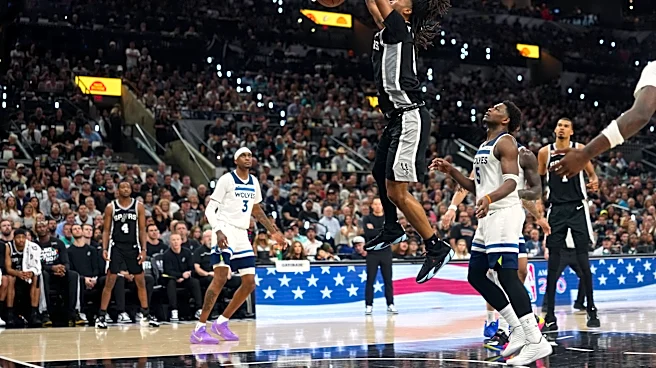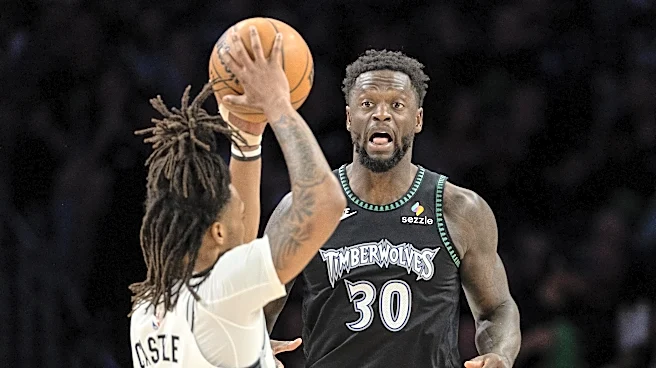








The second round of the 2026 NBA Playoffs has been … interesting. On one hand, there’s been two yawner series, with the Thunder comfortably (albeit not dominantly) sweeping the short-handed Lakers, while the Knicks swept a tired, limping 76ers team in the East. On the other, you have two thrilling (but not “beautiful”) series heading into Game 6’s on Friday, with the Spurs up 3-2 on the Timberwolves, while the Cavaliers upset the Pistons in Detroit in Game 5 to take the series lead (in part thanks
to a controversial no-call at the end of regulation).
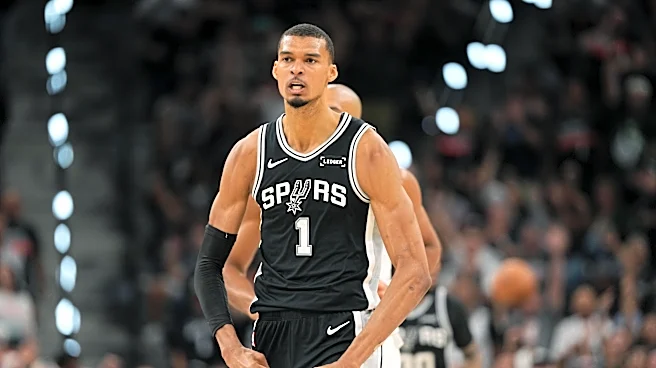
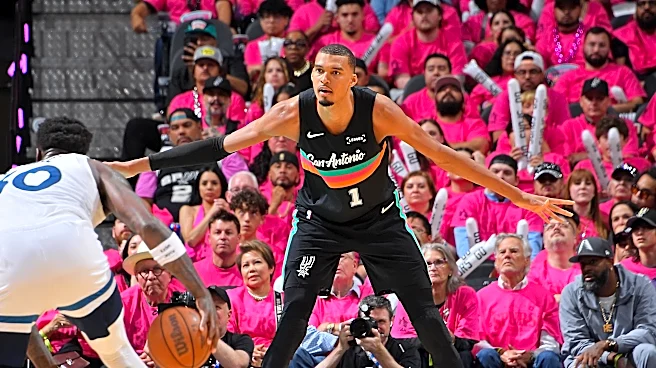
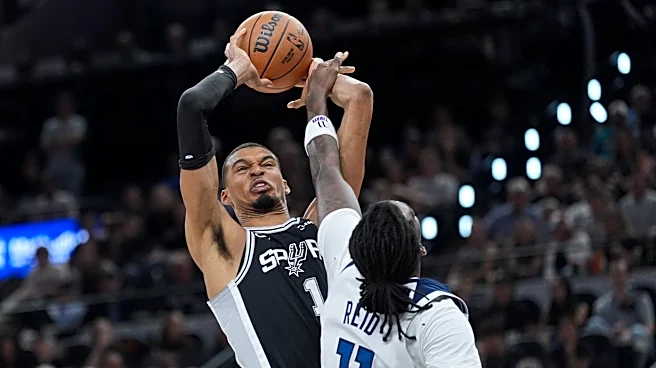
Spurs-Timberwolves has been by far the more interesting series (of course, I could be biased) in large part thanks to its unpredictability, differing factors in each game, and strange outliers. It all started with no one knowing that status of Anthony Edwards coming in, and everything has stayed weird since. For example in Game 1, Victor Wembanyama set an NBA playoffs record with 12 blocks, which you would think would doom an offensively-challenged team like Minnesota, but instead, the overexertion he caused himself chasing blocks robbed him of any energy on the offensive side, and a historic defensive performance still resulted in a Spurs loss.
Then, Wemby getting himself ejected early in the second quarter of Game 4 was arguably the biggest factor leading to that loss, but otherwise the Spurs have won the other three games in which he has stayed within himself by a combined 74 points, playing like the superstar he is without doing too much or too little.
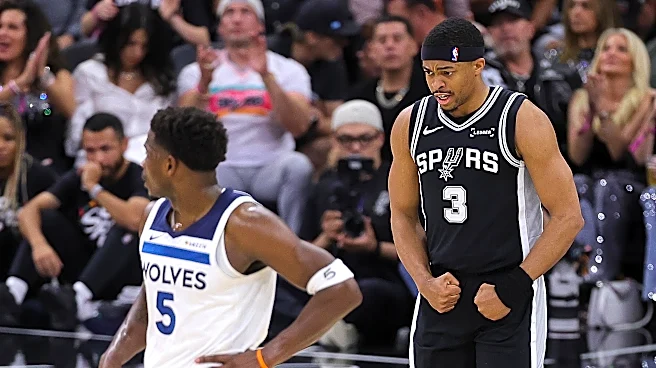
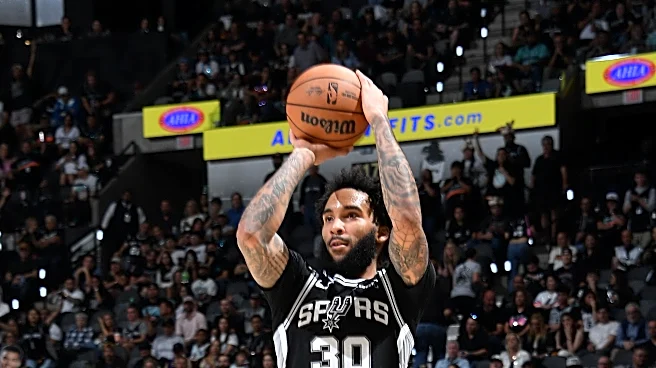
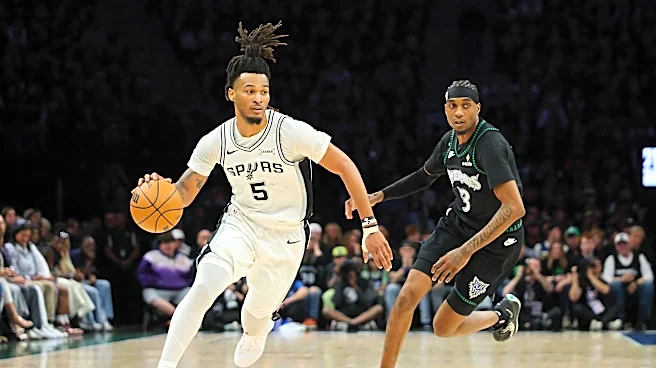
However, Wemby isn’t the only factor that has helped determine how the games have gone. It certainly helps when at least two of the guard trio of De’Aaron Fox, Stephon Castle and Dylan Harper have above average games, and Keldon Johnson finally having his postseason breakout was huge in putting Game 5 away after Minnesota had rallied back, but perhaps the most interesting stat line to follow for both teams has been three-point shooting.
Both are shooting a poorly from the arc in this series, with the Wolves hitting 53-156 (34%) and the Spurs an even worse 55-166 (33%). It isn’t too surprising to see Minnesota struggling outside the arc with Donte DiVincenzo out and Edwards hobbled, but that is a surprising stat for the Spurs. Even so, you might be thinking, “But if the Spurs have only hit two more threes than the Wolves in the entire series and at close to the same rate, how is this a big factor?
Good question, and the answer is probably what you expect: because of the way it influences the rest of the Spurs offense. When you break it down game-by-game, it generally follows a pattern. In the three games they won, the Spurs hit 39-104 (including tying a franchise record for makes in a playoff game with 16 in Game 2) for 37.5%, which is better than the 36% they averaged in the regular season. Overall, they have hit a total of 7 more threes than the Wolves in those games, with the outlier being Game 3 when the Wolves hit two more thanks to strong shooting off the bench from Naz Reid and Ayo Dosunmo. Interestingly, the Spurs still won this game because they were more accurate in seven fewer attempts.
So while the Spurs aren’t necessarily winning by the three, they have shown they are capable of losing by it. In their two losses in Games 1 and 4, they shot a combined 16-66 from the three (24%), including a combined 0-12 showing from Wemby and Fox in Game 1 and Fox, Castle and Julian Champagnie combining to hit just 3-18 in Game 4, which still accounted for half of the team’s makes. In other words, while they can win this series by merely being average from three, they can certainly shoot their way out of it. Often, their worst stretches on offense come when they get rushed or anxious, which results in them jacking up threes early in the shot clock, usually missing, instead of running some offense.
As the Spurs have shown throughout the season, they don’t always need Wemby to be a generational offensive player to win games. Instead, their best offense often comes not directly from him, but rather by the gravitational pull he has on opposing defenses, which generates more open looks and driving lanes for his teammates. Once defenses have to respect his teammates (which also requires them to make their shots), then it becomes easier for him to get clean looks.
Overall, you can’t point to three-point shooting as the deciding factor of this series because it has been relatively even, and the Wolves have actually been more consistent from game-to-game. However, the Spurs are slightly more dependent on the three and therefore have been better in the games when they shoot well. While that may seem like a “well, duh” point, the point is it has still mattered more than the overall series stats suggest.