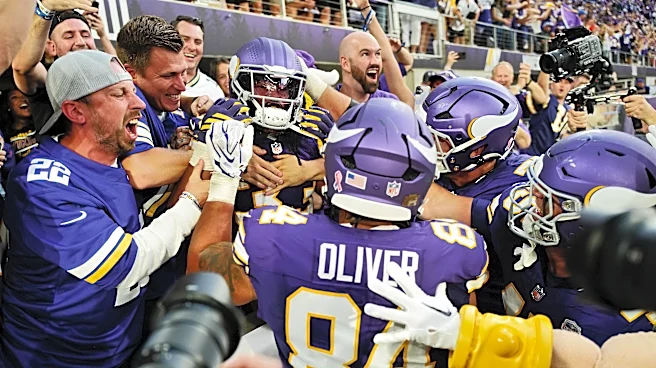


The Minnesota Vikings came away with probably the most unusual win over the Green Bay Packers in the history of the division rivalry. It was unique in that the Vikings were down 12 points with twenty minutes to play but finished win a 17-point victory, and because the Vikings won by 17 points despite gaining 180 fewer yards than the Packers.
As I mentioned in the stock market report, early season games can be unpredictable based on opposition research or lack thereof, as each team can present any
number of previously unseen looks/plays. The Packers seemed to have better opposition research on the Vikings than vice-versa, and that seemed to help them early on. Whether the Packers were able to capitalize on continuity of scheme with the Vikings, picking up videos of the Vikings practices, or gaining inside information from Kahlef Haillessie, a former Vikings safety who the Packers added to their practice squad last week, or a combination of all three, the Packers seemed to have the better game plan going into the game.
Fortunately the Vikings coaching staff was able to make adjustments as the game progressed, and the players execute better, but the Vikings seemed to be at a disadvantage early on. Whether that continues next week or not remains to be seen.
Penalties
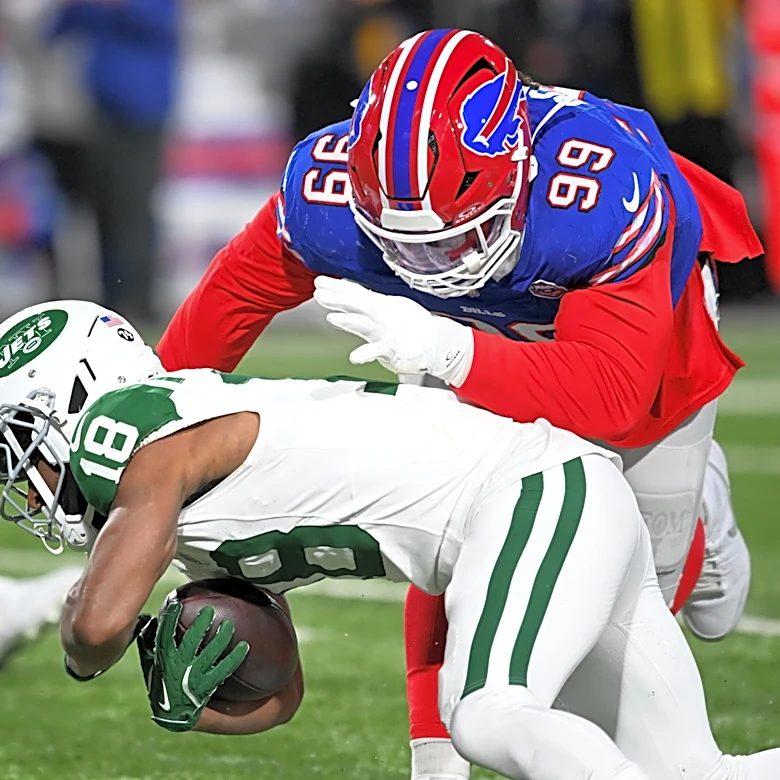
I’d say that penalties hurt the Packers more than the Vikings, except the Packers knocked out the Vikings starting quarterback Kyler Murray with an unnecessary roughness penalty, which likely cost the Vikings a lot more than 15 yards the rest of the game.
There was also an unnecessary roughness penalty against the Packers on a hit to the head of Justin Jefferson.
This was another obvious call where the player could have avoided head contact but chose differently. I would not be surprised if both players are fined at a minimum, and also suspended in a message from the league that it will not tolerate that sort of conduct at a time when concussions and CTE issues are rising. The league sometimes hands out what can be seen as stiffer penalties early in the season when the message value may resonate more and help prevent more incidents the rest of the season.
Looking back at the other Packers penalties, none of them were particularly controversial, except the roughing the passer penalty for the player putting his full weight on the quarterback when taking him to the ground. This is the Aaron Rodgers penalty, resulting from Anthony Barr’s sack of Rodgers in 2017 in which he broke his collarbone. That rule has often had controversial enforcement because it is difficult to ascertain whether the defensive player was able to break his fall sufficiently or not and because it is difficult to both sack the quarterback and break your fall at the same time. In any case, the enforcement was consistent- protecting the quarterback. Except a facemask penalty targeting Wentz was missed, and another one against Justin Jefferson.
It’s not uncommon to see more penalties early in the season as players get used to playing in real games again and new rules or emphasis by the league are enforced. But the latter wasn’t really the case as the penalties enforced have been on the books for years. It was simply a matter of the Packers either being undisciplined or poor in their technique to the point where it is outside the rules.
Vikings Need to be Better
It was great for the Vikings to beat the Packers by 17 points. Most will take that sort of win every time, regardless of circumstances. But it is also important to recognize that sort of win is unsustainable. You can’t expect the Vikings to continue to beat teams when they give up 180 more yards than they gain. The Vikings will need to be more explosive offensively than they were against the Packers and give up fewer explosive plays defensively. Those things can happen, but changes will need to be made.
First, the Vikings will need to get Kyler Murray back at quarterback to have the potential for a more explosive passing game. Carson Wentz did a great job in relief of Murray on Sunday, all things considered, but he has limitations in the passing game that make it more difficult to be successful with chunk plays. Kyler Murray also needs to settle in and perform at least to the average to above average level he has achieved in the past. He didn’t do that in the eleven plays he had before suffering the concussion.
Second, the defense probably needs to hone in on what works best for them. Every matchup is different, and there is a need to avoid being predictable, but one lesson from the Packers game is that interior gap blitzes are more effective than blitzes from the outside. Brian Flores began the game with more blitzing from the outside, which weren’t always as effective. But later in the game he went with more interior gap blitzes with linebackers that were more effective in disrupting Jordan Love. Again every matchup is different, but with Dallas Turner and Andrew Van Ginkel rushing off the edge, that may generate sufficient pressure by itself while interior blitzing may bring more value in added pressure up the middle that may disrupt the quarterback’s vision and throwing angle, in addition to generating sacks.
On the backend, getting alignment and assignment right is paramount. There were at least a couple blown coverages against the Packers that resulted in explosive plays. That simply can’t happen. Communication is key, but each player is also responsible. Optimizing personnel on the backend is an ongoing task. I’m not sure Josh Metellus, who appeared to be involved in some blown coverages, needs to be out there for 100% of the defensive snaps as he was against the Packers. Theo Jackson also appeared to be out of place or at least late in getting there in the long touchdown pass to Christian Watson. I noticed Jacob Thomas had ten snaps at safety and Jay Ward can certainly play and has plenty of scheme experience. Not sure why he didn’t get any defensive snaps against the Packers- he did play on special teams. Eric Wilson also had a rough game against the Packers and played all but one snap. Ivan Pace Jr. had only ten snaps but performed better- including in coverage- than Wilson. Maybe that snap mix needs to be optimized going forward. In any case, the backend needs to be alignment and assignment sound in a fast moving defense- from a changed call perspective. They can’t count on pressure getting home every time.
There is always some trial-and-error and adapting early in the season as the coaching staff discovers what works and what doesn’t, which players are doing well and which are struggling. There are a lot of moving parts. But there is a premium for figuring things out sooner rather than later.
Brian Flores addressed some of those things in his Tuesday press conference:
Another aspect of the passing game is quarterbacks need to see receivers other than Justin Jefferson. Yes, he is the best and often the primary target, but he’s not always open and other receivers are and don’t get targeted. There were a few times Jordan Addison was open and Wentz either didn’t see him or was too focused on Jefferson. Whatever the case, moving on from Jefferson when he’s covered and targeting other receivers when open shouldn’t be so difficult. There are also benefits to being more varied as an offense when opposing defenses are able to shut down Jefferson and/or moving the focus off of him a bit if the Vikings can do damage with other receivers- and/or in the ground game.
The bottom line here is that the Vikings can’t expect repeat performances of the Packers meltdown last Sunday to help them out every week. Execution needs to be better.
Special Teams – the Good and Bad
One thing I noticed in the Packers game: the Vikings never had worse starting field position than the 30 yard line following a kickoff. That is an improvement over last season when returns didn’t always get that far or there was a penalty that set it back. Myles Price leads the league in all-purpose yards at 192 based primarily on his kickoff returns, including the 69-yarder. But he had some other decent ones too and avoided the occasional bad one he had last season.
That’s not to say special teams were flawless, even though Will Reichard was with his field goal and extra point attempts. The Vikings gave up a big kickoff return to the Packers and also allowed a Packer through on a field goal attempt who should have blocked it. Unfortunately for him his hands were about a foot off, but he was in position to block it and the Vikings were lucky he didn’t.
Matt Daniels talked a bit about special teams on Tuesday as well:
On the Run Game and O-Line
The Packers seemed well prepared for the new wrinkles in the Vikings run scheme, which was also a bit underwhelming. Having a backup quarterback who hasn’t had the practice running most of the plays might have cut down the call sheet, but execution wasn’t that great either. It seemed like the left side of the Vikings offensive line has emerged as the stronger side, and that applies to pass protection as well, with Christian Darrisaw back to health and Donovan Jackson showing improvement as he starts his second year. Hopefully Will Fries and Brian O’Neill can step up. Blake Brandel had a solid outing in pass protection- allowing just one hurry according to PFF, although he wasn’t as effective in the run game.
Wes Phillips talked a bit about Carson Wentz, adapting, and the run game in his press conference on Tuesday:
I did like what I saw from Max Bredeson, who played 24 of the Vikings 65 offensive snaps. He wasn’t elite, but he does look like an ascending asset.
Next up for the Vikings is the Bears at Soldier Field where there is currently a 50% chance of a thunderstorm and a 75% chance of rain in the forecast for Sunday afternoon.
Stay tuned.
Follow me on X/Bluesky @wludford