

The Seattle Seahawks enter their bye week facing a decision that could define the rest of their season. Sam Darnold is expected to return from injury, but Drew Lock has done more than enough to make the quarterback conversation interesting.
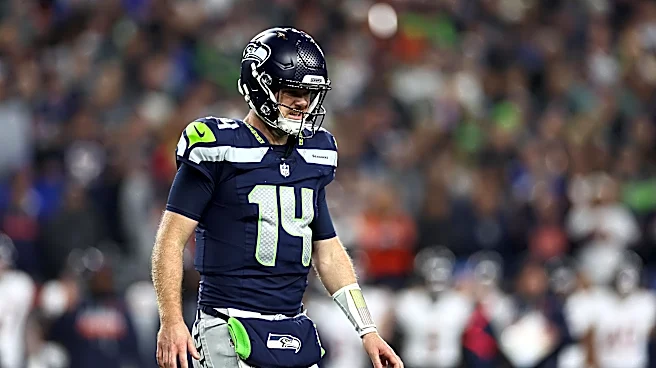
Lock is 3-0 in games he has started and has appeared in four victories this season. Across those appearances, he has completed 68 of 93 passes (73.1%) for 837 yards, seven touchdowns and zero interceptions. He has also posted a 125.6 passer rating. Darnold, meanwhile,
is 2-4 in his six full starts, with 1,478 passing yards, 10 touchdowns, nine interceptions and a 79.5 passer rating.
The numbers make a compelling case for Lock. But there is more to this discussion than the stat sheet. The quality of the defenses they faced, the support provided by the running game and, perhaps most importantly, the type of football Brian Fleury wants his offense to play all matter.
The numbers favor Drew Lock, but context matters
There is no denying that Lock has been efficient. His 73.1% completion rate, seven touchdowns and zero interceptions are impressive, especially considering he has taken five sacks for 31 yards lost. His 125.6 passer rating is also considerably higher than Darnold’s 79.5.
Darnold, on the other hand, has struggled to protect the football. Nine interceptions in six full starts is a significant problem, particularly for a team that wants to build its identity around a strong defense. He has also taken 17 sacks, losing 113 yards in the process.
Lock has been more efficient, more careful with the football, and better at avoiding negative plays. Still, the sample size is considerably smaller, and the circumstances surrounding their performances have been very different.
The quality of competition matters
The biggest argument in Darnold’s favor is the quality of the defenses he has faced.
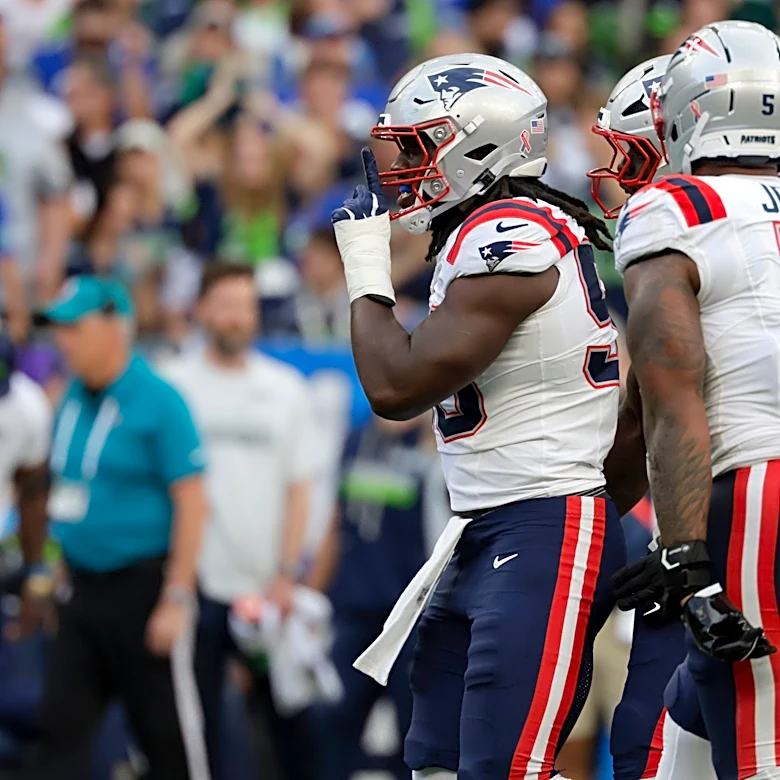
Lock’s four appearances came against the Patriots, Cardinals twice, and Raiders. Arizona and Las Vegas have been among the league’s worst scoring defenses, while New England has been closer to the middle of the pack.
Darnold, meanwhile, had a much tougher stretch. His six full starts came against Washington, the Chargers, 49ers, Broncos, Chiefs, and Bears. San Francisco, Denver, Kansas City and Chicago have all presented considerably more difficult defensive challenges than the Cardinals and Raiders.
That is a meaningful difference. Lock has taken advantage of favorable matchups, while Darnold has had to deal with considerably tougher defenses.
This doesn’t mean Lock’s production should be dismissed. He can only play the teams on Seattle’s schedule, and he has consistently given the Seahawks a chance to win. But comparing their raw numbers without considering the quality of the defenses they faced would be unfair.
The running game hasn’t provided the same support
One of the biggest differences between the two quarterbacks has been the support they have received from the running game.
During Drew Lock’s four victories, Seattle’s running backs (excluding quarterback rushing) produced 472 yards on the ground, averaging 118 yards per game and 4.2 yards per carry. They also scored four touchdowns.
During Sam Darnold’s four losses, the running backs managed just 260 yards, averaging 65 yards per game and 3.2 yards per carry. They scored only two touchdowns.
That’s a substantial difference. Lock has benefited from a ground game that has been more productive, allowing Seattle to control the pace, stay ahead of the chains and avoid putting too much pressure on its quarterback.
But the quality of the defenses they faced makes this comparison even more interesting.
Darnold faced run defenses that ranked, on average something near to the 12th in the NFL. His six opponents ranked second, seventh, 10th, 13th, 19th and 24th against the run.
Lock’s four opponents, meanwhile, ranked an average of 25th. Their run defenses ranked 14th, 28th, 28th and 31st.
In other words, Darnold faced considerably tougher run defenses and still had to deal with a running game that averaged just 65 yards per game in his four losses. Lock had a much more favorable set of matchups and received significantly better production from his running backs.
Against Washington, he threw for 379 yards and four touchdowns, while the running backs combined for just 39 yards on 17 carries. He wasn’t the reason Seattle’s offense struggled in that game. He was practically the entire offense.
Ultimately, the running game has been a major advantage during Lock’s victories and a significant weakness during Darnold’s losses. That context should be part of any fair evaluation of their performances.
Lock’s conservative approach might fit Fleury’s offense better
This might be the most important argument in favor of giving Lock the starting job.
Darnold probably has a higher ceiling. When everything clicks, he can make throws and create plays that Lock might not be capable of consistently reproducing. His best football is probably better than Lock’s best football.
But the other side of that argument is just as important: Darnold’s worst performances can be considerably more damaging than Lock’s.
Turnovers have been a recurring problem throughout Darnold’s career. Even during his strong stretches last season, there were moments when questionable decisions threatened to undo the good things he was doing. This season, that tendency has become increasingly difficult to ignore.
Lock, at least in this current season, has played a more conservative brand of football. He has taken what defenses give him, avoided forcing throws into coverage and allowed the rest of the team to do its job. That approach could be a better fit for what Brian Fleury is trying to build offensively, especially with a defense capable of keeping games competitive.
The Seahawks don’t necessarily need their quarterback to win games by himself. They need someone who can avoid putting the defense in difficult situations, protect the football and take advantage of scoring opportunities.
Lock has done exactly that so far.
I don’t know if Lock has the talent to win the games Darnold has lost. But Darnold’s turnovers have probably made some of the games Seattle won much more difficult than they needed to be. That is an important part of this discussion, too.
This decision could define Seattle’s season
There is another important consideration: Seattle might not have the luxury of changing quarterbacks again.
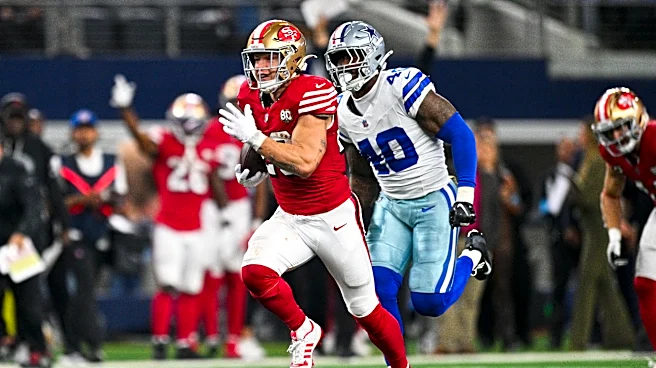
At 6-4, the Seahawks are approaching a critical stretch of their season. Their next game against the San Francisco 49ers could determine whether they remain in contention for the NFC West title. More importantly, every loss from this point forward could seriously jeopardize their chances of making the playoffs.
That’s why whoever starts against San Francisco will probably remain the starter for the rest of the season, or at least for as long as Seattle still has a realistic path to the postseason.
If the Seahawks find themselves needing to change quarterbacks again after that game, it will probably mean they have already lost more games and put their playoff hopes in great danger. There would be little point in continuing to experiment with the position at that stage.
This is ultimately what makes the decision so important for Mike Macdonald during the bye week. He isn’t choosing a quarterback for one game. He may be choosing the player who will lead Seattle through the most important stretch of its season. Macdonald has publicly maintained that Darnold remains the team’s starting quarterback when healthy. That suggests he is still the preferred option, and it is entirely possible that his health, rather than a decision to bench him, will determine who starts against San Francisco.
But Lock has made this decision much less straightforward.
Seattle doesn’t necessarily need someone capable of making spectacular plays every week. It needs someone who can keep the offense functional, protect the football and avoid turning manageable games into unnecessary battles.
Lock has shown that he can provide that. The Seahawks now have to decide whether that is enough to earn him the starting job.