




I always find myself wandering through the history of the Phoenix Suns. There is always something tucked away waiting to be found, some random nugget that makes you pause for a second and think, “Huh, I didn’t know that.” At this point I’ve spent enough time digging, writing, and obsessing, including putting together the whole All Time Pyramid project, that I feel comfortable calling myself a Suns historian. It’s not born completely from lived experience, but from pure curiosity and the inability
to leave things unexplored. So when a postseason matchup pops up, it is like an open invitation to go back and see what the past has to say.
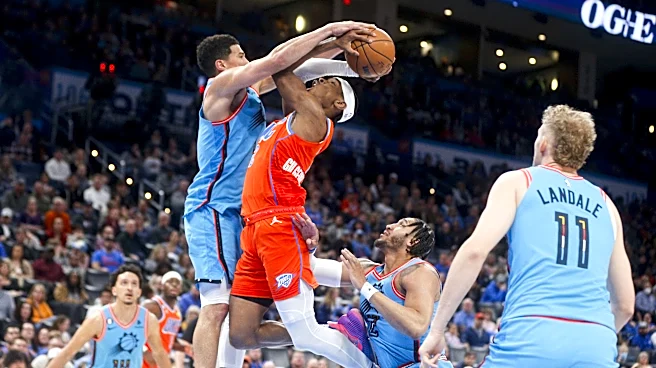
And now here we are. The Suns are set to face the Oklahoma City Thunder in a best-of-seven first-round series that tips off tomorrow at 12:30pm. On the surface, you would think there is some kind of playoff history between these teams, something to pull from, and/or something to reference.
If we are talking Phoenix versus Oklahoma City, there isn’t.
Since the Thunder relocated from Seattle in 2008, these two franchises have never crossed paths in the postseason. Their timelines never quite lined up. Phoenix was rolling through the late 2000s and playing meaningful basketball while Oklahoma City was still finding its footing. Then the Thunder rose up with Kevin Durant, Russell Westbrook, and James Harden, and the Suns slipped into that long, dark stretch where April basketball became something you watched other teams play.
The last time both organizations were in the postseason at the same time was 2024, and even then, nothing materialized. Phoenix exited early, and the Thunder were off on their own path, facing the Dallas Mavericks. So if you keep it clean and modern, Suns versus Thunder playoff history does not exist. No box scores, no series, no shared moments.
But history has a way of stretching if you let it.
Because the Thunder carry the city of Seattle with them, and if you choose to include that chapter, then suddenly there is a story to tell. The Suns and the SuperSonics met four times in the postseason, a total of 25 playoff games, a series of four meetings that actually meant something. Three of those series ended with the winner going on to represent the Western Conference in the NBA Finals, which tells you everything about the weight those matchups carried.
So while this version of the matchup is new, the feeling around it is not entirely unfamiliar. There is history here, it is simply wearing a different jersey.
1976
The first time these two franchises crossed paths in the postseason takes you back to 1976, the season that put the Phoenix Suns on the Finals map for the first time and gave the franchise one of its defining early chapters.
Back then, the league looked different. Six teams made the postseason and the Seattle SuperSonics came in as the two seed at 43-39, coached by the legendary Bill Russell. The Suns slid in right behind them at 42-40 as the three seed.
The early round setup felt like a prototype of the modern Play-In, with a quick best of three for the lower seeds to survive and advance. That chaos did not touch Phoenix or Seattle. They were dropped straight into a best-of-seven against each other.
Seattle had firepower. Fred Brown dropped 28.5 a night, Tom Burleson added 20.8, enough offense to win most nights in that era. It did not matter. Phoenix had more answers, more contributors, more ways to tilt a game. The Suns took the series 4-2, riding the steady brilliance of Paul Westphal, who put up 24.3 points, 6.3 assists, and 2.3 steals per game. Gar Heard owned the glass with 9.3 rebounds, and six Suns averaged in double figures.
From there, the run kept rolling. The Suns took out the Golden State Warriors in a seven-game battle, punching their ticket to the NBA Finals for the first time in franchise history.

1979
The next time these two franchises met in the postseason came three years later, in 1979. The NBA had expanded, and the playoff format shifted again. The top two seeds received a first-round bye, while the third seed played the sixth and the fourth played the fifth. The Phoenix Suns went 50-32 and landed as the three seed. It was a strange setup. Phoenix had the second-best record in the Western Conference, but the Seattle SuperSonics won the Pacific Division at 52-30. The Kansas City Kings, at 48-34, claimed the two seed by winning the Midwest Division. That left the Suns playing an extra series.
They handled their business. Phoenix beat the Portland Trail Blazers 2-1 in a best-of-three, then took down the Kings 4-1 to reach the Western Conference Finals. Waiting there, once again, was Seattle. The teams had met four times in the regular season, and the Suns went 1-3. Their lone win came in the 77th game of the year in an overtime victory.
What followed was a battle. The home team took each of the first four games. Phoenix broke that pattern in Game 5, winning 99-93 on the road and taking a 3-2 lead back home for Game 6. It’s a game not many mention when they talk about Arizona sports and the games the state has choked away, but this was one of them.
It was Mother’s Day 1979. The Suns had not lost at home in 10 weeks. Sixteen straight wins at Veterans Memorial Coliseum. They led by eight in the fourth quarter, still up six with a little over seven minutes to play. Then it slipped. Seattle took the lead on a Gus Williams jumper with 52 seconds left. Phoenix never got it back. Walter Davis missed an 18-footer that glanced off Jack Sikma, giving the Suns one final chance with one second remaining. They could not get it to Paul Westphal or Davis. The ball went to Gar Heard, and the shot did not fall.
Game 7 went back to Seattle. The Suns lost 114-110.
It is a game that rarely comes up, that Game 6 against the 1979 SuperSonics. Hold serve there, close it out at home, and the path to a first championship feels real. Seattle took that opportunity instead, moving on to beat the Washington Bullets 4 to 1 in the Finals.
1993
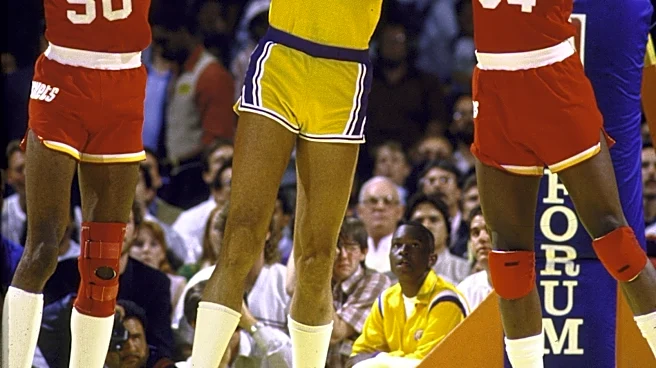
The next time these two franchises met came in 1993. The Phoenix Suns were the number one seed at 62-20, facing the third-seeded Seattle SuperSonics, who finished 55-27. Another Western Conference Finals. Another trip to the NBA Finals on the line.
Phoenix got it done this time. It was a back-and-forth series, both teams trading wins, each punch answered with another. Neither team won two consecutive games in the series. It built all the way to Game 7, with the Suns holding home court.
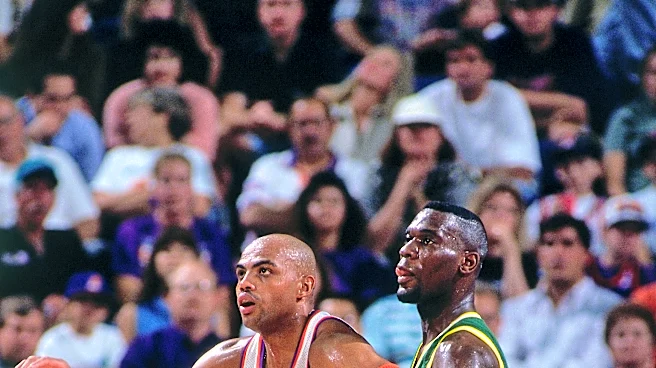
And then Charles Barkley took over.
44 points. 24 rebounds. A full takeover performance. Kevin Johnson added 22 points and nine assists, steady and in control. Danny Ainge chipped in 13 off the bench, knocking down 3-of-5 from deep.
This game carries a reputation. You look at the numbers and it jumps off the page. The Suns went 57-of-64 from the line. Shawn Kemp fouled out. Nate McMillan fouled out. Suns’ announcer Eddie Johnson, playing for Seattle at the time, fouled out agianst his former team. The Sonics were hit with 38 personal fouls. It was constant pressure, constant whistles, Phoenix living at the line and making it count.
The final was 123-110. The Suns moved on to their second NBA Finals appearance.
1997
The last time these two organizations met in the postseason was 29 years ago. The Seattle SuperSonics came in at 52-25, facing a Phoenix Suns group that finished 40-42 and still found its way into the bracket. Phoenix entered as the seven seed, and they pushed. This was a best-of-five, and it went the distance. The Suns grabbed a 2-1 series lead and had Game 4 at home with a chance to close it out.
That Game 4 is the one people remember.
Phoenix trailed by as many as 11 late in the fourth, then ripped off a 19-7 run to force overtime. It came on one of the most iconic shots in franchise history. Rex Chapman, 22 feet, falling out of bounds, three in the air, tying the game with 1:07 left and sending it to overtime.
Seattle answered. They took control in the extra period, outscoring Phoenix 15-8 and evening the series at 2-2.
Game 5 went back to Seattle. The Sonics pulled away late, a 35-19 fourth quarter that put it out of reach, closing it out 116-92. Wesley Person led the Suns in scoring that night, a quiet end to a series that felt like it was right there for the taking.
Seattle would lose in the next round to the Houston Rockets, however, making it the only time that a series played between the Suns and Sonics did not produce a team that would represent the Western Conference in the NBA Finals.
So there you go, a condensed playoff history between the Phoenix Suns and the Seattle SuperSonics, now known as the Oklahoma City Thunder. If you are keeping tabs, across 25 playoff games, the Suns hold a 13-12 edge. The four series are split, 2-2. This upcoming series is the proverbial rubber match.
A couple more numbers to round it out. Oklahoma City/Seattle lead the all-time postseason scoring by 28 points. They have 2,679 points. Phoenix sits at 2,651.
Now we shift to the present. Two very different teams, one in a different city, both stepping into a new series. The gap this time stands out. Phoenix finished 45-37. Oklahoma City went 64-18. Two of those losses came against the Suns, a small reminder that matchups still matter.
Another chapter is about to be written. More history is about to be made.