


Ken Burns, the brilliant documentarian, is fond of repeating a quote attributed to Mark Twain: “History doesn’t repeat itself, but it often rhymes.”
Burns usually says this in reference to landmark events that shaped the world in which we live, not something so trivial as the fortunes of a pro basketball team. Yet it can be applied to the Sixers at this point in their history.
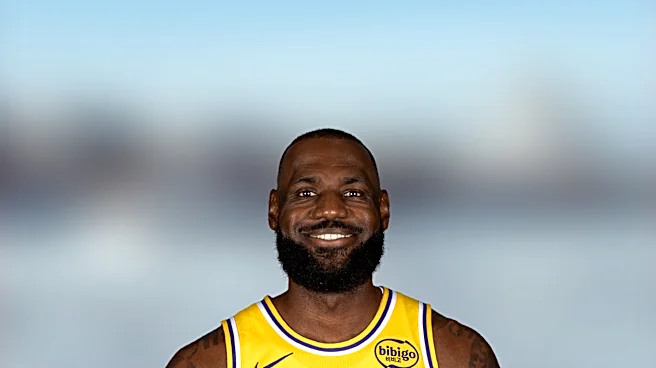
The addition of LeBron James has seismic implications, and can be compared to the September 1982 trade for Moses Malone, which
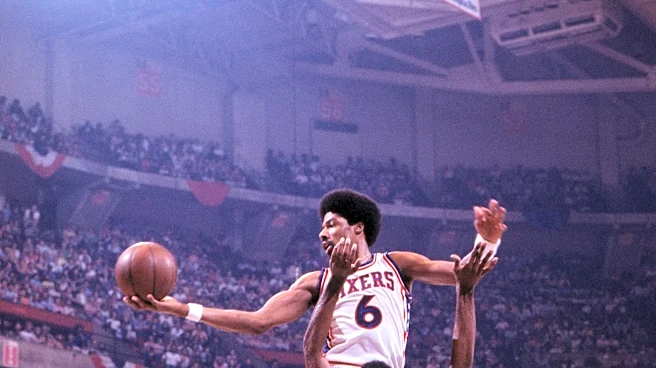
greased the skids for the franchise’s most recent championship the following spring. But given James’ stature, the better analogue might be the acquisition 50 years ago of Julius Erving.
The comparison is not perfect. Dr. J was acquired from the then-New York Nets for $6 million – half of which went to Roy Boe, the Nets’ cash-poor owner, to cover the territorial fees the Nets were required to pay after being absorbed with three other ABA teams into the NBA, when the leagues merged that summer of 1976. The rest went to Erving, who signed a new six-year contract.
James on the other hand joined the Sixers as a free agent recently, and a cut-rate one at that. He will be paid a mere $8 million over the next two years. He is also 41, and nearing the end of a career entering its 24th season. Erving was 26 when he was acquired by the Sixers, and at the very height of his powers.
“Forget the age, because age has nothing to do with it,” former Sixers player and coach Fred Carter said in a recent phone interview. “It’s the impact each one of them had on the whole sports platform in Philadelphia.”
Doc wound up playing the last 11 of his 16 professional seasons here, leading the Sixers to the Finals that first year and on three other occasions. And with Malone and Co. he collected that 1982-83 title.
LeBron is just passing through, just trying to enhance his already considerable legacy by chasing his fifth championship with his fourth different team. But like Dr. J he is an epic figure. And like Doc he is joining a superteam. That is the foremost comparison, the rhymingest rhyme in this piece of sporting history.
Carter, a Sixers backup guard in ‘76-77, was beginning the last of his eight NBA seasons when Erving arrived on opening night, and would remain with the team only through Dec. 8, when he was traded to Milwaukee. He believes James is coming to a team that has “far more talent” than that one, and added that if everyone stays healthy, “They could win 70 games.”
There was actually similar hype surrounding that ‘76-77 bunch. George McGinnis, a muscular forward, had come over from the ABA a year earlier, and had established himself as the franchise fulcrum. Doug Collins and Steve Mix had already played in All-Star Games by then, and Caldwell Jones had also been plucked from the ABA. Not to be forgotten, either, were young guns like Lloyd Free (still years away from his conversion to World B. Free) and Darryl Dawkins.
So the same questions face this group as that one: Can everybody coexist on the court? Will minutes and touches and shots become issues? That remains to be seen, but Carter, 81, believes James’ mere presence will change things.
“It puts everybody on notice that you’ve got to play the game the right way,” Carter said. “It’s not like you can dilly-dally and come not ready to play.”
Which happens, he added, to every team.
“Players,” he said, “take nights off.”
But that is far less likely to happen with a guy of James’ stature in town.
“Players that have any type of self-esteem, self-respect, will not take nights off,” said Carter, who also served as a Sixers assistant for six years (1987-93) and the team’s head coach for a season-plus after that. “That’s going to force Joel Embiid to play at a level higher than what he’s played at, which will help them tremendously. Because the last thing you want to do is have a 41-year-old guy out there, playing his heart out, and you’re out there half-stepping. That can’t be tolerated.”
The bottom line, Carter said, is this: “The price of poker just went up, and everybody’s got to ante up. … Guys have got to be playing at their highest level, because LeBron is here. The King is here.”
Again, it was a little different when Erving came to Philly. For one thing, his legend had largely spread by word of mouth in that pre-Internet, pre-cable, pre-streaming age. There was a lot of buzz about him, but few had seen video of him, and fewer still had seen him play live.
“I had heard that there was a guy who could walk literally on air,” Harvey Catchings, then a reserve center for the Sixers, said in a recent phone interview, “and he was just an incredible player.”
The Sixers had in fact faced Erving’s Nets in preseason play in the years before his arrival, but didn’t have a full read on him. Nor was it clear whether his game would translate to the more-established league.
“I did not believe the hype,” Mix said.
Others did. Pat Williams, the late Sixers general manager, always said that he described Dr. J as “the Babe Ruth of Basketball” while persuading team owner Fitz Dixon to pony up the cash to bring him aboard. The thing was, McGinnis had established himself as the Sixers’ version of Lou Gehrig the previous season, and for that reason Williams sought Big George’s blessing before finalizing the deal.
But as Catchings said, “What were you going to say? … At least they gave him the courtesy.”
Erving made his Sixers debut in the season opener against San Antonio, scoring 17 points off the bench in a 121-118 loss. Beforehand Mix had chosen to welcome the new guy by taping his hightops together and throwing them atop a light in the Spectrum locker room. (Carter has no recollection of Mix’s prank, though he did add this: “Steve was a jokester, so I can imagine Steve doing that.”)
“He was probably a little irked, I would think,” Mix said of Erving. “I went and got them down. I put them up, I got them down.”
Mix and Doc became fast friends. Roomed together on the road for years, in fact. They also remain close all these years later, and even coach together in the Big3.
But that season was a roller-coaster ride for everyone.
“I don’t know,” Mix said, “whether some of those guys knew how to play as a team.”
“Doc had to get his, Doug had to get his, Lloyd was trying to come into his own,” Catchings, 74, said. “Then you had Darryl. You had a lot of mouths to feed, and egos to feed.”
It reached a point where a Daily News columnist named Bud Shaw likened the Sixers’ offense to “a line at the delicatessen. You took a number and waited your turn at the counter. Every so often, somebody would take all the numbers and four other hungry stomachs would go home growling.”
Mix said Erving was the one who had to make the most sacrifices, the guy who had to tailor his game to everyone else’s. Even so, he made an immediate impression on his new teammates, who marveled at his physical gifts and improvisational abilities.
“It didn’t take but a minute,” Carter said. “Maybe half a minute.”
“You knew the guy could play,” Mix said. “Anybody who has an Afro like that has got to be able to play.”
And indeed Doc’s ‘fro was something to behold.
“It wasn’t as good as Darnell Hillman or Artis Gilmore,” Mix said, naming two others who made the ABA-NBA transition, “but it was a good look.”
His demeanor was no less impressive.
“Just the way that he carried himself was just so different from anything that I had ever seen before,” Catchings said. “It wasn’t arrogance. It was just confidence.”
Erving averaged a team-best 21.6 points a game that first season, two-tenths more than McGinnis. And despite everything the Sixers won 50 games and knocked Boston and Houston out of the playoffs. Then they took a 2-0 lead over Portland in the Finals before getting “backwards swept,” as Carter put it – i.e., the Bill Walton-led Blazers won the last four games.
“We had the best talent,” Mix said. “Portland had the best team.”
It didn’t help that Dawkins squared off with Blazers enforcer Maurice Lucas late in Game 2, throwing a wild punch that caught Collins over the eye. Dawkins, incensed that none of his teammates appeared to have his back (Erving, for example, sat down at midcourt rather than getting involved in the fracas), then trashed the Spectrum’s home locker room.
Nor did it help that McGinnis played poorly in the Finals.
“I wish George was alive, because I don’t want to speak ill of the dead,” Catchings said, referring to McGinnis’ passing three years ago. “But George choked during the playoffs.”
By the time the Sixers returned to the Finals in 1980, they were a vastly different team. McGinnis, traded to Denver for Bobby Jones in ‘78, was gone. Maurice Cheeks, drafted with one of the picks acquired in the Carter trade to the Bucks, arrived that same year. Clint Richardson, who would become a valuable reserve, came in the following selection process.
They finally broke through after acquiring Moses from Houston, and the conclusion is a simple one: Adding a foundational piece like a Dr. J or an LBJ, while obviously significant, is only a start. The right pieces need to be arrayed around them, and sacrifices need to be made for the greater good. That wasn’t the case with the 1976-77 Sixers, and we will only find out in time if that is the case now.
Mix wonders if James is coming as much for business reasons as basketball reasons – if he wants to pick Josh Harris’ brain, then apply those lessons to his own off-court pursuits. Mix further believes, as many do, that LeBron can best be used as a playmaker, despite the fact that he will be playing, in effect, power forward.
As Mix put it, “I don’t expect him to average 20; 12 to 14 would be a good average for him, if he’s distributing.”
Hard to picture James scoring at such a paltry rate, even at his age. He has always been a force, not to mention a force multiplier. Certainly his impact will be felt, as was the case with Erving all those years ago. And certainly much of the history rhymes to this point. Now it’s a matter of adding a few more stanzas, of crafting the perfect ending, in a town where fairytales don’t always come true.