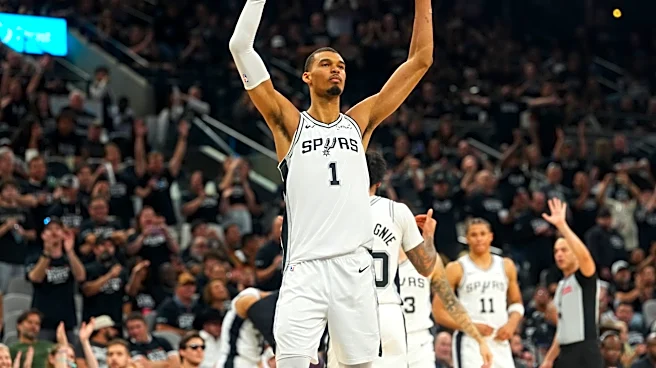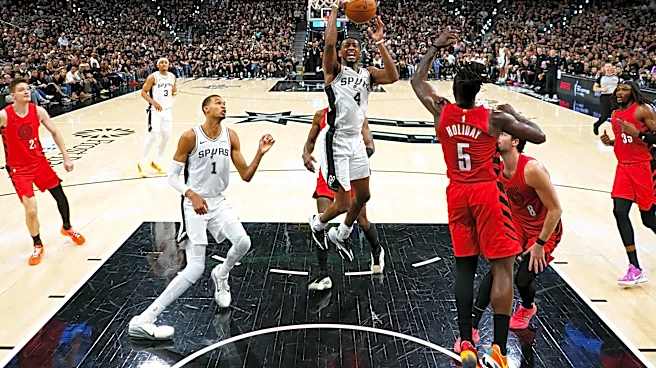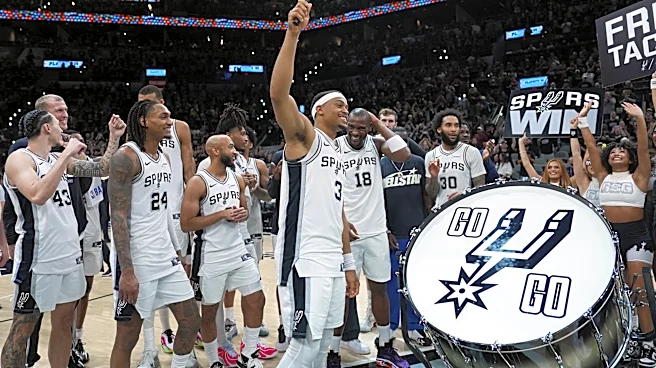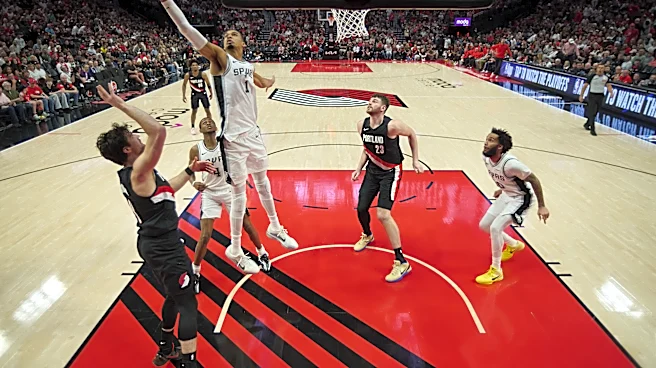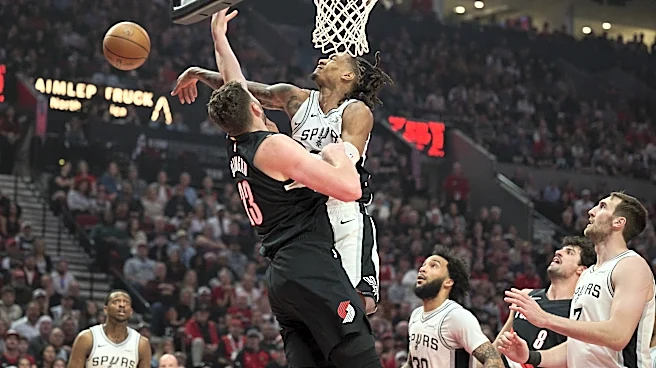




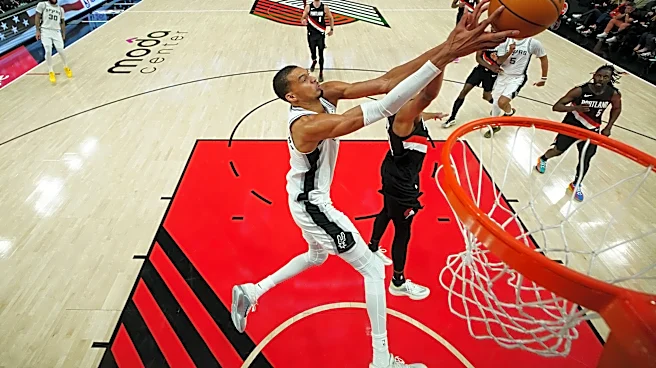
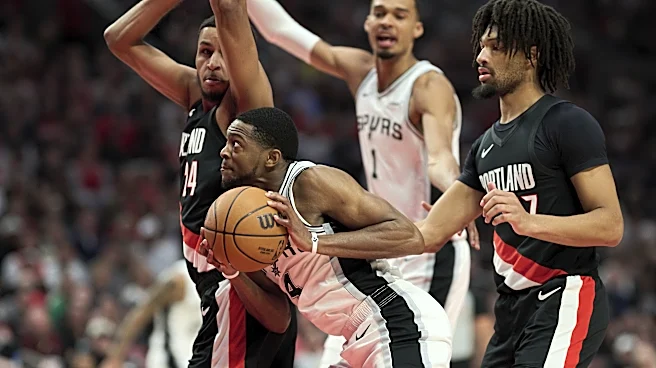
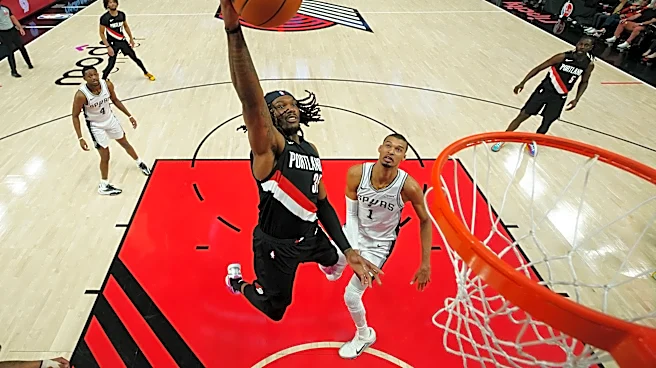
The Spurs completely dominated the series and would have swept the Trail Blazers had Wembanyama not suffered his concussion: true or false?
Marilyn Dubinski: It’s easy to say true since they still got ahead without him later in Game 2 before blowing it, then also made a massive comeback to win Game 3 without him, but ultimately it’s impossible to say. He is just as capable of losing a game by trying to do too much as he is winning one for them, but why not? True.
Mark Barrington: True! But the experience of facing and overcoming adversity was good for the team and will work in their favor for the rest of the playoffs, and in years to come.
Bill Huan: The Spurs did largely dominate the series, but I don’t think it would’ve been a sweep even with a healthy Wemby. Even in a lopsided matchup, the lesser team usually has a hot shooting night combined with the better team taking their foot off the pedal, so I still believe it would’ve ended with the Spurs in 5. OKC is the exception instead of the norm, and hopefully San Antonio can reach that level one day.
Devon Birdsong: I think it’s likely, but I also think that Portland woke a slumbering beast in Game 3. From the end of that game onward, the Spurs were borderline merciless in the execution. I think there’s a possibility that this series might have gone five games anyway, because I do feel like they needed that little wakeup call to know they have to be the best version of themselves as much as possible. There’s no sleepwalking in the playoffs.
Jeje Gomez: True. It was almost a sweep with Wembanyama missing one and a half games and the Spurs having no third big man who could step up, forcing them to play small. In no way is this meant to disrespect a Portland team that played hard and outexecuted a shorthanded San Antonio team down the stretch in Game 2, but the Spurs, with Wembanyama on the floor, outscored them by 45 total points in four matchups.
What is the biggest lesson you think the Spurs learned from the series?
Dubinski: Considering one of the biggest takeaways from every game besides Game 1 was that it was always a tale of two halves – whether they had bad first halves and had to come back in Games 3 and 4, or bad second halves that either blew (Game 2) or had them holding on (Game 5) – the biggest lesson is a reminder that they have to play all 48 minutes. The Blazers are a poor enough offensive team that is prone to long droughts, so that helped the Spurs survive their own poor stretches, but better teams won’t be as forgiving.
Barrington: I think the Spurs learned that they’re good, but just being good isn’t enough to win in the playoffs. You have to keep your composure and not get complacent. The talent gap between the Spurs and the Blazers was big enough for them to get away with not being mentally ready to play at the start of some of the games, or coast after gaining a lead while still winning easily. They won’t have that luxury in later rounds. I don’t know if the Spurs are capable of playing up to their potential for 48 minutes, but they can definitely do better than the 24-minute efforts in the first round series.
Huan: The most obvious one is that they need to play a full 48 minutes, which Marilyn and Mark have already mentioned. More specifically, in order for them to play a complete game, the Spurs need to always push the pace. The offense bogs down when it becomes stagnant and lacks movement on and off the ball, and playing fast and deliberately is when they look best on both ends of the court.
Birdsong: I think they learned that they have to step on the neck every time they get an opening, because the whole complexion of a series can change in a heartbeat. We’re seeing it all over the postseason, but there’s a difference between knowing something intellectually and being on the other side of a momentum turn. It was a good scare, and I’m betting they’ll remember it. They gave Portland precious few opportunities to turn the tide over the last two games.
Gomez: I think the biggest lesson is that they can’t let opponents dictate how they play. The Trail Blazers did a lot to throw them off balance, like letting Stephon Castle completely open on the perimeter, playing extra physical to slow things down, and using a lot of different players and lineups. The Spurs were at their worst when they fell for the trap of trying to force things to match them instead of simply adapting within their preexisting identity. There’s no need for weird lineups, slow, grind-it-out possessions, or hero ball, and it seems like, as the series progressed, the Spurs realized it.
There were many good moments and performances from both teams in this series. Which will you remember as the best or most meaningful?
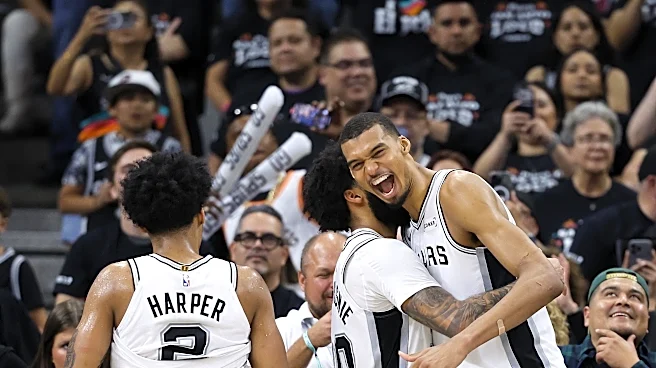
Dubinski: It’s easy to just say Game 1 was a huge playoff debut for Victor Wembanyama and proved he is ready for bigger things, but that really shouldn’t surprise anyone who recalls he has prior professional experience and has played in an Olympic Gold Medal Game. I think the performance that will stick with me the most is Dylan Harper’s breakout in Game 3. It was so unexpected and out of nowhere, and the way he responded to Scoot Henderson’s trash talk (who, by the way, hasn’t been the same since) was a joy to watch. It was a beautiful performance that even had Kevin O’Connor backing down from his stance that the Spurs made a mistake in drafting him over Kon Knueppel.
Barrington: I’m going to go with a Portland moment, where they were outclassed for the entire series, but didn’t give up and fought back in the closeout game to pull within single digits late in the fourth quarter. You have to respect them for keeping their edge even when they were in a bad spot. The Spurs need to learn from that and embrace that kind of intensity and composure, because things are going to be tougher going forward.
Huan: I love Mark giving the Blazers credit because it’s a great point: the Spurs need to keep fighting regardless of what the score is, even if they’re up big. Other than that, I’d say the second halves of games 3 and 4 were some of the most fun I’ve ever had watching basketball. Spurs fans have all known what Harper’s capable of, but seeing it on a big stage opened the eyes of the entire league. Meanwhile, the comeback in game 4 validated the lack of panic I felt at halftime. I’d never been more confident down 20 and knew the Spurs would claw back if they locked in, but even I didn’t see a 40-point swing. Cue the gif of LeBron pretending to be scared.
Birdsong: Having written about it, that 4th quarter comeback/explosion in Game 3 is going to stick with me for a very long time. I was already prepping an article in my head about the loss. I genuinely thought it was over. Just about every Spurs fan I know thought the same. Not only was it a historical-grade comeback, but it’s also something I’ve never seen from the Spurs before. And after 30-ish years of being a fan, that’s no small thing. I would never have bet on that in a million years.
Gomez: The last few minutes of Game 5 stand out to me. The first half was fantastic, and it set them up to win, but we had seen big comebacks and the Spurs struggling to close out Game 2 in this series, so there was some tension about whether their youth and inexperience would cost them. Instead, they looked like a veteran team that might play with its food but knows when to put opponents away. Fox and Wembanyama were terrific, but the entire group looked confident as they crushed the comeback attempt.