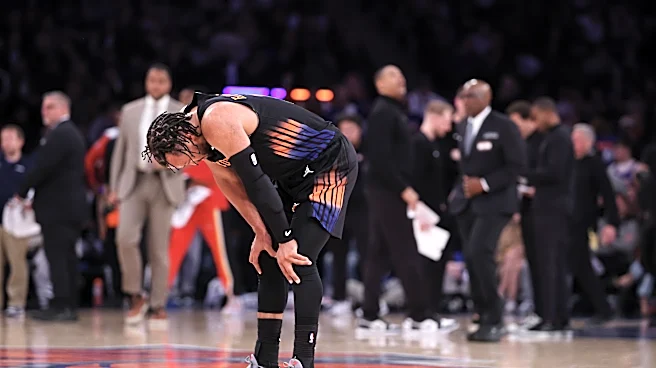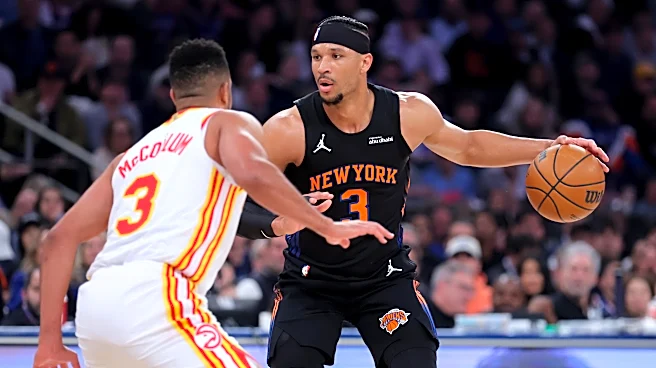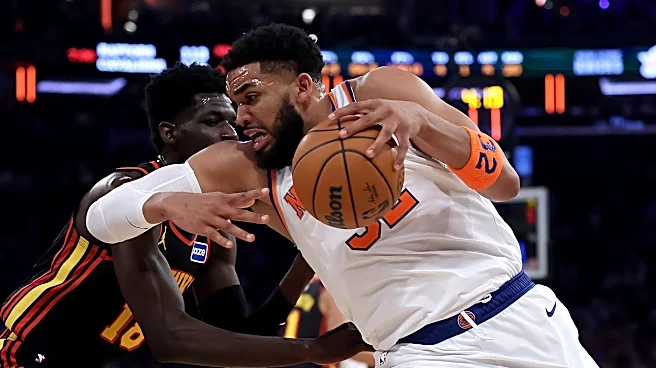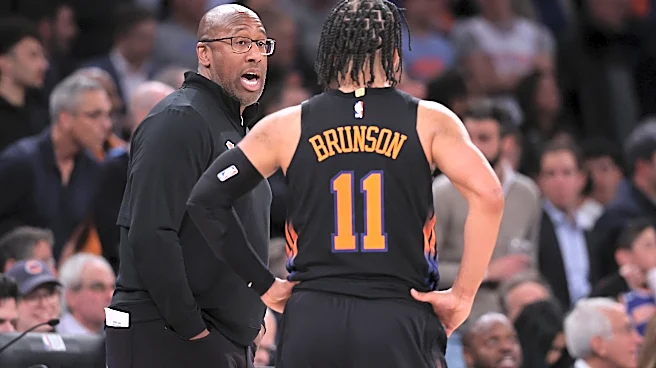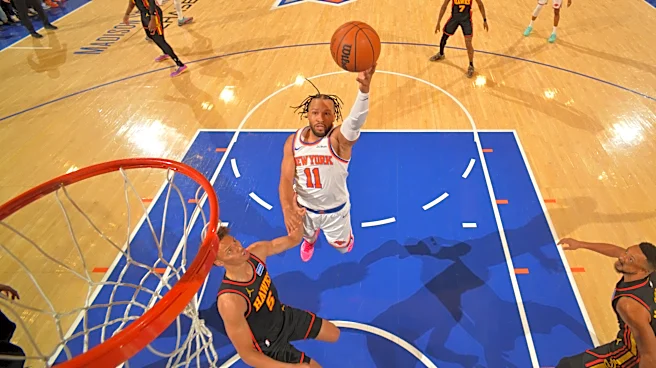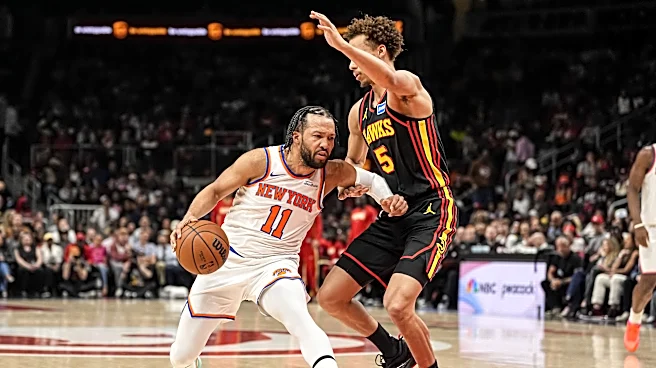






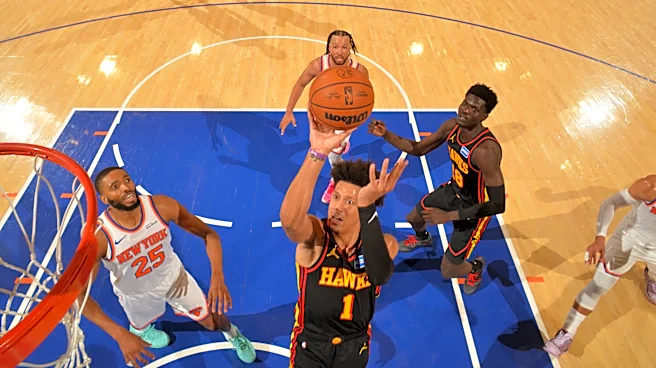
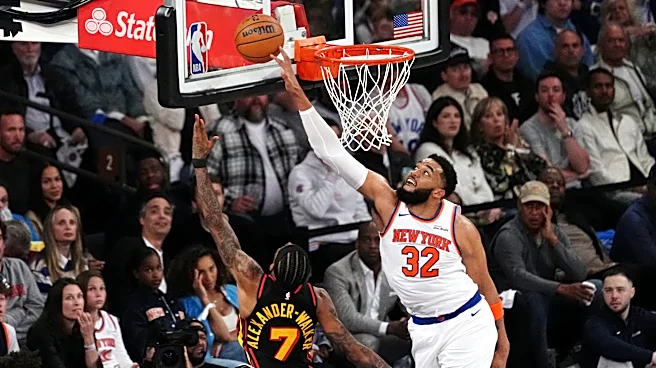
There’s been a lot of emotion pouring out of the Knicks-verse after the startling fourth-quarter collapse in Game 2 that turned the series from a Knicks stranglehold to anyone’s series. While not quite as jaw-dropping as the collapse against Indiana last year, this one was more methodical. In a way, though, it’s worse because it gave the Knicks countless opportunities to lock in, and it never happened, while there was this drowning sensation in that infamous Game 1 last May.
There are loads of reasons
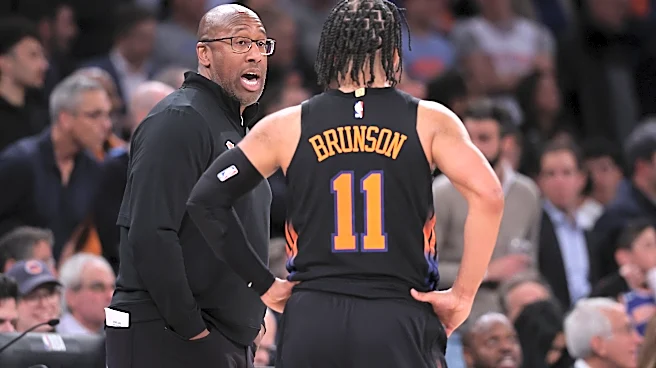
the game went the way it did. The timeout fiasco (Mike Brown did NOT have a timeout at the end of the game, but puzzling usage put them in that spot), the 10 missed free throws, Jalen Brunson’s off-kilter performance disrupting the offense, and a puzzling disappearance by Karl-Anthony Towns.
A reason that a lot of people are blaming is the rotations, which I don’t necessarily agree with for two reasons. For one, the Jose Alvarado-led lineup played effectively even in a 4-5 minute stretch in the second half, and two, the starters had a nine-point lead and the ball multiple times, and the offense shut off. For a lineup that’s been exceptional in fourth quarters and a team that’s historically good in these situations, that’s more to blame for me.
But you can argue that the lack of an optimized rotation allowed the Hawks to hang around in two stretches when they were struggling and to come back. As this series shifts to Atlanta in a suddenly even series, you might not have the margin for error that you had last night.
According to PBP Stats, Karl-Anthony Towns and Jalen Brunson are a slight negative when on the court together, but I believe that’s skewed by the late-game charge in Game 1 and whatever the hell that was in Game 2. For six of the eight quarters, they’ve played well together. That’s because the Hawks are mostly using Onyeka Okongwu to guard Towns, but are switching to using Jonathan Kuminga on him in clutch time.
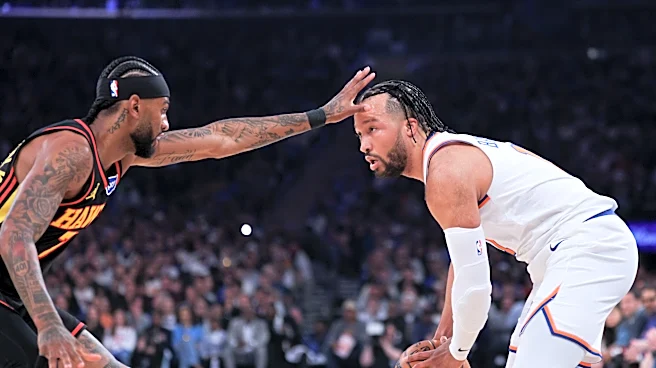
The reason behind that is pretty obvious: the Knicks go into an iso-centric offense around Brunson in these situations, and Towns is a non-factor, so you’re effectively able to take him out of the play and blitz Brunson while having his co-star two passes away. In fact, the only possession in the final five minutes where Okongwu guarded Towns last night was executed quite well, but resulted in a miss:
If Brunson makes this elbow jumper (or kicks to an open Anunoby in the corner), they probably win. Alas, that’s not what we’re here for.
The more startling number is that Mike Brown has now played lineups without Towns or Brunson for 20 minutes through two games, and those lineups are being crushed to the tune of a -13.5 net rating. Most of that is in the truly terrible stretch to start the second quarter, but it’s notable nonetheless.
The three lineups with both on the bench that we mostly saw last night were:
McBride-Shamet-Clarkson-Anunoby-Robinson
Alvarado-McBride-Shamet-Anunoby-Robinson
Alvarado-Clarkson-Bridges-Anunoby-Robinson
All of these lineups are a negative, albeit in a small sample. The first lineup, in particular, is the team’s second-most common lineup (11 minutes) in the series and is the worst-performing. That’s flat-out bad, especially when you’re playing a team that is as scrappy as the Hawks.
There are real issues with these lineups on offense. While the third lineup is theoretically playable with multiple shooters and ballhandlers, it lacks the alpha that is needed on the court in the playoffs.
There’s also a stylistic problem with how players are being used. Deuce McBride has been a non-factor so far and, for a guy with a reputation of being a plus-minus machine, is involved in all of these negative lineups.
Of the 35 minutes that McBride has played this series, 18 of them are coming without Brunson or Towns. In fact, 15 of them have come without a true point guard (which includes Alvarado). This forces the young guard to take on more on-ball responsibilities, which has never been his forte, especially against an aggressive defense.
In these possessions, you’re seeing either McBride sharing ball-handling duties with Landry Shamet or running in circles to try and create something to no avail. The 18 minutes that McBride has played without Brunson or Towns have a -18.4 net rating, while the brief stints he’s played with either Brunson or Towns have been much stronger.

You go back to the regular season, and these numbers are equally apparent.
McBride with Towns: +7.9 (323 min)
McBride with Brunson: +12.7 (273 min)
McBride with both: +11.8 (263 min)
McBride with neither: +3.5 (121 min)
Deuce thrives on his teammates’ gravity. When Brunson sucks in the defense on a drive, he has open shooters to spray to. When the defense collapses on Towns in the post, he has open shooters to kick it out to. The same can be said for Anunoby and even Mitchell Robinson off an offensive rebound, but these two are the keys. McBride has to play with one of them. He’s inarguably a top-seven player on your roster and needs to make an impact.
In the regular season, lineups without Brunson and Towns didn’t even play well, so choosing to go to them often in this postseason is baffling. It’s one thing when both have four fouls in the third; that’s understandable, but it isn’t in the second quarter. Mike Brown needs to stagger his stars better because complacency in the midst of trying things out is going to make this series a lot longer and more nerve-wracking than it should be.