




Some losses leave you wondering what went wrong.
Then there are losses that leave you wondering what could have been.
For Nevada, Saturday night’s 36-33 double-overtime loss to Air Force falls firmly into both categories.
The Wolf Pack didn’t get blown out. They weren’t dominated from start to finish. They weren’t overwhelmed by their first Mountain West opponent of the season.
Instead, Nevada fought back from a 10-point deficit in the fourth quarter, tied the game on a 57-yard touchdown run from Herschel
Turner with 1:49 remaining and had multiple opportunities to win in overtime.
And yet, the Wolf Pack walked away from Mackay Stadium with another loss.
Nevada is now 1-3 overall and 0-1 in Mountain West play, with three of its four games decided by one possession or less.
That makes the Air Force loss difficult to evaluate. It was encouraging because Nevada showed it could compete, but frustrating because the Wolf Pack once again couldn’t finish.
And with eight regular-season games remaining, the margin for error has become considerably smaller.
The Good: Nevada Can Compete in the Mountain West
We’ll take a step back from the criticism for a moment. One factor we can look at here is that, yes, Nevada lost, but the Wolf Pack were good enough to beat Air Force. That’s an important distinction.
Air Force came into Reno with a 1-1 Mountain West record and one of the conference’s most difficult offenses to defend. The Falcons eventually rushed for 316 yards, but Nevada stayed within striking distance throughout the night.
When Air Force appeared to take control late in the fourth quarter, Nevada responded. Down 27-17 with less than six minutes remaining, the Wolf Pack drove for a field goal before getting the ball back and tying the game on Turner’s 57-yard touchdown run.
The defense then stopped Air Force, giving Nevada the ball with a chance to win in regulation. The Wolf Pack didn’t capitalize, but they had put themselves in position.
Then came overtime.
Nevada and Air Force traded field goals in the first extra period. In the second overtime, Joe McFadden drilled his fourth field goal of the night, giving Nevada a 33-30 lead.
The defense simply needed one more stop. It couldn’t get it.
Air Force marched down the field and Rocco Conti scored from seven yards out to end the game.
That’s a painful way to lose, but it also shows Nevada isn’t miles away from competing in this new-look conference.
The Bad: Nevada Has to Start Winning These Games
This is where the bigger concern comes in. Moral victories don’t count in the standings.
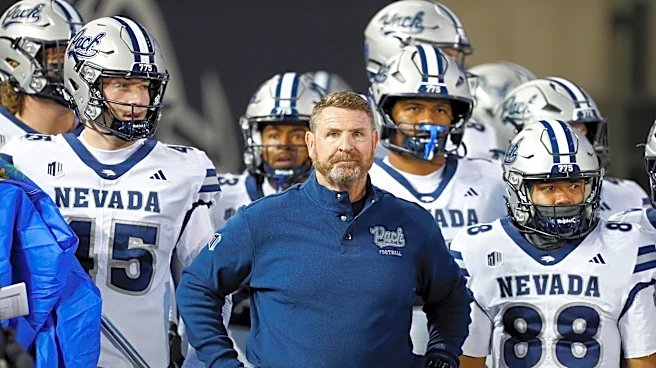
Jeff Choate has talked throughout his tenure about building a tougher, more competitive Nevada program. But eventually, competitiveness has to turn into wins, and that’s been a problem for the Wolf Pack since Choate arrived.
Nevada went 2-6 in one-score games during the 2024 season. In 2025, the Wolf Pack went 2-3 in one-possession games.
Now, through four games in 2026, Nevada is 0-2 in one-score games, losing 27-20 at Middle Tennessee and 36-33 to Air Force.
That puts Nevada at 4-12 in one-score games under Choate entering the rest of the 2026 season. That’s not simply a one-game problem anymore.
And the frustrating part is that Nevada has repeatedly put itself in a position to change that record. The Wolf Pack led Middle Tennessee for stretches before losing 27-20. Against Air Force, Nevada had the ball with an opportunity to win in regulation and again had a lead in double overtime.
Those are the games bowl teams have to find a way to win.
The Air Force Loss Isn’t the Same as the Middle Tennessee Loss
There’s an important distinction between Nevada’s two Mountain West losses.
The Middle Tennessee game felt like an opportunity that slipped away. Air Force felt more like two teams throwing everything they had at each other until somebody finally blinked.
Nevada totaled 420 yards of offense, with Carter Jones throwing for 224 yards and Herschel Turner rushing for 111. Jones completed passes to nine different receivers, while Turner’s 57-yard touchdown run kept the Wolf Pack alive late.
Defensively, EJ Smith produced an incredible 21 tackles, while Dylan LaBarbera added a career-high 18. This wasn’t a team that quit. It wasn’t a team that got pushed around. It was a team that couldn’t make the final play and had some questionable overtime calls. And that’s exactly what makes this loss so difficult to swallow.
What Does This Mean for Nevada’s Bowl Chances?
Nevada is now 1-3.
With eight regular-season games remaining, the Wolf Pack need to turn things around quickly if bowl eligibility is going to remain a realistic goal.
The traditional benchmark for bowl eligibility is six wins. That means Nevada needs to win at least five of its final eight games to reach 6-6.
That’s not impossible, but the schedule isn’t going to make it easy.
After the bye, Nevada travels to UTEP on Oct. 10 before heading to North Dakota State on Oct. 17. The Wolf Pack then return home to face San José State before traveling to UCLA.
November brings home games against New Mexico and Hawai‘i, with road trips to Northern Illinois and UNLV surrounding them. There are opportunities there, but there aren’t many games Nevada can afford to simply give away.
The UTEP and San José State games become especially important. So do the home games against New Mexico and Hawai‘i.
And then there are the difficult road trips. North Dakota State is undefeated in its first FBS season. UCLA represents a Power Four challenge. Northern Illinois has already shown it can be competitive despite its record.
Nevada doesn’t necessarily need to win every difficult game, but it does, however, need to start taking care of the opportunities in front of it.
The Bye Week Comes at the Right Time
The timing of Nevada’s bye week may actually be beneficial.
The Wolf Pack have now played four games, including three consecutive losses.
They have played two road games, faced a defending FCS champion in Montana State, traveled to Middle Tennessee and played a physically demanding double-overtime game against Air Force.
Now they get a week to regroup. The coaching staff can evaluate what worked against Air Force, particularly the rushing attack and the performance from Jones. It can also address the areas that continue to cause problems.
Most importantly, Nevada gets a chance to reset mentally, but the Wolf Pack can’t afford to treat the next eight games like there are unlimited opportunities remaining.
The Quarterback Situation Is Becoming Clearer
Another positive from Saturday was Carter Jones.
After missing time earlier in the season, Jones returned and completed 18-of-30 passes for 224 yards, spreading the ball around to nine different receivers.
Nevada entered the season with a three-man quarterback competition between Jones, AJ Bianco and transfer Luke Duncan.
Against Air Force, Jones demonstrated why he was viewed as a legitimate option to lead this offense.
Bianco also contributed with a nine-yard rushing touchdown after Jones went down for a few plays.
The quarterback position doesn’t appear to be the biggest problem Nevada has right now; the bigger question is whether the Wolf Pack can consistently finish games.
The Wolf Pack Need to Turn Competitiveness Into Results
That’s ultimately what this season comes down to. There is evidence that Nevada has improved in certain areas.
The offense has explosive players, the running game can produce chunk plays, the defense has individual playmakers capable of taking over stretches of games and Saturday showed the Wolf Pack can hang with a Mountain West opponent in a physical, back-and-forth game.
But Nevada has to stop being satisfied with simply being close. That’s been the story for too much of Choate’s tenure.
The Wolf Pack have played 16 one-score games under Choate entering this season, winning just four of them.
Now the question is whether 2026 can finally be the season that the trend changes. Because if Nevada continues losing close games, it won’t matter how competitive the team looks, the standings don’t award points for being within one possession. And those are things that are heavily looked at when deciding if a head coach should keep their job.
The Takeaway
The double-overtime loss to Air Force doesn’t mean Nevada’s season is over, but it does mean the Wolf Pack have very little margin for error moving forward.
At 1-3, Nevada needs five wins over its final eight games to reach the traditional six-win bowl threshold.
The more important question is whether Nevada can finally learn how to finish.
Saturday provided another example of the Wolf Pack being good enough to win a close game. They rallied from 10 points down, tied the game late, forced overtime and held a lead in the second extra period.
They just didn’t finish the job, and once again, that’s been the defining issue of the Choate era.