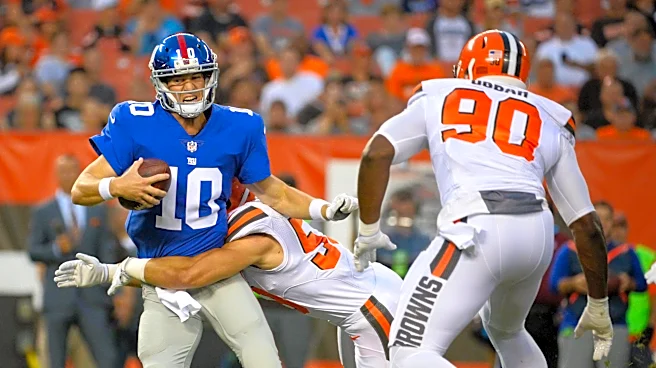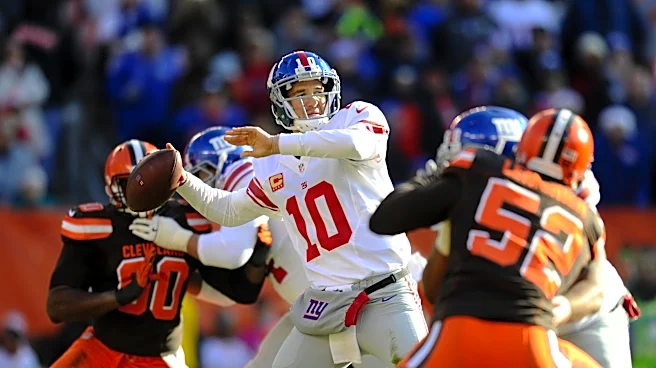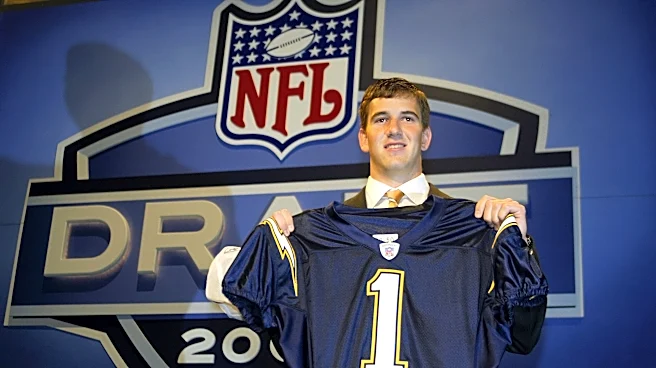



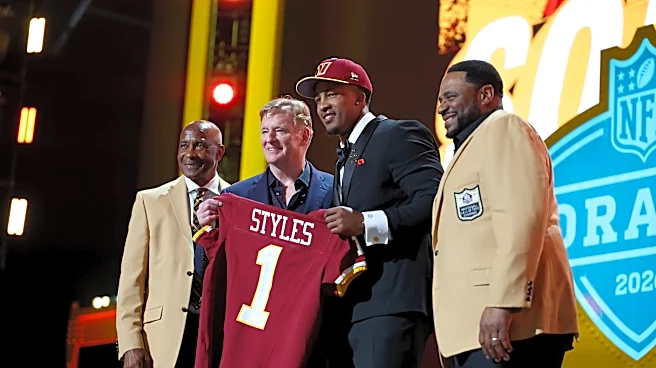
Twenty-two years after a draft-day trade that helped the New York Giants win two Super Bowls, Eli Manning has finally come clean about the decision not to play for the San Diego Chargers, who selected him No. 1 overall.
The decision was his, Manning told the “Bussin’ With The Boys” podcast, not — as had long been believed — his father’s.
“My parents really weren’t supportive. My dad didn’t like the idea,” Manning said. “Now, he came to my defense and like supported me after everything was going down,
but … he didn’t like that. And afterwards he took the brunt of a lot of the criticism because he came to my defense and people were saying, ‘Oh, you played in New Orleans all those years you didn’t win, so you’re trying to dictate like where your son’s going.‘ And and he just bit his tongue and said, ‘Hey, this is what Eli wants to do and I support him’ and he did some media to try to save me from doing all the media and taking the hits.”
Manning said “friction” he felt between the head coach, GM, anbd ownership led him to question the team’s commitment to winning.
“I just didn’t feel like they were the most committed team to winning at the time,” Manning said. “Marty Schottenheimer was the head coach, who was awesome. Had great respect for him. But they came to work me out in New Orleans, went to dinner and there was just friction between the head coach, general manager [A.J. Smith], the owners [Spanos family]. They are all yelling — kind of like fighting.”
“We are at a Marriott restaurant. Schottenheimer’s mad like, ‘We’re in New Orleans and we’re eating at a Marriott?’ He’s like pissed. They are kind of bickering,” Eli recalled. “It just didn’t seem there was a lot of agreement on things and they were committed to building a great winning franchise at that moment.”
Manning seems to have read the room correctly. The Chargers fired Schottenheimer two years later despite the coach leading the team to a 14-2 record and a second playoff appearance in three years.
Manning, of course, led the Giants to two Super Bowl titles during a 16-year career.