



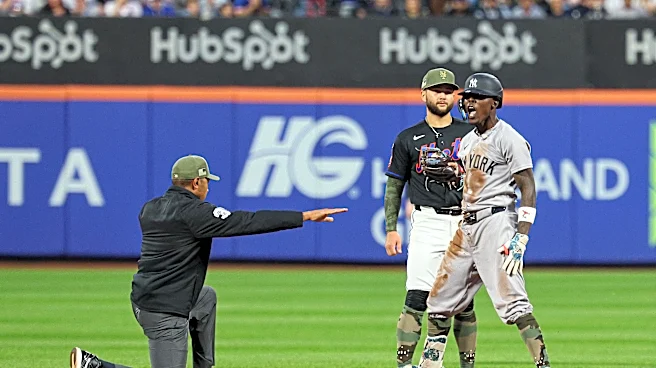
Coming off their most improbable win of the year to take the Queens edition of the Subway Series, the Mets (20-26) find themselves in Washington, D.C. for a four-game series against the Nationals (23-24). With five wins in their last six games and a 10-5 record thus far in the month of May, the Mets will simply be trying to keep the good times rolling as they continue to attempt a slow climb back into the playoff picture.
To be fair, the team is still just 2.5 games ahead of the Rockies, the team with
the worst record in the National League. But there’s a real opportunity to move up a couple more spots in the league over the course of these four games. The Marlins are just a half-game ahead of the Mets, and both the Diamondbacks and the Nationals are 2.5 games in front of them. While a four-game sweep to pass Washington would be a tall task, it’d be great to see the Mets gain some ground by winning the series.
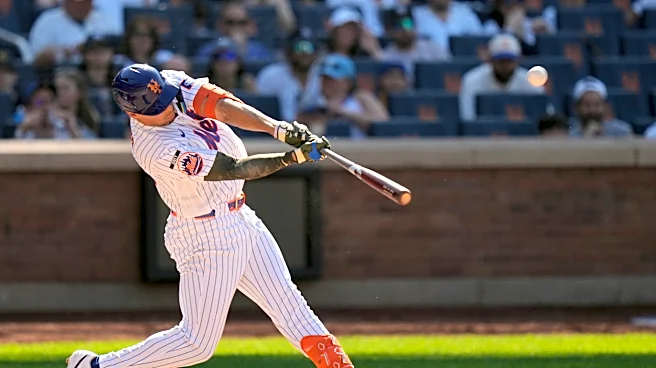
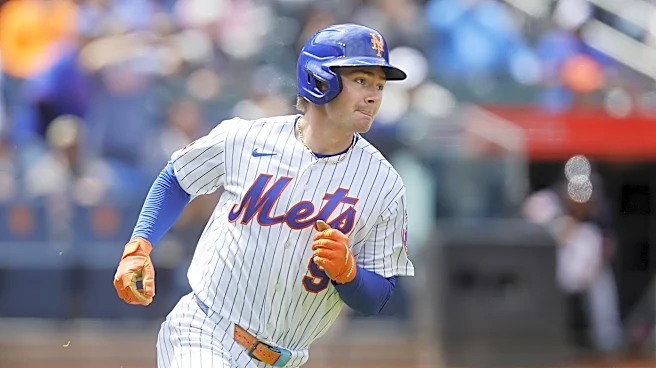
As you’re undoubtedly already aware, the Mets have had one of the worst lineups in baseball this season, but things have started to improve. They’re up to 3.83 runs scored per game, the fourth-lowest rate in the game. That’s better than being literally last, though, and for much of this season, that has been the case. You can thank the Mets’ exciting duo of A.J. Ewing and Carson Benge for that, as the former has a 209 wRC+ since getting called up from the minors and the latter has a 157 wRC+ over the past two weeks.
It’s understandable when a top prospect bats near the bottom of the lineup to get his feet wet, but Ewing is taking the best at-bats of anyone on the team right now, and it would be wise for the Mets to get him into the leadoff spot as soon as possible. The 21-year-old has looked poised and comfortable in his first 25 major league plate appearances, and he’s getting on base at a .500 clip. It’d be unconventional to bat three lefties in a row at the top of the order, but the Mets might need to be unconventional here. Ewing, Benge, and Juan Soto are the team’s most appealing bats at the moment.
Recent contributions from Brett Baty (131 wRC+) and Marcus Semien (130 wRC+) over those same two weeks shouldn’t be ignored, of course. And Luis Torrens (95 wRC+) has woken up with the bat, a welcome sign as the Mets deal with the extended absence of starting catcher Francisco Alvarez following surgery for a torn meniscus in his right knee.
As for run prevention, the Mets have given up 4.17 runs per game, the 11th-best rate in baseball. Their rotation ranks 12th in baseball with a 4.02 ERA, while their bullpen ranks 9th with a 3.45 ERA. There’s a major hole to fill for the next few months thanks to the fractured fibula that Clay Holmes suffered when he took a line drive off his leg over the weekend.
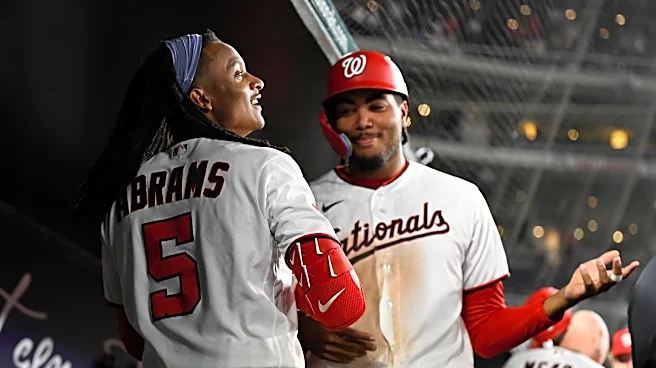
Turning our focus to the Mets’ opponents, you might be surprised to read that the Nationals have the best offense in baseball with 5.43 runs scored per game. Like the Mets, they’ve had a couple of youngsters leading the way, as CJ Abrams (155 wRC+) and James Wood (149 wRC+) have been their best hitters on the season.
Joey Wiemer (146 wRC+) has thrived in a part-time role, and Curtis Mead (126 wRC+), Daylen Lile (117 wRC+), José Tena (108 wRC+), and Luis Garcia Jr. (103 wRC+) have been better than league average. Keibert Ruiz (99 wRC+) is right behind them. If a lot of those names are unfamiliar to you, you’re not alone. The average age of Nationals hitters this year is 25, making the lineup the youngest in the sport.
Run prevention, however, has been a major problem for the Nats. They’ve given up 5.70 runs per game, the very worst rate in baseball. Their rotation has a 5.17 ERA that ranks 29th, and only the Rockies’ rotation has been worse. The bullpen hasn’t been much better, as its 2.78 ERA ranks 26th.
If you’re into low-scoring baseball, well, this might not be the series for you, but the Mets have a real opportunity to build upon their recent success. Whether or not that’s been a mirage remains to be seen, but it’s nice to have something to look forward to with this team right now.
Last but not least, it is going to be hot in the capitol this week, and with that comes a chance of thunderstorms and rain, especially for the Wednesday night and Thursday afternoon games. Highs will be in the mid-to-upper 90s through Wednesday, and the same cold front that’s coming for New York this week will see temperatures dip into the low 60s on Thursday if the teams are able to get that game in on a day the looks like it’ll be pretty rainy.
Monday, May 18: Christian Scott vs. Jake Irvin, 6:45 PM EDT on SNY
Scott (2026): 15.2 IP, 20 K, 9 BB, 1 HR, 3.45 ERA, 3.67 FIP, 88 ERA-
Given the long gap between major league appearances, it’s understandable that Scott felt like something of a forgotten man when the 2026 season was getting underway. He’s going to have to cut down on the walks before they come back to bite him, but his strikeout rate and ability to limit home runs have been encouraging signs. If he continues to be an above-average pitcher, he’d be a huge reason that the Mets are trending toward relevance instead of toiling away in the cellar.
Irvin (2026): 42.2 IP, 45 K, 20 BB, 6 HR, 5.91 ERA, 4.64 FIP, 146 ERA-
Having thrown 180.0 innings last year with a 5.70 ERA, the 29-year-old looks to be the same pitcher this year. His strikeout and walk rates are up, his home run rate is down, and here he is with a high-fives ERA again. FIP suggests he’s deserved better, but his 5.74 xERA does not.
Tuesday, May 19: Nolan McLean vs. Foster Griffin, 6:45 PM EDT on SNY
McLean (2026): 52.1 IP, 64 K, 15 BB, 4 HR, 2.92 ERA, 2.68 FIP, 75 ERA-
The way McLean got through seven innings after giving up three early runs in his last start was impressive, and while he isn’t the National League Cy Young favorite at the moment, he shouldn’t be counted out of the running. Yes, he has the 14th-best ERA in the NL at the time of this writing, but he ranks fifth in both FIP and xERA. He is the Mets’ ace—particularly with Clay Holmes sidelined—and is the team’s most exciting pitcher to watch.
Griffin (2026): 51.0 IP, 49 K, 18 BB, 8 HR, 3.53 ERA, 4.45 FIP, 87 ERA-
Of all the probable pitchers in this series, Griffin has been the second-best by ERA-, trailing only McLean. The 30-year-old lefty spent the 2023 through 2025 seasons pitching in Japan, having logged just eight major league innings in his career between 2020 and 2022 before making the move. The Nationals signed him to a one-year, $5.5 million deal ahead of this season, and that’s looking like a shrewd move, even if the peripherals aren’t quite as keen on him as his ERA appears today.
Wednesday, May 20: TBD vs. Zack Littell, 6:45 PM EDT on SNY
TBD
This is a real TBD for the Mets, as the team hasn’t announced its plans for the vacancy created by the Holmes injury. Sean Manaea and Tobias Myers are the two pitchers on the active roster who could be moved into the rotation. Jack Wenninger pitched yesterday and walked four batters in a short outing, but he might factor into filling in for Holmes at some point soon, even if it’s not in the cards for this game.
Littell (2026): 41.1 IP, 20 K, 15 BB, 14 HR, 6.10 ERA, 7.69 FIP, 151 ERA-
The Mets should be rooting for good enough weather to face Littell in this one. He’s tied for the second-most home runs allowed by a pitcher this year, and as a low-strikeout guy, it’s not an ideal thing to be serving up dingers. The 30-year-old was much better than this over the course of the 2024 and 2025 seasons, as evidenced by his 3.73 ERA over that span, but things haven’t been great in his first year with the Nationals.
Thursday, May 21: TBD (likely opener + David Peterson) vs. Cade Cavalli, 4:05 PM EDT on SNY
Peterson (2026): 43.1 IP, 46 K, 17 BB, 2 HR, 5.40 ERA, 2.96 FIP, 138 ERA-
If you were looking for a textbook case for the concept of an opener in baseball, Peterson would be an excellent choice. He has an 8.10 ERA when working as a traditional starter this year, but he has a 2.25 ERA working as the bulk guy after an opener. FIP has been a fan of his work regardless of those splits, but the results are undeniably quite different. Here’s hoping it continues to work for both him and the team.
Cavalli (2026): 46.2 IP, 52 K, 18 BB, 3 HR, 4.05 ERA, 3.37 FIP, 100 ERA-
The 27-year-old has been a league average pitcher, and FIP likes him more than that because of his strikeout and home run rates. He threw six innings against the Mets when he saw them in Queens, and he struck out ten, walked two, and gave up just two runs along the way.