
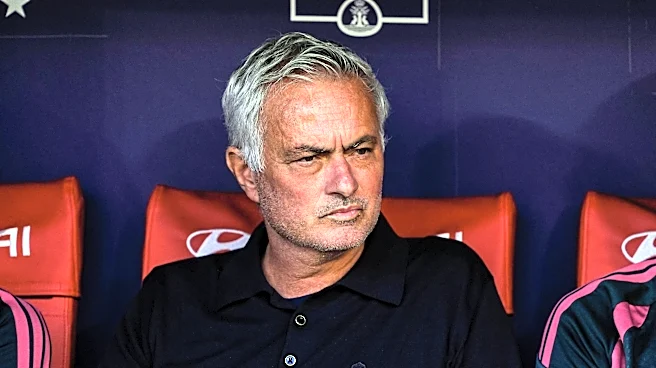
These observations — where I look at Real Madrid’s history, its players on loan, Castilla, tactical tidbits, and other relevant thoughts — are now a regular thing. All previous editions can be found here.
Shortly after Real Madrid were played off the park — primarily in a disastrous second half — of the Madrid Derby, head coach Jose Mourinho took to the podium with a print out copy of two egregious Atletico Madrid tackles in which one of them should’ve resulted in a direct red card.
“Yes… we could
have saved ourselves the press conference because the story of the match is here,” Mourinho said as he showed two photographs of Cuti Romero’s and Kang-in Lee’s challenges on Jude Bellingham and Fede Valverde respectively. “They are two clear red cards.”
Mourinho didn’t spend time talking about Real Madrid’s performance.
“The difficulties we had afterwards, 11 against 10, we can imagine what 50 minutes with 11 against nine would have been like,” Mourinho continued. “And therefore I have to limit myself to hugging my players, who gave everything. Who played a first half of great class, personality.”
The press conference was not short, and the words about the referee continued at length. It was a massive attempt to distract everyone from the football that was played on the pitch.
SUBSCRIBE: The Managing Madrid Podcast on YouTube
Mourinho knew what he was doing, and he was right. The referee had been terrible — even consequential to the result — and the Portuguese wanted to shield his players.
Mourinho even went out of his way to praise his players despite the poor performance.
“If we want to remember Elche, Elche’s two sendings-off… no, but in the first minute, the yellow card for Diomande… what our players feel on the pitch is not normal,” Mourinho continued. “But I liked my team as a team. Very much in the first half and in the second… obviously very, very, very difficult. Very difficult to have the ball, to stop the possession of the ball of a good team and with one more player. But I liked the pride, the determination. And it is a good feeling for me. It is not being disappointed with my players, not having anything to reproach them for. Within the negative of the result, it is a positive feeling for me.”
FOLLOW: Managing Madrid on Instagram
SHOP: Mbappe Nueve Swag
This is Mourinho’s bread and butter. He is too smart to not know that his team could’ve played better, or that certain stars are not pulling their weight the way the team needs them to. He is also self aware enough to know he didn’t set up his team to win. What he says publicly isn’t as important as to what he’s saying internally.
Outwardly, the focus was the referee. Inwardly, that may not be the case — or at least Real Madrid fans will hope for all of that to be true.
There is a fine line when it comes to analyzing this team so far, and crossing it too far in one direction may lead to an unnecessary, overly dramatic view of what’s happening.
Real Madrid’s performance in the first half against Atletico Madrid was not good, but it was, from a scoreline standpoint, on equal terms. They looked horrendous attacking in transition, but they also prevented Atletico from scoring, and had Atletico been a man down instead — which objectively should’ve been the case — then we’re talking about a different scenario, and probably a win, and difference makers off the bench like Yan Diomande and Bernardo Silva would’ve had more room to operate.
You could also argue that first half, scoreless, was somewhat acceptable — only in the sense that it’s a low bar in that stadium and Real Madrid almost never play well at the Metropolitano (arguably the hardest game on the schedule all year), and Atleti are the only team Real Madrid lost to even when Real Madrid were the best team in the world in the 2023 – 2024 season.
Then there is the Real Betis game, where Real Madrid missed seven (yes seven) big chances. Not shots, big chances. Real Betis, meanwhile, had one big chance, and won.
Processing that is important on some level, because if you replay these freak scenarios again, you’re looking at eight straight wins, second to Barcelona only on goal differential, and a different atmosphere both in the locker-room and the way the media has covered the team.
But that’s an extreme, and football is not fair. Tough luck. You have to do what’s in your control: Put away your chances and play better on both ends of the field so that these tiny margins of error are not consequential. Your main league rival, Barcelona, cares little about margins. They’ve scored 27 goals from an xG of 25. Both numbers are so ridiculous for this stage of the season, that it doesn’t actually make sense. They are on course, statistically, to be even greater than Pep Guardiola’s Barcelona.
Whether that’s sustainable or not is a different story; but what is true is that Real Madrid’s poor finishing has sustained at a poor rate for over a year now.
It’s possible to read the reality of the team without being overly-reactionary. Real Madrid have had some bad luck, played some bad football, and, in between, played some positive football as well while a few players are playing really well. Other players, meanwhile, have been poor. Sounds like normal stuff. The problem is that there is little time or patience left after two years of losing, and being six points back against a rival who doesn’t look like it will give ground is extra torturous and unforgiving.

The question now is how much Mourinho has learned in these opening eight games, and how much he is willing to adjust.
If he continues with the same line-ups and same approach to games, we will continue seeing the same things: Bad performers, good performers, bad second halves, good chance creation — you get the idea.
At this point, you don’t have all the sample size you need to make permanent decisions, but you do have enough data to extrapolate the good things while stripping away the bad things.
Deciphering what those good and bad things are can be subjective, and Mourinho may even disagree with the general consensus.
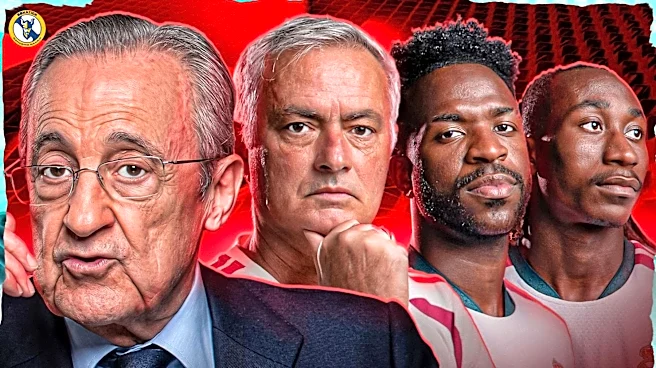
There is also another barrier: Even if he feels strongly about making a change, his hands may be tied because of political hierarchies in the team and pressure from the president. If that’s the case, Mourinho has a big decision to make: Die by his own sword, or die by Florentino’s sword. There is no question as to which one of those the ‘old Mourinho’ (circa 2010) would’ve chosen. But that was 16 years ago. People change.
The bigger question is, if Mourinho changed, then why was he brought in now, far removed from being one of football’s elite managers? Is his football not outdated?
FOLLOW for regular in-game updates: Managing Madrid on Twitter
We’ll learn more about Mourinho’s Real Madrid in the upcoming two months, and whether or not his version of this team is different from his predecessors.
The only way out of this mess is through a teardown and rebuild, and I don’t mean by selling the squad and building a new one — I mean by putting everyone in the current squad on equal flooring. The names on the back of the shirt must, to some extent, become irrelevant, and Mourinho needs to build the line-up from scratch, assuming hierarchies and star power don’t exist. Then, and only then, can a fresh tactical blueprint come about. Then, and only then, can he turn this team around and put them on a winning course.
That’s easier said than done, of course, and everyone will have an opinion on what names need to be dropped and what names need to be promoted. But the entire point is this: Mourinho needs to have that power to do what he feels works best, without any added pressure or noise — whether it be from the president, the players, agents and entourages, or family members.
Part of that responsibility needs to lie on Florentino Perez to give Mourinho that freedom, and, this may sound harsh: Mourinho will have do it anyway even if he doesn’t get that freedom. It is somewhat a lose-lose: keep doing things the same way and lose; or defy and maybe win or lose anyway.
This is where the board needs to be held accountable as much as anyone else. If after four coaches the exact same problems persist, the problem is clearly not the coach, and throwing coaches around like they’re darts is exactly where Real Madrid were after 2004 — one of the darkest periods of the modern era.
The parallels from then, to now, are jarring. In 2004, Vanderlei Luxemburgo subbed out Ronaldo Nazario in the 87th minute when the team was up 1-0 after David Beckham had received a red card. Florentino Perez called Luxemburgo after the game and told him he’s not allowed to do that again…. and that was Luxemburgo’s last game in charge.
In 2025, we saw what happened when Xabi Alonso subbed off Vinicius Jr in a Clasico. The heavy hand descended, and Alonso lost the support of both the president and some of his star players. Tactical decisions, at this club, unfortunately, can come with devastating consequences.

There are so many valid reasons for Real Madrid fans to be concerned from what they’ve seen from the last two years (and counting), and most realists would land on the negative side of agnosticism when it comes to the potential success of the team this season.
But there are some reasons to believe Mourinho can turn it around, even if some of those reasons are latent.
The team is deeper than it was last season. There are four (five if you include Ferland Mendy) proper full-backs. Ibrahima Konaté was a solid addition to the back line. Dean Huijsen looks good. Arda Güler is the best creator in Europe. Jude Bellingham looks unstoppable. Kylian Mbappe is still scoring at a prolific rate. The world’s best goalkeeper, Thibaut Courtois, is in between the posts. Carlos Espi is a profile Real Madrid hasn’t had since Joselu, and is currently on pace for a goal every 13 minutes. Yan Diomande is an upgrade over Franco Mastantuono.
There is also the other side of the coin: The full-backs haven’t looked at their best, yet. Espi barely plays. This team isn’t built for Jose Mourinho’s 4-2-3-1, primarily because none of the midfielders in the double pivot can control games against elite opposition. Vinicius Jr who is being relied upon heavily on the left wing, looks a shell of himself.
WATCH: 5 Real Madrid Questions That Need To Be Answered
Perfect roles often don’t exist. Football can be ruthless and brutal. If you’re not able to adapt to different positions and roles, the industry may chew you up and spit you out. Getting a system tailored around your strengths is often reserved for the best of the best. Not everyone gets to be the alpha. The most successful teams right now have one thing in common: collective buy in, sacrifice, and a belief in the greater good being more important than any one individual.
One of the bittersweet things Real Madrid fans experience on an ongoing basis is seeing so many of their stars thrive and dominate as alphas in their ideal roles — but it’s done at the international level rather than that club level. It’s a tough pillow to swallow and a challenging reality to grapple with.
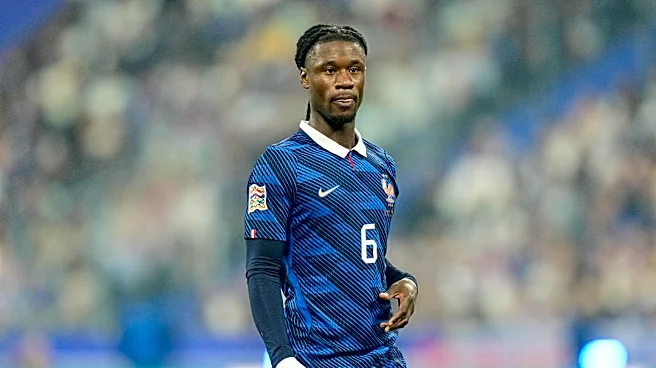
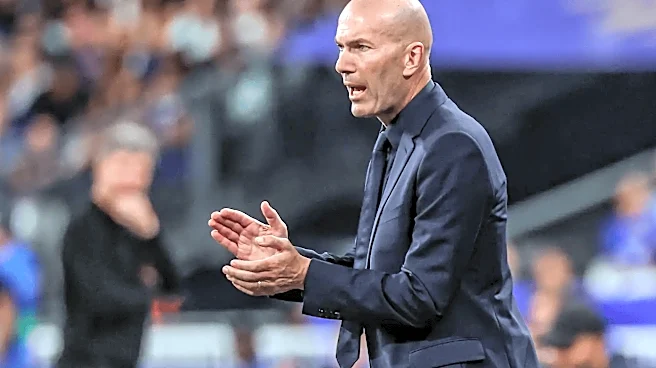
Brahim Diaz is the fulcrum of Morocco’s build-up, and he’s played just 99 minutes in La Liga this season. Vinicius in the World Cup was Brazil’s offensive channel. Mbappe doesn’t over-tangle with his co-stars in France. Camavinga looked good as the single pivot under Zinedine Zidane — in a position that doesn’t currently exist in Mourinho’s blueprint. Cucurella is an absolute defensive unit with Spain in a far less chaotic scheme. Thomas Tuchel has a team built to maximize Bellingham to a science. Güler is Türkiye. You get the idea.
(To be fair to Güler and Bellingham, those two specifically have been great at both the club and international level this season.)
That data tells us there is no shortage of talent here, but there is an overlap of talent in certain positions. Potentially not renewing Vinicius this past summer was seen by many as an opportunity to exchange a tactical mismatch for a tactical need, such as a controlling midfielder.
“They’re incredible players, but the tactical structure could be more difficult,” Mourinho said in his first Real Madrid press conference this season. “[Carlo] Ancelotti found the perfect role for Vini with Brazil, [Didier] Deschamps found the perfect role for Kylian, and [Thomas] Tuchel found the perfect role for Jude [at the World Cup]. But it’s harder to find the perfect role for all three. I have a lot of confidence that we’ll do well when all three play together. I don’t think they’re incompatible at all.”
This is by no means a sinking ship, but it is also not anywhere close to sailing smoothly. The next two months will tell us a lot: Barcelona are about to endure their first difficult stretch of the entire season, and Mourinho will show us, hopefully, what adjustments he has planned after observing the issues up close.
It’s cliche, but possibly more true than ever: October is pivotal. It could be the difference between a nine point gap or a three point gap.