



The Las Vegas Raiders added linebackers this off-season with Nakobe Dean, Quay Walker, and Segun Olubi but they still need to add depth to the position, and a swing on a late round flyer isn’t a bad idea. I broke down their options from rounds 2-4, and the class is very deep across the board which should give GM John Spytek the ability to find someone later on. Las Vegas has Cody Lindenberg and Tommy Eichenberg, but both work either on special teams or struggle in the pass game. Dean & Walker have
an injury history, and the Raiders are going to be searching for someone who can take the role as a plug and play defender. Adding depth, and upside to the room is crucial, and for a rebuilding team you need to prioritize the second level under Rob Leonard, who’s defense runs through the linebacker.
Round 5:
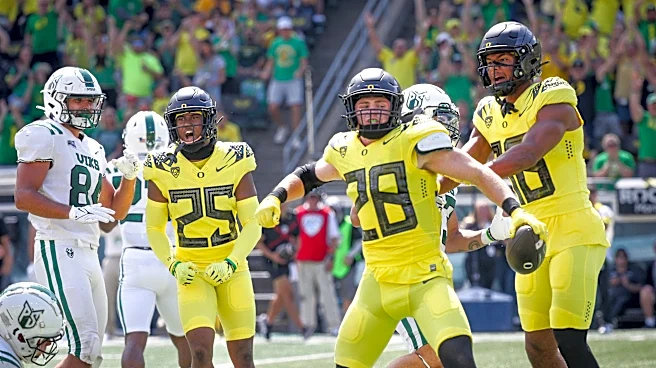
Bryce Boettcher, Oregon (Consensus: Early to Mid 5th)
HT: 6’1 | WT: 233 | Games: 55
Career: 269 tackles, 17 TFL, 4 sacks, 2 INT, 11 PBU, 4 FF, 23 pressures, 10% missed tackle rate | 77% reception rate (66/86), 519 yards, 2 TD, 89.2 QBR allowed
Testing: 4.69 40 (1.63 10-split), 34.5 Vert, 9’08 Broad, 4.30 Shuttle, 7.25 3-Cone, 21 reps | 7.14 RAS
- Explosive first step, shows good core and leg strength. Has ability to cut backside as a tackler. Showcases good initial quickness and downhill trigger. Fluid smooth hips, good instincts in run and pass game, covers grass not people. Demonstrates good natural bend and ankle flexibility to bend the edge as a blitzer. Sideline to sideline range, natural feel for the position, triggers downhill aggressively and violent. The patient defender trusts his athleticism to wait around and make play happen. Elite tackler, excellent form, takes good angles. Ability to anchor vs interior lineman and hold up on interior run plays. Tendency to bite on play action, over aggressive and will abandon his gap at times. Coverage feel isn’t fully there for the adaptation to LB. Can struggle to get the right depth drop at times. Not fully familiar with the position. Patience can beat him, sometimes allowing big run when he can’t get to the edge. Average speed to the edge in run defense. Can run in man coverage exceptionally well, showcases previous experience as a baseball centerfield in a lot of phases. Boettcher has a massive ceiling, he just lacks true experience, but there’s a massive runway for him to succeed.
Keyshaun Elliott, Arizona State (Consensus: Mid 5th)
HT: 6’2 | WT: 231 | Games: 52
Career: 301 tackles, 29 TFL, 11.5 sacks, INT, 10 PBU, FF, 50 pressures, 19.1% missed tackle rate | 82% reception rate (103/126), 1045 yards, 2 TD, 103.2 QBR allowed
Testing: 4.58 40 (1.66 10-Split), 38 Vert, 10’04 Broad, 4.28 Shuttle, 7.02 3-Cone | 8.74 RAS
- Elliott transferred into Arizona State after his standout career at New Mexico, Elliott is a fluid good athlete, but there’s some severe limitations also. Elliott has a great motor, he’s efficient on special teams, and he’s best when working in space against the run. Elliott triggers downhill quickly, he works best near the LOS, and when working backwards things get a little concerning. Elliott shows a knack for finding the ball in coverage, he understands passing lanes, but there’s time’s that Elliott is slow to react, isn’t able to turn and run the best, and he looks lost in coverage as well. Elliott has fluid hands, he’s aggressive, and he’ll work through contact to come downhill and fight through defenders, he’s not overly aggressive, but he takes some poor angles and his lack of functional strength causes him to simply miss tackles or tend to ankle bite leading to the high missed tackle rate. Elliott’s a liability in coverage, his initial burst backwards is struggling, which leaves him exposed. He’s a true early down linebacker, and shows effort on special teams, very reminiscing to Tommy Eichenberg.
Jimmy Rolder, Michigan (Consensus: Late 5th to Early 6th)
HT: 6’2 | WT: 238 | Games: 43
Career: 118 tackles, 9 TFL, 2 sacks, INT, 2 PBU, 20 pressures, 5% missed tackle rate | 75% reception rate (37/49), 335 yards, TD, 91.8 QBR allowed
Testing: 36 Vert, 9’11 Broad, 4.26 Shuttle, 7 3-Cone | 9.53 RAS
- Rolder can easily be a highly productive NFL linebacker, but there’s some very clear limitations as well. He’s struggled with injuries missing most of 2023 and the end of 2024 as well, which has limited his experience at linebacker. He has exceptional instincts, works extremely well downhill, and Rolder shows a natural understanding of both running and passing concepts. He’s a fluid, strong, full body tackler who takes amazing angles, drives through defenders with his body, and simply is among the best, if not the best, tackler in the class. Rolder has an electric trigger, strong heavy hands, and he works through contact well in the run game slicing upfield. He’s shown good hip flexibility, can turn and run in coverage, and he simply works well in space. He has good initial quickness, a strong first step, and he can turn and run with majority of receivers showing true long speed and natural feels for coverage. Rolder won’t work sideline to sideline, and he can get pushed out near the box at times simply just lacking the fundamental understanding of the position. Additionally, Rolder is a good blitzer but he can be too aggressive at times as well where he’ll miss the sack, look for the big hit, and just not take the clear cut play he needs too as a blitzer (though he’ll be an elite blitzing linebacker in the NFL). Rolder has some things to clean up, but he’s a true three down linebacker, and at just 22 years old the ceiling is extremely high for him. The Raiders like Rolder, he fits what they are looking for, and is a no brainer in the fifth round, if he makes it that far.
Round 6:
Lander Barton, Utah (Consensus: Late 5th to Early 6th)
HT: 6’4 | WT: 233 | Games: 46
Career: 207 tackles, 17 TFL, 8 sacks, 5 INT, 9 PBU, 3 FF, 66 pressures, 17% missed tackle rate | 75% reception rate (59/70), 625 yards, 2 TD, 80.3 QBR allowed
Testing: 4.8 40 (1.84 10-split), 33 Vert, 9’11 Broad, 4.4 Shuttle | 7.06 RAS
- Barton is big, but there’s struggles. He’s not the fastest, struggles to change direction, and in coverage there’s some clear limitations in his hip flexibility. Barton does show good feel for coverage, he knows passing windows and he can step into them which helps him get a good bit of ball production, but he’s struggled to change direction and tends to cover people not grass. Barton is a run first linebacker, he has good instincts, and he does work well coming downhill, but not working backwards. Barton needs to get better working through contact, he doesn’t have a great anchor, and I’d like to see him do better dipping his pad level to get into the backfield and make a play. Barton doesn’t keep his weight balanced well, struggles to work laterally, and he’s very average in most of the game. Barton does well in the special teams role, and he can be a productive player on that phase with bottom of the roster depth at LB, with a very limited ceiling.
Justin Jefferson, Alabama (Consensus: Early 6th)
HT: 6’0 | WT: 223 | Games: 41
Career: 149 tackles, 13 TFL, 5 sacks, INT, 7 PBU, 3 FF, 14 pressures, 11.5% missed tackle rate | 72% reception rate (53/73), 465 yards, 0 TD, 83.4 QBR allowed
Testing: 4.57 40 (1.59 10-split), 38.5 Vert, 10’05 Broad, 4.25 Shuttle, 8.81 3-Cone | 9.23 RAS
- Jefferson landed at Alabama after a strong performance at JUCO, and he’s simply a pure athlete which puts him into a lot of situations. Jefferson shows elite athleticism in his lower body, he has natural hip flexibility, fluid ankles and he works his upper and lower body in unison which allows him to be effective vs the run and in coverage. Jefferson works as a blitzer, he is able to dip his hips, explode with an elite first step, and Jefferson overall can turn and run exceptionally well with TE, RB, and slot receivers acting almost as a big nickel cornerback instead of a linebacker. Jefferson is new to the position, but he’s still able to tackle well, has good form, and utilizes his full body into the rep which is impressive for the relatively undersized player he is. Jefferson’s lack of size and length do limit him, and he needs to add physicality to match better vs tight ends in the NFL where he will get moved around. Additionally, Jefferson struggles in the run game, where he gets pushed around at times, he’ll try to win with athleticism and abandons his gap, and Jefferson also struggles to utilize his hands to slice through contact. He has an average anchor, but will need to do better to add upper and lower body strength to allow him to anchor, drive, and prevent being washed out. Jefferson is the rare coverage specialist in the NFL, but he shows a willingness to defend the run, and he also shows an understanding of how to work in the run game but adding mass, and increasing the experience will allow him to adjust.
Khalil “Red” Murdock, Buffalo (Consensus: Mid 6th)
HT: 6’2 | WT: 232 | Games: 42
Career: 364 tackles, 40 TFL, 9 sacks, INT, 3 PBU, 17 FF, 43 pressures, 12% missed tackle rate | 81% reception rate (75/92), 768 yards, 4 TD, 111.4 QBR allowed
Testing: 4.75 40 (1.63 10-Split), 31.5 Vert, 9’06 Broad | 6.81 RAS
- The last time the Raiders drafted a LB named Khalil from Buffalo, it worked out pretty well, so maybe that trend continues with Red. He holds the D1 record for career forced fumbles after leading the country in both 2024 and 2025 with 7 each season. He’s logged back to back seasons of 150+ tackles & 14+ TFL. Murdock has stiff hips, which do limit him when working backwards, and overall he likely won’t have a massive NFL impact in coverage. Murdock’s initial burst is average, he doesn’t do well changing directions in coverage, and overall just doesn’t look natural when working backwards. He understands passing lanes, but Murdock is exceptional working downhill. He’s violent, he’s aggressive, and he’s willing to punch someone in their mouth every rep. Murdock has an extreme knack for the ball, he’s a pure tackler who uses his full body but at times can get too aggressive and over-pursue, look for the big hit, or simply just miss the tackle by abandoning a gap. Murdock has active violent hands, he fights through contact, and he’s aggressive fighting through contact to get into the backfield. He works well laterally, has a good base, and Murdock overall just impacts the game as a run defender, and he will punch the ball out perfectly, get a strip, or simply make a hit to make a turnover. Murdock likely struggles in the NFL to find the field for his lack of coverage, but his run defense is elite, and he’ll make plays on special teams.
Owen Heinecke, Oklahoma (Consensus: Late 6th to Early 7th)
HT: 6’1 | WT: 227 | Games: 39
Career: 85 tackles, 12 TFL, 3 sacks, 4 PBU, 15 pressures, 19.3% missed tackle rate | 63% reception rate (19/30), 108 yards, 0 TD, 69.9 QBR allowed
Testing: 4.62 40 (1.62 10-Split), 34.5 Vert, 9’11 Broad, 4.27 Shuttle, 7.15 3-Cone | 8.21 RAS
- Heinecke originally played lacrosse for the first two seasons of his collegiate career, then shifted to linebacker where he saw little playtime till 2025 logging 74 tackles, 12 TFL, 4 sacks, ad 4 PBU. He is an extreme athlete, he has a quick first step, shows sideline to sideline range, and Heinecke does a good job working his hips and feet in unison. He’s shown a good ability to avoid defenders, relying on his athleticism over his pure strength and technique where he’s lacking. Heinecke does well working through contact, and he has a good trigger to come downhill, but he lacks the ability to fight through hand combat due to his lack of experience. Heinecke is exceptional going downhill, he plays well on special teams, with true find and react actions. His lack of experience shows in coverage, not understanding passing lanes, and he’ll be faked in route running at times leaving him off balanced consistently. He tries to rely on athleticism over technique, given the lack of experience, and that will be an issue in the NFL. He bites on play action, can over pursue a gap consistently, and Heinecke needs to do better tackling. His angles are average, he doesn’t utilize his full body, and he lacks length to really wrap up ballcarriers. Heinecke can be a starting NFL LB but he needs a lot of time, coaching, and pure experience. He’s an elite athlete, moves in unison, but there’s a lot of work to be done.
Round 7:
Jack Kelly, BYU (Consensus: Early 7th)
HT: 6’1 | WT: 240 | Games: 25
Career: 231 tackles, 42.5 TFL, 31 sacks, 2 INT, 15 PBU, 9 FF, 128 pressures, 18.5% missed tackle rate | 76% reception rate (70/92), 538 yards, 3 TD, 101.1 QBR allowed
Testing: 4.57 40 (1.61 10-split), 37 Vert, 10’05 Broad, 4.18 Shuttle, 7.12 3-Cone | 9.72 RAS
- Kelly transferred to BYU after two standout seasons at Weber State with 85 tackles, 20 TFL, 17 sacks, INT, 8 PBU, and 5 FF where he worked almost primarily off the EDGE with some experience dropping into coverage also, BYU converted him to a fulltime ILB but also saw him get some clean pass rush situations. His 128 pressures on just 550 attempts is the highest of a draft eligible off ball LB since Micah Parsons. Kelly has a good frame, good lower body strength, and he utilizes his core well. His tackling is inconsistent, but frequently he’s in place to make a play others can’t make but still it’s a tough play driving up his misses. He has good ability to fight through contact as a run defender, and his elite hand combat skills will translate at LB in the NFL, working downhill. Kelly has a quick first step, he works well in space, and his initial trigger is elite, with an innate ability to slice through combat. Kelly is still learning in coverage, he doesn’t get the passing lanes down, and he also needs to do better getting his hand in during the point of attack, or finding the ball in the air. He’s not overly physical, looks for the big hit, and can be an ankle biter as well. Kelly is adjusting to the position, he’s a good athlete, and he shows the ability to rush the passer, work against the run, or take short yardage passing concepts. There’s a lot of tools, but a lot of work needed.
Jack Dingle, Cincinnati (Consensus: Late 7th to UDFA)
HT: 6’4 | WT: 232 | Games: 45
Career: 164 tackles, 10 TFL, 4 sacks, 2 PBU, 2 FF, 35 pressures, 13% missed tackle rate | 77% reception rate (40/52), 494 yards, 5 TD, 137.8 QBR allowed
Testing: 4.57 40 (1.57 10-split), 33.5 Vert, 10’04 Broad, 4.17 Shuttle, 7.10 3-Cone | 9.82 RAS
- Dingle is among the best, if not the best, pure athlete at the position in the class. He has great length, good lower body power, and he simply has a massive blend of speed, power, explosiveness, and strength but he struggles in a lot of factors as well. Dingle is a good tackler, he can ankle bite at times, and he can also look for the big hit, but overall Dingle does well wrapping up, using his full body, and making a consistent player. He understands the run game well, covers the gap, and won’t over pursue either. Dingle has a good first step, his hips are fluid, and he has quick feet with clean footwork. Dingle is able to turn and run in coverage, he has a quick trigger, but he’s also struggled to work backwards in coverage. He bites on play action, double moves, and simply most moves in coverage which cause for some issues. He can struggle to be physical in coverage, and despite his athleticism there’s a lack of athletic hip flexibility in coverage leaving him open. Dingle is a ball of energy, athleticism, and power, but he’s got a good bit to work on. He’s a 1-2 down linebacker, the coverage is developing, but he’s a moldable player to develop.
Jaden Dugger, Louisiana (Consensus: Just Round 7)
HT: 6’4 | WT: 242 | Games: 46
Career: 200 tackles, 21 TFL, 8 sacks, 2 INT, 15 PBU, 3 FF, 20 pressures, 11% missed tackle rate | 73% reception rate (78/107), 722 yards, 3 TD, 92.5 QBR allowed
Testing: 4.6 40 (1.6 10-Split), 34.5 Vert, 10’06 Broad, 4.26 Shuttle, 7 3-Cone | 9.6 RAS
- Dugger is a safety who’s converted down to linebacker and he plays super similar to former Raider Divine Deablo. Dugger has exceptional length, good initial quickness, long speed, and he shows an ability to engage and drive blockers. He’s able to close passing lanes well, has a natural feel for the position in coverage, and he isn’t afraid of working backwards. Dugger has natural fluid hips, his footwork is clean, and he works his entire body in unison. He’s new to the position, which does show in the run game, where he’ll over pursue, isn’t consistent using dips, and he seems to avoid contact at times as well. Dugger doesn’t understand run fits, he can overpursue, and he’ll abandon a cutback lane consistently. He’s faked by playaction and QB’s can easily misdirect him as well. He’ll need to clean up as a tackler, being an ankle biter, and he’s afraid to get his nose dirty at times. Dugger likely plays a big nickel in the NFL, but he needs to get better working downhill to be an everydown player.
Erick Hunter, Morgan State (Consensus: Mid 6th to Late 7th)
HT: 6’2 | WT: 235 | Games: 45
Career: 301 tackles, 35 TFL, 10.5 sacks, 3 INT, 12 PBU, 7 FF, 48 pressures, 12% missed tackle rate | 71% reception rate (78/109), 826 yards, TD, 84.9 QBR allowed
Testing: N/A
- Hunter missed all but 2 games in 2024 with a knee injury, but he rebounded well in 2025 with a career best mark in tackles (110), TFL (15), sacks (5), and INT (2). Hunter plays bigger than he is, he’s able to engage and disengage from defenders, he’s a very consistent player, and he tackles well. Hunter has quick, natural, loose hips which give him an ability to turn and run, and he’ll also utilize his first step quickness and explosiveness to drive downhill, collapse passing lanes, and undercut routes. Hunter shows a natural understanding of coverage, he’s able to turn and run, he can carry TE/RB, works in man coverage, and overall has a knack for the ball as well. Hunter shows good physicality in his hands, he’s able to be violent and active at the point of attack, he’s sliced through contact well. Hunter needs to add strength to his lower half, where he’s moved around and can be washed out. Additionally, he will need to be more physical in coverage, it shows but he needs to move receivers and tight ends, and he’ll also need to do the same in run defense where he can be patient to engage. Hunter doesn’t have functional play strength, he’ll need to add upper body strength to better wrap up, and he can show some issues vs play action. Hunter projects as a good linebacker in the NFL, he has fluid movements, high instincts, and there’s a range for him to grow as well.
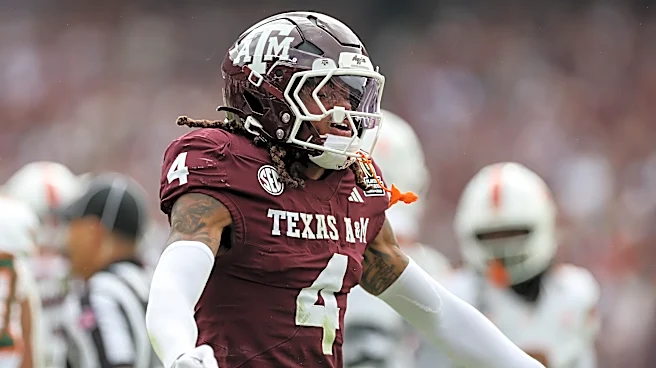
Scooby Williams, Texas A&M (Consensus: Late 7th)
HT: 6’2 | WT: 231 | Games: 43
Career: 132 tackles, 15.5 TFL, 2 sacks, 2 INT, 4 PBU, 3 FF, 31 pressures, 20% missed tackle rate | 70% reception rate (42/60), 439 yards, 4 TD, 99.2 QBR allowed
Testing: N/A
- Williams shows good range, instincts, and he’s functional in coverage with a good ability to collapse passing windows. He needs to get more physical in coverage, where he’s moved around too often, and his lack off mass also shows consistently. Williams is well built, but tight ends can move him in situations you wish they didn’t, he also lacks length which can cause issues. Williams has fluid lower half technique, but he lacks the lower body strength to pair with it. I’d like to see him do more to avoid contact at the POA in the run game where too often he’ll try and anchor and get washed out. Williams is an ankle biter, he doesn’t use his frame in the tackle, and he also gets moved off by bigger physical receivers or runningbacks. Williams can over pursue a cut back lane, abandon his gap, and bites on play action far too often to be on an NFL field consistently. Williams works well downhill, but in coveage he can be too passive, where he’s too agressive moving forwards. The traits show, but Williams lack a lot of refinement he’ll need at the NFL level.
Other Names to Know:
- Jackson Kuwatch, Miami (OH) -> Limited production, good athlete, showed potential to be a depth LB in the NFL. Needs to refine his run defense angles, and understanding of passing concepts.
- Shad Banks, UTSA -> Productive at TCU & UTSA. 208 tackles, 22 TFL, 4 INT (2 TD), and 4 FF in career
UDFA:
Namdi Obiazor, TCU (Consensus: Mid 5th to UDFA)
HT: 6’3 | WT: 230 | Games: 53
Career: 302 tackles, 17 TFL, 9 sacks, 3 INT, 6 PBU, 2 FF, 43 pressures, 9% missed tackle rate | 75% reception rate (79/106), 934 yards, 4 TD, 101.7 QBR allowed
Testing: 4.53 40 (1.56 10-split), 37.5 Vert, 9’11 Broad, 4.36 Shuttle, 7.25 3-Cone | 9.23 RAS
- Obiazor is a converted safety to linebacker, and it shows, he has exceptional movement skills, understanding passing lanes, and he’ll collapse on the ball quickly to make a play in the backfield. Obiazor works really well coming downhill, but he lacks physicality, and he needs to adjust to the LB position. He has an average first step, but quick second step, his tackling form is fluid but he’ll need to utilize his full body as well. When working in the box it was bad, he was washed out in the run game, and there’s a clear lack of funcitonal strength. Obiazor lacks length, which prevents his ability to engage, and he’ll also need to get more physical at the point of attack when working backwards instead of coming forward. Obiazor has the traits, but he’s a true UDFA that you mold into the position.
Eric Gentry, USC (Consensus: Mid 7th to UDFA)
HT: 6’6 | WT: 221 | Games: 52
Career: 271 tackles, 27 TFL, 9 sacks, 2 INT, 13 PBU, 9 FF, 45 pressures, 14% missed tackle rate | 76% reception rate (76/100), 677 yards, 4 TD, 98.6 QBR allowed
Testing: 4.59 40 (1.63 10-split), 35.5 Vert, 10’04 Broad, 4.41 Shuttle, 6.76 3-Cone, 13 reps | 7.74 RAS
- I don’t like Eric Gentry, he does hold rare size and length for the position but that’s about it, he’s not accustomed to linebacker. Gentry should likely consider a transition to safety in the NFL, where he’ll be able to avoid getting flushed out in the run game due to his severe lack of strength and anchor ability. Gentry shows a good ability to collapse and come downhill, and his length allows him to work in short yardage and collapse passing lanes. He’s a capable blitzer, with good twitch, but the lack of strength and hand combat skills limit him when he’s engaged with runningbacks or defenders. Gentry has good hip flexibility, and his footwork is fluid, he does show a good ability to turn and run in coverage, with flashes of being a strong pass rusher off the EDGE. He needs more mass but his frame is linear which can’t hold much, if any. Additionally, Gentry really struggles to play physical at the catch point, where he’s boxed out despite his size largely due to the lack of mass. He is an ankle biter, struggles to bring down defenders with his full body, and overall Gentry doesn’t look comfortable working at the second level. A team will likely draft him late day three and try to mold him into a player due to the length, he’s a nickel defender in the NFL, and if he can sit and react on concepts there’s a route he’ll carve a solid NFL career.
Xavian Sorey Jr, Arkansas (Consensus: UDFA)
HT: 6’2 | WT: 226 | Games: 52
Career: 204 tackles, 20 TFL, 5.5 sacks, 3 INT, 5 PBU, FF, 45 pressures, 17% missed tackle rate | 71% reception rate (44/62), 503 yards, 4 TD, 96.4 QBR allowed
Testing: 4.63 40 (1.65 10-Split), 37.5 Vert, 10’ Broad, 4.42 Shuttle, 7 3-Cone | 7.38 RAS
- Sorey is fine, that’s really all I have to say about him. He’s undersized and lacks length but overall does a good bit well, and doesn’t struggle with much. There’s not much to wow you, and he needs to clean up the tackling form, angles, and hip drop tackles, but Sorey shows some good movement skills, instincts against the run, and he’ll play violent. There’s a limited ceiling, but he can produce on special teams and in early down run fits.
Logan Kopp, North Dakota State (Consensus: UDFA)
HT: 6’2 | WT: 238 | Games: 58
Career: 276 tackles, 28 TFL, 9.5 sacks, 8 INT, 22 PBU, 3 FF, 48 pressures, 16% missed tackle rate | 68% reception rate (92/136), 809 yards, TD, 61.2 QBR allowed
Testing: N/A
- Kopp hasn’t gotten much look this draft cycle, but he deserves some. He’s an effective linebacker, he has physical traits, and he’s a physical player. Kopp works well coming downhill, he has a good first step, strong initial trigger, and overall Kopp shows an ability to work through contact into the backfield. His hands are active and violent, he keeps his legs engaged, and he has an ability to anchor which prevents him from being flushed out. Kopp doesn’t have great hip and ankle flexibility, and he’ll struggle to turn and run in long concepts due to pretty poor long speed, but his initial burst and understanding of passing lanes is special. Kopp generates turnovers, he generates himself near the ball, and he’ll capitalize. He’s a good tackler, using his trigger to come downhill, and he’s not afraid of contact either but he’ll also take some poor angles in the open field which need to be flushed out. He’s a smart instinctual defender in coverage, and it’s where he makes his mark. Kopp shows the traits to be a good late day three or UDFA linebacker, and I won’t be shocked if he finds his way onto an NFL field.
Other Names To Know:
- Caden Fordham, NC State -> NC State has a history of linebacker development, Fordham likely follows that and should be an intriguing UDFA. 252 tackles, 18 TFL, 5 sacks, 8 PBU in 48 games.
- Declan Williams, Incarnate Word -> Physical, big body LB, lacks twitch, very average in coverage. Works best coming downhill vs the run. 170 tackles, 25 TFL, 8 sacks, and 9 PBU in career
- Reid Carrico, West Virginia -> Ohio State transfer to WVU, 128 tackles, 10 TFL, 5 sacks in last two seasons. Solid athlete, limited in experience, needs more time against the run.
- Karson Sharar, Iowa -> Limited PT, lacks athleticism, very average player. Will be productive on ST
- Drue Watts, Memphis -> 260 tackles, 31 TFL, 10 sacks, 2 INT, 9 PBU in career between Memphis & Nevada, shows good athleticism, can be productive working sideline to sideline. Small player, lacks thump.
- Jordan Kwiatkowski, Central Michigan -> 255 tackles, 29 TFL, 4 INT, 11 PBU in career. No relation to Nick, very functional linebacker, average athlete. Struggles in coverage, run first, can make NFL roster.
- Wesley Bissainthe, Miami (FL)
- Wade Woodaz, Clemson -> Former 5*, hasn’t developed to the extent expected. Four years of consistent playtime, average athlete, decent working in space. Limited ceiling.
- Luke Banbury, William & Mary -> High instincts, smart LB, very average athlete but wins with his intelligence. 140 tackles, 7 TFL, 3 sacks, 11 PBU in one season at William and Mary.
- John Miller, Utah State -> ST linebacker, decent run defense, plays really twitched up, moves well in space. Going to be a very functional LB in the NFL on special teams. 192 tackles, 17 TFL, 11 sacks in career including 118 tackles, 11 TFL, and 9 sacks in 2025.
- Parker Hughes, Middle Tennessee State
- Keli Lawson, UCF
- Quinn Urwiler, Northern Illinois
- Dylan Hazen, Wake Forest