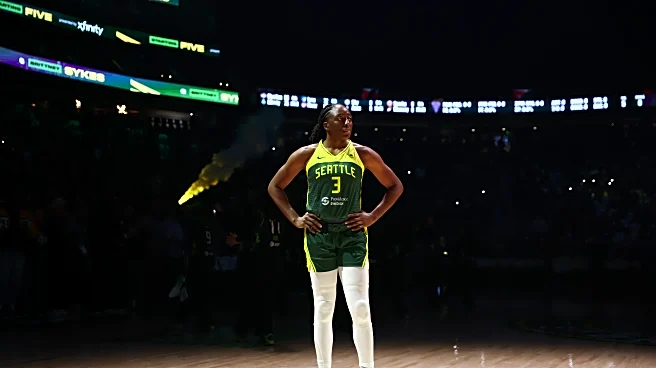

Last Monday, members of the WNBPA executive committee left the much-anticipated in-person collective bargaining agreement (CBA) meeting the WNBA dismayed that the league had not come prepared with a new
proposal, as the league had yet to respond to a proposal submitted by the union over a month prior.
As WNBPA president Nneka Ogwumike said afterwards, “They volunteered that they did not have a proposal prepared at the top of the meeting. That kind of set the tone for the conversation because we were hoping to hear otherwise.”
On Friday, the WNBA finally shared a new proposal with the WNBPA, and while providing the players with a few concessions, the league again resisted relenting on the primary point of contention between the two sides: revenue sharing.
According to Front Office Sports’ Annie Costabile, “[T]he league is still proposing the same revenue sharing system,” making only “marginal changes to its proposed revenue sharing percentage.”
Costabile clarified that, “The WNBA’s proposed revenue share percentage still does not meet or exceed 15 percent of total league revenue.”
On Friday, before public knowledge of the league’s latest proposal, Ogwumike spoke with the Associated Press’ Doug Feinberg, emphasizing that “once revenue sharing is solved, the rest hopefully will fall into place quickly.” Ogwumike asserted, “We made the point that once we nail this, we can get everything else done.”
Well, based on the league’s latest proposal, the issue of revenue sharing has yet to be nailed, remaining an elusive target for the two sides.
The WNBA’s proposal did include concessions around housing policy, an issue stressed by players at last Monday’s meeting. As first reported by ESPN’s Alexa Philippou, “As part of the housing concessions, players on their applicable minimum salary and those with zero years of service would be provided a one-bedroom apartment for the first three years of the new deal.”
The league also agreed to add two developmental player roster spots, something first proposed by the union. As explained by Costabile at FOS:
These players will only be eligible to play a certain number of games and will receive a check for each game they play in addition to a stipend. They will also have access to certain benefits like housing and medical. The WNBA is proposing studio apartments for these players.
So while the league is not offering a housing stipend for any player making more than the minimum salary, minimum and developmental players would have housing support.
The league also moved toward the players on other issues, including retirement benefits, facility standards and staffing requirements. As Costabile noted, these concessions follow the league “agreeing to a pregnant player trade consent clause, the elimination of marijauna testing and increased performance bonuses.”
Regarding the retirement benefits, Costabile reported that the league has offered a recognition payment of $3,000 per year of service for retired players who played eight or more years in the WNBA. This benefit is only available to players that retired before the implementation of this in-progress CBA.
There has not been any reporting suggesting that the league has revised its salary projections. Previously, the WNBA had proposed a max salary of $1.3 million in 2026, which would approach $2 million by the end of the CBA. The average player salary would begin around $465,000 in 2026, growing to $780,000 over the term of the deal. According to The IX Sports’ Jackie Powell, the league did increase the proposed salary cap for the 2026 season from $5 million to $5.65 million; the players most recently proposed a salary cap of $10.5 million.
Both FOS and ESPN indicated that WNBPA leadership intends to meet in the week ahead to assess the league’s latest proposal. Costabile additionally noted that there is an increasing sentiment that “if a deal is not done within the first two weeks of February, the season will be delayed.”