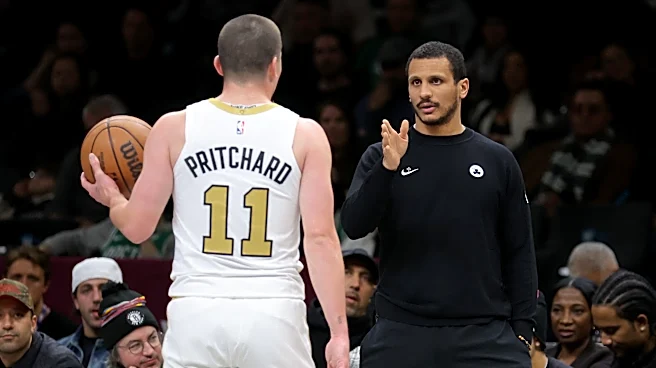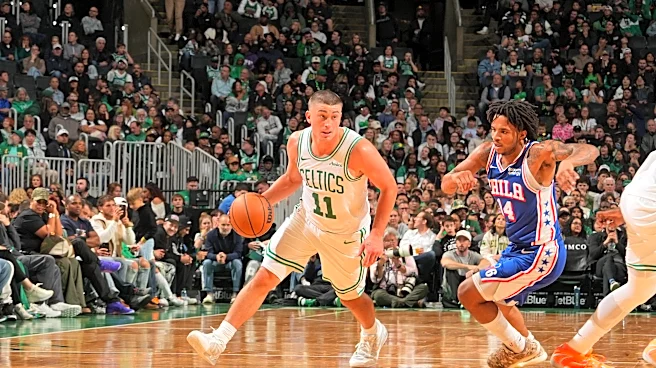




BOSTON — Payton Pritchard usually loves an open three. But to start the third quarter, he passed up a pretty open look for an even more open Baylor Scheierman three-pointer.
Swish.
It was one of dozens of times on Wednesday night when Pritchard made it a point to set up a teammate rather than look for his own offense — and one of 11 times it resulted in an assist.
The 11-assist, 0-turnover stat line raised the question: could a playmaking leap be coming for the former Sixth Man of the Year?
On NBA Media
Day, the 28-year-old said he wasn’t sure exactly how he would improve in Year 7, but he made it clear he knew he would. Among other potential areas for improvement, he floated the idea of adding 4 more assists per game (last year he averaged 5.2 per game, a career-best).
“I know somebody asked [about] some of the areas of growth they want to work on; at the end of the day, we’re always pushing him outside of his comfort zone, [and are] really hard on him to figure things out and to take things to a different level,” Joe Mazzulla said.
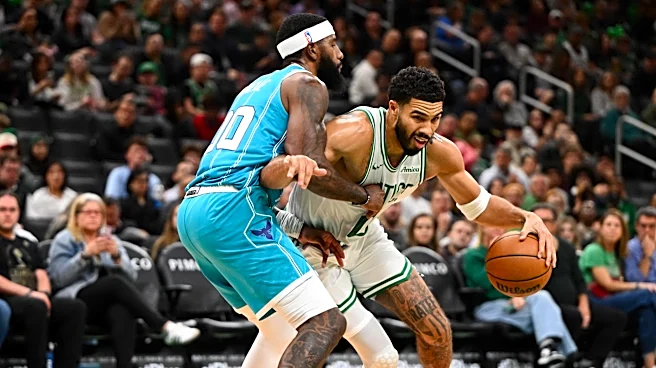
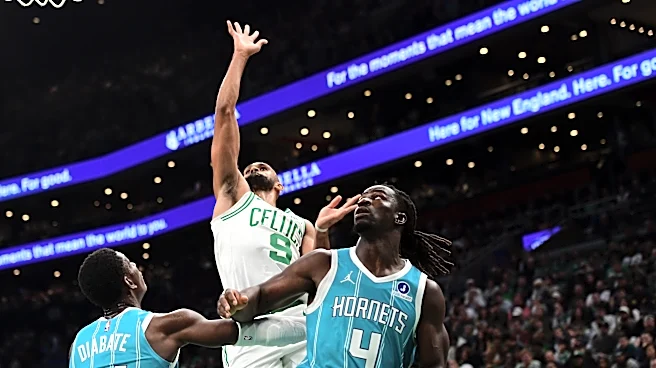
In the 114-93 win over the Charlotte Hornets, Pritchard’s box score line was otherwise unexciting — he finished with 7 points on 3-13 shooting. But in that resounding victory, he clearly made a concerted effort to involve his teammates.
“He does a great job of just giving what the defense needs,” Mazzulla said. “His ability to just give the game what it needs is one of his biggest strengths.”
The results speak for themselves: the Celtics outscored the Hornets by 19 points in his 29 minutes on the floor, giving Pritchard the second-best plus-minus on the team. Three days earlier, in his preseason debut, he was a game-best +35, racking up 7 assists (along with a game-high 25 points).
Payton Pritchard’s teammates are taking notice of his playmaking
Neemias Queta is beginning his fourth season as a teammate of Pritchard, and he’s one of the longtime beneficiaries of Pritchard’s playmaking.
On Wednesday, Queta scored 3 of his 7 baskets off feeds from Pritchard and explained that he credits Pritchard’s scoring ability to his ability to create for others so effectively.
“First and foremost is just his ability to put the ball in the basket,” Queta said. “Just that brings a lot of gravity towards him, and his ability to score at all three levels attracts a lot of attention from the other team’s defense. A guy that’s able to finish at the rim and pull up from deep.”
Mitchell Robinson, a far newer teammate, has also been impressed and noted that things feel vastly different when Pritchard is off the court.
“He’s fast,” Robinson said. “He can handle the ball really well. Being in there with P, it’s like night and day.”
“He’s just got a great vision for the game,” Queta said. “He’s a smart player, and he’s a willing passer too. So I think those things together just put him in the best position to playmake in general.”
Payton Pritchard’s playmaking leap could coincide with his new extension
On Tuesday, Pritchard reportedly agreed to a 2-year, $44.2 million contract extension that keeps him a Celtic through at least the 2028-2029 season. The contract, which has not been officially announced, gives Pritchard the most guaranteed money he’s ever received while allowing the Celtics to keep their most important players under long-term contract.
Joe Mazzulla couldn’t comment on the extension before Wednesday’s game because it hadn’t been formally announced, but he did discuss Pritchard’s impact on the organization.
“When people think of a Celtic, he’s one of the guys that first comes to mind,” Mazzulla said. “He’s a great competitor, a great guy.”
Mazzulla attributes a lot of Pritchard’s success to his mindset and ability to be coached.
“He just plays with a chip on his shoulder, but doesn’t have an ego, and I think that’s a balance that’s difficult for people to be able to have,” Mazzulla said. “If you tell him he’s starting, if you tell him he’s coming off the bench, if you tell him he’s playing 20 minutes, if you tell him he’s playing 30, the chip on his shoulder never changes. He doesn’t need the affirmation to be an elite competitor, and so I think, as a coach, that gives you the freedom to just do what makes the most sense at that particular time.”