
I’d like to preface this by saying that while I know my sarcasm in this article might suggest otherwise, I don’t take any of the salty comments you’ll read below that Rivers addressed towards me personally. His team had just been embarrassed by another team that had just lost 11 straight games. He wasn’t in a good mood, I get it. Our past interactions have been fine, and I respect him as a person. Though he’s spoken this way to other reporters a fair bit recently, I know he is a nice enough guy and very
personable. And one more note: he didn’t answer every question with “what do you think? I mean, honestly.” I’ve included that for effect.
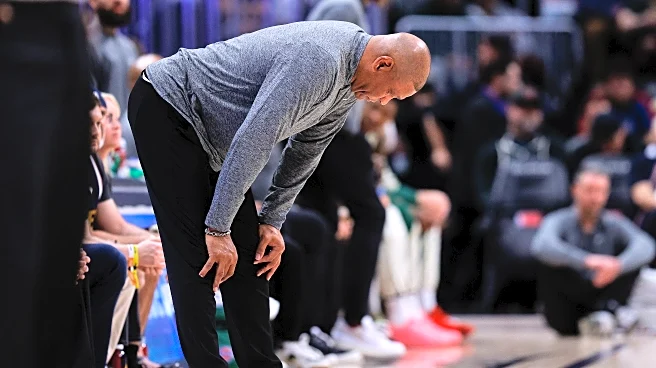
Yesterday afternoon, I sat down ahead of Doc Rivers’ postgame press conference at the United Center, expecting that I might touch a nerve with what I was about to ask. His Bucks had just been punked in a staggering 23-point loss thanks to a truly horrendous fourth quarter. You can see the grisly numbers on that here; I won’t rehash them in full. Suffice it to say, it was an utter meltdown.
Usually, Rivers is on the podium pretty quickly after delivering a postgame talk to his players. I wasn’t checking the time, but it felt like it took longer to get out of the locker room and to the presser. Perhaps it was a longer address. But once we sat down, the comments that followed felt to me like a self-own. Instead of going chronologically through them, I’ll start with the two questions I asked, first the more banal: why did the Bucks’ run of 18 consecutive missed field goals happen?
“You tell me. I literally just said that. All in-between jump shots and overdribbling the basketball.”
Ok, fair enough. Now the contentious one: what are you doing in huddles and during gameplay to address giant scoring droughts like that 27-0 run?
“What do you think? I mean, honestly.”
“I’m asking you.”
“We do it every time. We set the right stuff up offensively, we just didn’t get to it… We ran the same plays we ran all game that worked, and then they didn’t work because we overdribbled the basketball.”
Coach, I don’t know what you’re doing to stop the bleeding; that’s why I asked you. I’ve never coached basketball at any level. If you can’t give me a straight answer, what exactly are you telling your guys in those timeouts? You have eyes; you know the run happened in part because of bad shot selection:
“I don’t know how many contested, in-between jumpshots we took in the third. I can’t wait to look at it. It felt like every other shot was a contested, off-the-dribble, 16-dribble, in-between jumpshot. And that’s the worst shot in the game.”
Yes, your team took oodles of bad shots and missed them. What are you doing to fix it?
“What do you think? I mean, honestly?”
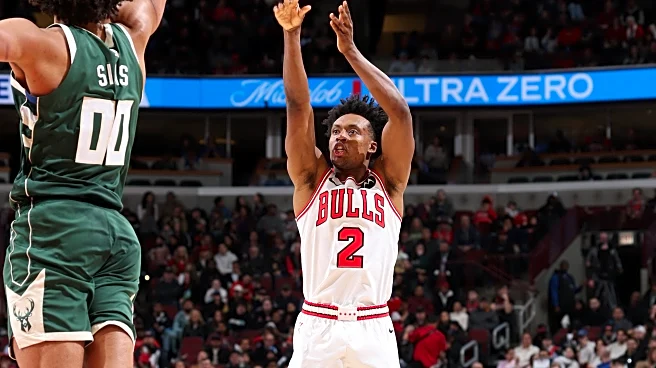
I’m asking you. During the disaster run, they took five shots inside the arc, and a Bulls defender was within four feet—defined as “tight” or “vert tight by the league—on all of them. Only one of those shots came within six feet. Yet players kept putting these shots up, and seemingly no effort was made to stop them.
That’s a long-term problem with the Bucks under Rivers. After Milwaukee’s incomprehensible loss to Washington back on December 1st, my colleague Jack Trehearne discussed the lack of accountability Rivers has with his players. Our Jackson Gross brought it up the next morning too. During that game and at his other stops around the league, we’ve seen this in action—this can also be thought of as being a “player-friendly coach”—but mostly regarding stars. Yesterday, it extended down a starless roster:
“Once we got down 10, I thought everybody was trying to win the game for us. They felt the pressure of losing that game.”
Yeah man, your guys are irresponsibly playing hero ball. What are you doing to fix it?
“What do you think? I mean, honestly?”
I’m asking you. Perhaps they need more accountability. But Rivers definitely needs to take more for himself. Yesterday, one look at the plus-minus column will tell you that Milwaukee’s starters were bad. The figures for the bench look better, but most of that was due to their first-half performance. Here’s Rivers on how the second unit was responsible for their 17-0 second-quarter run and how the starters struggled to maintain the positive momentum:
“The second group… they got us the 15-point lead. (The) first group came in before halftime, lost it, and then regained it, and then lost it again [in the second half]. They lost two 15-point leads. The second group—there was a stretch in the second quarter where it couldn’t have been more beautiful in the way the game was played. No dribbles, into the paint—they did everything you’re supposed to do as a team, and then the first group came back in and did the exact opposite.”
Ok dude, your starters were crap. What are you doing to fix it?
“What do you think? I mean, honestly?”
I’m asking you. Granted, you are missing your best player, and what you have active is easily a lottery team. But there are several other head coaches around the league known for getting the most out of what they have, and even bad teams manage to piece together productive lineups (note Milwaukee’s and Utah’s quintets here).
Back to shot selection. Rivers pointed out that it was better from the last minute of the third quarter on… which was exactly when the 27-0 Bulls run began. And he’s right: of the Bucks’ 14 shots during that debacle, 9 were from three and six were wide open. He brought this up after my initial “why?” question, and though I did not ask the question that precipitated this response, he gestured and looked at me during the emboldened part:
“I don’t care if it’s not in the paint. We’re getting wide-open threes. For you, we’re one of the best shooting threes in the NBA. So if we take 30 of those, I can live with it.“
If you want to see his face and hear his tone, here’s a video:
Cool cool, your team was missing clean looks from deep. What are you doing to fix it?
“What do you think? I mean, honestly?”
I’m asking you! Cold stretches happen when teams are shooting boatloads of threes. It’s an efficient shot, but not as efficient as anything in the restricted area or free throws. As I brought up yesterday, Chicago only had two players active above 6’8” while Milwaukee had five. With a size and talent advantage, there is no excuse to abandon interior scoring completely—as I mentioned, their closest shot during the 27-0 run was a Bobby Portis five-foot floater—while you’re frigid from deep.
Not to get too meme-y, but we’re all trying to figure out who the problem is. And what exactly you do here. As far as I can tell, nothing of consequence is happening in these huddles, or at least nothing that portends winning basketball. Is this a tank job? Usually, it’s the front office directing that, not the coach. Rivers being in on the tanking is the most understandable explanation, but it belies the approach the team seemingly has to make the play-in once Giannis returns, which will apparently happen tonight.
I’d like to add that just before this, Rivers said they had a “36-point third quarter” as evidence that they do know how to “play right.“ No sir, your team gave up 36 points in the third quarter. That box score you’re looking at? The bottom line is for the Bulls, not you. Maybe he meant the second quarter, where the Bucks scored 34 and played beautifully, an appraisal I agree with. I’ll give him the benefit of the doubt, I guess.
But back to my question. Recall that Rivers’ reply was “we ran the same plays we ran all game that worked, and then they didn’t work because we overdribbled the basketball.” Last week, Bucks sideline reporter and friend of the site Melanie Ricks overheard what Rivers was telling his players during a timeout and relayed it to viewers at home. Essentially, he told them, “I’m the coach, run the plays I call! Not your own!”
Hey! An ounce of accountability Rivers refreshingly levied on his players. But on the other hand, maybe these are the wrong plays. If guys are overdribbling, maybe there needs to be more off-ball movement to give them somewhere to pass. Maybe guys are trying to call their own plays that might work better. Critically, maybe this is a sign that players are tuning him out?
The overdribbling might be indicative that they are. Moreover, there’s a bigger lesson to be learned here, and it’s very simple. If the same plays stop working, for whatever reason, stop using them. Or fine, if they’d work if only your guys stopped dribbling so dang much, tell them to stop doing that.
I know, I know. As he’s so fond of saying, Doc is just a nickname. He’s not a real doctor. But I’m reminded of this classic joke, which I learned comes from the repertoire of vaudeville comedian Henny Youngman (of “take my wife, please” fame):
“Doctor, it hurts when I do this.”
“Then don’t do that!”
You don’t need to be a doctor of anything to grasp this. A Hall-of-Fame coach who amassed a playbook over 26 years in the NBA has alternatives to plays that stop working. If it’s not working when you do it, stop doing it. That’s what I think, honestly.