




The 2026 MLB Draft is now over and if they all sign, there will be 21 new members of the Cubs family. Scouting director Dan Kantrovitz said before the draft that the Cubs would work on the weakness on the pitching side of the Cubs farm system and boy, did they ever. With 21 picks over the 20-round draft, the Cubs took 16 pitchers, one outfielder, one shortstop, one shortstop, and two first basemen, although one of the first basemen catches some. Nineteen of the 21 picks were college players.
Here,
once again, are all 21 Cubs draft picks.
Round 1 (23): Cade Townsend RHP Mississippi
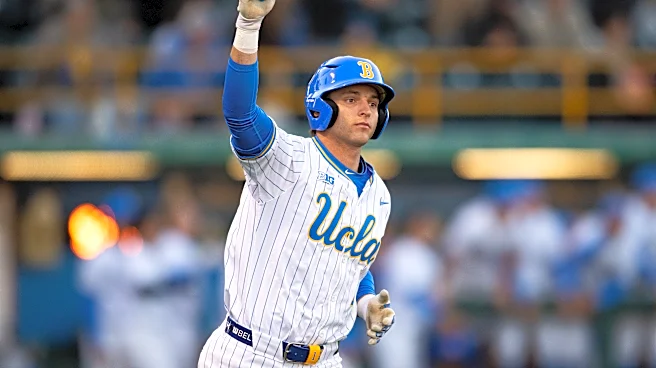
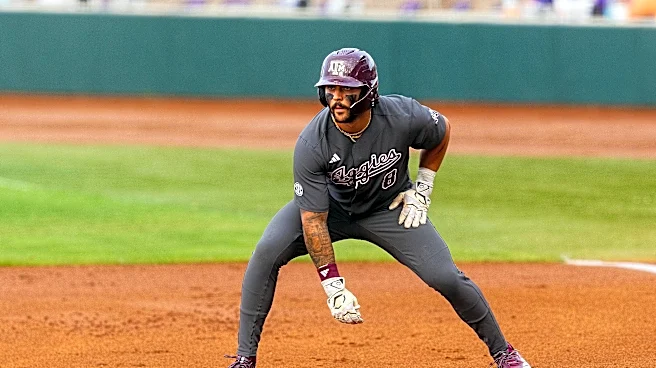
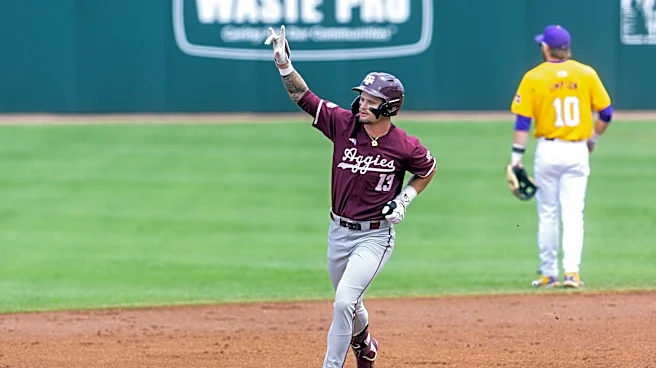
Round 2 (62): Caden Sorrell OF Texas A&M
Round 2 Comp (75): Myles Bailey 1B Florida State
Round 3 (98): Carson Jasa RHP Nebraska
Round 4 (126): Dylan Marioneaux RHP Northwestern State (LA)
Round 5 (159): Dylan Blomker RHP La Cueva HS (NM)
Round 6 (188): Isaac Morton RHP Minnesota
Round 7 (217): Cole Tryba LHP UC Santa Barbara
Round 8: Lance Williams RHP Maryland
Round 9: Chase Meyer RHP West Virginia
Round 10: Luke Alwood RHP Seattle University
Round 11: Ariston Veasey RHP Clemson
Round 12: Brandon Arvidson LHP Tennessee
Round 13: Emanuel Hernandez C Carlos Beltran Academy (PR)
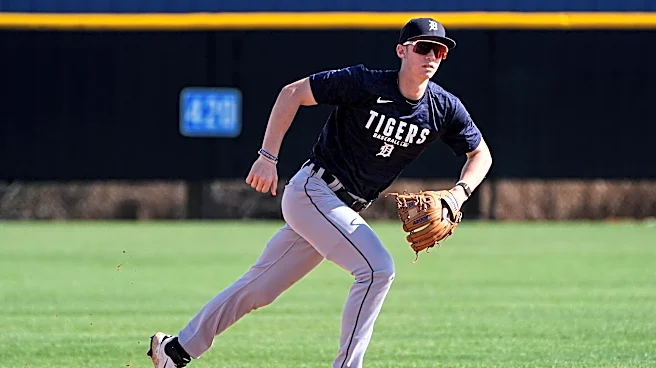
Round 14: Corey Nunez SS UC Santa Barbara
Round 15: Griffin Naess RHP Caly Poly SLO
Round 16: Ashton Pocol RHP Florida Gulf Coast
Round 17: Ryan Marton RHP UNLV
Round 18: Luke McGrath RHP James Madison
Round 19: Luke Guth RHP Vanderbilt
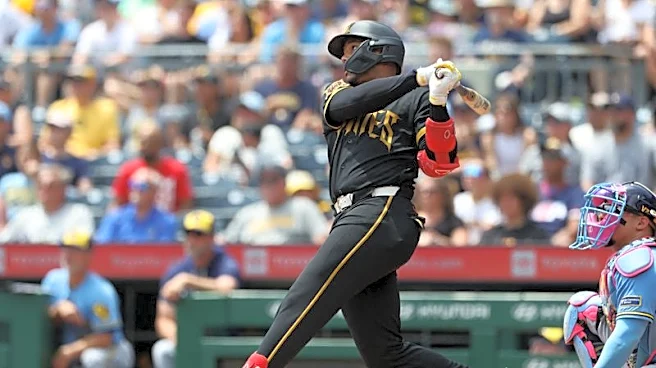
Round 20: Brennan Hudson 1B Georgia
So the Cubs stuck to their long-standing preferences for college players over high school players by drafting only two high schoolers—Blomker in the sixth round and Hernandez in the 13th. That’s a trend that is taking hold in all of baseball as around 77 percent of the players drafted came from a four-year college. Another two percent came from the junior college ranks, so only around 1 out of 5 picks were high school players.
Otherwise, two things stand out. Obviously the Cubs took a lot of pitchers. Kantrovitz hinted that they would and they did. But what is striking is what kinds of pitchers they took. While the Cubs did not take many soft-tossers, even the hardest throwers sit more 95-96 miles per hour on their four-seam fastball. Some have touched the upper-90s and perhaps the Cubs think they can put a few ticks of velocity on them in the pitch lab. They’ve had some successes doing that in recent years.
But the one thing that unites almost all these pitchers is a high spin rate. In his video press conference with the Cubs media, first-round pick Cade Townsend said:“Spin is really my super power. That’s what I tell everyone. I just have a weird, innate ability to spin the ball and make the ball move left or right.” Kantrovitz said he was going to work with Cubs pitching coordinator Tyler Zombro to identify pitchers that he could work with. Apparently Zombro wants pitchers who can spin the ball.
Beyond Townsend, 3rd round pick Carson Jasa, 4th round pick Dylan Marionneaux, 5th round pick Dylan Blomker, 6th round pick Isaac Morton, 8th round pick Lance Williams and 9th round pick Chase Myers are praised for the spin they get on the ball. Spin affects the path of the ball—more spin means less vertical movement and more arm-side horizontal movement. Basically, the mis-named “rising fastball” is a fastball with a lot of spin. A pitch with a high spin rate is just harder to hit.
Clearly, Kantrovitz and Zombro targeted pitchers with that high spin rate and Zombro thinks he can build upon that kind of profile better than he can with lower-spin pitchers.
The two position players taken with the two second-round picks are interesting as well in that neither one of them have great contact rate, which is something that the Cubs have targeted in past drafts. Instead, Sorrell and Bailey are athletic and powerful sluggers who struggle sometimes to make contact. Sorrell’s problem is pitch recognition and swinging at too many pitches out of the zone. Bailey just swings so hard that he misses a lot of hittable pitches, even if he tends to lay off bad ones and draw a fair number of walks.
I’m not going to go over the first five picks as I already wrote about Townsend, Sorrell, Bailey, Jasa and Marionneaux. I will add, because I didn’t have much information on Marionneaux right after he was drafted, is that he’s a pitchability right-hander whose best pitch is his mid-80s slider. He also has a low-90s fastball, a cutter, a curve and a change. He was used as a starter at Northwestern State, but he’s almost certainly a reliever in the professional ranks where his slider could be an effective weapon out of the pen. In my article on Saturday I said that Marionneaux was likely a below-slot pick so that the Cubs could sign a player who wanted a bigger bonus later. That pick turned out to be Blomker. But I do want to make clear that the Cubs didn’t just grab some random pitcher who’d sign cheap. They clearly like Marionneaux and that slider fits in with what Zombro wants to work with down in Mesa.
I also want to add that Bailey is likely to be the most fun Cubs hitting prospect since Daniel Vogelbach and maybe even farther back than that. He’s going to strike out a ton and we hope that doesn’t derail his career. But man, he hit home runs than just made your jaw drop at Florida State. Bailey is gonna be a must-watch player for the sheer entertainment value.
So here are some quick thoughts on the Cubs other 16 draft picks.
Dylan Blomker is one of the two high school players the Cubs took in the draft. He’s a 6’4” right-hander with a pretty vertical pitching motion. His fastball is timed in the low-90s, but it touches higher and a lot of scouts think he can add a few ticks on to his four seamer as he develops. But his best pitch is a sweeping slider with a lot of spin and impressive break. He, like most high school pitches, needs to work on his changup.
Blomker has already said he’s going to sign. Fun fact: the Blomker family is friends with the Bregman family and Dylan has known Alex most of his life. Alex Bregman helped recruit Blomker to LSU. Now he is a major reason Blomker is excited to forgo LSU and sign with the Cubs.
Isaac Morton is a 6’3” right-hander who had two seasons at Texas A&M before transferring to Minnesota. He’s got a hard sinking fastball that sits 94-96. He also has a low-90s cutter and a mid-80s slider. Both pitches have a lot of spin and the slider is his put-away pitch. He also made major strides with his control his junior year after coming home to Minnesota.
On talent alone, Morton should have gone in the top three rounds. Baseball America named him as one of their “college sleepers” in this year’s draft. But he struggled to stay healthy with the Aggies and after making 13 starts with a 3.26 ERA for the Gophers, he suffered an arm injury that required Tommy John surgery. So it will probably be late next season before we see Morton pitch at the earliest. But Baseball America write that Morton is the best pitcher to come out of Minnesota since Max Meyer and if Morton is anywhere near as good as Meyer is these days, he’ll be worth the wait.
Cole Tryba is an undersized lefty with a low arm release and above-average control. His fastball is around 90-93 mph. He also has a sweeping slider that is his go-to pitch. Tryba’s changeup needs some refinement, but it’s promising at this point. He also has a cutter.
Tryba has been the Gauchos closer for the past three years and he’s most likely going to stay in the pen as a pro. Tryba pitched well in the wooden bat Cape Cod League last summer (1.07 ERA over 25.1 innings) and that’s always a good sign.
Lance Williams is an undersized (5’11”) righty who nevertheless gets some good velocity on his fastball, which sits mid-90s and has touched 99. Once gain Williams ties into the “spin rate” that the Cubs are chasing, and both his slider and cutter some impressive spin. He rarely threw his change, but when he did, he got a lot of swings and misses.
In his one year at Maryland, Williams split time between the rotation and the bullpen. He missed a lot of bats and missed the plate a lot, leading to 69 strikeouts and 29 walks over 57 innings. It’s a profile that works better in the pen than as a starter as a professional, but it’s also some good clay for the pitch lab to work with, so I wouldn’t completely dismiss the chance that he starts.
Chase Meyer is a 6’2” right hander with some electric stuff. Meyer sports a fastball that sits around 96 and can go as high as 98. He’s also got those high-spin breaking pitches. His change is a low-8os 12-6 with a hard break and the slider comes in just a bit faster but with good glove side break.
Unfortunately, Meyer was dismissed from the Mountaineers after two appearances and 3.1 innings this February after he was involved in a locker room incident where he angrily criticized the coaching staff. Since then, he’s pitched in both the MLB Draft League and the Cape Cod League to give scouts some looks. Again, Meyer is likely a reliever.
Luke Alwood ia a big, 6’5” right-hander who spent four full years at Seattle University. His fastball is only 92-94, but there is some thought that someone that big should be able to throw harder and he has hit 98 once or twice. He has good control, although his pitches can be a bit too hittable. For a college senior, his stuff is still pretty raw. With his size, Alwood is definitely someone whom the pitch lab would like to work with and see if they can make something out of him. It’s definitely a starter’s frame, if not a starter’s arsenal at this point.
I fully expect that all of the top ten draft picks will sign. There may be one or two picks in the second half of the draft that don’t.
Ariston Veasey is a 6’1” right-handed junior out of Clemson. He missed the start of the season after getting involved in a campus bar fight, but all charges were dropped in the end. Veasey transferred to Clemson after two years at Alabama and quickly became the best reliever on the Tigers with a 3.29 ERA and 37 strikeouts over 25.1 innings. Opposing hitters managed just a .143 average against Veasey. He did struggle with control at times and walked 18 batter. Veasey has a mid-90s fastball.
Brandon Arvidson is a tall, 6’5” left-handed reliever with a lot of swing-and-miss in his fastball/slider combination. The mid-80s slider breaks down hard and is a potential plus pitch if he can learn to throw it for more strikes. It’s Arvidson’s bread-and-butter pitch. The fastball sits low-90s but can touch 95-96. Arvidson struck out 35.2 percent of hitters over his two years with the Volunteers. He improved his walk rate this past season and he will need to improve it still if he wants to be a major league reliever.
About all I know about Emanuel Hernandez is that he’s a Miami of Ohio commit and that the Cubs needed to grab some catchers or all these pitchers they drafted will have no one to throw to. I did see a video of him throwing to second base from behind the plate and he looked fine there. We’ll see if he sticks to his college commitment. The Cubs need catchers.
Corey Nunez is the second Gaucho the Cubs took in this year’s draft after Tryba and after they took two more Gauchos, Ryan Gallagher and Ivan Brethowr, in the 2024 draft. Nunez took a step forward in his senior season at UCSB with a line of .280/.361/.393 and hit .345 in limited (seven games) action this summer in the Cape Cod League. Despite being 6’3”, Nunez doesn’t have much power and has a stroke that is geared towards contact on a line to all fields. Nunez struck out just 23 times in 200 plate appearances this past season.
Griffin Naess is another tall, 6’6”, lanky right-hander who was a three-year starter for Cal Poly. From what I’ve seen of Naess, despite his size, he’s not a hard-thrower with a fastball checking in around 90 mph. But by far his best pitch is a fall-of-the-table upper-70s changeup that gets a lot of swings and misses. He’s also got a mid-70s curve with some good break on it but I didn’t see him land it for a strike much.
With the Mustangs last year, Naess went 8-5 with a 4.63 ERA over 91.1 innings and 17 starts. He struck out 97 and walked 35. The Mustangs seems to ride his arm more than I like and he threw 137 pitches in the Big West Championship Game.
Ashton Pocol was the senior closer for FGCU. He put an impressive strikeout-to-walk ratio with 50 strikeouts and just ten walks over 33.1 innings. He was 3-4 with a 3.24 ERA and six saves.
Canadian Ryan Marton is a big 6’4”, 235 right-hander who spent two years in junior college before transferring to UNLV this past year. He didn’t get much of a chance with the Rebels, throwing just 19 innings over four starts and nine relief appearances. His numbers aren’t all that impressive—6.16 ERA, 22 strikeouts and nine walks—but he was pitching in Las Vegas.
Luke McGrath is a 6’2” redshirt sophomore right-handed reliever who struggled with control last year at James Madison. I didn’t get a radar reading on his fastball from the video I saw of him pitching, but it looked hard. He also appears to have a slider and a curve, again, at least from what I saw. The breaking pitches appeared to have good movement, but from the 20 walks he had in 28 innings last year, I wonder how often he can throw them for strikes. McGrath struck out 28.
Luke Guth is another one of those big spin guys that the Cubs took so many of in this year’s draft. Guth has a 92-93 mph fastball with that good spin and “rise” that the Cubs have targeted. His breaking stuff has a lot of movement—maybe too much as he seems to struggle to throw them for strikes. Guth was dominating as a sophomore reliever for the Commodores with a 0.93 ERA and 22 strikeouts and seven walks over 19.1 inning. But Guth couldn’t follow that up and he struggled this past year with a 5.18 ERA. The problem was he was just walking too many batters. If Guth can live up to his promise of 2025, there might be a solid reliever in there.
I have Brennan Hudson listed as a first baseman but a lot of places list him as a catcher. He did both at Georgia this year, with more first base than behind the plate.
Hudson wasn’t much of a draft consideration last year in his first season with the Bulldogs after transferring from Georgia State. But as a senior this year Hudson had a breakout season, hitting .294/.466/.730 with 22 home runs in 56 games. The big difference between Hudson’s junior and senior season is a huge drop in his strikeout rate from a whopping 37 percent as a junior to 20.8 percent as a senior. Hudson walk totals also increased as his power numbers soared. He has a kind of violent left-handed pull swing that is geared to power.
Despite those impressive numbers, both the scouts and the data analysts think those senior season numbers were a bit of a fluke. That’s why Hudson was still available in the 20th round. But he certainly seems like someone worth the gamble this late. And if he can catch, that’s all the better.