


I’m sitting here looking at the Phoenix Suns’ depth chart, and I have to admit, my imagination is starting to run wild. Maybe that’s what all of us do during the offseason. We stare at a depth chart and begin imagining all of the possibilities for the upcoming season. This is the time of year built on hope and optimism because we haven’t seen anything play out on the court yet. We can spend all day hypothesizing about everything that could go right.
At the same time, realism has to live alongside
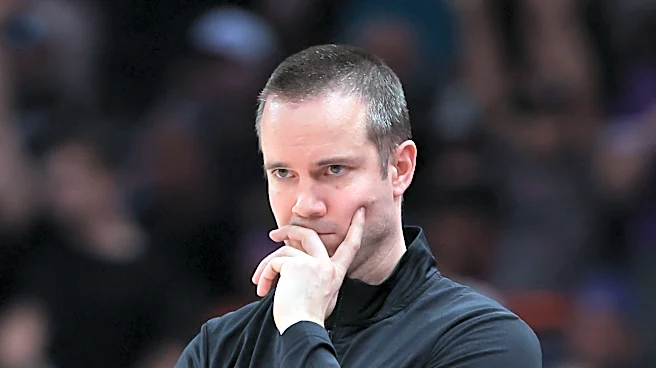
those expectations. As I sit here in the same chair, staring at a different depth chart than I was a summer ago, I realize I didn’t have this same level of optimism. I didn’t feel the number of lineup combinations the Suns could deploy was nearly as expansive. I also didn’t know what kind of coach Jordan Ott would be or what kind of culture this team would ultimately establish.
A year later, we have those answers. And understanding what the Suns can be is part of why I’m so excited. From a roster construction standpoint, this team has optionality. Just look at it.

Where it really gets fun is when you start exploring the different lineup combinations the Suns can throw at opponents because they finally possess the roster versatility they haven’t had in years. You want a “tough son of a bitch” lineup? Give me Gillespie, Goodwin, Brooks, Bridges, and Maluach. You want size? Give me Booker, Brooks, Peat, Fleming, and Maluach. You want rebounding? Give me Goodwin, Green, Fleming, Bridges, and either Mark Williams or Maluach. You want experience? Give me Booker, Green, Brooks, Bridges, and Williams, which is probably the starting five when the season opens.
That’s what intrigues me most about this roster. There are answers for different situations. There are lineup combinations built to solve different problems. And that’s something the Suns simply haven’t had at their disposal in recent seasons.
My point? The Suns have options. Plenty of them. We’ll probably spend the rest of the summer talking about all of the lineup combinations available to Phoenix.
But there’s a downside to that optionality, one that will reveal itself every time the Suns lose. I’ve talked at length in the past about the disease of “what if.” When you have this many options at your disposal, it’s easy to focus on the lineup that wasn’t used rather than the one that was. Every loss will invite questions about what Jordan Ott should have done differently.
That’s human nature. We like to imagine what could have been more than accept what actually happened. On nights when the Suns end up on the wrong side of the scoreboard, this roster’s optionality could become more of a curse than a blessing. My hope is that simply acknowledging it now serves as a reminder not to fall prey to that inevitable conversation. At the same time, we have to remain objective. If the Suns are consistently losing and there’s a clear trend showing that certain lineups are underutilized, then the inexperience of the head coach has to be part of that discussion.
I know it probably sounds like I’m preparing everyone for disappointment before a game has even been played. I’m not. What I’m saying is this roster gives Jordan Ott more options than the Suns have had in years. That’s exciting. It’s also going to require a delicate balance between experimenting with different combinations and settling on the situational lineups that consistently produce results. That won’t be easy.
Think about all of the lineups I mentioned above. I didn’t even include Ryan Dunn, and he’s someone who absolutely needs meaningful minutes this season because the organization has an important decision to make on him next offseason. You can’t evaluate what you have if you don’t let him play.
That’s the blessing. That’s also the curse. The Suns have built quality depth, but quality depth becomes a challenge if it’s underutilized. Winning cures all. If Phoenix wins, these conversations largely disappear. But overanalyzing sports is part of being a fan, and if the Suns start losing, I’m telling you now that the conversation will inevitably begin with one question. “What if?”
The irony is that this is exactly the kind of problem good teams are supposed to have. A coach would rather sort through too many playable combinations than spend an entire season searching for five players who fit together. Jordan Ott’s biggest challenge won’t be finding options. It’ll be identifying the right ones, knowing when to adjust, and resisting the temptation to chase every possible answer. For the first time in a long time, the Suns’ biggest roster question isn’t whether they have enough pieces. It’s figuring out how to best use them.