
After the worst Big Ten loss of the season for No. 11 Ohio State women’s basketball, the Buckeyes finish January with the Wisconsin Badgers. The Scarlet and Gray’s 91-70 defeat to the Iowa Hawkeyes on Sunday
showed a team struggling to adjust to the absence of redshirt freshman forward Kylee Kitts.
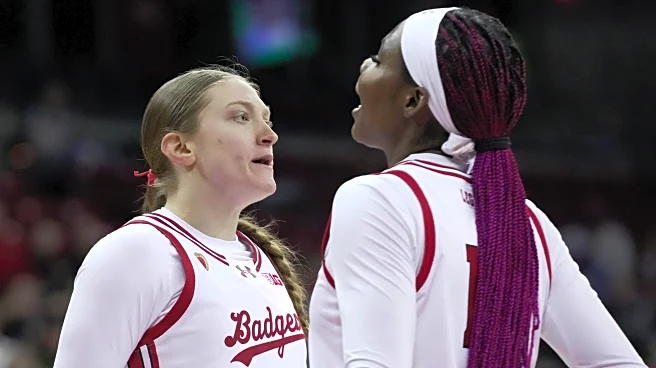
While the Badgers have not challenged Ohio State much of the last few years, this year’s Wisconsin team is different across the board. The program has a new coach, new players and is also picking up impressive wins in its best season in 15 years.
Wisconsin turnaround
Last week, Ohio State played a surprising Big Ten side in the Indiana Hoosiers. Surprising because Indiana came to Columbus without a win in seven conference games, a streak that continued over the weekend in a loss against the Purdue Boilermakers. Wisconsin’s surprise is more of the fun kind for Badger fans.
After the 2024-25 season, forward Serah Williams, a four-time All-Big Ten Defensive Team and 23-24 Big Ten Defensive Player of the Year, transferred to the UConn Huskies. Wisconsin also lost its head coach Marisa Mosely, who was mired in controversy and allegations from former athletes about alleged treatment of student athletes.
Mosely ultimately resigned and it appeared that the Wisconsin program, which has two winning records in the last 15 years was destined for a rebuild that started at the foundation of the house.
Halfway through the Big Ten season, Wisconsin is 5-5 in conference play, has wins over two ranked opponents and is playing its best basketball since the 10-11 season.
After 468 games in charge of the Mizzou Tigers, Robin Pingeton left the SEC for the Big Ten and did what many coaches do and dove into the transfer portal pool. Wisconsin returned 27.5% of last season’s minutes played and Pingeton did not stick with the power conferences to fill the void.
Pingeton received commitments from midmajor standouts and alongside a four-year Badger who runs it all created a team that is winning games with unexpected chemistry.
Leading the scoring is guard Destiny Howell. After five years with Howard University of the Mid-Eastern Athletic Conference, where Howell won the 22-23 MEAC Player of the Year and was All-MEAC three times, Howell joined Pingeton and already has her name in the Wisconsin record books.
Howell hit 10 three-point shots in a double overtime win over the Oregon Ducks on Jan. 18, 2026, a new program record, part of her 13.9 points per game average and career high 41.8% shooting from beyond the arc.
Guard Kyrah Daniels joined Wisconsin after two years with Missouri State University of the Missouri Valley Conference and enters Thursday with 16.7 points and five assists per game in the last three games. The 6-foot tall guard rebounds consistently, distributes and scores.
Then there is fellow Missouri Valley Conference veteran forward Gift Uchenna who followed up an All-MVC season with Southern Illinois with a trip to Madison, Wisconsin. Uchenna was slow to start this season, but the 6-foot-3 big averaged 14.5 points and 12.8 rebounds in the Missouri Valley Conference.
The forward’s numbers are lower in her first year with the Badgers, but had 22 points and 14 rebounds in a ranked win over the Nebraska Cornhuskers on Sunday.
The victories over the Oregon Ducks and the then No. 24 ranked Nebraska Cornhuskers are two of many examples of Wisconsin’s impressive turnaround. It began in the first Big Ten game of the season against the then No. 20 Michigan State Spartans.
In that win, Uchenna had 14 points, 15 rebounds and a career high 7 blocks after Wisconsin started the game on a 10-0 run and did not look back.
There are also wins against teams at the bottom of the Big Ten standings that required a lot from the Badgers. Against the Rutgers Scarlet Knights, the Badgers came back from a 21-point deficit. When the Badgers faced the Penn State Nittany Lions, Wisconsin outscored Penn State 19-10 in the final quarter to win by a single point.
To put it lightly, Wisconsin is no longer a team at the bottom of the conference, looking up.
On any night, the Badgers can challenge an opponent but there is also the other side of the 5-5 record. Take Sunday against the Minnesota Golden Gophers. After two single-possession wins over Oregon and Nebraska in consecutive games, the Badgers went to Minnesota and lost 88-53 to their rival Minnesota Golden Gophers.
Defending the three
Wisconsin lives or dies by the three-point shot. Against Minnesota, the Badgers went 9-for-24 from beyond the arc and 9-for-28 from two-point range. That is the fourth time this season that Wisconsin shot more efficiently from deep than inside the arc.
Helping get the ball to the Badger shooters is senior point guard Ronnie Porter. The four-year Wisconsin Badger nearly left in the offseason when she entered the portal. However, Porter returned and leads Wisconsin with 4.6 assists and 1.6 steals per game.
Porter does not normally light up the scoreboard herself, with only six of her 21 appearances ending with at least double-digit points for the senior, but she is a facilitator.
In Big Ten play, Porter’s assists grew and in 10 conference games the guard averages five assists per game, tied for sixth in conference play.

Inside, Uchenna and Ohio State center Elsa Lemmilä is the matchup to watch, but when the Buckeyes are in the zone, there are four players for the Badgers who will take shots from deep. Against Iowa, the Scarlet and Gray struggled to keep up and the Hawkeyes found open shooters in the corners. Of Wisconsin’s five projected starters, four take at least 2.5 three-point shots per game and lead the Big Ten with 25.5 attempts per game.
Those attempts and the instances of hitting more shots outside more frequently than inside shows the Badgers are not athletes who normally take trips to the rim. Wisconsin is 328th in the country with a 22.6% free throw rate. Then Ochenna grabs rebounds, with 2.4 offensive rebounds per game.
That should give Ohio State a slight break inside the paint, unless the first year Wisconsin head coach Pingeton tries to switch up her side’s strategy to exploit the Buckeye weakness.
How long could Kitts be out?
While McGuff kept things broad when it comes to Kitts’ prognosis, the play against the TCU Horned Frogs where Kitts had to leave the game looked like either a strain or a dislocation. Depending on the severity, the range differs between the two.
According to the Mayo Clinic, a strain could take a few weeks to recover. A full dislocation could require surgery, which would put Kitts out well into the 2026 summer offseason.
Without specifics, it is hard to pin down such a large window of recovery. A positive sign came in that same TCU game. After Kitts left the game, she returned in roughly a minute of game time and played two minutes before leaving the game through the final buzzer. It was not severe enough for Kitts to completely shut it down after the initial incident.
There are five weeks until the Big Ten Tournament and seven until the NCAA Tournament. As it stands, Ohio State has a great chance of playing in both but how far it goes in those tournaments rests partially on the shoulders of Kitts.