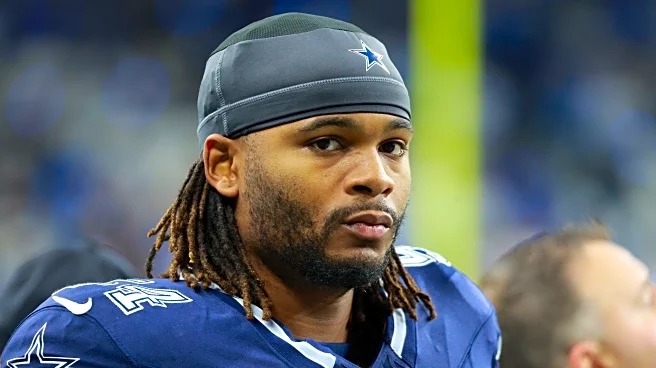

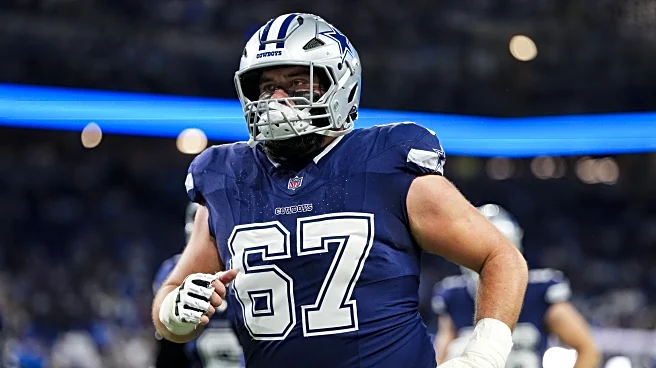
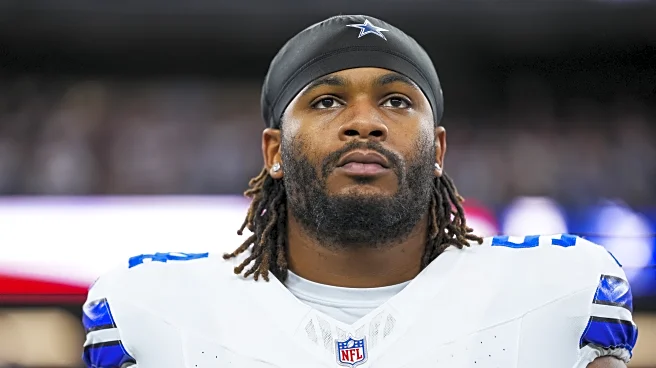
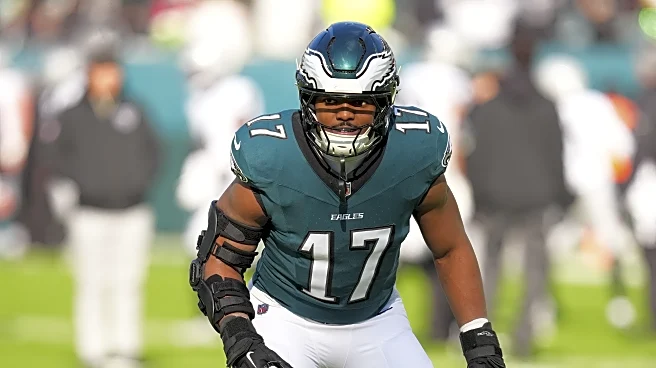
Edge rusher Sam Williams is about to get a somewhat surprising fifth season in Dallas, re-signing with the team on a one-year deal worth up to $3 million. It’s the quintessential “prove it” deal for Williams, whose rookie contract expired with an unfortunate lack of career momentum. We thought it’d be interesting to look back on similar situations with former Cowboys players and see how successful they’ve been.
What you consider a “prove it” deal may differ from someone else. You might argue that
a season played on the franchise tag is one, and that might be true in some cases. But many times, like with TE Dalton Schultz in 2022, it’s more of a stop-gap measure that a team utilizes to keep a position filled without a long-term commitment. Just be willing to pay a guy the franchise tag price indicates that he’s already proven a fair bit as a legitimate NFL player, if not more.
Other mechanisms like one-year deals for restricted and exclusive rights may not always be true “prove it” situations. They certainly can be, but we’ve often seen the Cowboys use those options more for cap management purposes. It can buy them an extra year or two before they have to pay a guy what he’s already proven that he’s worth. We may be about to see a good example of that with K Brandon Aubrey, if he doesn’t get a new deal.
There’s no doubt, though, that Williams falls into the “prove it” category. The former second-round pick had moderate success in Dallas’ pass-rushing rotation early, getting four and 4.5 sacks in each of his first two seasons. A projected bigger role in 2024 was wrecked by a knee injury in training camp, costing him the entire year.
Williams returned last season and struggled, along with everyone else, in Matt Eberflus’ scheme. Despite playing 171 more defensive snaps than he had in 2023, his production plummeted to just one sack and relatively fewer positive plays overall. His best moments in 2025 came on special teams, blocking both a punt and a field goal in different games.
Despite Dallas’ desperate need for more pass-rushing help going forward, they did not give Williams more than a low-end backup’s compensation. Williams has had maturity issues, both with off-the-field legal issues and occasional reckless penalties. Those have partly stymied his career, but the knee injury and Eberflus didn’t help. The Cowboys are clearly hoping that Williams has grown up and will be even better on the field, now in Christian Parker’s scheme and further removed from the injury.
So, how does this usually go? Do guys ever actually prove they were worth keeping around, or even giving a bigger contract to stay? Or do they usually just reinforce why you were down on them in the first place? Let’s run through some modern examples.
DB Israel Mukuamu, 2025 – After playing out his rookie deal in depth and special teams roles, Mukuamu got a minimal one-year deal to come back and compete. He didn’t make the roster again, getting released at final cuts.
RB Rico Dowdle, 2024 – Dowdle got a one-year deal to return and compete for a depth spot behind the zombified version of Ezekiel Elliott. He wound up taking the starting job midway through the year, even finishing with over 1,000 yards despite his reduced time as the primary back. He parlayed that into a free agent deal with the Panthers the following offseason.
WR Noah Brown, 2021-2022 – Brown got back-to-back one-year deals after his rookie contract expired, but these may have been less “prove it” deals and more just about his niche role on the team. Brown was normally just a standout run blocker and special teams player, but did finally contribute offensively with 43 catches, 555 yards, and three touchdowns in 2022. He left for Houston the following offseason.
WR Cedric Wilson, 2021 – Another late-round WR who made good, Wilson played on a RFA tender in 2021 and broke out as WR injuries increased his opportunities. He got a three-year, $22.8 million contract from the Dolphins the following March.
DE Randy Gregory, 2021 – Now we get to a guy with a much more comparable story to Williams’. Also a former second-round pick, Gregory missed numerous games, even whole seasons, with suspensions for substance abuse issues. After getting reinstated and playing in all 16 games in 2020, Gregory got a classic “prove it” deal to return in 2021 and earn trust for more. He did just that, finishing second in sacks behind Micah Parsons. The next offseason, it was reported that the Cowboys and Gregory had agreed to a significant new contract, but there was a last-minute hangup over personal conduct language. Gregory backed out and signed a five-year, $70 million deal with the Broncos.
CB Morris Claiborne, 2016 – There are a few fond memories of Claiborne’s time in Dallas, and most of them came from his “prove it” year. Dallas had declined the fifth-year option on the CB they once drafted fifth overall, but did re-sign him to a relatively small one-year deal. Claiborne earned a starting role and was playing the best ball of his career. Unfortunately, injuries once again limited him to just seven games. Dallas let him walk the following offseason, and he had a decent two-year run starting for the Jets.
DL Jason Hatcher, 2010 – A third-round pick in 2006, Hatcher played out his rookie deal as a backup. He returned on a one-year deal in 2010 to a similar role, though he did get his first career start, and then a modest three-year deal in 2011. His breakout occurred with Rob Ryan’s 3-4 scheme changes, better utilizing Hatcher’s pass-rushing potential. He would eventually make the Pro Bowl in 2013 as a 4-3 DT under Monte Kiffin, then got a big contract from Washington the following offseason.
Taking all this in, it’s a pretty wide range of mixed results. That’s really a positive for Sam Williams, meaning there’s as much potential for him to reward the Cowboys for this opportunity as there is to burn the final pieces of the bridge.
One thing that this list shows: even if Williams does make the most of 2026, it doesn’t mean that he’ll get a new contract from Dallas. Like with Dowdle, Wilson, Hatcher, and others, it may mean a lucrative departure in 2027 free agency. But that’s still a win for the Cowboys, meaning they got a great year from a $3 million player and perhaps a compensatory pick when he goes.
Williams’ biggest concern now is how many pass-rushing opportunities he’ll actually get. He’s already behind Donovan Ezeiruaku and James Houston in the pecking order, and now Dallas has added veteran Rashan Gary. And that’s before the many possibilities as the offseason unfolds: another major veteran addition, a first-round draft pick, or both are still on the table. And you never know if Jadeveon Clowney might want to get off the couch again before training camp.
Still, Sam Williams can earn anything and everything he wants with strong enough play. Dallas would love to see a former second-round pick finally work out, so they won’t be slow to recognize and reward progress. We’ll see what Williams proves in this critical season, and just how much this benefits the Cowboys in 2026 and beyond.