



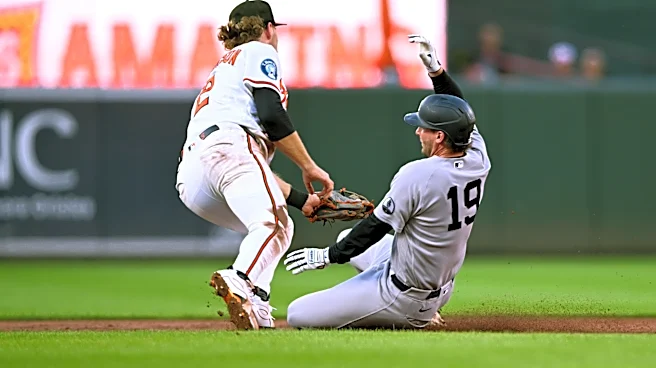
All season long, the Orioles have tread water. Their win-loss record has never gotten better than two games above .500 (on April 13) or worse than nine games under .500 (July 8). That type of mediocre form has been enough to keep them in the conversation for a playoff spot, but with just a month of games left to play, they will need to find another gear if they are going make a genuine push for the postseason. This upcoming road trip is their opportunity to pull ahead.
Starting on Tuesday, the Orioles
will begin a three-city road trip that takes them to St. Louis, Sacramento, and Denver for nine games against the Cardinals, Athletics, and Rockies, respectively.
The Cardinals are a solid club, boasting a 66-66 record. They have no hope of catching the Brewers in the NL Central, and even the wild card feels like a pipe dream. The Cards are 5.5 games out of the final wild card in the NL. But it’s not impossible for them to bounce back from their current three-game losing streak to go on a run and sneak into the playoffs. The Orioles will need to be careful with them.
The Athletics and Rockies, though, are a different story. Entering play on Monday, these are the two worst teams in baseball. The A’s, at 51-80, are at the bottom of the AL while the Rockies, at 50-80, are at the very bottom of the entire league.
Things aren’t trending better for either team. The A’s are 11-34 since the start of July. They have slipped from three games back in the division at the time to 14 games back now. The Rockies were awful back in May (8-20), improved a bit in June and July (21-29), but have fallen apart recently. They own a 7-13 record in August, which includes an active six-game losing streak.
Why are these two teams bad? It’s pretty simple. They can’t pitch. The Rockies’ 5.54 ERA is the worst in the sport, and the Athletics’ 5.47 mark is second-worst. Even if you slice and dice by rotation vs. bullpen it doesn’t get much better. The Rockies rotation has a 6.18 ERA while the Athletics is 5.35. In the bullpen it’s the Atheltics that are worse (5.66 ERA) while the Rockies are somewhat serviceable (4.80 ERA).
On paper, even the flawed Orioles should have an advantage in the series against these two bottom feeders. But that doesn’t guarantee anything. The Orioles have already lost two of three to the Athletics this year when the two teams met at Camden Yards back in May.
What makes this upcoming road trip even more vital is what follows.
The Orioles wrap up the series in Denver on Wednesday, September 2. The final out there will probably be recorded sometime around 6 p.m. ET. Then, they have to take the 3.5-hour flight home, find a way to get some rest, and then be at Camden Yards and ready for a 7:15 p.m. ET first pitch on Thursday night against a Red Sox team that will have probably already been in Baltimore for several hours before their hosts even arrive.
That game with the Red Sox will begin the final 22-game stretch of their season in which they will play four against Boston, three with Cleveland, six against Toronto, three with Milwaukee, and three against each of the New York teams.
The only perceived “break” in there is the series with the Mets, but even they have been better recently. Every other opponent is at least in the playoff mix with something to play for, whether that be seeding or even getting into the tournament in the first place. If the Orioles performance on the season to this point is any sort of guide, we can expect them to put up a fight against these competitive clubs, but hoping for any sort of streak seems foolish.
But it’s not only the Orioles schedule that we have to worry about, it’s also the schedules of the teams that the O’s are battling for that final wild card spot. An easier path likely means the Orioles need to play just that much better. The news isn’t great on that front, unfortunately.
According to Tankathon, the four easiest remaining schedules in Major League Baseball this season belong to the Twins, Guardians, Blue Jays, and Mariners.
Seattle has the easiest road, thanks in part to a down year for the AL West. Of their 31 remaining games, 17 of them are against the Angels, Athletics, and Rockies.
Toronto is second-easiest. As records exist today, none of the clubs left on their schedule have a .500 or better record. That’s particularly good for them, since they are 33-42 against such teams this season.
To be fair, it’s not as if the Orioles’ remaining schedule is the absolute toughest. They rank 20th on Tankathon, and while clubs like the Guardians or Blue Jays are daunting given the context of the standings, these are still flawed, sub-.500 teams that the Orioles could theoretically take care of.
So, what sort of performance should the Orioles be aiming for?
FanGraphs projects the standings for the rest of the year. They believe that in order to get into the AL playoff field, a team will need to finish with an 81-81 record, exactly .500. They also expect the Orioles to go 15-16 in their final 31 games, ending up at 78-84, last place in the AL East and just three games out of that final wild card spot.
That sounds entirely possible and reasonable. The Orioles have provided no evidence to suggest that they are a better than .500 club. Even when they briefly held a playoff spot earlier this month, they still had a losing record. Bucking that trend, going on a run, and leap frogging several teams that have an easier path from here is not what we should expect to happen. There’s a reason that Baseball Reference gives the O’s just a 9% chance of making the postseason at this point.
But that’s why we play the games. The Orioles could change the math by going on a tear out west, otherwise continuing to tread water, and then taking care of business against the Blue Jays in September. Most of the other games are window dressing.