




The Colts are about to finish the offseason with some post-draft free agency moves, marking the 10th offseason under Chris Ballard. The decade of Ballard’s management has been a wild rollercoaster ride, albeit not all of it due to Ballard himself. But after this Ballard decade, how does the Colts roster stack up from 2026 compared to 2016, the last year of the Grigson era?
In this position by position series, we breakdown each spot of the Colts roster to see if the Colts are better or worse than their
counterparts from a decade ago. Quarterbacks were first, next is Running Backs.
2016 RBs: Frank Gore, Robert Turbin, Josh Ferguson, Jordan Todman
2026 RBs: Jonathan Taylor, DJ Giddens, Seth McGowan
Frank Gore is a legend and will be a Hall of Famer sooner than later (was a finalist in his first year of eligibility in 2026). The gritty runner was a true ironman of the physically punishing RB position, making a lengthy career for himself in the NFL. But in 2016 he was not in his prime at age 33, diminished his efficiency. Gore ran for 1,025 yards and 4 TDs in 2016, mustering 3.9 Yards Per Carry behind the Colts bewildered Offensive Line. He added an additional 277 yards and 4 TDs in the receiving game, being a valuable dump off option for Andrew Luck.
Behind Gore was a trio of backups in Turbin, Ferguson, and Todman who struggled to provide consistent rushing production. Turbin led the way with 47 carries as the top backup, primarily used to give Gore a breather in the rotation for receiving duties (35 targets) and in short yardage situations. Turbin led the team with 7 Rushing TDs and had just 3.5 Yards per Carry, albeit his efficiency was reduced due to his role in goal line situations.
Ferguson also had some receiving duties with his 26 targets, but on the ground only netted 20 yards and 0 TDs on 15 carries. Todman was not targeted at all in the passing game but had a 6.6 Yards per Carry average… but on just 9 carries.
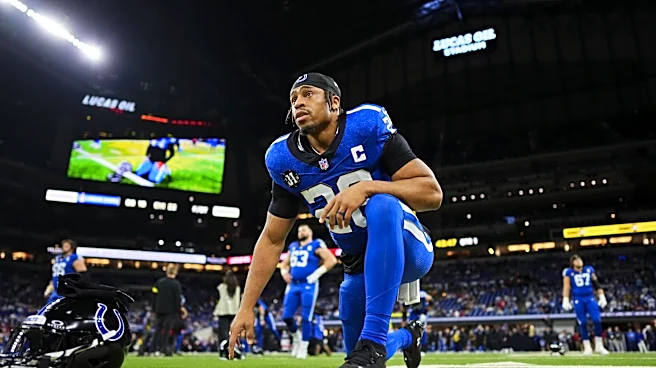
Jonathan Taylor in 2026 should still be in the prime of his career at age 27. He is coming off a season with 1,585 yards and an NFL leading 18 Rushing TDs for 4.9 Yards per Carry on the ground while adding 378 receiving yards and 2 TDs out of the backfield in 2025. Taylor even had some MVP buzz after his dominant game in Germany against the Falcons at the midpoint of the year.
Expect the former Wisconsin Badger to have another strong year as the Colts workhorse back in 2026 in his last year under contract. He already passed Edgerrin James in Colts Rushing TDs in 2025, and could potentially pass him in rushing yards with another big season. Taylor is only 1,628 yards away from Edgerrin James as a Colt, and with Taylor getting 1,811 yards and 1,585 yards in his two 17 game seasons, if he is fully healthy for all of 2026 and averages 96 yards a game, he will pass James.
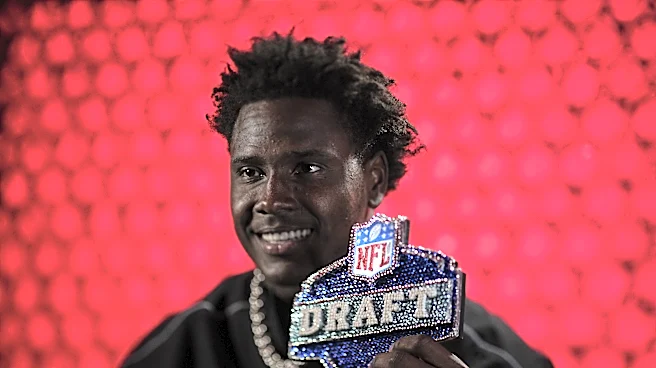
Behind Taylor is a pair of inexperienced backs with 2025 5th Round draft pick DJ Giddens and 2026 7th Round draft pick Seth McGowan.
Giddens had a very limited impact as a rookie with 26 carries for 96 yards and 0 TDs (along with 2 targets but 0 catches). His scouting report was a home run hitter runner (9.78 RAS with 4.43 40 time and 39.5” vert) with a ton of speed and acceleration with one cut ability in his rushing style, but ran upright which limited the power of his 6’0 212 lb frame and struggled to catch consistently.
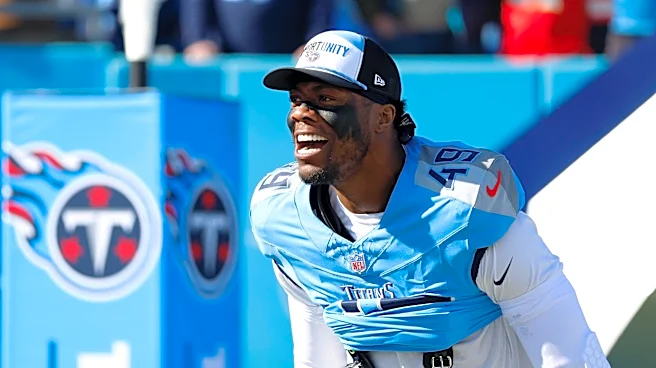
He should compete for the RB2 duties in 2025, but he did lose snaps and that role to receiving backs Ameer Abdullah and Tyler Goodson in 2025. He was a healthy scratch for quite a few games due to that duo, neither of whom are returning to the Colts in 2026.
Seth McGowan is another athletic freak (4.49 40 time and 42.5” vertical) but with less quick acceleration and agility to his game but more power (223 lbs. and better pad level at hit point) and is a proven pass blocker for 3rd Down usage compared to Giddens. Giddens could have an early edge for the job with his blocking prowess being valuable to rotate with Taylor, but Giddens’ more dynamic receiving threat could be unlocked if he develops his hands could get him some valuable snaps too.
Advantage: 2026 Colts
Both 2016 and likely 2026 have their starting RBs take the lion’s share of the carry workload. While 2016 had a worse run blocking OL and a rushing rate to worsen both Gore’s efficiency and total stats, Jonathan Taylor being in his prime certainly gives him the edge here. Taylor has the better situation for blocking and is being asked to carry a lot more, but he frankly has much more explosion and big play ability compared to a 12 year veteran Frank Gore, further expanding the divide between the two.
Tubin’s 8 total TDs will likely not be eclipsed by either of the 2026 Colts backup Runners, but neither of them are likely to take much of Jonathan Taylor’s goal line work in 2026 anyways. Giddens and McGowan could very likely be more efficient than the 2016 backs in yards per carry, albeit not likely as effective out of the backfield as Turbin and Ferguson.
Still the gap of starters in favor of 2026 is too much for the depth of 2016 to overcome. The 2026 Colts are a team truly built off of the run game as the foundation of their offense, while the 2016 Colts had a run game that was a complement (albeit lacking in efficiency) to the passing attack. Love and respect Frank Gore, but at 33 he wasn’t leading an offense like a 27 year old Jonathan Taylor has. If Taylor stays healthy, the 2026 Colts rushing attack should outperform the 2016 one.