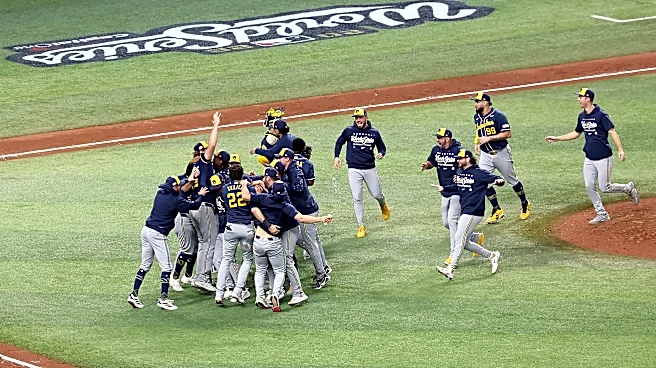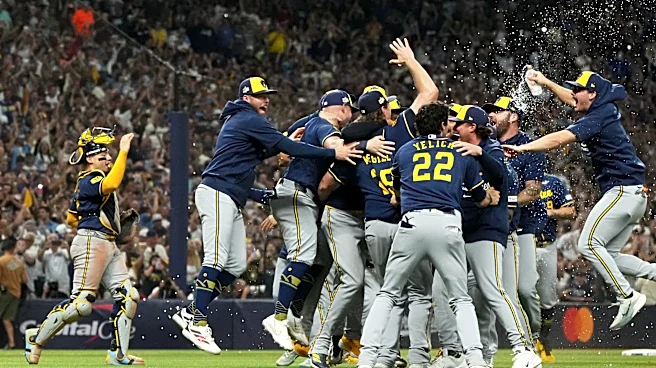


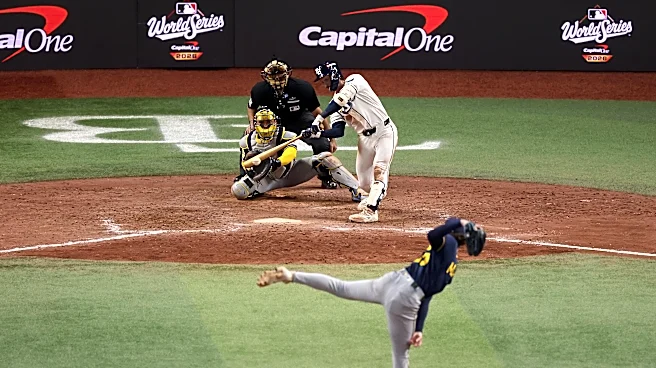

The Phillies are not going to be able to turn themselves into the Milwaukee Brewers. Nor should they want to.
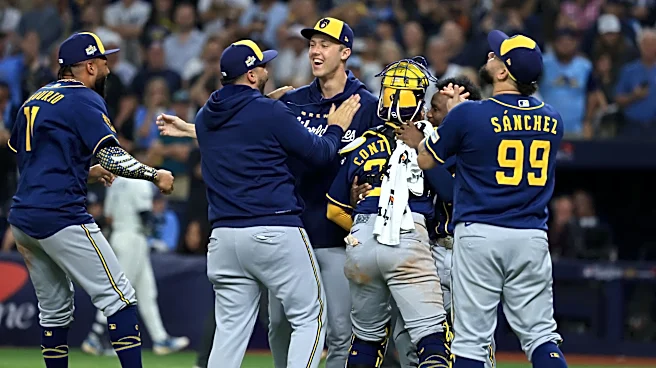
Just because a team wins a title doesn’t mean everyone should rush to imitate everything they are doing. The Brew Crew’s run to their first championship in franchise history was magical, and likely not repeatable for anyone else. Heck, it was the 8th time in 9 seasons they had reached the postseason and the first in which they even got to the World Series.
Needless to say, the Phils should
not aspire to be a small market baseball team. It’s good that they want to spend money on players. And even if they wanted to scale back, they are committed to a number of high-priced, immovable players replete with no-trade clauses and 10-5 rights. But that doesn’t mean there aren’t things the Phillies can learn from the Brewers’ blueprint of success.
How has Milwaukee piled up two straight seasons of 100+ wins and, at long last, a World Series title on such a small budget? How did they finally navigate the October crucible?
Here are two things the Phillies should emulate.
Offensive Philosophy Shift
The Phillies dismissed longtime hitting coach Kevin Long following their wild card loss to the Braves and have replaced him with Peter Fatse, who was the hitting coach in Boston under Alex Cora. Both were fired in April after the team’s dreadful start. The Phils also announced Joe Cronin, also from the Boston organization, will join as an assisting hitting coach.
The goal, as outlined by Dave Dombrowski at his end-of-year press conference, is to make the Phils’ hitting apparatus function similarly to Caleb Cotham’s pitching machine that is streamlined from the farm system all the way up to the big leagues. Fatse will also be tasked with trying to get Phillies hitters to adapt a more patient approach more like the one they exhibited in the first three weeks of August rather than the free-swinging mess we saw for most of 2026.
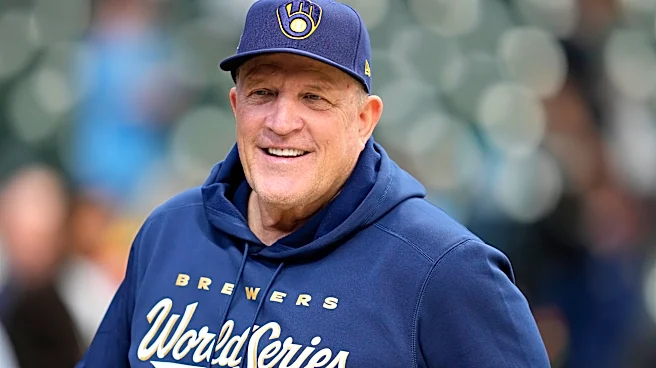
Brewers hitting coach Daniel Vogelbach is getting his flowers right now, and well he should. He helped guide a Milwaukee lineup that finished with the second-fewest home runs in the Majors but the second-most runs scored. In an interview with MLB Network during the World Series, Vogelbach explained why Brewers hitters were able to be so productive with so little power.
“It takes a special individual to be OK with taking strikes, and these guys are OK with it. They grind out at bats, they’re not scared to go 0-2, they know what they want. They don’t try to do anything else other than what their plan is going up there.”
More than anything, it’s a mindset and I think the mindset of these guys is special.“
Vogelsong was asked about hitters always wanting to get their “A” swing off and whether that actually is the right approach, especially against elite pitching.
“Homers are thrown, they’re not hit. You have to be ready for the mistake, but at the same time, you have to take what the pitcher gives you. Facing the Dodgers and the Padres and now this Rays team, sometimes you have to slow torture guys… take singles, walk, run the bases, and manufacture runs that way.”
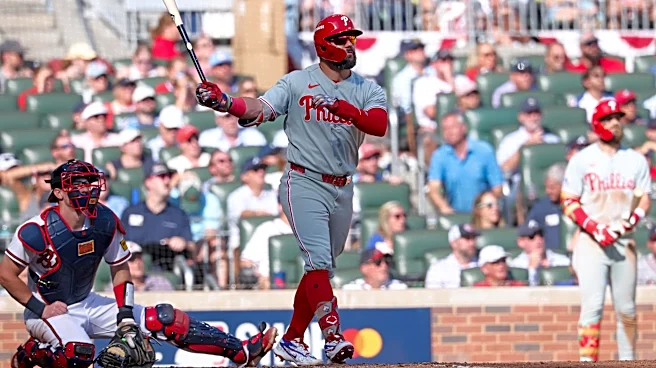
That sentiment about players always wanting to get their “A” swing off resonated with me about these Phillies hitters who, it feels like, is obsessed with always getting off their “A” swing, no matter what.
The Phillies were obviously not a patient team, and haven’t really been during the Harper/Schwarber era. Their 34.8% chase rate was 4th-highest in MLB last season. Milwaukee’s 29.1% was the lowest. As a result, the Phils saw the 11th-fewest percentage of pitches in the strike zone last year, while the Brewers saw the 5th-most. But this excellent thread looking at Milwaukee’s hitting philosophy also shined a light on why the Phils have been easier to pitch to the last couple years, too.
Last year, the Phillies were tied for 3rd in the percentage of swings in which they were “early,” on all pitches. Look at the Brewers way down there at the bottom.

In the postseason, they were early more than any other team.

Philadelphia hitters have been befuddled by off-speed pitches, particularly changeups, for a long time. On off-speed pitches during the regular season last year, which includes changeups and split finger fastballs, Phils hitters were earlier on their swings more than any other team in baseball.

Their on-time rate for off-speed pitches was tied for 18th and their average miss in distance (3.9 inches) was tied for 9th-most.
Their goal, obviously, was to be ready to mash fastballs for homers, but it didn’t work. They were still tied for 24th in on-time rate for fastballs (including sinkers and cutters), and 25th in on-time rate just for four-seamers.
Part of the reason for that is it appears hitters are always looking to get off their “A” swing and trying to attack fastballs. All. The. Time. The Brewers, on the other hand, stand farther back in the batter’s box than any team in baseball and are willing to be a little late on the fastball if it means being able to see spin and spit on pitches out of the strike zone.
Of course, you need power. What the Brewers did in the regular season and, in the playoffs in particular, is exceedingly difficult. As Jayson Stark noted in his recap of the Series for The Athletic…
The Brewers’ three home runs were hit by Sal Frelick (none in the regular season after July 11), David Hamilton (one after June 6) and Cooper Pratt (one against a left-hander all season). Which means …
They got no home runs from their Nos. 1-2-3-4-5-6 hitters — and they still won the World Series.
On one hand, seven other World Series champs have done that. On the other hand, according to STATS, none of those other teams played in the live-ball era (since 1920). Unbelievable.
Unrepeatable, is more like it.
The goal should not be for the Phillies to go homerless during a World Series from their 1-6 hitters. They’re not winning very many games if they do that. But it’s clear they cannot continue to sell out for power that just isn’t there most of the time and is especially scarce against great October pitching.
Is this a solvable problem with this current group of Phillies? That will be Fatse’s first job out of the gate. Can he convince hitters to stick to their plan at the plate, be patient, stop worrying so much about using their “A” swing every single time and be more reactive?
Clearly, you don’t want to stop Bryce Harper and Kyle Schwarber from swinging for power, but a bit more judiciousness would be welcome. As for the rest of the lineup, none of them are home run hitters, so they need to be following this model.
Fixing the Bullpen is Job 1B
If fixing the offense is Dombrowski’s No. 1 item this off-season, adding to the bullpen is 1B.
To his credit, he did make a couple of moves last off-season he truly believed would make the Phils’ bullpen more dynamic.
There was no way he could have foreseen Brad Keller being lost for half the season and most of 2027, and he did swing a nice trade, jettisoning Matt Strahm for Jonathan Bowlan. Bowlan wore down as his workload went beyond his previous norms, but was one of the few dependable arms for most of the season. But Dombrowski also was depending on a Jose Alvarado bounceback, which was no sure thing, and thought Tanner Banks could repeat his out-of-nowhere 2025 season. Neither happened. Orion Kerkering also fell apart over the season’s final month and was unusable over the final two weeks.
The run-scoring environment in the postseason is much harder. We’ve seen past Phillies’ offenses fall apart once the calendar flips to October, which puts more pressure on the pitching staff, particularly the bullpen. As has been well chronicled now, the last time a Phils reliever successfully converted a save opportunity was in Game 4 of the 2023 NLDS against Atlanta by Strahm.
Runs were even more at a premium in 2026 and virtually every postseason moment was a high leverage situation for Milwaukee this October, as noted by Stark.
The Brewers played 120 innings in this postseason. The game was within two runs at some point in 110 of them. That is 91.7 percent of the time. And if that feels like it’s a big percentage, it’s because it’s a really big percentage. In fact, according to STATS, it’s the highest percentage by any World Series champ in the wild-card era (since 1995).
Milwaukee’s bullpen run was historic, the fourth-lowest ERA (1.38) in playoff history (the 2022 Astros, you’ll remember, didn’t give up a single run throughout October). The Brewers would not have survived without an otherworldly performance by their ‘pen, even with the outstanding starting pitching they received. The Phillies have fallen apart because both their offense and their bullpen have faltered the last three years. If even one of those facets of the team had been functional, they likely would have at least won a few more rounds in 2024, ‘25 and ‘26.
The Phillies’ quest to “fix” the offense will obviously be the lead story this off-season, but Dombrowski and the front office have to be obsessed with finding as many potential impact relievers as possible this winter. They need to make a bunch of trades, even if it’s for players buried on other teams’ 40-man rosters. They need to do a better job of developing their own relief pitchers and come into spring training relying less on hope and more on stuff. And you don’t have to break the bank to do it.
The Brewers got Trevor Megill for cash and a player to be named later in 2022. They got Chad Patrick from the A’s for a washed infielder, Abraham Toro. DL Hall was part of the Corbin Burnes deal, so that was a high profile trade, but they drafted Aaron Ashby in the 4th round signed Abner Uribe as an international FA at 18 years old for $85,000. All of them finished with 1.3 WAR or better this year and were dominant in the playoffs.
Fixing the bullpen should not be a secondary concern.
It’s possible we see solutions to some of these problems come quickly, as team presidents and general managers try to get transactions done ahead of the end of the collective bargaining agreement and pending lockout on December 2.
But solutions must come.