


With the near certainty of a lockout and a long fight between players and owners this offseason, it’s hard to get real enthusiastic about free agency right now. It’s usually hard for Tigers’ fans in the first place. While there is the idea being floated that top free agent Tarik Skubal may sign before the December 1st lockout if the right offer is available, with the Dodgers, Mets, and Cubs, generally regarded as his main suitors, he’s a pretty unique case. Apart from Skubal, there seems to be widespread
expectation that most free agents will wait until new terms of the next collective bargaining agreement are announced before signing. Likewise, teams need to know the payroll constraints they’ll be working under to really manage their budget for free agents.
However, there’s also likely to be a set of moves from many teams simply designed to shore up depth where possible before the lockout begins. Scott Harris has a habit of trying to add a depth starter early in the offseason. These moves have generally gone pretty poorly, although Drew Anderson was a better choice last year than most. Even so, Harris certainly seems to emphasize getting a little depth in his offseason shopping early on, perhaps with the idea that he won’t have to force a move later. This strategy has not worked out terribly well, but that’s more been a matter of picking the wrong pitchers. The theory is still reasonably sound, particularly with the lockout looming. I wouldn’t be surprised to see him try it again.
The Tigers have a pretty solid group to build a rotation out of next season, but they aren’t necessarily that deep either. By 2028 the Tigers may have a pretty good crop of starting pitching prospects in the upper minors. Right now, they do not. And as we’ve discussed repeatedly since the regular season ended, the Tigers need for high leverage relievers is best answered by converting 1-2 of their starters with big stuff, but limited recent workloads, into relief help. To do that they’re going to need to pick up another starting option this offseason.
The criteria is pretty simple. We’re just looking at short term deals here. The Tigers are highly unlikely to go after a big target in the starting pitching market. National media is going to continue to report that the Tigers are “keeping tabs” on the Tarik Skubal market, but no one is buying that as long as the reported price tag remains well over $300 million. The Tigers will be angling for depth here unless Scott Harris decides to break his usual patterns, so it’s not going to be a thrilling signing when and if they add an arm. Deciding to lock up a decidedly mediocre journeyman reliever in Jacob Waguespack should probably be seen as the corollary to any depth starter signing that could come before the lockout begins.
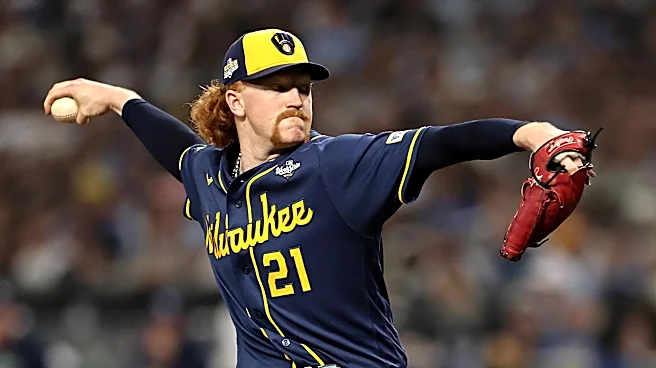
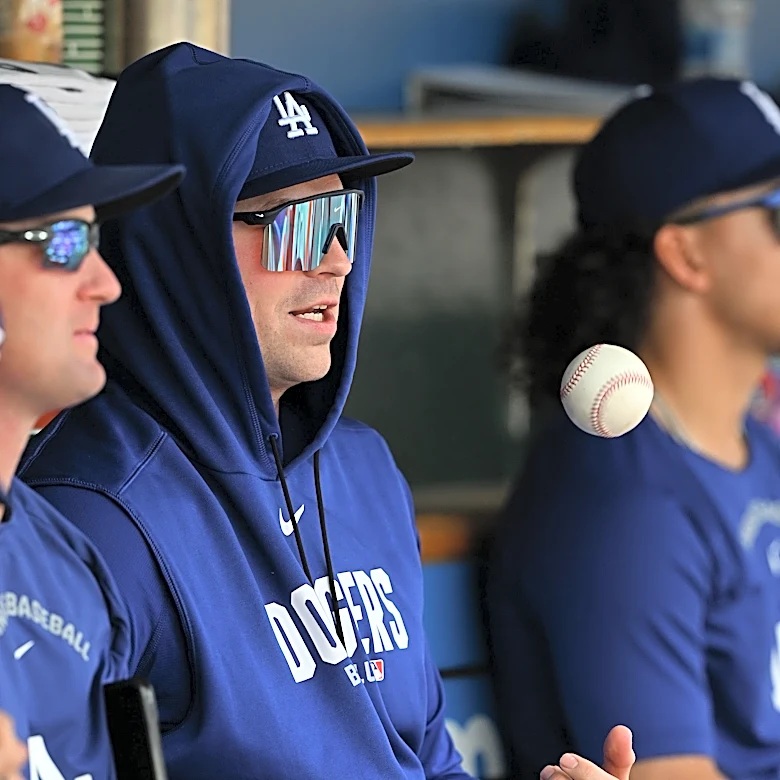
Let’s take a look at Dustin May, who is a pretty good all around fit for what the Tigers will probably look for in a free agent starter.
RHP Dustin May
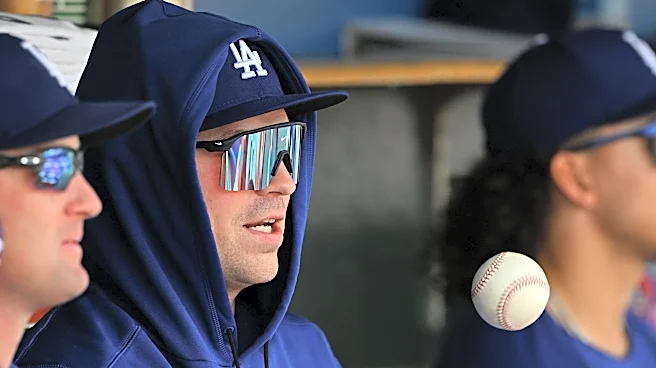
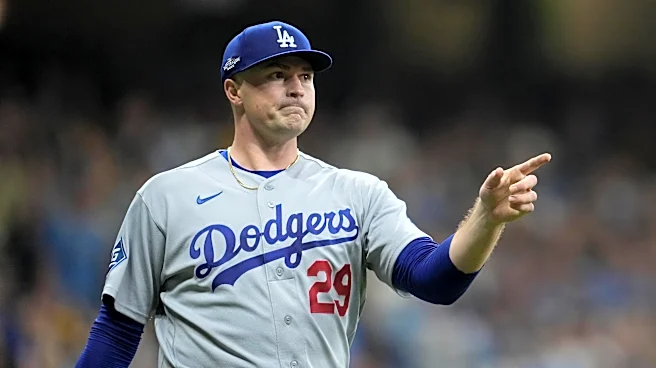
This veteran right-hander makes some sense for the Tigers. The lanky 29-year-old has never been able to translate his velocity into high-end whiff rates, and his breaking stuff has never carved hitters up the way many expected when he was a prospect. On the other hand, he’s fairly consistent and took a notable leap in preventing home runs this season while finally putting his years in injury purgatory behind him.
Between 2021-2024, when he was still with the Dodgers, May’s career was in shambles as he had two UCL reconstruction surgeries with just a brief comeback in between them. He was still effective in his brief stints on the mound, but his early potential was going to waste as his mid-20’s were largely spent on the injured list. He was traded to the Boston Red Sox at the deadline in 2025. The Cardinals signed him to a one-year deal worth $12.5M for 2026 before they dealt him to the World Series champs back at the trade deadline. For two seasons now he’s been generally healthy, throwing 132.1 and 145.2 innings the past two seasons, with no major injury trouble.
May is still averaging just shy of 97 mph on his fourseam and sinker with a bit more than average extension. He’s largely backing that with his 93-94 mph cutter in a very fastball heavy profile. He uses his 86 mph sweeper a decent amount, but the break on that is a little too big to fool major league hitters as much as the movement might predict. May rips his 86 mph sweeper at over 3000 rpms, and late in the season, he started throwing more of a straight curveball at 83.7 mph, with the same monstrous spin rate and getting more whiffs with it. We didn’t see it working as effectively in the postseason. In general, May gets a very balanced spread of grounders, line drives, and fly balls, so he’s fairly neutral in terms of how park factors will affect him.
He still feels to me like a guy who might be better off ditching the cutter and trying to throw more of a prototypical slider instead, while continuing to experiment with the sweeper/curveball combo as more of a strike stealer that is hard to square up for lefties. Sometimes throwing cutters, fourseamers, and sinkers all can diminish each of those pitches individually by requiring some fairly subtle feel differences how they’re gripped and released.
However, May was with the Dodgers a long time, so I would guess there have been plenty of stuff experiments under smart coaches along the way. The intriguing note for me was his increased curveball usage late in the year and the velocity on that pitch. Both Jackson Jobe and Beau Brieske started ripping an 85-86 mph curveball that neither had really thrown before, and the pitch looked pretty whiffish in the brief looks we had of them. Possibly the Brewers were thinking along similar lines with May, making this a little more interesting fit in Detroit.
May intrigues me to a degree is that he’s missed a lot of time in his career and really hasn’t had long stretches of good health in which to actually hone his craft and get better. Of course, you can just as easily call that being injury prone, but you take a look at May’s raw stuff and the wildly varying arm angles from year to year, it feels like he’s still tinkering for the right arm angle and stuff.

The Tigers don’t really need a workhorse here. May just completed back-to-back full seasons for the first time in his major league career, and yet he’s been with four teams over those two seasons. He hasn’t had a chance to settle in anywhere. And yet, May had a pretty good first half before fading as the season progressed. His 4.38 ERA with the Cardinals was solid, and he boasted a 3.15 FIP in St. Louis that said he’d actually been somewhat unlucky. He dealt with back tightness in June and then an ankle contusion in July, and really wasn’t pitching well through that stretch.
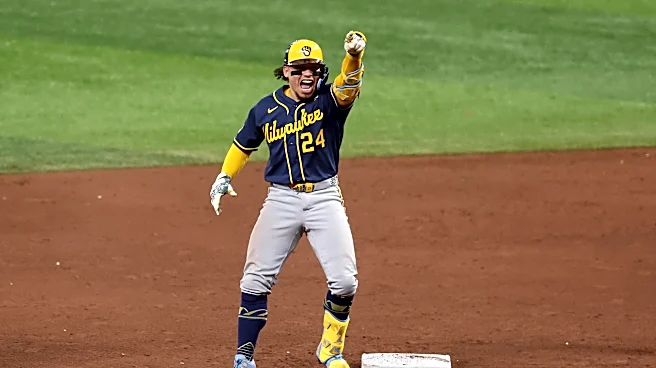
May briefly got off to a good start in Milwaukee, but blew up in a start on August 19th and the next time out took a 106 mph liner to his back, striking him in the upper back on the right side. He struggled the rest of the way, posting an ERA of 5.65 with the Brewers as they limited his starts and kept a quick hook on him. He was okay in the postseason, but again was working short outings with a mix of starts and relief appearances after an opener.
May dominates right-handed hitters. His trouble has always been allowing power and walks to lefties. In 2026, the problem was really just those walks. The Tigers being in pretty good shape with lefty relievers says that May would have a quick hook hanging over him in the middle innings of any start where a tough pocket of lefties was coming up in the opposing lineup.
Things are set up pretty well for May to have a solid season in 2027. I wouldn’t expect much more than 125-145 innings, but his production should be basically league average or a little better. He would be the Tigers’ fifth starter, and might get flexed into middle relief work here and there as well. That would allow the Tigers to use one of River Ryan, Troy Melton, or Keider Montero in high leverage roles along with Drew Sommers and hopefully, Will Vest next year. If Reese Olson is finally healthy, that opens up more options.
I’m not convinced that May has tons of upside remaining or anything, but his velocity and ability to spin the baseball will continue to intrigue teams around the league. The Tigers would be happy with his Cardinals production during most of the 2026 season, and hope to help him be more consistent from start to start and cut down on the walks to lefties. Solid depth starter work with some flexibility would do just fine, though he’ll likely be angling for a two-year deal after proving that he’s finally beyond all the elbow troubles.
MLB Trade Rumors projects a two-year, $30M deal with a player opt-out after year one. Like most contracts of this type, you’re rarely going to love it, but it might be just what the Tigers need to allow them to focus on the bullpen.