

Let’s keep the mid-season 2026 Purple Row Prospects (PuRPs) list reveal rolling! Today are prospects 25-21. As a reminder, in this edition of the PuRPs poll, 29 qualifying ballots were cast, with 30 points granted for a first place vote, 29 for second, etc.
For each player on the PuRPs list, I’ll include a link to individual stats and contract status (via Baseball-Reference), PuRPs voting stats, a note on the 2026 season to date, and a scouting report from a national prospect writer where possible.
For what it’s worth, I’ll also include where I put each player on my personal ballot. All ages are as of the date the article is posted.
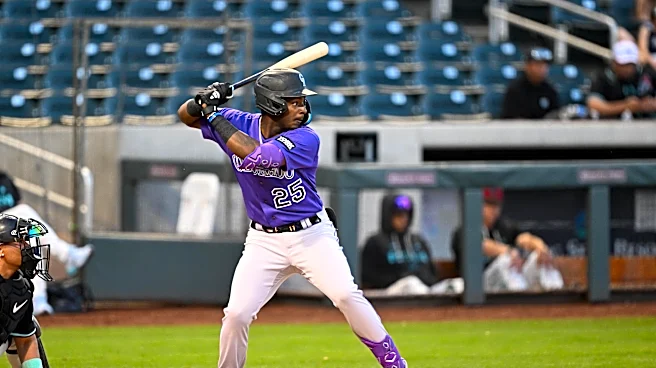
25. Andy Perez (168 points, 20 ballots) — Preseason Ranking: NR— High Ballot 14, Mode Ballot 26, 27
How did he enter the organization?
2021 International Free Agent, Cuba
Why did he make the PuRPs list?
Perez is an athletic up-the-middle player with decent speed and good contact ability in a large frame (likely 6’4”, 210 pounds). The 22-year-old lefty-hitting, righty-throwing shortstop was an international free agent out of Cuba, signing in 2021 for $300k. After two seasons in the DSL, Perez skipped the Complex League in 2023 and was assigned directly to Low-A Fresno, where he was overmatched by older pitching (63 wRC+).
In 2024, Perez was returned to Fresno and his batting numbers progressed to a league-average level (100 wRC+). Perez got a late season look with High-A Spokane as well, where he was below league average in 66 PA (54 wRC+) as a 20-year-old. In 2025, Perez served as the shortstop starter for Spokane, committing 17 errors in 113 games, but offensively it was a struggle again. In 483 plate appearances, Perez hit .271/.314/.389 with 19 steals in 23 attempts and hit seven homers among his 33 extra-base hits, totaling a 83 wRC+.
This year, Perez has been the primary shortstop at Double-A Hartford, where he is 1.7 years younger than league average. Despite the step up in level, Perez has had a stronger year at the plate with Hartford, hitting .301/.332/.413 with seven homers and 23 steals in 459 plate appearances, which is a near league average 96 wRC+. Perez has put the ball in play quite a bit, walking in only 4.4% of plate appearances and striking out in 14.6% of them while facing a younger pitcher in only nine of his plate appearances. At shortstop, Perez has committed 13 errors in 92 games. The overall numbers aren’t super impressive, but Perez’s ability to hang in Double-A at a younger age at a middle infield slot is notable.
Here’s some video of Perez in 2024 with Fresno, including slo mo swing looks at the end:
What do the scouts say?
Perez is ranked by FanGraphs as the 15th best in the system at a 40+ FV grade:
Perez and Dyan Jorge entered the organization months apart with similar profiles as glove-first Cuban shortstops. They have progressed, if not quite in lockstep, then at least with some overlap since. But while Jorge had bigger amateur hype, it’s Perez who has quietly developed into the intriguing middle-of-the-diamond prospect.
Perez has grown into his large and lean frame very slowly. Even with somewhat long levers and just average bat speed, he has great feel for contact and has some of the best spin recognition I’ve encountered in a player his age. It’s a see-ball, hit-ball approach, though, and his 62% swing rate was the highest in the system among players who are actually prospects; for an idea of what that tends to look like, Ezequiel Tovar is in a similar territory and he’s run a 4.1% career walk rate in the majors. Tovar has a lot more power, however, as Perez’s remains below-average, and unless he gets significantly stronger, he looks like he’s going to tap into weak outs on pitches he’d be better off leaving. Better discernment or strength gains are useful for anyone, but could have an exponential effect in this case; perhaps new voices in Colorado’s player dev group can unlock something here.
Defensively, Perez’s work with the glove should get him to the big leagues. He’s a rangy defender with a powerful and accurate arm and a very quick release given the first two parts of this sentence. He’s played around the diamond a bit to accommodate other shortstops — including Jorge, who he’s long since passed defensively — and that experience should serve him well in a utility role. If you’re feeling optimistic this spring, Perez’s frame and athleticism give him latent everyday upside in a way that’s unusual for a guy who has consistently posted pedestrian numbers in the box.
MLB.com ranks Perez 16th in the system as a 45 FV player with 50 grades on everything except power:
Ever since signing, Perez has shown a penchant for putting the ball in play from the left side of the plate. He very rarely swings and misses, but he can be a victim of his own success as his chase rates remain very high. He has added strength to his 6-foot-3 frame, which helped him get to some more extra-base authority, but the power some projected hasn’t shown up consistently, even with his success this year with Hartford.
Perez can steal a base even though he possesses just average speed, and he moves very well defensively, especially given his size. He might have the range, instincts and arm to stick at shortstop long-term, though he’s also seen some time at second and third should he need to fill a utility-type role in the future. He’s still only 22, so there’s time for him to refine his swing decisions, get to more impact and grow into a regular role in one spot in the future.
When’s he going to get to the Rockies and how good will he be once he’s there?
Perez was 23rd on my list as a 40 FV player because big-framed shortstops who can stick at the position with both power potential and elite contact ability don’t grow on trees, even though it hasn’t come together yet for him. If that does happen, Perez would be more of an impact big leaguer than many others ahead of him on the list. Perez will be Rule 5 eligible for the second time this off-season and he’s going to be in contention to get protected with the season he’s had. If he’s back in the organization next year, Perez will probably be in the Double-A/Triple-A mix with a 2027 debut possible as a reserve.
24. Angel Jimenez (184 points, 12 ballots) — Preseason Ranking: NR — High Ballot 10, Mode Ballot 18
How did he enter the organization?
2019 International Free Agent, Venezuela
Why did he make the PuRPs list?
Jimenez didn’t exactly come out of nowhere this year, but you would be forgiven if you forgot his existence. The 23-year-old right-handed pitcher signed out of Venezuela all the way back in July of 2019 for $325k but due to the pandemic in 2020 and arm issues in 2021, Jimenez didn’t throw a pitch in affiliated game until 2022. After a decent debut in the Dominican Summer League, Jimenez had strong results stateside with the Arizona Complex League team in 2023 but lost another season in 2024 to injuries. By the time Jimenez made his full season ball debut in 2025, he’d already been Rule 5 eligible.
In 2025, Jimenez began back at the Complex level with seven starts before moving up to Low-A Fresno in late June for ten more starts to end the year. In all, Jimenez threw 60.2 innings with a 4.01 ERA, 1.43 WHIP, 10.8 K/9 rate, and 3.7 BB/9 rate. That wasn’t enough to get him a 40-man roster placement, but over the off-season Jimenez found a change-up that put him on scouting radars. In 2026, Jimenez returned to Fresno, where he was league-average age even after seven years of professional baseball.
Jimenez started 14 games with Fresno, throwing 57.1 innings with a 4.40 ERA, 1.17 WHIP, 11.8 K/9 rate, and 3.3 BB/9 rate, including two quality starts. After going on the shelf for a couple weeks and a two start rehab stint with the Complex League, Jimenez got his first look with High-A Spokane in mid-July and has made four starts there. In 13 innings (he hasn’t gone more than four innings in a High-A start yet), Jimenez has allowed 10 runs on 13 hits and seven walks with 16 strikeouts. Regardless of results, it’s been good to see Jimenez roughly match his entire professional innings total from 2019-2023 in 2026 alone.
What do the scouts say?
FanGraphs ranks Jimenez all the way up at number 10 in the system as a 45 FV player, slapping a plus future grade on the fastball and the change-up:
Jimenez is a loose and projectable righty who signed out of Venezuela back in 2019, but the pandemic and a series of injuries have limited him to 139.1 innings in pro ball. He dials it up into the upper 90s without much obvious effort, and has the athleticism and body control to project average control and a future in the rotation. Jimenez’s fastball shape isn’t great, but he throws hard enough — at least early in outings; his velocity tended to tail off toward the end of his outings last year — to get away with it.
After working with mostly average secondaries last summer, Jimenez showed up to camp with a plus sinking changeup, which is thrown with late action and good arm speed. His breaking balls are slurvy and can run together, but his best flash average; he has enough feel for spin to project here, and his relatively short track record gives me hope that time and reps will work their magic. He’s an exciting, arrow up arm, one who could find himself in the mix for the Top 100 someday if he can sharpen the slider, hold his stuff deeper into games, and leave the injury bug in his rear view mirror.
Jimenez snuck in at number 29 in the system for MLB Pipeline as a 40 FV player:
While he’s already 23, Jimenez is still more about projection and arm strength than feel for pitching due to all the time he’s missed. There’s plenty of velocity from his right arm, with a fastball that sits around 97 mph and touches 99. It plays down a bit because it can come in too straight and gets hit, with some concerns about its future playability lingering. He does have a full array of secondary offerings, with his sinking changeup ahead of his two breaking balls, but he does display decent feel to spin.
There’s a chance Jimenez could start long term because he does a nice job of repeating his delivery and throwing a good amount of strikes, though there’s plenty of work to be done in terms of maintaining his stuff deep into starts and in refining his breaking stuff and heater.
When’s he going to get to the Rockies and how good will he be once he’s there?
Unlike some others on this list, Jimenez doesn’t just face Rule 5 eligibility at year’s end — he’ll be a minor league free agent if the Rockies don’t add him to their 40-man roster this off-season (Yujanyer Herrera is in the same boat). That creates a sense of urgency for the Rockies to see what they’ve got in Jimenez. Right now, he appears to be a talented pitcher with a starter profile who probably needs two more years in the minor leagues.
If he got those years with the Rockies, he’d be occupying a 40-man roster spot and would burn two of his option years. Is Jimenez worth the trouble? Would he re-sign on a minor league deal in the off-season? I don’t know the answer, but Jimenez is a 40+ FV player for me, ranking 15th on my list because he’s got two potential plus pitches with two other decent secondaries and the Rockies need more of those kinds of players.
23. Max Belyeu (208 points, 20 ballots) — Preseason Ranking: 15— High Ballot 12, Mode Ballot 22
How did he enter the organization?
2025 Competitive Balance Round B, University of Texas
Why did he make the PuRPs list?
Belyeu (pronounced like the bear in The Jungle Book) was Colorado’s third pick of the 2025 draft, going 74th overall and signing for a slot bonus of $1.11 million. Rockies fans will naturally make comparisons between Belyeu and fellow Texas hit-over-power outfielder, Rockies draftee (in 2024’s second round), and PuRP Jared Thomas. The 6’2” 22-year-old lefty hitting, righty throwing Belyeu handled right field for Texas in 2024 while Thomas (who is only five months older than Belyeu but was old enough to be a draft-eligible sophomore) took first base and center field. Belyeu broke out in a big way (along with Thomas) in 2024, winning the Big 12 Player of the Year award with a .329/.423/.667 batting line in 249 plate appearances which included 18 homers among his 34 extra-base hits (142 wRC+).
In 2025, Belyeu moved along with Texas to the tougher SEC as a potential first-round draft pick. He started the season well, but suffered a fractured left thumb in March while diving for a ball in the outfield that limited him to only 156 plate appearances and likely impacted his power output. Belyeu’s .303/.410/.576 line with nine homers among his 17 extra-base hits was still good for a 117 wRC+, but he also struck out over a quarter of the time (up from 17% in 2024) and struggled with chasing out of the zone and spin. Those warts were enough to make him available for the Rockies between the second and third rounds of the draft.
After the draft, the Rockies assigned Belyeu straight to High-A Spokane. Belyeu started strong (.318/.423/.727 with three homers in his first 26 plate appearances) but he went cold down the stretch, including a 1-20 mark with nine strikeouts in September. In 21 total games, Belyeu hit just .150/.244/.300 with four homers and three steals (42 wRC+) while striking out in 36% of plate appearances (and walking in 10% of them).
In 2026, Belyeu returned to Spokane, where he is about six months younger than league average. After a slower start, Belyeu was having a torrid June (.349/.434/.773 with eight homers in 17 games) before he tore a tendon in his finger that ended his season. In total, Belyeu hit .244/.348/.489 with 12 homers among his 26 extra-base hits in 258 plate appearances, good for a 109 wRC+. Based on the trajectory of his June, I’d say that without the injury, his full season total was headed a good bit better than that.
Belyeu walked in nearly 11% of plate appearances but strikeouts remained a big problem, consisting of 32% of his plate appearances. He crushed right-handed pitching (.923 OPS) and struggled against southpaws (.556 OPS) In the field, Belyeu spent time in all three outfield positions, though he was most often in right field, making nine outfield assists and committing one error.
And here are some highlights from Belyeu’s draft year with Texas:
What do the scouts say?
Baseball America was higher on Belyeu than every person in the PuRPs electorate, ranking him 7th in the system before the season and listing Belyeu as the 2029 Rockies right fielder:
Belyeu is a strong, physically developed 6-foot-2, 215-pound lefthanded hitter with a compact swing and quick hands. He has an aggressive approach at the plate and is prone to chasing pitches. Belyeu’s plate discipline showed steady improvement throughout his college career but it regressed dramatically in his pro debut. He possesses above-average raw power and projects to hit 20–25 home runs with further refinement.
Belyeu’s routes in the outfield can get scenic at times, but with reps he has a chance to be an above-average defender in an outfield corner. His arm is his loudest tool and is a plus weapon with great carry and accuracy that should leave baserunners questioning themselves when taking an extra bag.
Keith Law of the Athletic ranked Belyeu 12th in the system in February:
Belyeu got a boost with the Rockies when one of his college coaches, a guy named Troy Tulowitzki, went to bat for him (pun intended), leading Colorado to take him in the second round in last year’s draft. He offers 25+ homer upside with the potential for plus defense in an outfield corner, but his approach is really suspect with a lot of chase and whiff, including too much of a tendency to give away at-bats entirely. He missed about 20 games of his college season with a thumb injury, and then missed fall instructional league with a hamstring injury. It’s a lot to ask of a player to overhaul his swing decisions, making Belyeu a very high-risk/high-reward prospect.
MLB Pipeline ranks Belyeu 14th in the system (he was 34th in their draft rankings) as a 45 FV player (the same grade as Thomas) with a 60 grade on the arm and a 55 on the power:
While Belyeu isn’t a total free swinger, he did get more aggressive during his junior year, and his strikeout rate did climb, something that continued during his stint with Spokane after signing. The left-handed hitter has some strike-zone awareness and there’s damage in there, with the ability to drive the ball to all fields, but he’s going to have to work to try not to do too much at the plate, which takes him out of his approach. The Rockies’ new hitting group values contact and will work with him to be a hitter first.
Belyeu is a solid athlete with decent speed and should be able to handle a corner outfield spot capably, with a plus arm that fits in right field. He plays with intensity, sometimes being too hard on himself, and he’ll get to show what he can really do over a full, healthy season.
FanGraphs is less sanguine on Belyeu, grading him as a 35+ FV player and ranking him 36th in the system (he was 117th in the draft rankings) with a 60 raw power and 55 bat control grade:
It’s possible that the [2025 thumb] injury, combined with the start-stop-go-pause-okay-let’s-play-again nature of Belyeu’s 2025 season destroyed his rhythm at the plate in a way that made his pro debut unrepresentative of what he’ll look like under normal circumstances. All parties should hope so. Visually, he looked lost and unbalanced in Spokane, and took some of the most bizarrely bad swings I’ve encountered in a high-level college prospect. A cursory review of the tape shows him swinging at fastballs above his helmet and in the dirt, and lunging at all manner of soft stuff, all while leaving much more hittable pitches aside. The stats bear this out, too. It was a relatively small sample, but the gap between his overall swing rate (49%, which is normal) and his swing rate on balls in the heart of the plate (59%, which is 20 grade) is alarming and strange in equal measure. His chase rate also exploded with two strikes, raising additional questions about his zone control and pitch recognition.
Athletically at least, there’s plenty to like. Belyeu has above-average bat speed, a chance for above-average power, and, strangely for someone with a huge strikeout rate, a flat and manipulable bat path. He’s also a decent runner and projects to be just fine in a corner. That hit tool, though. As much as I want to give him a pass for 2025, the numbers and the look are just too concerning to do anything other than stick him down here and hope last season was a fever dream.
When’s he going to get to the Rockies and how good will he be once he’s there?
I think it’s not too unreasonable to compare Thomas and Belyeu as prospects given the similarity in their provenance, age, and position. Thomas is faster, makes better swing decisions that gets his raw power into games more, and can play both center field and first base. Meanwhile, Belyeu has a better contact tool (though he has struck out more as a professional), raw power, and outfield arm that is well suited for right field.
I prefer Thomas as a prospect because the profile has already worked against Double-A pitching and Belyeu’s issues with spin are concerning, but Belyeu is comfortably a 40 FV player who I ranked 26th on my ballot. Scouts seem to be higher on Belyeu than the electorate, so hopefully he will show why in a bigger professional sample size next year, probably in Double-A Hartford.
22. JB Middleton (213 points, 23 ballots) — Preseason Ranking: 7— High Ballot 12, Mode Ballot 19
How did he enter the organization?
2025 Second Round, University of Southern Mississippi
Why did he make the PuRPs list?
Middleton became the highest-ever drafted pitcher for Southern Mississippi when the Rockies took him 45th overall in the 2025 draft (Middleton was 41st in MLB Pipeline’s draft rankings), signing the 22-year-old right-hander to a $2.072 million bonus that was $100k under slot. Middleton doesn’t possess ideal size for a modern day hurler (he’s only 6’0”), but his repertoire includes a good three pitch mix (fastball, slider, change) that he throws for strikes. He throws from a three-quarter slot with a quick arm action, a mid-90s fastball, a late-breaking slider that gets whiffs, and a good change-up to keep lefties honest.
After two relatively unimpressive college seasons as a reliever, Middleton’s stuff took a big step forward in 2025 and he moved into an ace starter’s role. In 16 starts, Middleton averaged nearly 6.2 innings per outing (105.1 total) against less acclaimed competition in the Sun Belt conference. Middleton’s 2.31 ERA, 10.4 K/9 rate, and 2.1 BB/9 rate were good, but it was his sterling 0.85 WHIP (ranking second in Division I) that was especially noteworthy.
As a professional, Middleton didn’t debut until this spring with Low-A Fresno, where he is league-average age. Middleton made five starts in April before requiring internal brace surgery on his right elbow (which happened in June or July) that ended his season at just 20 innings pitched. Notably the recovery time for that procedure (when all goes well) is closer to 6-9 months rather than 12-18 months for Tommy John surgery.
In the innings he pitched before the injury, Middleton had a 4.95 ERA with a 1.70 WHIP, 8.1 K/9 rate, and 5.9 BB/9 rate. He was crushed by lefties (1.212 OPS against) in 44 plate appearances while he handled right-handers well (.538 OPS against in 49 plate appearances).
Here’s video of Middleton in action last March with USM courtesy of Kyler Peterson, including some slo-mo looks at his delivery and release for his arsenal in the last couple minutes:
What do the scouts say?
Keith Law of the Athletic ranked Middleton 8th in the system in February:
Middleton is a four-pitch guy who’s up to 97 on the heater, lacking a clear out-pitch in the mix but mitigating that with plus control and a good delivery he repeats well. I noted at the draft that he was a good candidate for the Rockies, who now have their own pitching lab, to try to work with on pitch design, as his slider seems like it could be sharper and maybe become that 60 in the quiver to help him miss more bats. As is, he’s a back-end starter who should get to Double A quickly.
MLB Pipeline ranks Middleton 24th in the system as a 40 FV player with a 60 grade on the slider as well as a 55 on the fastball and changeup:
Middleton is an undersized right-hander who has the three-pitch mix to make a go as a starter. He can run his fastball up to 97 mph, sitting in the 93-95 mph range, and it can play above its velocity at times with his ability to both sink it or throw it with carry up in the zone. It gets a fair amount of miss and chase, but not nearly as much as his secondary offerings. His upper-80s slider has two-plane depth and is sometimes cutter-ish. Both that and his 86-88 mph tumbling and fading changeup miss a ton of bats both in and out of the zone.
The six-foot Middleton isn’t the most physical hurler, but he’s athletic, repeats his delivery well and showed a vastly improved ability to find the zone compared to his time in the Southern Miss bullpen. The Rockies love that he pitches with a chip on his shoulder and is super-competitive, knowing that he’s going to hate whatever workload limitations they put on him.
FanGraphs grades Middleton as a 40 FV player (99th in the draft class) and ranks him 31st in the system with a 60 future grade on the changeup:
Middleton had a huge junior year at Southern Miss, where he moved into the rotation and posted a 2.31 ERA while striking out more than 10 per nine. The undersized righty was a popup guy, and a little extra velo down the stretch may have earned him a bunch of money, as he signed for a little more than $2 million.
Changeup aside, Middleton’s stuff looked fringy this spring. His fastball sits 93-95 without bat-missing shape, and he’ll likely need to air it out in short stints to reach higher than that over the long haul. He’s added a curve and flashes an above-average slider, though neither looks like an out pitch. He has good arm speed on the change, and the sink and fade he generates gives him a legitimate weapon for lefties. It’s the pitch mix and repertoire depth of a starter, and a backend starter outcome is in play. Middleton’s stature raises durability concerns, and his somewhat bland blend of stuff and command suggests that the second and third trips through the order could get ugly. For those reasons, a middle relief outcome seems most likely.
When’s he going to get to the Rockies and how good will he be once he’s there?
Middleton’s elevator pitch is that he is a high-probability starting pitcher with some mid-rotation projection. That profile has taken a hit with the injury, which is why I dropped him a half grade to a 40 FV player, 22nd on my list. Middleton’s 2027 is in question as he recovers from surgery. I anticipate that, even if he does return during the season, that the Rockies will ease him back in Fresno, though a High-A Spokane assignment by the end the season could happen as well.
21. Sean Sullivan (217 points, 20 ballots) — Preseason Ranking: 8 — High Ballot 6, Mode Ballot 22
How did he enter the organization?
2023 Second Round, Wake Forest University
Why did he make the PuRPs list?
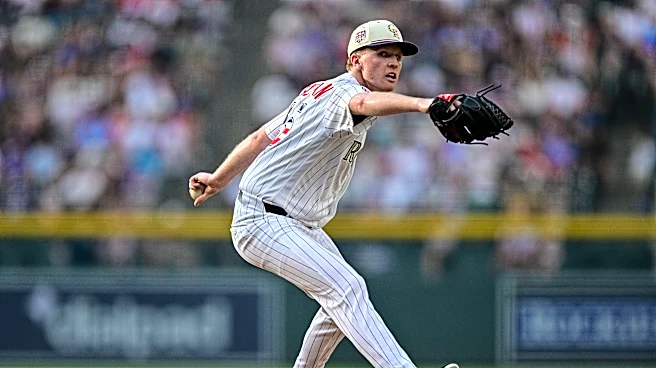
Despite a professional career that has been marred by injuries and an accompanying loss in velocity (sitting only in the mid-80s at points), Sullivan has made his bones by getting upper-minors hitters out — a lot of them via strikeout. Sullivan relies mostly on his fastball which despite the lower velocity is an effective pitch due to a low, wide release angle that gives it great carry up in the zone and the elite extension he gets that allows the velocity to play up. He pairs that offering with a slider and change-up, but the fastball and excellent command are the main separators.
The 6’4”, 24-year-old lefty pitcher was dominant at Wake Forest, pitching 69.2 innings with with a 2.45 ERA, 0.92 WHIP (fourth-best in Division 1), a 14.3 K/9 rate (second-best), and a 2.7 BB/9 rate as the Demon Deacons made it all the way to the College World Series semi-finals. Sullivan (whose delivery reminded the Rockies of Kyle Freeland) rode those numbers to a $1.7 million bonus from the Rockies that was about $187k below slot.
In High-A Spokane in 2024, Sullivan threw 83.1 innings in 14 starts with a 2.16 ERA (2.79 xFIP), 0.84 WHIP, 10.9 K/9 rate, and a minuscule 0.9 BB/9 rate (including a nine-inning complete game). That was enough in the High-A Northwest League to receive their Pitcher of the Year award even though the Rockies promoted Sullivan in August to Double-A Hartford. Sullivan maintained his excellent run prevention against Eastern League hitters, throwing 32 innings across seven starts with a 1.97 ERA and a 1.09 WHIP, a strong achievement for one of the younger pitchers in Double-A (the batter was older than him 80% of the time).
Recovery related to an offseason hip labrum surgery delayed Sullivan’s 2025 debut back at Hartford (where he was 2.7 years younger than average) to mid-May. In 18 starts and 97 1/3 innings with Hartford, Sullivan posted a 3.14 ERA (3.39 xFIP), 1.09 WHIP, 9.0 K/9 rate, and 2.2 BB/9 rate. Those numbers were trending better before Sullivan went to the IL briefly in August and was hit hard in his final four starts of the year (allowing 13 earned runs in 16 2/3 innings) after returning. Seven of Sullivan’s Double-A starts were quality starts, while Sullivan allowed just a .611 OPS to opposing hitters (with basically no platoon splits).
That was enough for Sullivan to get an invite to Major League spring training this year by the Rockies. He was assigned to Triple-A Albuquerque, where in a tough pitching environment the results took a step back. In 11 starts (three of them quality starts), Sullivan threw 54.2 innings with a 5.60 ERA, 1.56 WHIP, 8.2 K/9 rate, and an uncharacteristic for him 3.3 BB/9 rate. The Rockies called up Sullivan for his Major League debut in mid-June against the A’s, where he threw three scoreless innings despite being “sick as a dog” beforehand). Unfortunately, Sullivan’s next four starts with the Rockies didn’t go so hot as he allowed five homers en route to a MLB line so far of an 8.87 ERA, 2.02 WHIP, 6.4 K/9 rate, and 4.4 BB/9 rate in 22 1/3 innings (-0.4 rWAR, -0.1 fWAR). Sullivan went on the minor league IL in late July with left shoulder inflammation (no word on the severity yet).
Here’s some video of Sullivan striking out a bunch of dudes in 2025, many of them swinging:
What do the scouts say?
Keith Law of the Athletic ranked Sullivan 7th in the system in February:
Sullivan had hip labrum surgery after the 2024 season and started the 2025 season about six weeks late, pitching well enough in Double A even though his fastball wasn’t 100 percent to where it was beforehand. Sullivan has never thrown hard; at his best, his fastball is 89-92 but the pitch misses bats thanks to a very low release point, over seven feet of extension (OK, that hurts my hip just thinking about it) and excellent ride on the pitch. He’s got an above-average slider with good tilt and an average changeup, going right after hitters like he’s throwing 98. Sullivan had a lot of outings last year where he was sitting in the upper 80s, and that won’t play, but if he’s even just 89-92 again, I think he’ll be a back-end starter. Side note: I really like watching this guy pitch.
MLB Pipeline slots Sullivan 21st in the system as a 40 FV player thanks to a 60 control grade and a 55 change-up:
Sullivan never had a big fastball, but it took another hit in 2025 as he was coming back from hip labrum surgery. The Rockies had held him back until early May to let him build back up, but he never quite got there. Somewhat amazingly, he found success in Double-A with a fastball that averaged around 86-87 mph and scraped 90 mph, using a combination of deception, angle and up-slope movement to the pitch to get outs. His upper-70s changeup is probably his best offering and while his mid-to-upper 70s slider can be slurvy, he manipulates the velocity and shape of it and it missed a fair amount of bats last year.
While the left-hander is never going to light up radar guns, there is hope that Sullivan can still find a few more ticks of velocity. For one thing, he had a normal offseason throwing program, rather than rehabbing his hip. For another, with the new pitching group in the fold, Sullivan might be able to get back to being more rotational like he was in college, and averaged 91-92 mph with his heater, as opposed to focusing on a deep hinge on his back side and getting a little stuck in his delivery.
FanGraphs is less of a believer due to the low fastball velocity, grading Sullivan as a 40 FV player (with a multi-inning relief role), 32nd in the org, albeit with a 70 future command grade:
Sullivan has just about every deceptive trick in the book. He has a huge crossfire, he hides the ball well, and his low slot gives him both a flat release angle and plus extension. Jarringly, for a tall drink of water without the world’s most fluid looking delivery, he’s got great command. He can hit all quadrants with his fastball and adeptly runs the sweeper on and off both sides of the plate. The change and slider give him a starter’s complement of pitches, and he’s had success out of the rotation through Double-A. He sits 86-88 and barely scrapes 90 in that role, though. While I’d love to project for it to work at the highest level, that’s too narrow of a tightrope for me, even before considering he’ll need to make the high-wire act work at Coors Field.
Sullivan sat in the low 90s in shorter stints this spring and had some pretty good Dodgers hitters off balance in a multi-inning relief outing a couple weeks back. Doing that in a once-through-the-order gig seems more sustainable, and it’s a particularly valuable job in Colorado, where there’s often a need to piggyback or otherwise bail out the starter.
When’s he going to get to the Rockies and how good will he be once he’s there?
Sullivan’s MLB debut marks the fifth so far from Colorado’s 2023 draft (joining Chase Dollander, Cole Carrigg, Kyle Karros, and Seth Halvorsen), with probably another one or two to come in Jack Mahoney and a player like Braylen Wimmer or Cade Denton. Sullivan’s fastball dominance has carried over to the minor leagues all the way up the ladder. The decreased fastball velocity is obviously a concern, though the development of a decent changeup and slider to pair with the fastball are certainly helpful.
Sullivan got knocked around in his first exposure to the Show and it’s possible that he might not be able to thrive in a starter’s role with mid-high 80s fastball velocity. In that situation, I’m still a believer that Sullivan’s handedness and funk mean he could succeed in a bullpen role as well. I ranked Sullivan 19th on my list as a 40 FV player because of the big league proximity and dominance despite the stuff quality diminishing, plus I want the Rockies to continue to think creatively with their pitching draftees.
Next, we’ll crack the top 20 of the mid-season 2026 PuRPs list!
Join the conversation!
Sign up for a user account and get:
- Fewer ads
- Create community posts
- Comment on articles, community posts
- Rec comments, community posts
- New, improved notifications system!
Please keep in mind our Purple Row Community Guidelines when you’re commenting. Thanks!