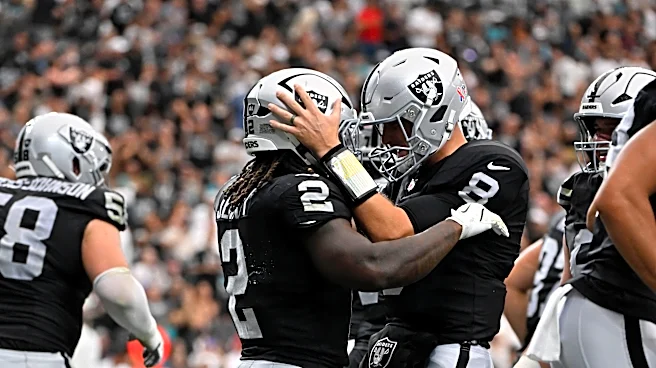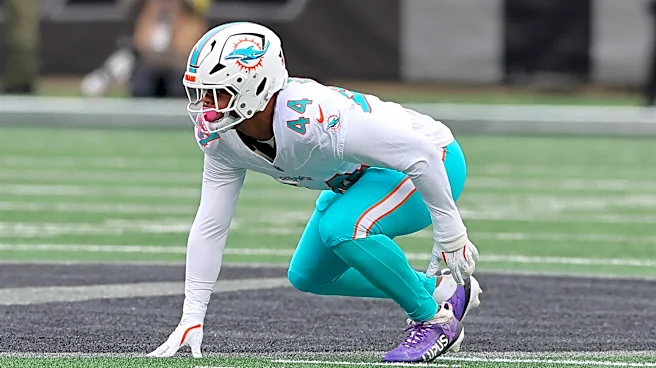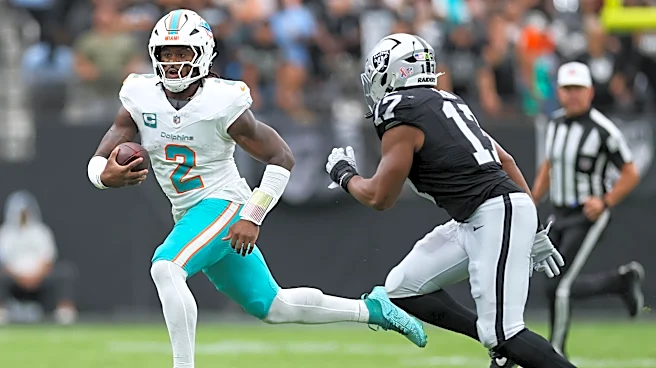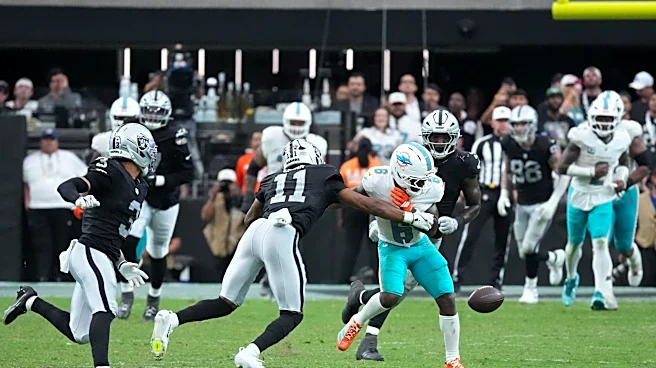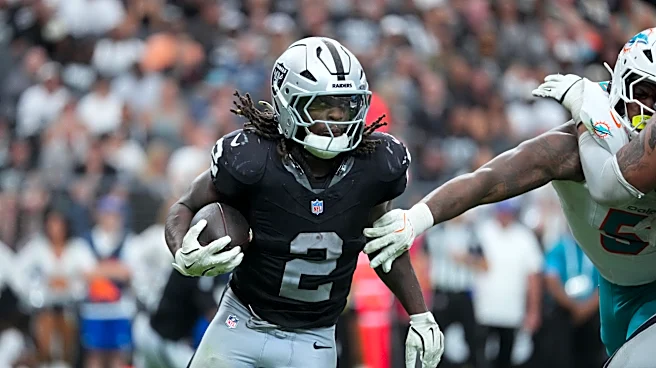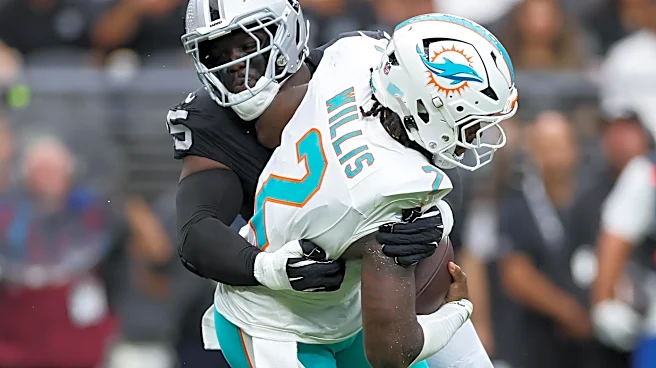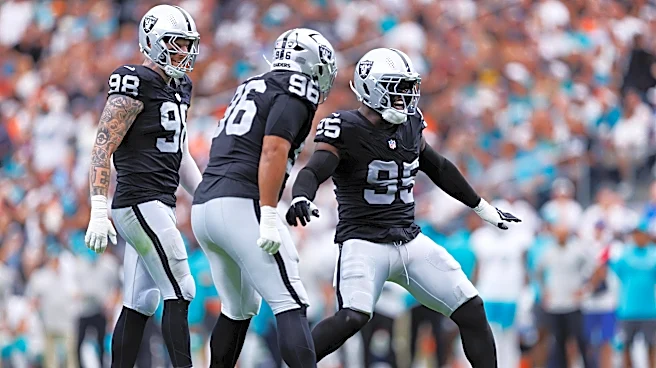


The Las Vegas Raiders’ defense was pretty dominant in the 27-13 Week 1 win over the Miami Dolphins. The Raiders’ pass rush was especially impressive, sacking Dolphins quarterback Malik Willis five times and recording 27 pressures as a team, per Pro Football Focus. Maxx Crosby, Las Vegas’s well-known rusher, was his typical self with 1.5 sacks and tying for the defense’s most pressures with eight. However, he wasn’t alone, as Kwity Paye was also impressive.
The free-agent signing made his Raiders debut
on Sunday and managed to tie for the team lead with six total tackles. Additionally, he led the Silver and Black with two sacks and four quarterback hits while matching Crosby with eight pressures, which is tied for the third-most across the NFL at the position (pre-Monday Night Football). Here’s the kicker: Paye only had 24 pass-rush snaps, meaning he got pressure on a third of his opportunities.
The former Indianapolis Colt didn’t get many opportunities to rack up a large volume of stats against the run with Vegas holding a lead for the majority of the contest. However, he was an efficient run defender, notching a pair of defensive stops on just six snaps against the run, per PFF.
With all of this in mind, let’s flip on the tape and breakdown the performance.
One reason that Paye was so productive against the Dolphins is that defensive coordinator Rob Leonard called an excellent game.
The Dolphins come out in 11 personnel but motion into a 21 personnel formation by motioning the tight end on the line of scrimmage and a wide receiver into the backfield as the H-back in the offset I-formation from the pistol. Miami’s goal is to keep the defense in nickel personnel by leaving three receivers on the field and shifting into a look that they can run a triple option out of. However, Las Vegas has the perfect counter.
Whether it was called in the huddle or something the Raiders checked to pre-snap, Leonard has a well-timed blitz to defend the option. The boundary cornerback (Darien Porter) comes off the edge, which influences the quarterback to hand the ball off to the running back and immediately takes away two of the offense’s “options”: the quarterback and pitch man/wide receiver in the backfield.
Meanwhile, Paye is supposed to be the defender the quarterback is reading, meaning he’s unblocked. He does a great job of recognizing the play design to avoid getting too far upfield and stays close to the line of scrimmage, squeezing inside on the heel line of the offensive line. That puts him in a perfect position to meet the running back in the backfield for a TFL, with some assistance from nickelback Taron Johnson, who blitzes off the other edge and beats the slot receiver’s block to get penetration.
So, this is a scheme-assisted tackle for Paye with a great play call from Leonard. But the edge defender executes his assignment well to be in a perfect spot to make the play.
One way that Paye filled up the stat sheet on Sunday was by making several “clean-up” tackles, like the one above.
Something he brings to the defensive line is alignment versatility. The Raiders match this two-tight end or double-wing-esque look (before the motion) from the Dolphins by putting Johnson in the box and getting into an odd front with off-ball linebacker Quay Walker on the edge. As a result, Paye slides inside a bit to play as a 5-technique defensive end rather than a standup outside linebacker or wide defensive end.
That also means he’s going to take on a combo block from the left tackle and guard against Miami’s outside zone toss call. In other words, he’s being asked to execute an assignment that edge defenders don’t see much because they’re the end man on the line of scrimmage and won’t have to take on many combo blocks, at least not with two offensive linemen.
So, Paye does give up some ground after initial contact. However, he does a good job of attacking the man he’s lined up across from (the left tackle) and then turning his shoulders when he starts to feel pressure from the guard to get skinny and split the offensive linemen.
When the tackle works up to the second level, that’s where the versatile defensive lineman comes in, escaping from the guard and making the play for a one-yard gain after Jeremy Chinn misses.
Along similar lines, the Raiders used Paye as an interior pass-rusher on a lot of third downs or obvious passing situations. That’s a good way to get him, Maxx Crosby and Malcolm Koonce on the field at the same time, like the play above. Additionally, it helps take advantage of Paye’s lateral movement skills and quickness by giving him matchups against guards.
He lines up as a 5-technique again and pushes upfield with his first couple of steps to help sell the vertical rush. That combination gets the left guard to widen, and with the center working in the opposite direction/to Crosby’s side, there’s a big pass-rush lane in the weak-side A-gap. That’s where the five-year veteran’s quickness and lateral movement skills come into play, as he beats the guard across the guard’s face to get pressure.
The one tweak that Paye can do here is finishing his pass-rush move with a chop or an arm over rather than a rip. The former would allow him to knock the guard’s inside hand/arm down and get a clean win to have a better chance at finishing with a sack. But regardless, he flushes the quarterback out of the pocket and forces the quarterback to scramble on third and long, leading to a punt.
This time, Leonard dials up a simulated pressure out of a double A-gap look, where Koonce and Walker drop into coverage while Paye, Nakobe Dean, Jonah Laulu and Crosby make up the four-man rush.
Paye and Koonce are in the same alignments as the previous play; the latter is just in a two-point stance instead of having his hand in the ground this time. So, it’s a similar look for the offensive line.
However, when Koonce drops into coverage, Paye works wide to end up rushing on the edge despite starting the rep as a 5-technique. That keeps the offensive line on their toes and gives them something to think about when those two defenders line up next to each other moving forward.
Post-snap, Paye gets outside so that he can keep Willis (a running quarterback) in the pocket and rushes with power to be in a position to escape if the quarterback steps up or tries to scramble around the edge. It takes a second since he has to transition from inside to outside and then from upfield to into the quarterback, but Paye gets a nice surge to push through the right tackle’s inside shoulder and collapse the pocket. Then, when Willis tries to step up, he’s in position to slow Willis down and give Crosby enough time to finish with a sack.
We’ll end with an exotic blitz call from Leonard.
Las Vegas comes out in a five-man front with three defensive linemen on the opposite side of Crosby, which gets the center to open to the left post-snap. Also, Dean is walked up on the line of scrimmage to force the guard to account for him in the protection scheme. All of that is to set up a one-on-one opportunity for Crosby, which he wins by running right through the right tackle.
Meanwhile, on the other side of the line, Hemingway crosses the center’s face to go from the weak-side gap to the strong-side A-gap, and Walker blitzes, essentially crossing paths with Hemingway and attacking the other A-gap. That also forces the right guard to stay inside/tight to the center in the protection scheme by giving him a lot to look at with the nose tackle and linebacker crossing the center.
Additionally, it sets up a three-man line game with Paye, Walker and Hemingway, where Walker does a good job peeling off his path late to attack the guard and bring the running back with him. Paye also disguises the stunt well by working up the field to hold the guard’s attention before Walker comes crashing in. Then, Paye loops inside and has a free run at the quarterback, meeting Crosby in the backfield for a shared sack.
Overall, Paye definitely made a lot of plays that were schemed up or came via cleanup opportunities. But he was constantly around the ball throughout the game to do his job effectively.