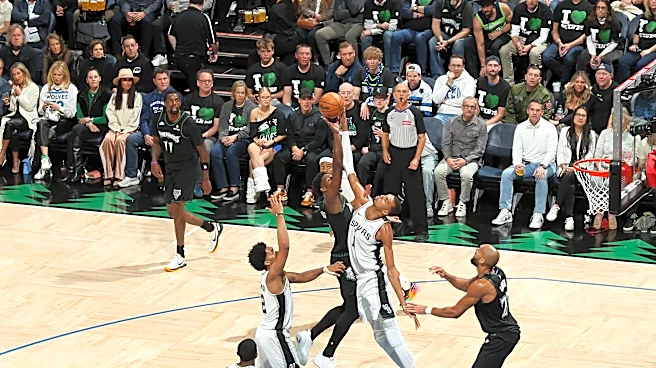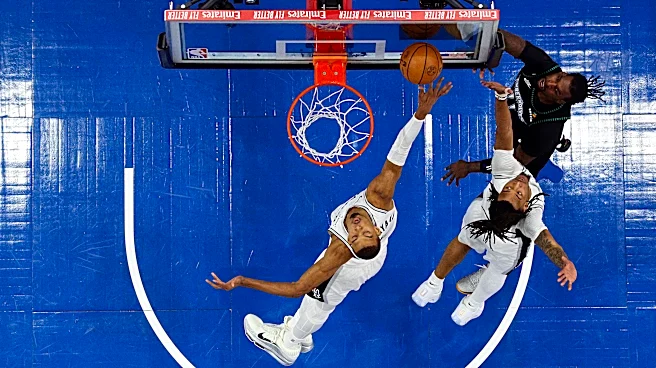





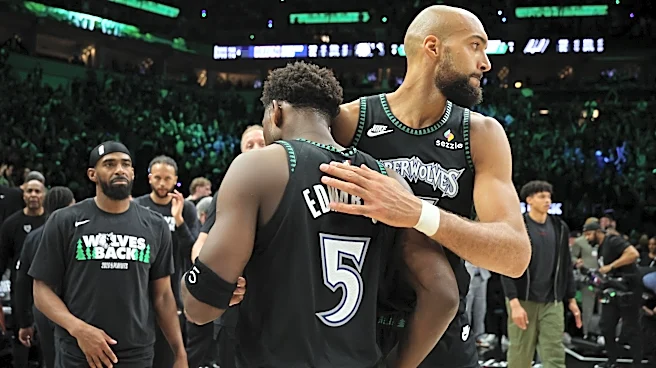

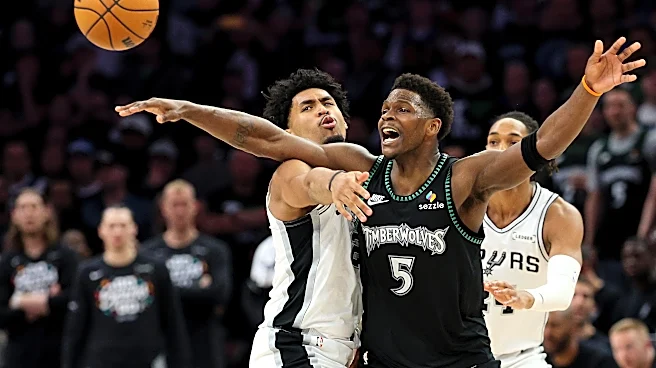
I will attempt to refrain from commenting too much on the play that defined last night’s game and will instead try to focus on the optimistic fact that this young and inexperienced Spurs team very nearly scored a road playoff win against a very good (and extremely desperate) opponent without the support of their best player for nearly three quarters. Especially considering how critical Victor Wembanyama’s role is in this particular matchup, it was impressive to see how effective the team managed
to be for long stretches. In any case, for the moment I’ll set my broader feelings about the game aside and focus on the box score, which has a number of striking highlights:
Note: Now that we’ve moved into the postseason, the reference period used for grading changes from the set of regular season games since 2012-2013 to the set of postseason games since 2012-2013. Unless otherwise noted below, this set DOES include play-in games. As of the end of May 10, 2026, this group include 1,183 games.

Factors that decided the game
- Both teams had numerous mild edges in this game, though they were often offsetting. For example, Minnesota won the offensive (+2) and defensive (+6) glass, but San Antonio had three fewer turnovers.
- San Antonio also fouled less and earned a FTA margin of +5. However, the Timberwolves’ big advantage in FT% (+13.13 percentage points) drove the Spurs FTM differential down to just +1.
- San Antonio had a +2.99 percentage-point edge in FG%, which should have put them in a great position to win. Unfortunately, Minnesota offset this with two big advantages. First, they attempted eight more total shots, and thus had a FGM margin of +1.
- Second, the Spurs’ overall edge in shooting efficiency emphatically did not extend to the three-point line, as the Timberwolves had a 3P% margin of +13.96 percentage points. As a result of all this, Minnesota outscored San Antonio by six from the field despite their FG% deficit.
Rare Box Score Stats
- San Antonio and Minnesota combined for 53 shots from distance in this game, which is unusually low but for from unheard of in today’s game. In fact, there have been three other cases in the 2026 playoffs alone (i.e., excluding the play-in) where two teams combined for a 3PA total as low or lower (that’s about once in every 15-16 games). However, what is amazing is how quickly this outcome has gone from being completely expected to notably rare. As recently as the 2016 playoffs, an absolute majority of true playoffs had a 3PA total of 53 or less, and wen the Spurs won the title in 2014 this share was north of 84%. Prior to that, games with more than 53 three-point attempts were exceptionally rare, with no instances in several years.
- This is just the 11th postseason game since 2013 (that’s about 1-in-108, or 0.93% of games) in which the winner had a FG% margin at least as bad as -2.99 percentage points and a 3P% margin as good or better than +13.96 percentage points.
- This was also just the ninth postseason contest in the same period in which the loser shot at least as 47.67% from the field and at least as bad as 23.08% from distance. Oddly enough, one of the other cases happened yesterday as well, as the 76ers shot 50% from the field and 22.86% from distance.
- Though San Antonio’s blocks were (for obvious reasons) way down in this game, they did have 13 steals and thus combined from a total of 16 stocks (steals + blocks), which is 10 more than the Timberwolves’ total of six. Since 2013, only seven other postseason winners (about 1-in-169) have had a stock differential as bad or worse.
What are Team Graded Box Scores?
Very briefly, these box scores grade winner-loser differentials for basic box score statistics, with the grade being based on the winning team’s differential relative to other NBA winners during a defined reference period. Think of it like a report card for understanding how a given winner performed relative to other winners. The reference period used runs from the start of the 2012-2013 season to the latest date of play, including only games in the same season category (i.e., regular season and playoff games are not compared to each other).
Data Source: The underlying data used to create these box scores was collected from Basketball Reference. In all cases, the data are collected the morning after the game is played. Although rare, postgame statistical revisions after data collection do occur and may affect the results after the fact.