
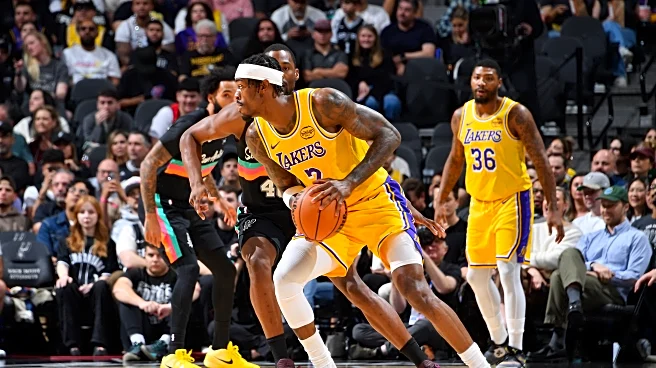
In a tense back-and-forth contest in Philly, Sixer star Joel Embiid nails a jumper to tie the game with just over a minute remaining.
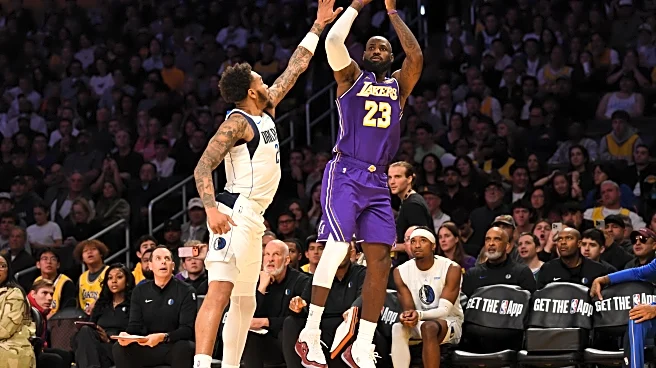
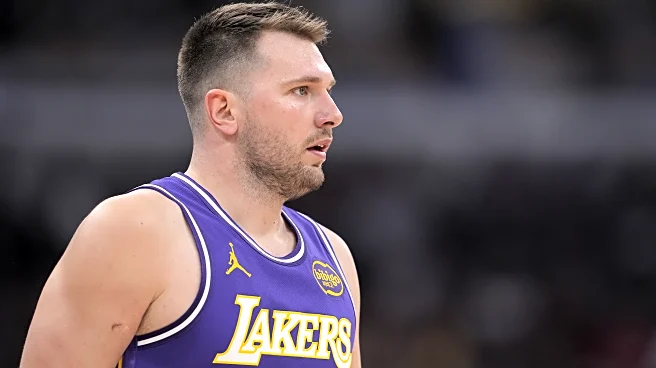
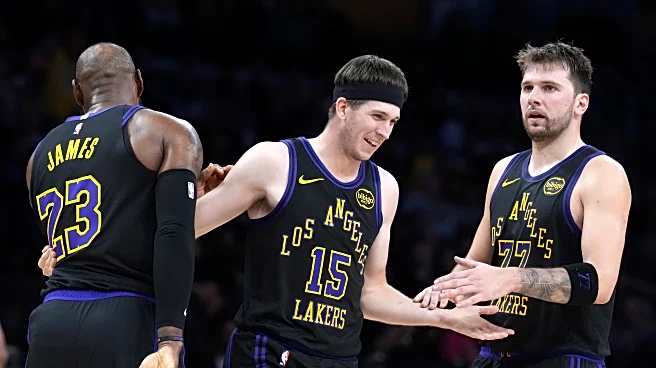
In every other stint of his unprecedented 23-season career, this would be LeBron James’ time. Instead, without even a glance at the ball, he jogs up the floor to his position while Austin Reaves hands the inbound over to backcourt partner Luka Dončić.
LeBron awaits his teammates in the front court and sets a screen for Luka to initiate the action. The Sixers opt to blitz
the screen, putting two defenders on the ball, leaving him open for a massive go-ahead three.
“One of the things he did extremely well tonight was screen,” head coach J.J Redick said after the win. “LeBron was like our connector tonight. The second action stuff was huge.”
Screener, connector, and being in the secondary actions aren’t exactly roles you pin for a superstar, especially one that’s an all-time leader in points, but it might be exactly what’s needed to complement his new explosive backcourt.
Luka has always dominated the basketball since he walked into the league, but Reaves’ star leap puts LeBron in an interesting offensive position.
That backcourt leads the league in scoring as a duo, averaging a whopping 62.5 combined points per game. Luka and Reaves helped lead LA to an impressive 10-4 start as the team awaited LeBron’s recovery from sciatica.
As it were, LeBron’s debut meant the Lakers needed to figure out the on-court machinations of this now big three.
Last year, the much-anticipated trio was net-neutral in the regular season. What was hyped to be a high-powered offense cratered in the playoffs against a physically imposing Minnesota Timberwolves team, who unceremoniously ended LA’s season in five games. Changes were needed.
A reflective Redick revealed the concept of “utility plays” in his introductory presser, a takeaway from an offseason conversation with Los Angeles Rams head coach Sean McVay.
“That’s something that is a football term,” Redick said. “Utility plays are plays where all three of those guys feel involved in some capacity, and they are sharing the court together.”
Sharing with one ball means a sacrifice. Even at almost 41, LeBron is not only still the most physically imposing of the three but also the most position-less and versatile, able to oscillate seamlessly from wing to big man in ways his backcourt cannot.
Screening allows him to pose a threat while simultaneously engaging with his guards rather than spectating and camping out as just a spacer.
Reaves is comfortable operating off the ball as a spot-up or movement shooter and Luka will do it on occasion. Those two will get a large chunk of the on-ball possessions, not only because of their high skill level, but as a way to conserve LeBron’s night-to-night energy and responsibility.
“There’s a lot of different ways we view him as a screener,” Redick said after a recent practice. “The first part is getting him a mismatch, getting him a smaller defender. We can do that at the elbow, we can do that in different ways in the post. That forces the defense to make a decision. Do they put two on the ball, do they allow him to get his two feet in the paint, where he can overpower a smaller guy?”
In the play below, LeBron sets an empty-side ball screen, where only the two offensive players are on one side of the floor, for Reaves. Utah switches it, putting a smaller defender on LeBron, who begins to back down, forcing the weak-side defender to shade over and leaving Jake LaRavia open in the corner after a screen from Ayton.

In this next one, the Lakers have LeBron and Luka set up in their Horns formation. Austin comes off a rip screen from LeBron and their defenders switch. This time, LeBron backs down with no help, getting two feet in the paint for an easy layup.

“What we’ve seen an uptick in, and we saw it in flashes last year, is him getting roller behind as a screener,” Redick said. “That’s where I think he’s the most dangerous. He had a number of, we call them follows. He had a number of plays where it was the second action, follow. Follow the pass, got roller behind, and now we’re playing four on three.”
These plays are how the Lakers leverage both the high pick-and-roll nature of Luka’s and Reaves’ games and LeBron’s unusual skill as a roll man. It allows arguably the greatest playmaker of all time to attack an already compromised defense.
Watch as LeBron gets “roller behind” in the clip below. He comes to set a screen for Reaves, who hits LeBron in the pocket. Reaves’ defender is screened out of the play, leading to a four-on-three. Embiid is hesitant to leave Deandre Ayton in the dunker spot, allowing for LeBron to get the finish.

LeBron obviously has full autonomy to take over possessions at his discretion, but he’s currently averaging career lows in points and field-goal attempts. So far, he’s looked committed to doing everything he can to empower his backcourt and sacrifice his game for the greater good of the team, something the Lakers will need all year.
Increasingly, it’s as a screener for Luka or Austin. But whatever the situation calls for, LeBron will make the right play to help his teammates prosper.
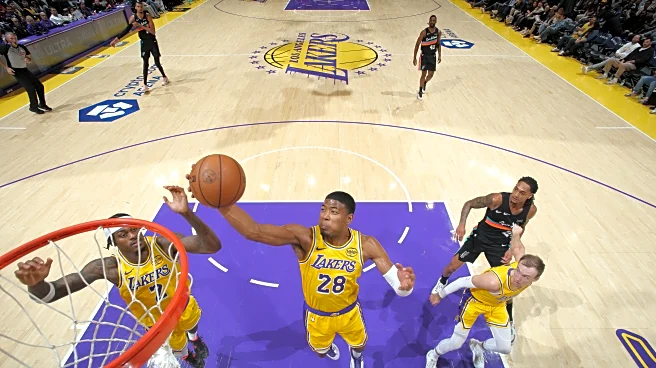
Following a road win in Toronto, LeBron made the ultimate sacrifice of foregoing taking the last shot and finishing with eight points, ending his likely never-to-be-touched record of a 1,297-game streak of double-digit scoring, to find Rui Hachimura in the corner for the buzzer beater.
“None,” said LeBron postgame on thoughts of the streak ending. “We won.”
You can follow Raj on Twitter at @RajChipalu