

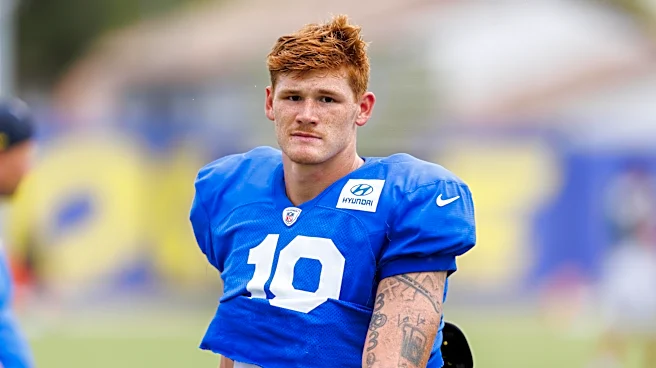
The Seattle Seahawks have taken some significant hits over the past week.
Jake Bobo, a fan favorite who had carved out a meaningful role in Seattle’s receiver rotation, was placed on injured reserve with a torn ACL. Bud Clark, one of the team’s most intriguing defensive prospects, also landed on IR. Then there was Mason Richman.
Of the three, Richman is probably the loss that has received the least attention.
That’s understandable. Richman was a seventh-round pick in 2025 and was never expected to walk
into Seattle as a starter. But his development was becoming increasingly interesting, and his versatility was giving the Seahawks something that is difficult to replace.
Mason Richman was quietly becoming valuable
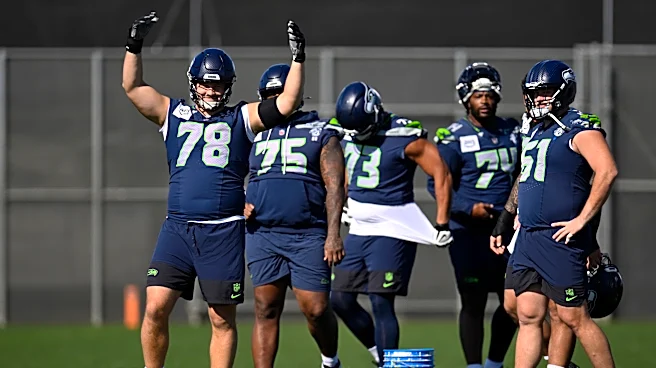
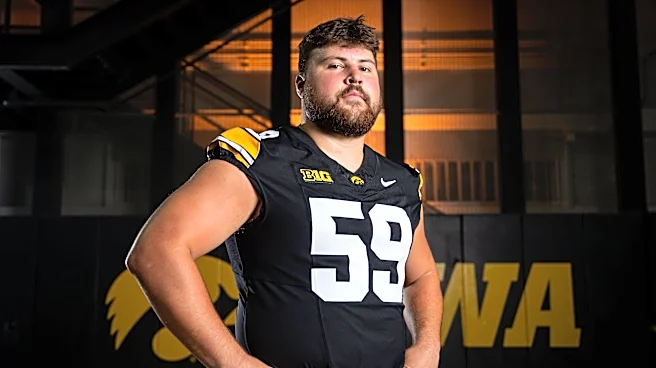
Richman played tackle at Iowa, but Seattle has been able to move him around the offensive line, giving him experience at tackle, guard and center, including work at center last season.
That versatility was a major reason he remained on the roster.
And there were clear signs of progress this preseason.
Richman had been receiving positive feedback throughout camp, and his first two preseason games showed a player who was noticeably more advanced than he had been a year ago. The performances weren’t perfect, but the improvement was considerable, particularly in terms of his strength and technique.
His development was also showing up in the run game.
On power concepts, Richman was frequently used as a puller, where he was asked to execute important blocks at the second level. Those plays don’t necessarily mean a backup offensive lineman is about to become a starter.
They do show, though, that the coaching staff was increasingly comfortable trusting him with meaningful assignments. That matters when you’re talking about offensive line depth.
A player who can play multiple positions doesn’t have to start to provide real value. He gives the coaching staff flexibility when injuries happen and allows the team to carry fewer specialists on the active roster.
Richman was becoming that type of player.
Now he’s gone.
The two trade candidates
The Seahawks don’t have many offensive linemen who could realistically attract trade interest, but two names stand out: Olu Oluwatimi and Christian Haynes.
Olu is the more obvious candidate.
He has starting experience at center, which immediately gives him value to teams looking for help at the position. He’s also nearing the end of his contract, potentially making him an attractive short-term option for another team.
And that’s important because you don’t trade a player just because you’re willing to move him. Another team has to see something in him.
Olu has that selling point: he has started games at center in the NFL.
That makes him a legitimate trade candidate.
It also makes Seattle much less likely to want to move him.
Haynes has a different argument.
He hasn’t lived up to the expectations that came with being a third-round pick during his first seasons in Seattle. However, there have been signs of improvement this preseason.
That could make him an intriguing reclamation project for another team.
Haynes still has the physical tools and draft pedigree that could convince a different coaching staff that there is more to unlock. A different scheme or developmental environment could potentially put him in a better position to succeed.
That makes both players realistic names to at least consider in trade discussions.
But Richman’s injury makes moving either one much harder.
Why Richman changes the equation
Start with Olu.
If Seattle trades him, the center depth becomes extremely thin.
After Jalen Sundell, the obvious remaining option is Federico Maranges. And what we’ve seen from Maranges this preseason hasn’t exactly provided much confidence that he is ready to step into a larger role.
Richman potentially offered another option because he had already been getting work at center.
Now that option is gone.
Beau Stephens and Bryce Cabeldue don’t appear to provide an immediate solution either. Stephens is still a rookie, while Cabeldue has fallen considerably down the depth chart. More importantly, neither has been getting the kind of center work that would give Seattle confidence in using them as emergency options there.
That makes an Olu trade extremely difficult to justify.
The situation with Haynes is slightly different.
Trading him would leave Seattle with Stephens and Cabeldue as the primary guard depth behind the starters. That’s not necessarily impossible, but it’s a much bigger gamble than it would have been with Richman available.
The Seahawks could have felt better about moving Haynes if another player on the depth chart had been developing at center or showing enough positional versatility to cover multiple spots.
Richman was the player closest to providing that insurance.
His injury removes that possibility.
Final Thoughts
Mason Richman wasn’t a starter. He wasn’t a high draft pick. But he was becoming a valuable piece of Seattle’s offensive line depth precisely because he could do things that the players around him couldn’t. He could play tackle, guard and center. He was improving. And the Seahawks were beginning to trust him with important assignments in the run game. That versatility gave Seattle options.
Now it doesn’t.
Oluwatimi may have enough value to attract a trade offer because of his starting experience at center. Haynes may attract interest from a team that believes it can unlock more from a former third-round pick.
But the Seahawks have to consider what happens after the trade.
Move Olu, and the center depth becomes Federico Maranges.
Move Haynes, and the guard depth becomes Stephens and Cabeldue.
Neither scenario looks particularly comfortable. That’s why Richman’s injury may matter more than the player’s role on the depth chart would suggest.
The Seahawks didn’t lose a starter. They lost flexibility — and in a roster where trade options are already limited, that could prove to be the bigger loss.