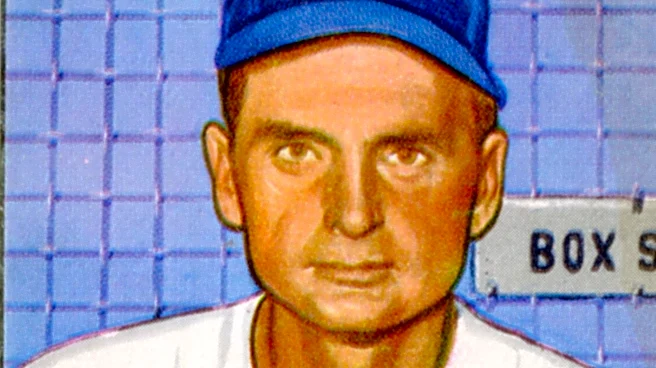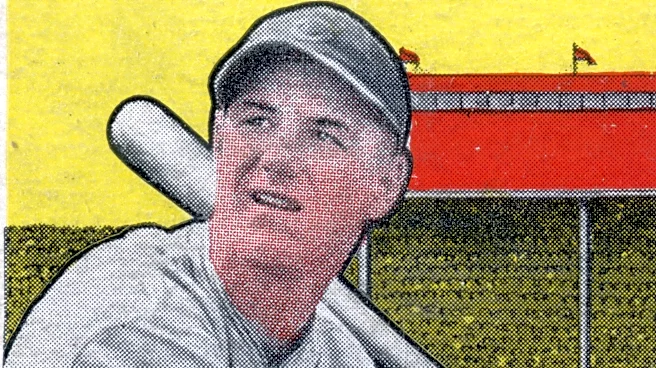


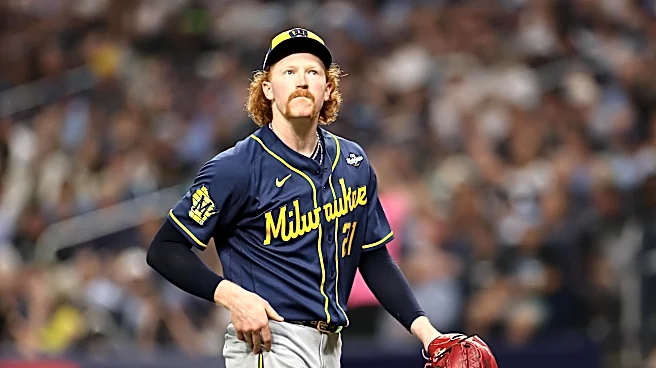
Billy Jurges was one of the lesser-known players on the Cubs teams who won multiple NL pennants in the 1930s.
He was the team’s regular shortstop from 1932-38, playing on three pennant winners, and made the NL All-Star team with the Cubs in 1937.
Only an average hitter, his primary value to the team was great defense at shortstop. Using numbers collected retroactively, Jurges led all of MLB in defensive bWAR in 1932 and 1935 and had significant positive defensive value every year he was with the Cubs.
Put another way, had Gold Gloves existed back then, Jurges probably would have won five or six of them.
But perhaps his most lasting fame, if you want to call it that, was from perhaps being the inspiration for “The Natural,” as he was shot while playing for the Cubs in 1932. From his SABR biography:
On July 6, 1932, in Jurges’ first full season as a big leaguer, a scorned showgirl named Violet Popovich Valli interrupted his breakthrough when she tried to kill both herself and the young ballplayer. Early that morning, the pretty brunette singer and showgirl, who had dated Jurges, entered the Hotel Carlos (now the Sheffield House) just a few blocks north of Wrigley Field in Chicago and called Jurges’ room from the front desk.
Her .25-caliber pistol fired three shots, hitting Billy in the little finger of his left hand and in a rib, then ricocheted out his right shoulder. The third hit Valli in her arm and broke her wrist. Dr. John Davis, the Cubs physician, heard the shots from the lobby and found neither seriously hurt. Jurges never pressed charges.
Jurges missed only three weeks with these wounds, then returned to finish off a pretty good season.
His batting numbers declined a bit in 1938, so after the season the Cubs traded him, along with Frank Demaree and Ken O’Dea, to the Giants for Dick Bartell, Hank Leiber and Gus Mancuso. This turned out to be not a good deal at all for the Cubs. Jurges had perhaps his best overall season in 1939 for New York, batting .285/.349/.398 with a career-high 84 runs scored, and posted 4.0 bWAR while netting another All-Star appearance. Bartell never really fit in with the Cubs and put together one mediocre year before he was traded away.
Jurges was beaned in 1940 and was never quite the same after, and, from the SABR biography:
Billy’s beaning raised serious consideration of the requirement of some form of protective headgear for batters. Many players resisted the idea, saying they would feel silly and would be hindered by the extraneous equipment. That summer National League President Ford Frick began meetings with medical experts and team owners, setting into motion the process that eventually led to the compulsory use of batting helmets.
The Cubs reacquired Jurges, by then 38 and on the downside of his career, in 1946, a popular move that didn’t produce much on the field, and he retired after 1947, then coaching two years for the Cubs before leaving baseball for a time. Eventually he was hired as manager by the Red Sox in 1959, but his tenure was stormy, as by 1960 Red Sox players began to tire of his style:
Despite Billy’s early success, rumors of unrest began to arise among the players, who resisted his attempts to instill discipline and hustle. An unnamed Red Sox player remembers Jurges “would put on these rah-rah speeches in the clubhouse, and you had to figure he was kidding.”
After that Jurges became a long-time scout for the Houston Colt .45s, the Washington Senators, and eventually back with the Cubs from 1979 to 1982. He died March 3, 1997 in Clearwater, Florida, aged 88. Jurges posted 15.7 bWAR with the Cubs.