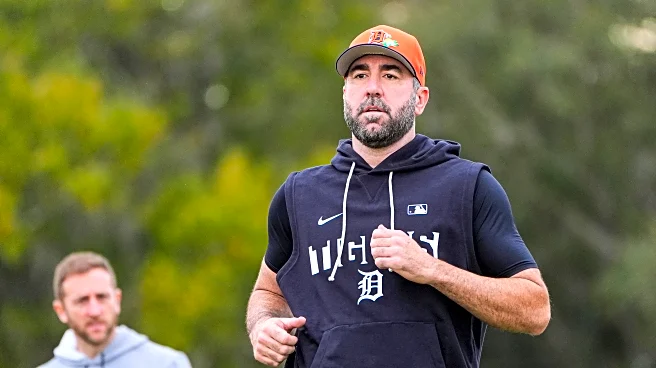

While the signing of Justin Verlander is certainly exciting and nostalgic all at the same time, let’s talk about how he turned his 2025 season around, and about keeping expectations reasonable. The future
Hall of Famer isn’t quite the beast he was even 3-4 years ago. Time catches up with everyone eventually, but Verlander’s willingness to keep experimenting with his approach, along with a good run of health, salvaged his 2025 season with a pretty strong finish.
A year ago things weren’t looking so hot. Back with the Houston Astros after a brief stint with the Mets in 2023, Verlander’s 2024 campaign was marred by a shoulder strain that limited him to 90 1/3 innings, and his 5.48 ERA was easily the worst mark of his career. The San Francisco Giants took a chance on him for the 2025 season, and for a few months, it looked possible that he was in his final season. With pedestrian strikeout and walk rates, another minor injury, and a few too many home runs allowed, Verlander produced a 4.70 in the first half of the season. His slider was still effective and his velocity was intact, but hitters were teeing off on his fastball and curveball to an egregious degree.
Verlander managed to shake off the neck strain in June and July, and as it turned out, he had a few more tricks up his sleeve. Adjustments he started in June were refined over the All-Star break, and he came back out for the second half, cut the home run rate down dramatically, and started collecting more whiffs and weak contact. A 2.99 ERA with a 3.47 FIP after the All-Star break says he figured some things out.
A nice, successful season in Detroit would see Justin Verlander throw 150 innings with a 4.00 ERA. ZIPS projections have him at a 4.24 ERA over 133 1/3 innings. We would celebrate either, but it may take some adjustment to stop expecting more. Tarik Skubal and Framber Valdez are tasked with leading the way. The Tigers legend just needs to contribute good outings and hopefully have another mostly healthy season. That would be plenty, and plenty fun to witness as a fan.
We do need to check any wild expectations at the door for now. Tigers fans are used to seeing him in his prime, overpowering hitters and pitching through minor injuries, whereas this season putting him on the injured list for anything minor is the move. Ideally, you’d keep his starts short as well, especially early in the season. If the Tigers can keep Verlander relatively fresh throughout the season while getting Troy Melton, Drew Anderson, or Keider Montero a few starts in his stead, all the better.
Adjusting his delivery and angles
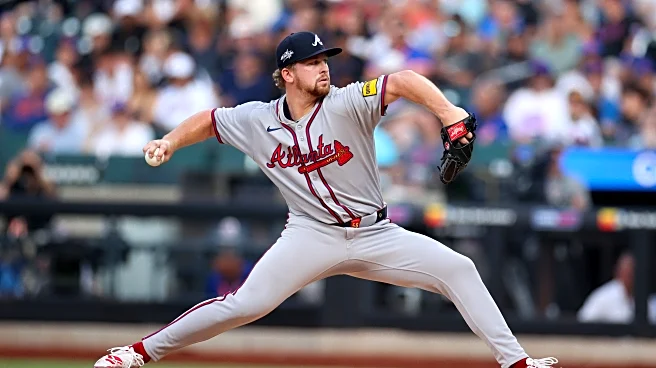
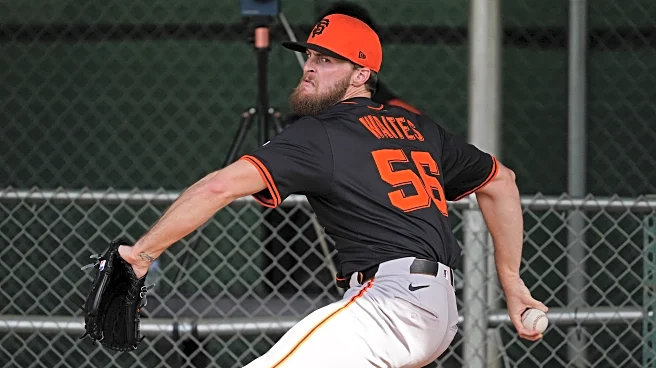
Two adjustments he made in 2025 were pretty straightforward. First, he started taking the ball out of his glove earlier in his delivery. The second adjustment was moving over to the third base side of the rubber. The different angles that created seemed to help his fastball, and he was still able to maintain enough deception out of the glove that hitters weren’t picking up any early visual cues.
Starting his arm motion a little earlier, as opposed to gripping the ball in the glove belt high until well into his leg kick may have helped keep him in rhythm. The late hand-glove separation he’s often used in his career required a quicker move early in his arm path to catch up to his torso and lower half, and perhaps separating a little earlier freed his arm to catch up with the rest of his motion and get into sequence. Pitchers are always tweaking little timing mechanisms, and something about it clicked for him.
It’s also possible that he just got healthier. After some shoulder trouble in 2024, and then a neck strain in 2025 that cost him about a month in May and June, Verlander made every start from June 18 to the rest of the season, and other than getting blown up on a few occasions, was consistently good the rest of the way. Health would also explain why he was able to get back to the higher arm slot he threw from in his best years with the Astros. That alone helped him to get a bit more riding action back on his fourseamer, a few more whiffs, and fewer home run balls launched.
Sweepers and changeups
Verlander has slowly dialed back his fourseamer usage as his velocity has dipped, and a lot of that extra workload has fallen on his slider. Early in 2025 he just didn’t have much else to work with. His trusty curveball was even less effective than the fourseamer in the first half, and right-handers in particular were hitting it harder than ever before. The solution there was to develop a sweeper at 84-85 mph. Much firmer than the curveball, the sweeper still has a lot of depth, but it has a sharper bit of gloveside break, while the curve is usually close to 12-6. All things being equal, it’s better to throw a harder breaking ball. Neither pitch needs to be more than a third offering from him, and by pairing the two, hitters had a harder time squaring either of them.
By season’s end, Verlander was mixing the curveball and the sweeper in equal doses, replacing a third pitch with two solid breaking balls that look similar out of the hand. Neither is a huge swing and miss pitch, but mixing the pair made it harder for hitters to barrel them up.
While the sweeper is an interesting development, another thing that really helped Verlander squash left-handed hitters was using his circle changeup more effectively in the second half. Long-time Tigers fans will remember the early years of his career, when he routinely dropped in a straight 88-90 mph changeup. Back then, it played well mainly because the fourseam fastball was so terrifying. The version he’s started working with in recent years, and used more in the second half of 2025, is more of a classic circle change that moves away from lefties like a sinker.
Verlander threw the changeup about 14 percent of the time to left-handers in 2025, and hitters posted a downright horrendous .237 wOBA against it. He still uses all three breaking balls against lefties too, so it’s no surprise hitters weren’t looking for it often. Verlander doesn’t have a ton of confidence in throwing the changeup in the zone, but breaking out the changeup helped him handle certain hitters. Perhaps he’ll lean into that this season. It will be interesting to see if Chris Fetter and his staff has an impact on the pitch mix, or if it’s just mainly a matter of having more tools to work with so that if one pitch isn’t feeling great, he has other options to turn to in a pinch.
Don’t get too greedy
It’s fairly ridiculous to look back and compare Justin Verlander’s current fastball with its metrics 10 years ago back in 2016. At the time, in a season where the numbers say he should have won the AL Cy Young award, his fourseamer averaged 94 mph with 17.3 inches of induced vertical break. In 2025? He averaged 93.9 mph with the fourseamer, with 18.6 inches of induced vertical break. See? The old guy has really fallen off his game.
It’s interesting that he’s still getting more ride these days than he did with the Tigers in the early Statcast era in 2015-2016. The Tigers really didn’t get that higher arm slot, truer backspin, concept for a while. It took the Astros coaching staff to fully unlock it and maximize his fastball’s effectiveness. In fairness, he also got back to averaging 95+ mph from 2017-2022, along with hitting 19-20 inches of induced vertical break in that era of his career. When your fastball is that good hitters are in huge trouble. In 2022, Justin Verlander had the most valuable fastball in baseball at age 39. This man is not normal.
Verlander doesn’t get the extension down the mound that he used to, which is probably just a product of being less flexible and shortening his stride to compensate. He also isn’t holding as much back for later in a start the way he once did. It’s 92-94mph out of the gate, and then he’ll sit 94 the rest of the way while reaching back for 95-96 in tight spots. His best fastball in 2025 was 98.3 mph, and there were only eight fastballs total at 97 mph or better.
Back in the day, he would throw 92-93 mph early in a start, hoping to rack up quick outs the first time through the order. As he loosened up he’d sit 95-97 mph by the time the top of the order came up a second time, and then reach back for high 90’s and triple digits later in an outing. Verlander still shows signs of trying to do that— yes it would be fascinating to see Tarik Skubal attempt to implement this a little more, I agree—but there just aren’t as many gears available for JV these days.
In terms of secondary factors, the changes from the Giants to the Tigers defense, or from Oracle to Comerica as a home park, don’t look too significant. Verlander pitched to Patrick Bailey a lot last year, and the Giants main backstop is probably the best pitch framer in the game, so this isn’t a case where Dillon Dingler or Jake Rogers are going to give him a boost in that regard. On the other hand, the Tigers graded out a good deal better than the Giants defensively by both DRS and Outs Above Average. No doubt Verlander’s results this year will rest partly on how the his outfielders perform behind him.
The generational raw ability to pitch and drive to be one of the best ever, along with the smarts and willingness to keep making those little adjustments in all phases of the game, from diet, conditioning, pitching mechanics, to approach, have extended Justin Verlander’s career beyond anyone’s wildest dreams other than possibly his own. His legacy was secured long ago. There are already five distinct four-year eras in his career, and in the last one, he still won a Cy Young award and a World Series ring.
We can argue about what “best” means, but Verlander is the most valuable pitcher of this millenium by fWAR, 16th best all-time by fWAR, eighth all time in strikeouts at 3553 and needs just 149 more to pass Bert Blyleven for 5th all-time. He’s already fifth all-time if you count the postseason, and if you think about it, it’s weird that we don’t. In October, the top starting pitchers on playoff teams are making the highest pressure starts of the year while already at the end of their gas tank after a long season. Only Andy Petite has thrown more postseason innings in his career than Justin Verlander. But I digress.
This is the most delightful depth move in franchise history, and we shouldn’t be too greedy about it. If he’s healthy enough to get in a good groove and keep making counter adjustments to hitters, Justin Verlander will give the Tigers decent mid-rotation production, leadership, and perhaps a little extra edge. And it could be really special to watch.