
Regardless of your status of being a Guardians fan, anywhere from casual to die-hard, you know what most people say is the biggest issue with this team: Ownership.
The Guardians are currently owned by Paul
J. Dolan who is also the chairman and Chief Executive Officer. His family – who currently own 75% of the team – began searching for a minority owner in 2015, and it was announced on June 16, 2022 that billionaire sports owner David Blitzer had purchased that other 25%. His purchase included an option to become a majority owner in 2028. While the news of this pending ownership change sounds great to most Cleveland baseball fans, what’s really in store as we begin this period of transition?
The Dolan era of ownership began on May 13th, 1999 when former Cleveland Indians (at the time) owner Richard E. Jacobs sold the team to Lawrence J. Dolan for $323 million. The sale was then unanimously approved by the MLB owners on January 19th, 2000. Lawrence had also appointed his son Paul as vice president and general counsel.
At that time, there was – almost – no room for growth for Cleveland baseball. The team had won the last five division titles and was benefiting from frequent sell-outs at Jacobs Field, and the team’s payroll was quite high at nearly $76 million – ranking eighth in the league. This persuaded the Dolans to change the ownership strategy that Jacobs had in place.
“We’re out of the business of collecting talent and in the business of building a team,” said president and general manager Mark Shapiro at the time. Payroll cuts began as young players were traded away for veterans and free agents were signed. In the first two years of the Dolan era, the team’s payroll had been cut drastically by 65%, and the team fell below .500 for both of those seasons. As a result of the poor play, attendance fell by half.
This made it clear that another shift in strategy was needed. That shift came in 2002 when the team spent the next three years trading those veterans for young prospects. This seemed to be the sweet spot as the team crept back above .500 in 2005 and made it to the AL Championship Series in 2007 before losing to the Boston Red Sox. The next four years were unimpressive as the team never won the division, reaching only as high as second place in 2011. This called for a change.
That change came in 2012 when the Dolans sold the regional sports network that they owned for $230 million, and added another $25 million from an MLB agreement to carry all Cleveland games on a subscription-based platform. With this extra cash on their side, the Dolans reverted to their strategy of signing free agents and veterans, including adding manager Terry Francona later that year.
Some additional organizational changes came three years later when Chris Antonetti took over as president and Mike Chernoff as general manager, as they remain today. The team finished third that year, barely over .500, but things started to click the following season. So much so that the Cleveland Indians made it to game seven of the World Series in 2016. While they couldn’t pull off the ultimate goal that year, the team has seen great success since. They’ve won the division six of the last ten years, and have only missed the playoffs three times. Sounds great, right? Then why does attendance at Progressive Field consistently remain in the bottom-ten in the league since that World Series appearance? And why has the team not made it back to the biggest stage in the last ten years? Will new ownership make a significant enough change to improve things at the gates and in the playoffs?
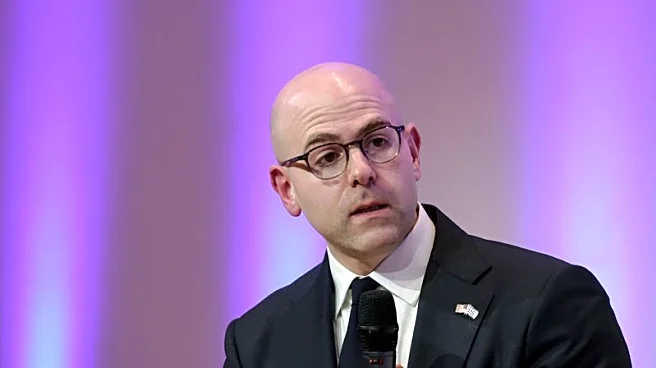
To answer that last question, let’s turn to David Blitzer – minority owner of the Cleveland Guardians. Blitzer was born on September 7th, 1969 in Scotch Plains, New Jersey. He graduated from the University of Pennsylvania’s Wharton School of Business in 1991 and joined Blackstone Inc. investment firm shortly thereafter. In 2008, the businessman met Josh Harris of Apollo Group Management, and the two formed their own investment group alongside 11 others (including Will and Jada Pinkett Smith).
This group made their first venture into the world of sports in 2011, and it was a huge leap. They purchased the Philadelphia 76ers of the National Basketball Association for $280 million. It only took two years before they wanted more. Their next purchase was the New Jersey Devils, Blitzer’s hometown National Hockey League team, for $320 million. In 2017, they purchased a 50% stake in the Scranton/Wilkes-Barre RailRiders, the Triple-A affiliate of the New York Yankees. Later that year, Blitzer and Harris formed their own investment group called Harris Blitzer Sports & Entertainment.
2022 was an extremely busy year for Harris and Blitzer who purchased a $140 million stake in the Pittsburgh Steelers of the National Football League, followed by a full purchase of Real Salt Lake of Major League Soccer and their field, the re-establishment of the Utah Royals of the National Women’s Soccer League, and the minority purchase of the Guardians. With that investment in MLB, Blitzer became the first person to hold team equity in all five major American sports leagues (NFL, NBA, MLB, NHL, MLS).
Just a year later, Harris and Blitzer added even more to their portfolio by purchasing the Washington Commanders of the NFL for a whopping $6.05 billion. Later that year, Blitzer also purchased a minority stake in NASCAR’s Joe Gibbs Racing team, and he has owned the Jupiter Links Golf Club of TGL Golf with Tiger Woods since its inception that same year. Blitzer is currently worth $3.6 billion, an unfathomable amount for the normal sports fan like you and I. So how does he put that money to use in the numerous teams he owns or has stake in?
As mentioned above, Harris and Blitzer’s investment group began their journey in sports ownership by purchasing the Philadelphia 76ers for $280 million in 2011. As of today, the team is worth $2.5 billion. But what does that mean for the fans? How did the team get there? Going into their first season as owners, Harris and Blitzer had a strategy in mind.
“At the end of the day, you hire the best people at every position and you give them the room to do their jobs,” he said during a panel at his Alma Mater. Putting that strategy to use, Blitzer retained Doug Collins as the 76ers coach and Rod Thorn as their president of basketball operations, but fired general manager Ed Stefanski. The team has shockingly seen five different general managers since that first move in 2012. In the fans’ eyes, these moves did not work.
Many of the team’s returning players were waived or left in free agency that offseason and were replaced by players from the NBA’s development league. When it came to on-court performance, ownership’s strategy felt downright stupid. The team was intentionally losing games in order to secure a higher draft pick the following season. They even lost a record-setting 28 games in a row to start the season. They missed the playoffs four years in a row. While it was a miserable four years for players and fans alike, it eventually paid off. The 76ers drafted Joel Embiid with the third overall pick in 2014.
During the 2015 season, ownership made multiple personnel changes by promoting Elton Brand to Special Advisor to the Managing General Partner and Chairman of Basketball Operations, and his son Bryan was named President of Basketball Operations. The intention was for Bryan to compliment former general manager Sam Hinkie, but Hinkie did not want to share the responsibility and resigned in 2016. A controversy ensued surrounding a supposed burner account owned by the younger Colangelo that spouted praise for himself and criticism of Hinkie. An investigation followed, and Colangelo resigned and was replaced by Elton Brand in 2018.
Getting back to on court performance, the team drafted Ben Simmons in 2016 and almost immediately began to see success. Following their 2015-16 record of 10-72, the 76ers 52-30 and clinched a playoff spot for the 2017-18 season. In 2018, the team traded three players and a 2022 draft pick to the Minnesota Timberwolves for Jimmy Butler and Justin Patton. The following year, the team became the first NBA team to sign a partnership with a betting operator (Fox Bet).
Additional personnel moves came in 2020 when Doc Rivers was named head coach and Daryl Morey became the president of basketball operations. Following these moves, the 76ers went 49-23 and clinched the Eastern Conference title for the first time in 20 years. The 76ers record under Blitzer’s ownership stood at 515-598 after the 2024-25 season. Was the success in recent years singlehandedly due to Blitzer? Absolutely not. However, with his “I hire people who know what they’re doing” attitude, it seems that he’d be able to take some of the credit.
As he stated in an interview with Grant Wahl, “I’m there to create governance structures, which I do think are important, and it’s really ‘Where can we help?’ And obviously you can help in a lot of different ways, but I’m not trying to call down and say, ‘You need to go get this player…’ That’s not what I should be doing. I’m not the expert in that. Obviously, I’ll be in some of those key conversations, but again, we should let the professionals do their jobs really well.”
Shifting focus to the NHL, Blitzer purchased his hometown New Jersey Devils for $320 million in 2013 after the team was forced to borrow $30 million to meet payroll under then-owner Jeff Vanderbeek. While there were no major front office changes with the sale, veterans David Clarkson, Ilya Kovalchuk, and captain Zach Parise had also announced their departures. In an attempt to fill the hole of these three major contributors, the Devils signed 41-year-old Jaromir Jagr who would end up leading the team in goals scored. The team had also traded for goaltender Cory Schneider who would lead the league in goals against average that year.
The first three seasons following the sale were very similar to those of the 76ers – unsuccessful. That was when the hammer fell and personnel changes began. Ray Shero was named general manager in the 2015 offseason, and John Hynes became the team’s head coach. The team picked up star Taylor Hall in the 2016 offseason, but none of these additions led to immediate success. The Devils missed the playoffs five years in a row, finishing dead last in the Eastern Conference in 2016-17. However, a crumb of success came prior to the 2017-18 season when they won the draft lottery (sound familiar?) and drafted Nico Hischier.
Things were immediately looking up that season as the team went 9-2-0, the best 11-game start in franchise history. They secured a playoff spot for the first time in six years, but were eliminated by the Tampa Bay Lightning in the first round. The following season was another losing struggle that was plagued by injury. However, it resulted in yet another win in the draft lottery where they signed superstar Jack Hughes. Shortly after, chaos ensued.
The Devils started the 2019-20 season with six consecutive losses which led to the firing of their head coach. The team also lost one of their stars when Taylor Hall was traded to the Arizona Coyotes, and general manager Ray Shero was fired. Two months later, the season was suspended due to the COVID-19 pandemic, and the team officially missed the playoffs when the season was declared finished on May 26th. This would be a familiar theme as they missed the playoffs the next two years as well.
They finally found success in the 2022-23 season after breakout seasons from Hischier, Hughes, and the newly acquired Vitek Vanecek between the pipes. The New Jersey Devils had their most successful season in franchise history, winning 52 games and earning 112 points. They finished third in the league and made it to the second round of the playoffs before losing the series to the Carolina Hurricanes. On February 17th, 2024, the Devils beat the Philadelphia Flyers in front of a colossal 70,328 person crowd at the Stadium Series game. The Devils record under Blitzer’s ownership sat at 414-410 after the 2024-25 season. The team is now worth $775 million, over double what he purchased it for in 2013.
On the football front, Harris and Blitzer purchased the Washington Commanders in May of 2023 for $6.05 billion, the largest amount ever paid for a professional sports team. After a measly 4-13 record in their first season as owners, Harris and Blitzer completely flipped the front office. The team’s head coach and his staff were fired, and Adam Peters was hired as general manager. The roster also saw significant changes with around 30 free agents joining the team alongside 2023 Heisman winner Jayden Daniels. In 2024, the team went 12-5, won their first playoff game in 19 years, and played in the NFC Championship for the first time since 1991.
Harris and Blitzer have also put a lot of money into the experience for fans. They have invested over $75 million into food, renovations, and suites at Northwest Stadium on top of announcing a $3.7 billion stadium in Washington D.C. that is targeted to open in 2030.
Okay, so that’s a lot of information, but what does it mean for the fans of these teams that Blitzer and his investment groups own? Can they actually be counted on to invest in the teams and their fans? As it turns out, it depends on which fans you ask.
If you ask a Devils fan, they’ll tell you that he will invest – to a point. “As owners, both Harris and Blitzer seemed to be very hands on and revolutionary at the beginning,” The Bratt Pack (@TheBrattPack on Twitter) said, “We got a new arena with incredible amenities and the team was essentially saved from the previous owner going bankrupt and almost [losing] the team entirely. That said, since the beginning, it seems not much has been followed up on or updated. They have grown hands off and things don’t improve anymore.”
One other 76ers fan remaining anonymous felt the same way, stating that ownership’s handling of the Sam Hinkie/Bryan Colangelo situation set the organization back as a whole, and that the ownership has been much more hands–off since.
The Bratt Pack also stated how his experience as a fan has gone down since Blitzer’s ownership took over. “Ticket and concession prices have skyrocketed, the amenities have been cut back, and the game day experience offers the same thing it did 15 years ago – maybe even less now.”
A prominent theme in many Devils and 76ers fans’ minds is how they feel “forgotten”. Multiple fans stated that since Blitzer purchased the Commanders, the NHL and NBA teams have been pushed aside and are no longer a priority.
When it comes to spending on the team, there are multiple pros to Blitzer’s ownership style. SB Nation and Covering the Corner community member mthoman1, whom you will find posting in our forums, commented on our recent post seeking thoughts from Philadelphia residents about Blitzer as an owner that one of these pros is how “They understand the value of revenue generation and don’t manage purely by cost controlling.” mthoman1 also included specific examples of Blitzer’s revenue generation such as partnerships with Fanatics, investments in the arena and its surroundings, and a partnership with Comcast.
In terms of spending on players, one of the biggest concerns for Guardians fans, mthoman1 also sees a positive. “[They] have been willing to spend deep into the luxury tax and hand out max contracts for stars. They understand that asset value of the franchise is more important than annual profits,” they said. For a team that was so close to a World Series championship less than ten years ago, this idea is of paramount significance. Invest in your team and grow your investment.
However, mthoman1 also shared fans’ concerns about how Blitzer has handled his front offices. They concurred with the earlier 76ers fan who felt that Blitzer did not handle the Hinkie and Colangelo controversy well, adding how they “Completely failed to defend the front office when the NBA … forced a GM change.”
What about the Commanders fans? It seems that they’ve been reaping the benefits of the Devils and 76ers fans’ adversity, do they see it the same way? Long time Commanders and Guardians fan Teddy E shared, “The Blitzer/Harris group as a whole has been a huge success. They have been great with the fans, spent money, and made moves when needed. The fan base feels that [the team’s] owner actually cares about them.” Teddy agreed that Blitzer is a “hands-off” type of owner, but he doesn’t see that as a bad thing. “They are letting the football people do football things and don’t meddle in football decisions,” he said.
Blitzer has proven that his investment is about more than just football. The new sports campus that will be the home of the Commanders after 2030 will also provide a vast array of shopping, entertainment, parking, housing, and recreational areas to D.C. The Guardians most certainly do not need a new stadium as Progressive Field has received millions of dollars of rennovations over the past few years. However, the importance of investing in the area around the stadium cannot be understated. If Blitzer and Cleveland Cavaliers owner Dan Gilbert can develop the space downtown that Progressive Field and Rocket Arena share to include more dining options, shopping areas, and other recreational spots, there would almost certainly be a huge revenue generation. Making the area more of a destination for sports fans wanting to spend a night downtown or young professionals wanting to live in Cleveland could pay huge dividends. However, it would not just be an ask of Blitzer. Cleveland residents and business owners would need to do their part, too.
So what does all of this mean for us Guardians fans? His ventures with the 76ers and the Commanders were alongside Josh Harris who predomiantly holds the reins. In this major solo venture, will Blitzer move on from the Commanders and hedge all of his bets on the shiny new toy in front of him? Or will his $6.05 billion investment take priority from here on out? While I don’t have a magic eight ball to give you the answers to these questions, I can at least take a look at the current needs of the Cleveland Guardians and discuss how Blitzer’s ownership style could potentially fulfill those needs.
The Guardians have the eighth ranked farm system according to Bleacher Report, and it is vital that it becomes the team’s biggest investment in 2026. The highlight of the farm, Travis Bazzana, finished the 2025 season with a .245/.389/.424 line in Double-A Akron, boasting nine home runs, 39 RBIs, and 12 stolen bases. The big league team’s .373 slugging percentage could use a boost, and that could come in the form of Bazzana. Chase DeLauter could also contribute, posting a .278/.383/.476 line with Triple-A Columbus last year. The only “investment” he was given last year was six at bats in the American League Wild Card Series, so his numbers really don’t mean much in the Majors. If he can get consistent playing time next year – and avoid injury – he could be a real contributor to this team.
The commitment to the Minor Leagues has never really been there, but the hopes are that Blitzer will change things. His pattern of making waves in the draft and signing young, promising players is a good sign for this young, promising team. However, if he intends to tank for multiple seasons to secure these draft picks, the fanbase will not be happy. While this strategy has been frowned upon and the draft lottery has been implemented in attempts to avoid it, it was not completely successful in doing so in the NHL. The Devils tanked, they won the draft lottery twice, and now it’s paying off. If he plans to keep up this strategy, he will lose the fanbase before he’s even had the chance to introduce himself.
The Guardians have taken the last few years to prove themselves. They’re young, they’re talented, and they have a real chance to bring home a World Series championship if they’re given the resources to do so. While it’s been proven that bringing back certain veterans (ahem Carlos Santana ahem) for half-seasons in the hopes that they’ll tap back into their glory days doesn’t work for this team, some veteran presence could be helpful in more ways than just raising the average age of the roster.
Much like the young players in the Guardians’ farm system have the chance to prove themselves, minority owner David Blitzer does too. He has very little experience with owning baseball teams, and none at all in owning Major League Baseball teams, but he has proven that investing in young talent brings success. However, his “hands-off” style of ownership combined with this lack of experience could mean that things won’t change in the front office or on the field.
While there are still a few years before Blitzer even has the option to become majority owner, that gives current ownership under the Dolan family to get everything ready for him. Once the ownership is handed over, lock the team in and aim high. The fans don’t need a guarantee that Blitzer will bring us a World Series championship, we do need a guarantee that a proper team and lineup will be put in place. We also need a guarantee that he will prioritize the fans. While improvemets have been made around the stadium, he has the opporunity to bolster in-stadium entertainment, concessions, customer experience, and fan engagement. Even just bringing back GuardsFest and providing opportunities for fans to engage with players would greatly improve fans’ views of the ownership.
It is also worth noting that Blitzer is not the type to make appearances at team events or interact with fans in any way. The Bratt Pack shared, “I could not tell you what Blitzer looks like. They take their helicopter to/from games and don’t seem to interact with fans in any capacity. I’ve never seen him give so much as an interview to any Devils related media outlet. I don’t need an owner that’s in the media spotlight as long as the organization is being run well, but Blitzer seems particularly absent.” Sound familar? There’s probably a good amount of Guardians fans out there who couldn’t tell you what Dolan looks like either. If you search his name on Google, one of the articles on the first page of search results states, “Cleveland Indians owner Paul Dolan gave a rare interview last week.” So while an absent owner wouldn’t be anything new to this fanbase, a change would certainly be nice. An owner who is available to the team and to the public would help show that they are invested.
All in all, there is no way to know if David Blitzer taking on majority ownership of the Cleveland Guardians will be a good thing or not. He’s given us many reasons to be optimistic about the team’s success, the playing environment, and more. However, he’s also given us several reasons to be apprehensive about his personal success, or lack thereof, in sports ownership. If he can show that he truly cares about owning a successful Major League Baseball team, about the fanbase, and about the city of Cleveland, he will be successful. This fanbase just wants someone who cares just as much as we do about this team that we have loved for so long. We will invest in his product as long as he does. While there’s no telling if Blitzer will be that someone or if Cleveland is just a stopover on his path to the next shiny new professional sports team, we can have some optimism that sometimes change is good.
This piece was written with reporting/interview assistance from CtC site-runner Quincy Wheeler.