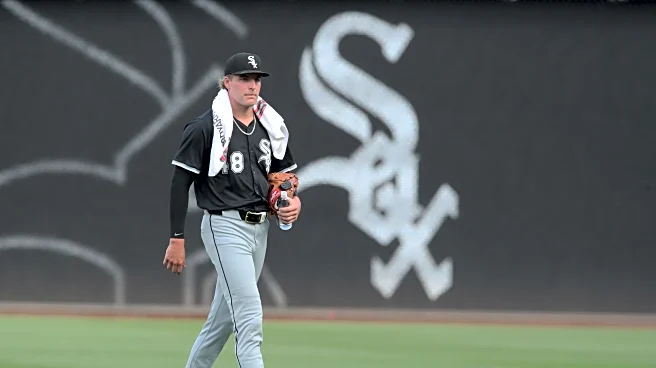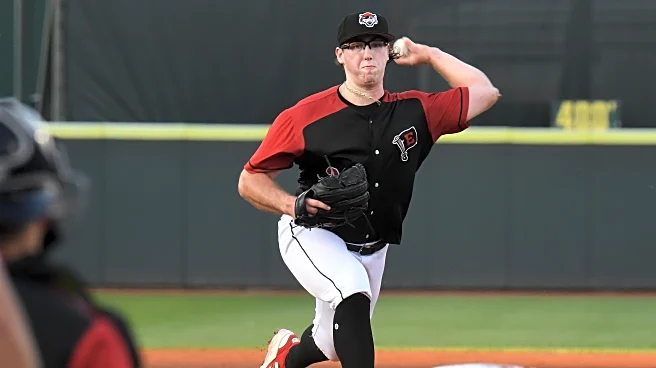


While the Tigers’ rotation is currently set, and they appear to have starting depth both among their relief corps and at the Triple-A, they don’t have much in the way of actual starting pitching prospects to help them this year. The most advanced of the bunch are left-handers Jake Miller and our 11th ranked prospect, lefty Andrew Sears. Miller is working his way back from offseason hip surgery. Sears is another somewhat underrated college draft pick who has refined his game and is now set to tackle
Triple-A with a chance to make an impact sometime this season.
The 23-year-old is another example of the Tigers extensive scouting in the northeast, an area some teams neglect as it isn’t generally a major hotbed for pro talent. They spent their sixth round pick in 2023 on Sears, drafting him out of Connecticut and signing him for $167,500, just slightly over the minimum bonus. That was money well spent as Sears has really broken out over the past two seasons.
On draft day, Sears was a low-90’s crafty lefty type with solid secondary pitches and good control. Over the past two years, he’s built velocity and he’s also really sharpened his slider and changeups into weapons.
Sears started out with a solid campaign for the Lakeland Flying Tigers in his 2024 full season debut. At those levels, the number of lefties who are refined enough to locate their fastball and show solid secondaries isn’t that great, and advanced southpaws tend to do well. The bigger tests come when they start facing more experienced hitters in High-A and at the Double-A level, and that was what Sears had to tackle in 2025. He handled that test pretty well while showing improved stuff with all three of his main offerings.
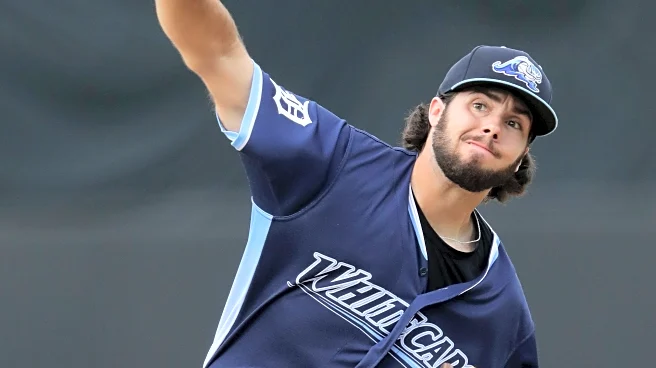
With the High-A West Michigan Whitecaps in 2025, Sears gave a deep pitching staff with numerous older minor leaguers some real presence. He works quickly and with a lot of intensity, rarely stepping off the mound for even a moment. He gets the ball back, stares in while sometimes muttering what we’ll term “encouragement” to himself for a beat, rocks and fires. As soon as the catcher throws it back he’s on the rubber again, staring in and waiting on hitters to dig back into the batter’s box. He’s an intense competitor and the psycho vibes and quick pace are pretty fun to watch.
Sears works from a low three-quarters slot with a fastball mix that touches 96-97 mph but is more typically 93-94. He gets plenty of life on the fourseamer and from a low release point he has a good angle to the top of the zone to get whiffs and weak contact in the air. He’ll use plenty of sinkers too, with the horizontal break augmented by good, late sink, but he’s not necessarily a ground ball pitcher and tends to get a pretty even mix of contact, though most of the contact in the air is really weak and he pops guys up pretty routinely. He’s pretty adept at working both sides of the plate and likes to jam right-handers inside, though he’ll sometimes tail fastballs back over the middle of the plate or hang his secondaries where they can launch them.
Sears struck out 27.2 percent of hitters with the Whitecaps, with a decent walk rate of 8.4 percent. His home run rate was fine at 0.87 HR/9, but a little higher than you’d like at that level. Still, he posted a 2.95 ERA with a 3.70 FIP in his first look at the High-A level, and since he was a little on the young side on draft day, it was only his age 22 season. Altogether it was a pretty nice success, though a short look at the Double-A level saw him hit a little more, as you’d expect.
His best weapon is a sweeping slider in the mid-80’s with good two plane movement. Sears is already pretty consistent with it, with the best ones showing plus and drawing a lot of whiffs. He has some feel for adding depth or sweep depending on the count and the hitter, and is adept at stealing strikes at the bottom of the zone with it too. His other pitch that flashes above average is a good circle changeup with nice velocity separation and a lot of late depth. He’ll still lose command of it at times and when he does it turns into a meatball without much depth, but there was less and less of that over the course of his 2025 campaign. When Sears is strafing the edges with sinkers and then playing the changeup off it effectively he is pretty tough to deal with. He can also mix in a curveball and a cutter at times, though he streamlined his pitch mix mainly to fastball, slider, changeup last year.
At this point, Sears has the stuff to be a major league starter. There just isn’t a ton of margin for error in his command. The fastball combo is pretty average, though a little better when he’s at the top of his velocity band. However, when he’s commanding all three pitches he is very tough to deal with. He sets up on the third base side, and generates some deception with his crossfire delivery and the fact that his low arm slot allows him to keep the ball hidden a little later than most. It’s a classic, funky lefty delivery, but it does make it tricky to repeat and Sears’ velocity tends to rise and fall with how locked in his delivery is from start to start. When he makes mistakes out over the plate with the fastball, the raw stuff is usually enough to avoid them getting barrelled up, but that won’t be the case in the upper minors. When Sears is throwing first pitch strikes, locating reasonably well, and staying out of hitters’ hot zones, they’re in a bad place against him.
The lack of a dominant fastball or precision command is probably going to keep Sears from tracking like a future mid-rotation arm. Instead, he still profiles best as a spot starter/swingman type. However, he could be really valuable in that role. He handles right-handers well, and if his fastball command is a little sharper in the years ahead, a future at the back of a starting rotation isn’t out of the question. He holds runners well and shows what used to be called moxie in tough situations, continuing to attack the strike zone with a lot of aggression. In short, he has all the traits of a versatile lefty, but with enough gas to throw it by good lower level hitters as well.
The Double-A jump isn’t quite the major separator it was a few years ago, but for left-handed pitchers it’s still a major hurdle in particular. Lower level hitters just haven’t seen many good lefties and there tend to be more easy outs in lineups for a good southpaw until the better A-ball hitters funnel up to Double-A. We haven’t seen him in major league camp, but there’s no report of a major injury either, so we’ll assume he’s dealing with something minor for now. Sears will start the season in Erie when he’s ready, and if his command ticks up a little more he should reach Triple-A with a chance to help the Tigers out later on in the summer. His real ETA is 2027, but if the Tigers decide they need his versatility in the bullpen he could certainly move more rapidly.