



Welcome to the inaugural Fawning or Warning?, a new fortnightly feature where I muse on all things Milwaukee Bucks, however explicitly or tangentially related, and determine if they’re worth fawning over or if they’re a warning sign of something going awry.
KPJ, roster building

My initial reaction to Kevin Porter Jr.’s axing was a combination of surprise and frustration. In fact, I had pencilled in Jon Horst as the inaugural Winners & Sinners sinner, penning the following before deciding against it:
Jon Horst. Yes, the
Bucks were in a (self-imposed) difficult roster crunch prior to the season. And, yes, Kevin Porter Jr. opting in to his contract earlier in the offseason might not have been part of their plans. But to let a guy who was arguably the best player on the team last year, who has immense talent—perhaps the most on the team, and who Bucks fans still saw as the seventh-most-important player on the team go for nothing stings. To do that when there were much more logical options—ones fans wanted—makes it all the worse. Kyle Kuzma, Caris LeVert, and their expiring contracts sure better bring something meaningful back at the trade deadline.
Since then, thanks in no small part to all of your commentary, I’ve come to rationalise the move—and now actually support it. For one, as a one-year, $5.4m deal, Porter’s contract was a relatively easy one to cut. From an ownership perspective, this is an easier pill to swallow than, say, LeVert’s $14.8m deal. From a GM perspective, despite Porter certainly being the better talent and more productive player at this stage in their respective careers, it also makes sense. Porter clearly wasn’t a desired commodity league-wide, otherwise he would’ve been traded (he also probably wouldn’t have exercised his player option in the offseason). Moreover, LeVert’s larger salary is the better trade chip, either paired with other assets—players or picks—in matching for a desirable player who could help the Bucks now, or in taking on a “bad” contract to bring in assets.
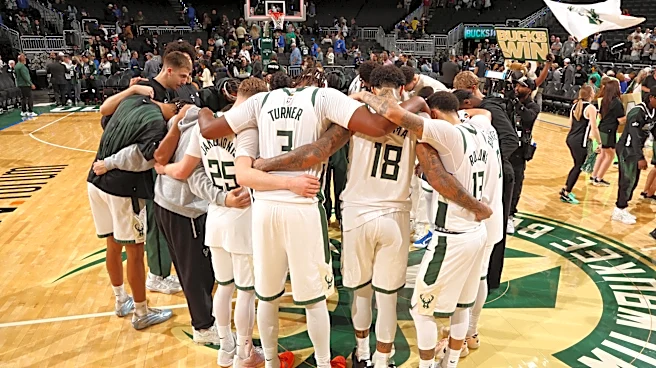
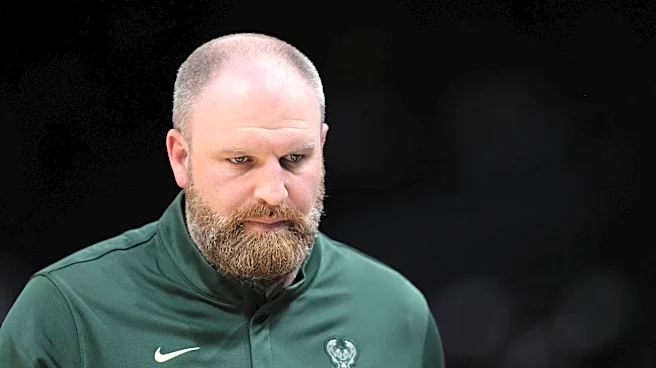
The on-court ramifications are also favourable. Because of his talent, retaining Porter would’ve all but demanded playing him and that would undoubtedly come at the expense of younger players who are more likely part of Milwaukee’s future core, namely Brayden Burries and Kasparas Jakučionis. So, cutting him has afforded them meaningful developmental minutes. Moreover, it’s spared Taylor Jenkins from the difficult decision to play Burries and Jakučionis over Porter (or vice versa) altogether, instead enabling him to focus on cultivating the sort of relationships that are essential for a young team trying to instill a “Compete. Together. Get better” mantra. Of course, LeVert’s role in this part is also pivotal. As someone on the downside of his career, he can more easily be given—and accept—a back seat as an end-of-the-bench veteran to help guide these players. Kudos to him for that.
Bigger picture, does cutting Porter signal a philosophical shift within the franchise? Faults of yesteryear—heck, even (or especially) this year—aside, cutting Porter might suggest a renewed roster-building focus, one that prioritises internal growth and development from the ground up. For as talented as he is, it’s hard for someone like Porter to unlearn his ways (think ball-dominance, shot selection). At the same time, might it also signpost a return to the high-character ethos that was so prominent under Mike Budenholzer? After all, Jenkins was an assistant under Bud with the Atlanta Hawks for six years.
To be clear, this is by no means an attack on Porter, who by all accounts conducted himself admirably while with the Bucks—and who I “fell for” enough to write not one but two screenplays about. But stains linger for a reason, and with the Bucks beginning a new era without an obvious drawcard—and Porter already a divisive figure among fans—ownership and management have to seriously consider their brand and fan perception of it. Inherent within these considerations is who represents them and who they promote. At the least, this is something to monitor moving forward.
Verdict: Fawning.
Not all rebounders are created equal

We’ve heard about it all offseason—how Taylor Jenkins will have these Bucks attacking the glass in an attempt to win the possession game. In the preseason, things looked pretty good, especially on the offensive glass (just check the notes). So far, this has translated in the regular season too. After five games, the Bucks rank third in rebounds per game (49.8) and 10th in rebounding percentage (51.7%). They also rank sixth in defensive rebounding percentage (72.6%). These are all great signs of a philosophical buy-in.
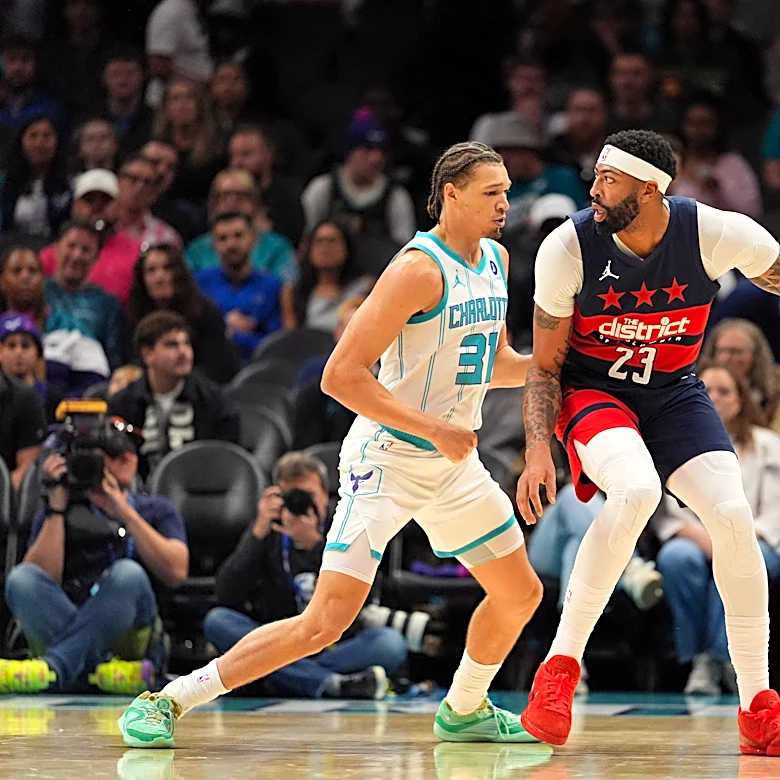
But the overall numbers obscure a truth: for all their intentions, the Bucks still sit a mediocre 16th in offensive rebounding percentage (31.1%). Milwaukee’s problem? A lack of “go-get-it!” rebounders—you know, the sort of rebounders who go after it, grabbing boards outside their area. Who make opponents feel them and wear them down doing so. Think Moussa Diabaté. Tristan Thompson. Reggie Evans. Upon acquiring him in the Giannis trade, I envisioned Kel’el Ware as one of these players, but early signs are inconclusive, suggesting he more so collects rebounds as a by-product of his size and placement near the rim. Jericho Sims offers more in the “go-get-it!” regard, particularly on the offensive glass, but he’s not seeing action. Kyle Kuzma is seeing action—and full credit to him for getting his hands dirty—and Brayden Burries seems to have a nose for the ball off iron too. But they don’t fit the bill either, not really, especially for a team that starts Myles Turner and his career-worst 9.2% rebounding percentage (seventh best on the team) at centre. Horst, that leaves two options: target the “go-getters” or… Is Mike Dunleavy Jr. still calling?
Verdict: Warning (precautionary).
Must-have maestro

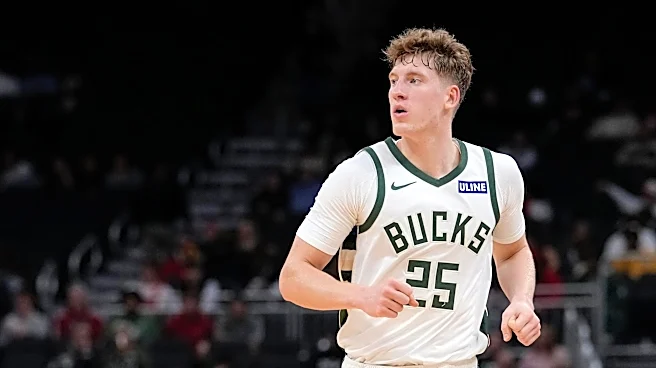
By all accounts, Kasparas Jakučionis was a must-have in the Giannis trade. But for all the hype, Jakučionis was satisfactory at best in Summer League play and preseason did nothing to up expectations heading into the regular season. In fact, after playing only three games and struggling to find nylon—37% overall shooting, 23% from three—it seemed Jakučionis would be an end-of-rotation player at best, a nice option to have but nothing to scare opponents. Turns out, this Kas ain’t so friendly.
Now, Jakučionis has emerged as the Bucks’ sixth man. And while his stats through five contests aren’t anything exceptional—9.0 PPG, 2.8 RPG, 4.2 APG—he’s shooting it better overall (50%), even if the long-range shot still hasn’t come around (23%), and mostly limiting turnovers (2.0 TOV). More importantly, he’s closing games. In the process, Jakučionis has been such a joy to watch. The highlight passing stands out, but dig deeper and you’ll notice the little things: how he’s in a perpetual state of motion (on and off ball), how he attacks the glass and then hustles back on D, how he gives the ball up early, knowing that he’ll get it back. How he uses his body and arms to draw fouls. How he knows when to take one to halt an opponent attack too. And, perhaps more than anything, how the game just looks so much smoother when he’s out there.
Verdict: Fawning.