




We’ve experienced plenty of emotion from the Phoenix Suns during Summer League.
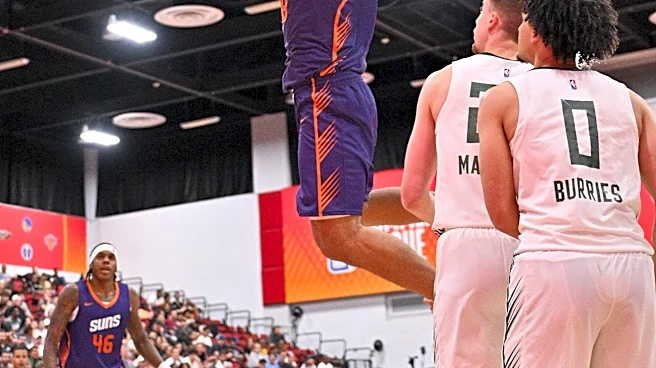
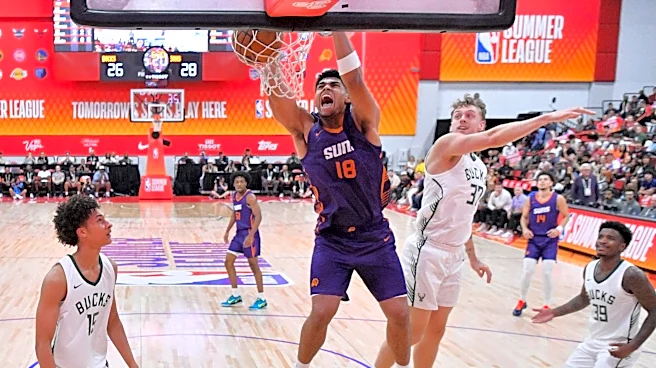
Koa Peat is screaming into the ether after throwing down a savage dunk. Khaman Maluach is yelling toward general manager Brian Gregory after swatting an opponent’s shot into the multiverse. The passion and emotion on display in Las Vegas this summer could very well be a byproduct of the culture the organization has cultivated, bringing in players like Dillon Brooks, who spent all of last season alongside Maluach.
Then there’s
Rasheer Fleming.
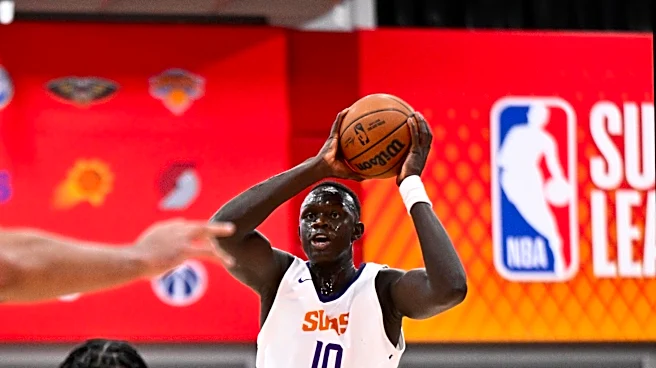
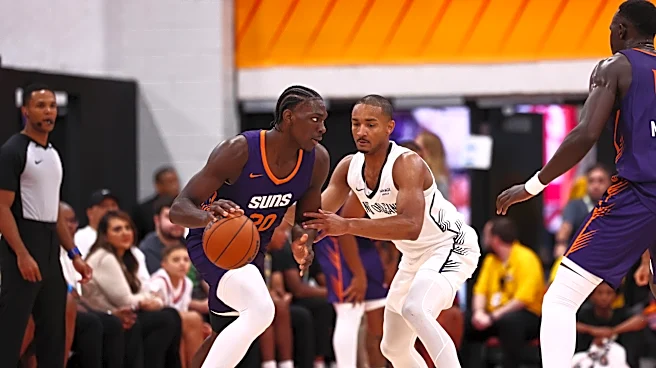
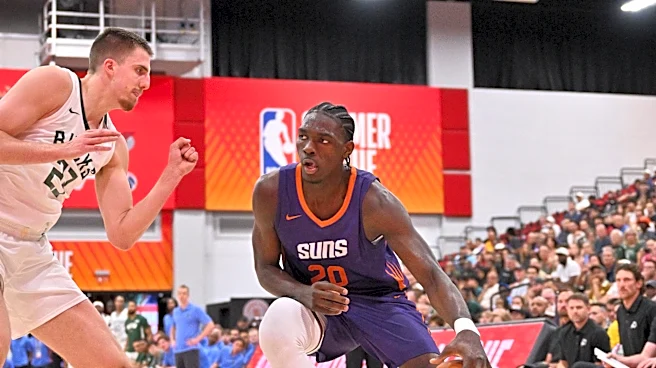
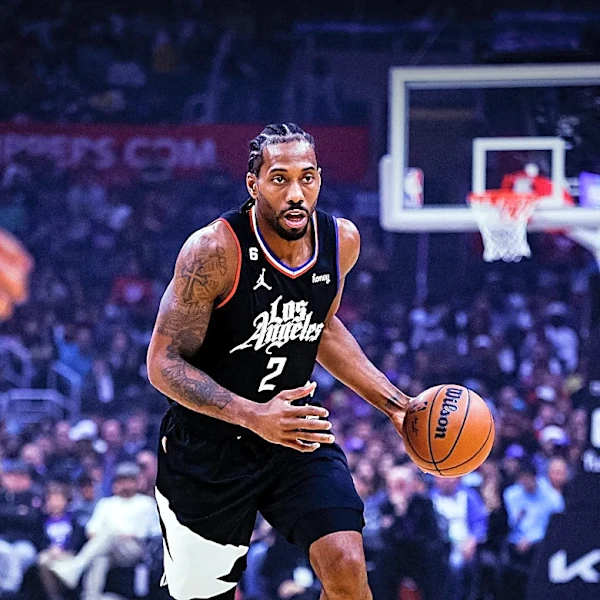
He simply goes about his business with a steady hand and a rhythmic heartbeat. He hasn’t been flashy. He hasn’t been loud. He’s simply been effective. That can make it difficult to fully appreciate what he’s doing, especially when he’s sharing the floor with two players whose emotional displays naturally command your attention. But despite his Kawhi Leonard approach to the game, Fleming has quietly put together an outstanding Summer League.
You might not immediately see it in the counting stats, but what Rasheer Fleming is doing defensively has been what truly caught my eye. That said, even the numbers are more than respectable for a second-year, second-round pick playing in his second Summer League. Fleming is averaging 12.0 points, 6.5 rebounds, 1.0 steal, and 1.0 block per game while shooting 47.4% from the field and 42.1% from beyond the arc. From a statistical standpoint, there’s nothing underwhelming about that production.
He’s not demanding the basketball the way Koa Peat does, either as a scorer or facilitator. He’s not consistently finding touches as a rim runner the way Khaman Maluach is. Instead, he’s playing within the flow of the offense, and that’s exactly what makes his performance so encouraging. He’s setting high screens and back screens. He’s finding the corners. He’s rebounding the ball and going back up with it. He’s taking the open three when it comes his way. For a player whose long-term projection is as a three-and-D forward, Fleming is the Summer League player whose role most closely mirrors what he’ll actually be asked to do next season.
Fleming saved his best performance for the Suns’ final Summer League game, finishing with 22 points, eight rebounds, and knocking down 4-of-6 from beyond the arc. Some will look at that performance and wonder why he didn’t play that way throughout Summer League. I see it differently.

His role with the Suns is going to be as a three-and-D forward. That’s why I wasn’t focused solely on his scoring. Yes, I wanted to see how the three-point shot looked. But more than anything, I wanted to see the defense. That’s the side of the ball that rarely receives the appreciation it deserves. If the counting stats aren’t jumping off the page, it can be easy to overlook what a player is actually doing. Fleming was anything but underwhelming over four Summer League games.
What I have appreciated most was his awareness on defense. I think back to last Summer League, when he looked like he was all arms and legs, running around the court, losing his man, arriving late on closeouts, slipping under screens, and generally looking uncomfortable defensively during his limited minutes. He missed the first two games and averaged only 16.8 minutes. This year, in 26.7 minutes per game, there’s a confidence to the way he defends. More importantly, there’s execution. Watch his feet as he glides with ball handlers and rotates between assignments. Watch his arms as they clog passing lanes and deter shots at the rim. That’s where the growth has been.
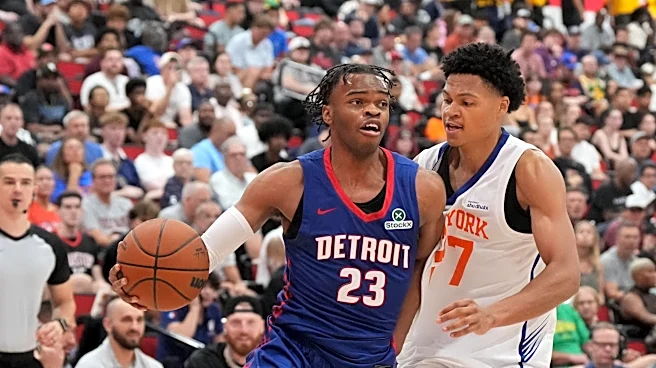
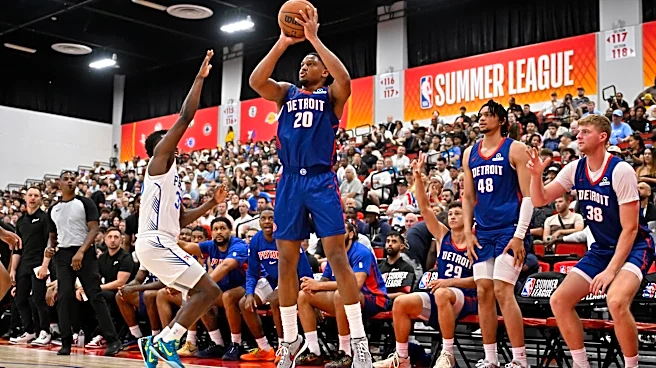
Yesterday against the Detroit Pistons was a perfect example. Ebuka Okorie, the 17th overall pick, had put together a solid Summer League for Detroit. He’s a twitchy point guard with the ability to beat defenders off the bounce with ease. Not yesterday. The Suns’ game plan was simple. Put Rasheer Fleming on him and make his life miserable. Mission accomplished. Okorie finished with 16 points, but it took him 17 shots to get there. Fleming’s work at the point of attack was outstanding, consistently disrupting Detroit’s offense and making every possession a challenge.
That’s one of those things that gives you butterflies in your stomach when you start thinking about the possibilities next season. If Fleming spends time at small forward, his defensive versatility becomes incredibly intriguing. He has the ability to guard one through five. On one possession, you can throw him at the point of attack. On the next, he can battle a power forward inside. When you combine that with the different lineup combinations the Suns can deploy, it becomes a fascinating chess piece for Jordan Ott to work with.
So he might not be loud. He might not be extroverted on the court. That doesn’t mean his Summer League has been underwhelming.
When we talk about progression from the sophomore class, Fleming belongs in that conversation. Much like the Suns’ second-year players showed meaningful growth throughout last season, we’ve seen that progression continue in Las Vegas.
The challenge now becomes translating it to the regular season. For a player who appears destined to receive consistent rotational minutes, this was a meaningful step in the right direction. The three-and-D role he’ll be asked to fill aligns almost perfectly with what he’s shown throughout Summer League.
Sometimes, progression isn’t measured by who scores the most points. Sometimes it’s measured by how prepared a player looks for the role that’s waiting for him.