



Fall is settling into the Valley of the Sun, and the nights are finally becoming crisp. So I think nothing of it when my wife gets up in the middle of the night to turn off the ceiling fan. Unfortunately for me, the ceiling fan switch sits next to two other switches, one of which controls the outlet on my side of the bed. How I became the lucky bastard who inherited the switched outlet is one of life’s great mysteries, but here we are.
So when I woke up this morning and discovered that my phone hadn’t
charged all night, I quickly pieced together what had happened. While stumbling around in the darkness, the Mrs. had initially missed the ceiling fan switch and inadvertently turned off the outlet powering my charger. And as I stood there staring at my lifeless phone, the first thought that entered my basketball-obsessed brain was, “Well, crap. I’ve been disconnected. Much like the Phoenix Suns defense.”
I landed that plane, didn’t I?
After surrendering 143 points in the season opener against the Portland Trail Blazers, your instinct was to chalk it up as a variance game. “Shit happens,” as Forrest Gump says, and with all the emotion Portland was riding into its season opener surrounding the return of Damian Lillard, you could rationalize the Suns being unprepared to match that energy.
But since then, they’ve surrendered 122 points to the Santa Cruz version of the Golden State Warriors and another 125 to an extremely banged-up Oklahoma City Thunder team. It’s beginning to look less like that season opener was a fluke and more like the defensive identity of the Phoenix Suns, much like a lonely iPhone in the night, is disconnected.
Watching their collective performance has been a shock to the system for a team that built its reputation on that side of the ball a season ago. And the only thing more disappointing than watching it unfold is opening up the stats section on NBA.com to assess the damage. Because yes, it is damaging.
The Suns are allowing 123.7 points per game, which shockingly is only the fifth-most in the NBA. But their 124.5 defensive rating? Yeah, that’s the worst in the league. Their rebounding percentage sits dead last at 42.9%, and they’re tied for allowing the most second-chance points at 23.0 per night.
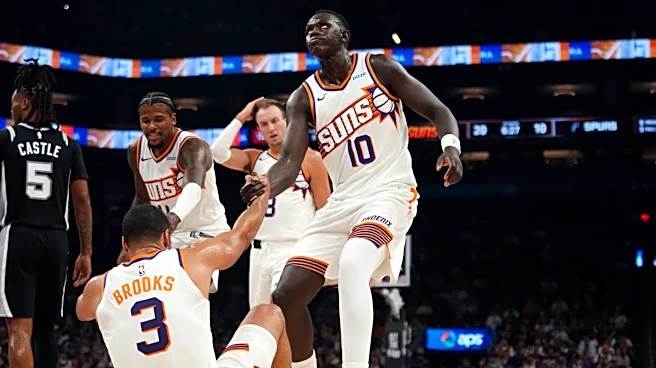
This team reminds me of the one we watched during the back half of last season. You know the one. The team that went 14–16 over its final 30 games. But there was justification for that team being as discombobulated as it was, right? Injuries were the culprit, not the system. You could point to the fact that over those final 30 games, Devin Booker missed 10, Dillon Brooks missed 20, and Mark Williams missed 10. The stability Phoenix had experienced for most of the season had disappeared, and the results reflected it.
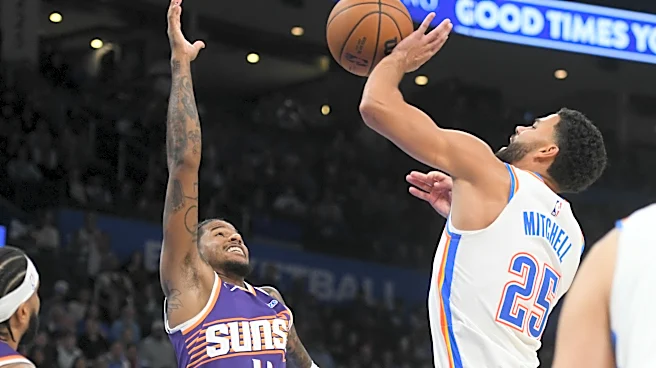
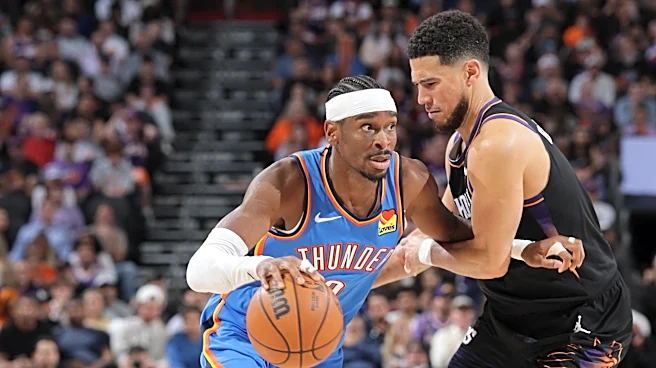
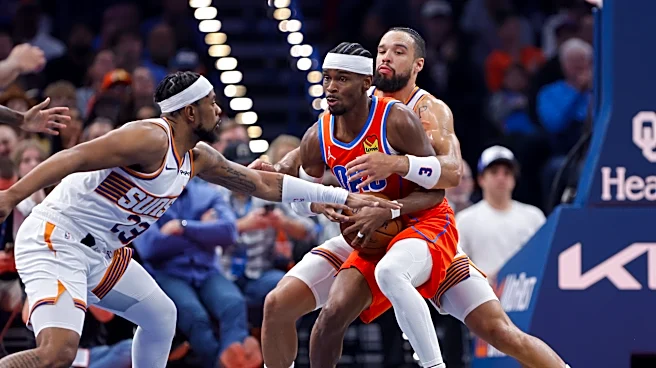
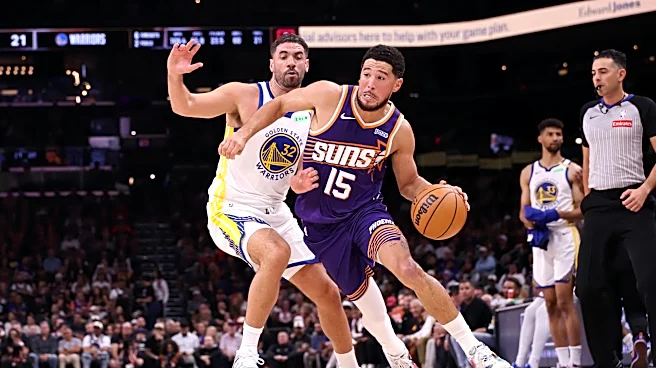
What we witnessed at the end of last season looks an awful lot like what we’re seeing at the beginning of this one. Opposing teams are manipulating the Suns’ defense in ways that are both predictable and unacceptable. Guards are slicing into the lane unimpeded, getting to the rim for layups that are weakly contested because the rotating big man arrives late. And why is he late? Because he’s busy guarding his own guy. You can’t have catastrophic defensive collapses where nobody stops the ball and then expect your center to magically erase the mistake at the rim.
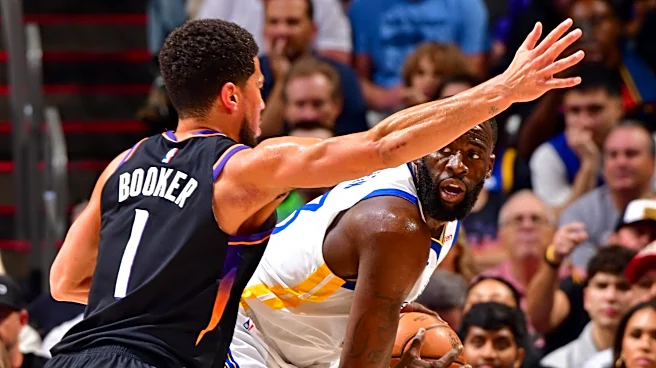
When perimeter defenders are continually beaten, and penetration occurs, the defense collapses to compensate. And when that happens, wide-open three-pointers become available. The Suns currently rank 29th in perimeter defense, with opponents shooting 40.7% from beyond the arc through the first three games.
Oh, and the rebounding? Per Basketball University, the Suns are permitting their opponents to grab 43.3% of their own misses. If Phoenix does somehow stop the opposition on a possession, odds are they’ll get another crack at it.
So part of me is beginning to wonder whether we were too quick to blame injuries for the way Phoenix struggled down the stretch last season. Because what we’re witnessing at the front end of this year looks remarkably similar to what we saw at the back end of last year. Is it the same issue? Is unfamiliarity the primary culprit? Because if it is, that problem was never fixed last season.
And when I look at teams like the Warriors and Thunder, who have been limping through games against Phoenix over the past two contests, they still appear connected defensively. They have guys out there I’ve never heard of (I’ve got a vanilla iced protein latte for Josh Dix here), yet somehow, strategically and schematically, they’re finding ways to defend as a cohesive unit. Hell, the Thunder were throwing a 2-3 zone at the Suns, and Phoenix couldn’t figure out how to crack it.
Yes, my friends, the Suns look disconnected. And it’s becoming increasingly difficult to determine whether the problem is the personnel or the scheme.
Three games is a small sample, but the similarities to last season’s collapse are becoming difficult to ignore. At some point, Jordan Ott and his staff have to determine whether the system is putting players in positions to succeed or exposing their deficiencies. And the players have to execute their responsibilities within it. There’s accountability on both sides. Because right now, the Suns are playing defense like five individuals sharing a court rather than five teammates sharing a purpose. Somebody needs to find the damn light switch.