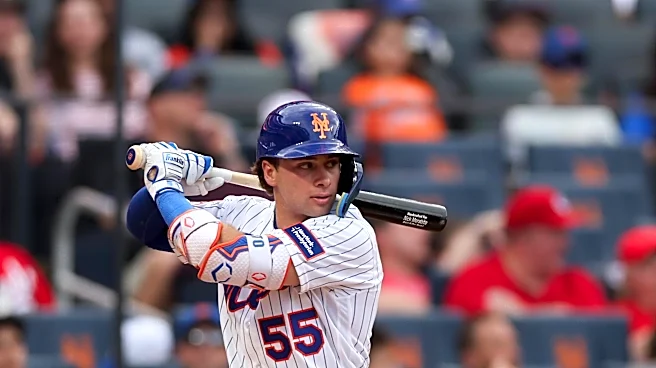






Nick Morabito
Week: 6 G, 21 AB, .333/.462/.810, 7 H, 1 2B, 0 3B, 3 HR, 5 BB, 5 K, 4/4 SB (Triple-A)
2026 Season: 64 G, 234 AB, .256/.364/.415, 60 H, 9 2B, 2 3B, 8 HR, 33 BB, 64 K, 22/24 SB, .319 BABIP (Triple-A) / 5 G, 11 AB, .000/.083/.000, 0 H, 0 2B, 0 3B, 0 HR, 1 BB, 9 K, 0/0 SB, .000 BABIP (MLB)
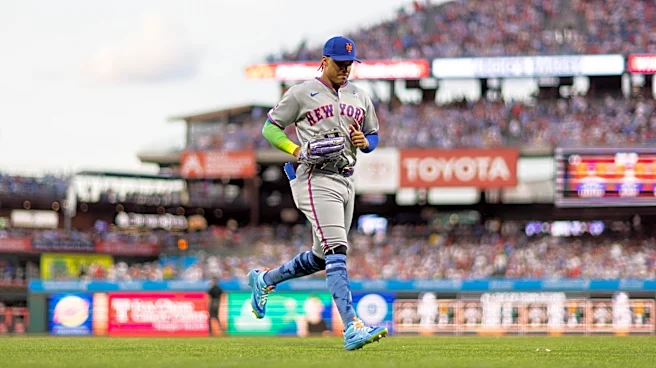
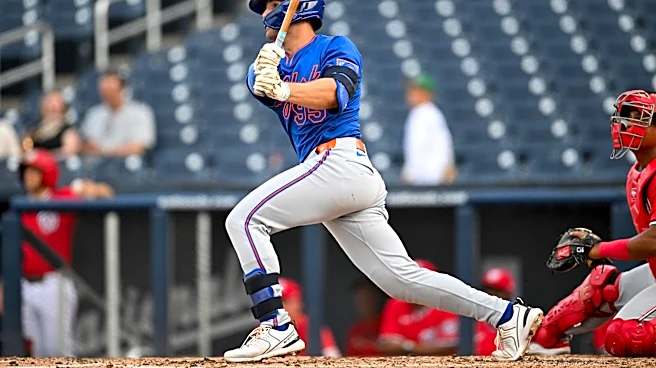
Earlier this season, people were discussing Nick Morabito in the same breath as Carson Benge or AJ Ewing, and with good reason: through the first month of the season, he was hitting .268/.371/.463 with four doubles and four home
runs in 23 games for the Syracuse Mets, good for a 116 wRC+.
Unfortunately for Morabito, and for everyone else out there, things took a turn for the worst in the month of May, as the outfielder hit .234/.355/.297 until May 19, when the Mets called the 23-year-old up to the majors for roughly a week to balance out the bench. After going hitless in 11 at-bats, drawing a walk, he was optioned back down to Syracuse on May 25th, where he had a strong week, going 6-23 with a pair of extra base hits and three walks, finishing out his May hitting .241/.353/.333 with 3 doubles, a triple, and a home run.
Prior to this past week, Morabito’s June was looking grim. Coming into the week, he was hitting .227/.320/.295, but thanks to his performance against the Tides, he is hitting .256/.364/.415.
As expected, the red flags that presented themselves in his profile last season, such as his elevated strikeout rate, have continued to bite Morabito, but to his credit, he responded by making improvements in other facets of his game. His walk rate has improved, up from a 9.8% in 95 games with High-A Brooklyn and 9.6% with Double-A Binghamton to 11.6% in 63 games with Syracuse. His batted ball data, however slight, has improved, with fewer groundballs and more line drives and flyballs. His hit spray, though slight, is more efficient, with his pull and up-the-middle rates up a bit and his opposite field rate down.
There is no doubt in my mind that Morabito will be called back up to the majors at some point between now and when he decides to call it a career, and with his speed and ability to play centerfield, there is no doubt in my mind that he will carve himself a nice little niche as a bench player. While he does not have particularly loud offensive tools, there are clear avenues for Morabito to improve which might then raise his potential standing even further, from bench player to perhaps more.
Jonathan Santucci
Week: 1 G (1 GS), 6.0 IP, 5 H, 0 R, 0 ER, 2 BB, 7 K (Double-A)
2026 Season: 13 G (13 GS), 62.2 IP, 50 H, 29 R, 26 ER (3.73 ERA), 31 BB, 75 K, .311 BABIP (Double-A)
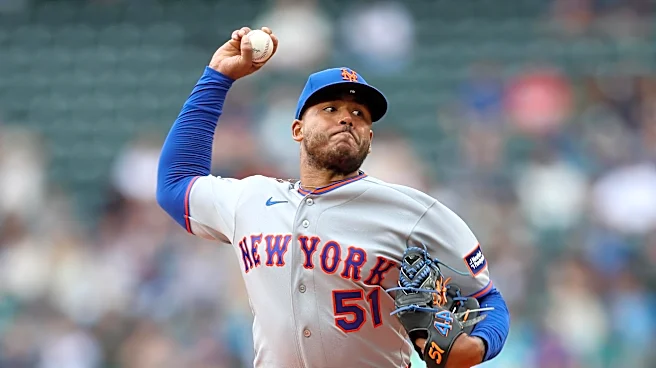
I wouldn’t exactly call the season that Jonathan Santucci is having so far a breakout, but in a season that has been a fairly big let-down for many of the Mets’ top prospects for various reasons, the southpaw is one of the few whose stock is, at minimum, holding. The left-hander threw a shutout performance for just the second time this season, dropping his ERA .40 points, to 3.73. He relied on his bread-and-butter, his fastball-slider combination, for six of the seven strikeouts he recorded in the ballgame, striking out four batters with his fastball, two batters with his slider, and one batter with his changeup.
Santucci was promoted to Double-A Binghamton last season around this time and made 10 starts with the Rumble Ponies, posting a 2.52 ERA in 50.0 innings, allowing 33 hits, walking 18, and striking out 63. When combined with his performance there this season, the left-hander has a cumulative 3.20 ERA in 112.2 Double-A innings, allowing 83 total hits, walking 49, and striking out 138. Assuming that he does not suddenly take a major step back, it would seem like Santucci is due for a promotion to Triple-A Syracuse sometime in the next few weeks.
When he eventually is promoted, how likely is it that his solid season continues? Looking at Santucci as a whole, two things stick out at me that could be problematic: his limited pitch mix and his poor command of that limited pitch mix.
Santucci throws a fastball, slider, and occasional changeup. In 2025, he added a more traditional curveball to his arsenal and claims that he still throws it, but the pitch is so identical to his slider that it is difficult to tell the two apart. While his fastball is an average-to-above average pitch and his slider a definite above-average pitch, the viability of a two-pitch pitcher outside of the bullpen is suspect. Clouding matters, both pitches play down when the left-hander is having trouble commanding either pitch on any given day.
Control and command has been an issue for Santucci going back to his time at Duke, and while it looked like he made some strides with his control last year, any such gains if they were legitimate seem to have disappeared. The left-hander currently has a 4.5 BB/9 rate, a below-average Zone%, and an extremely sub-optimal 44.4% F-Strike%. The southpaw has only thrown six or more innings three times this season, and in those three games, he has had an average or better strike rate, throwing 56 strikes in 87 pitches (64%), 60 strikes in 92 pitches (65%), and 60 strikes in 92 pitches (76%). In games where he has thrown fewer than six innings, Santucci has averaged a below-average 58% strike rate, with individual games ranging from 63% to 49%.
Slinging the ball from a three-quarters arm slot with a long arm action through the back and a pronounced weight shift to his back leg during his wind-up, the left-hander is unlikely to ever have pinpoint control. While a large preponderance of Santucci’s strikeouts come from getting batters to expand the zone on his fastball or slider, improving his command of both pitches- especially once in the International League, where the league-wide walk percentage is roughly 10% thanks to a strike zone that is defined as slightly smaller as compared to Double-A thanks to the ABS system- will be imperative to his future value as a baseball player.