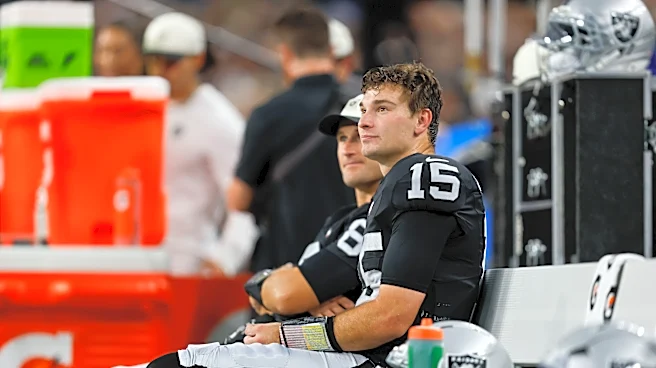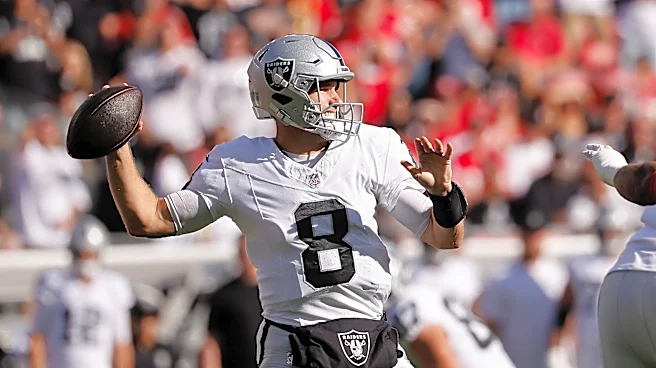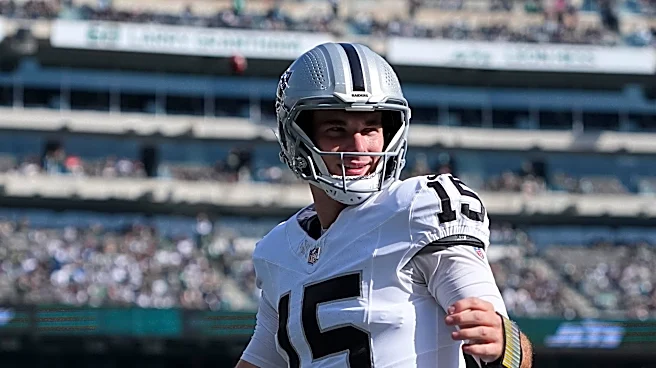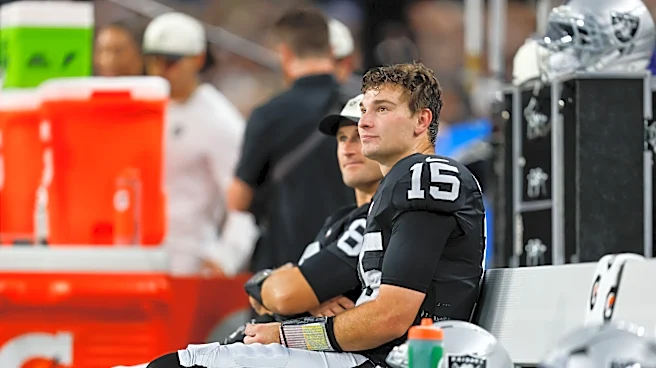


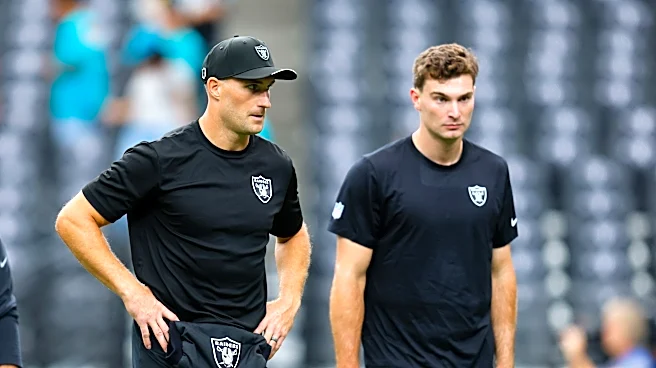
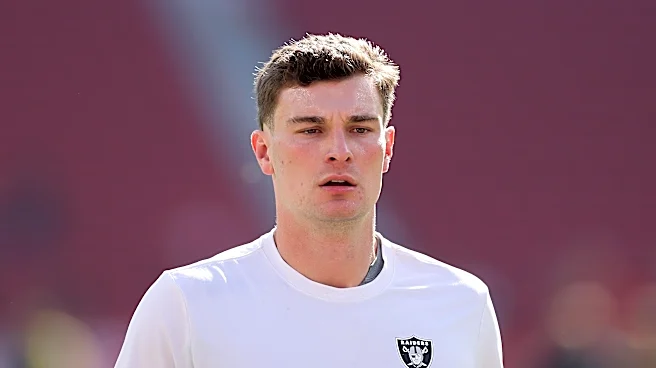
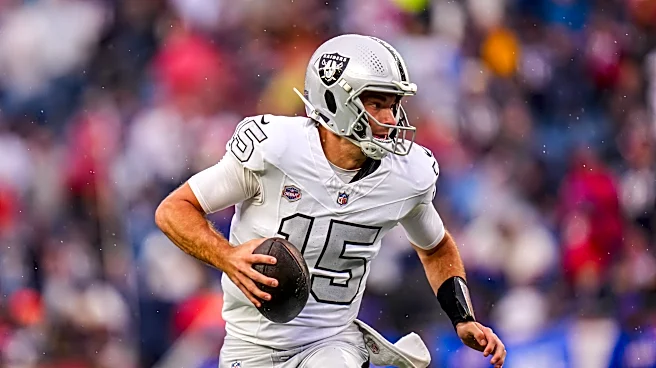
The Seattle Seahawks’ next opponent is making a major change at quarterback. After trading Kirk Cousins to the Minnesota Vikings, the Las Vegas Raiders are turning to Fernando Mendoza, the No. 1 overall pick in the 2026 NFL Draft, as their starter for Week 10.
Mendoza has already made his NFL debut, completing six of eight passes for 48 yards in garbage time against the New England Patriots. Sunday, however, will be a different challenge: his first career start against the reigning Super Bowl champions
and one of the NFL’s most difficult defenses to prepare for.
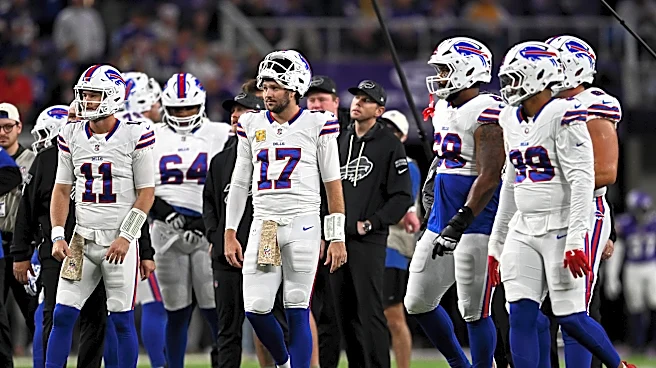
The Cousins trade also has implications beyond Las Vegas. Minnesota is strengthening its quarterback room with a familiar veteran, potentially improving the offense of a team competing in the same NFC playoff picture as Seattle. While the Vikings still have questions to answer, the move makes them a team worth watching in the wild-card race.
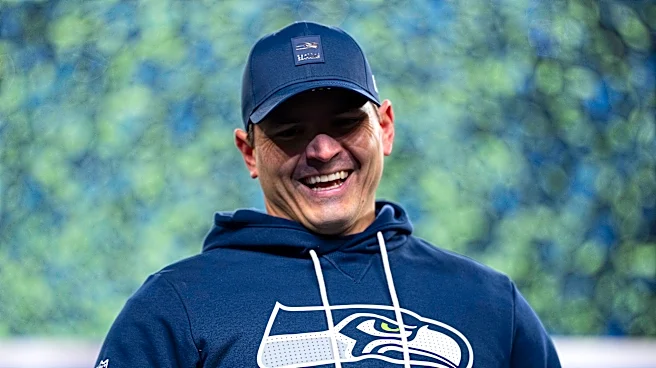
For the Seahawks, though, the immediate focus is Mendoza. And if history is any indication, Mike Macdonald has a particularly uncomfortable welcome waiting for the rookie.
A difficult matchup for first-year quarterbacks
Macdonald has built his defensive reputation around disguise, pressure and forcing opposing quarterbacks to make decisions before they are entirely comfortable with what they see. That combination can be especially difficult for a rookie. Young quarterbacks are still learning how quickly NFL defenses close throwing windows, how protections should respond to different fronts and when a seemingly open receiver is actually being baited into a dangerous throw.
Macdonald frequently uses simulated pressures and disguised coverages to complicate those decisions. A defense can show a threatening blitz before dropping defenders into coverage, or present what looks like a manageable protection before sending pressure from an unexpected angle.
The objective is not just sending more rushers; it is to make the quarterback unsure of where the pressure is coming from and which areas of the field will remain open after the snap. That uncertainty creates two opportunities for Seattle.
The first is hesitation: if the quarterback holds the ball while identifying the rush, the pass rush gets more time to reach him. The second is a rushed decision: if he anticipates pressure and throws early, he may deliver the ball into a coverage that looks different from the one he initially read.
For an experienced quarterback, these situations are challenging enough. For a rookie making his first start, the margin for error is considerably smaller.
The numbers against rookie quarterbacks
Seattle’s recent matchups with rookie starters illustrate the challenge.
Across the four games against Bo Nix, Caleb Williams, Cam Ward, and Max Brosmer, the quarterbacks combined for 642 passing yards, seven interceptions and 17 sacks. Those quarterbacks completed 89 of 142 pass attempts, for a combined completion percentage of 62.7%.
The most striking numbers are the sacks and interceptions. Seattle averaged more than four sacks and nearly two interceptions per game in this sample. That is a demanding combination for any offense, especially one relying on a quarterback who has not yet experienced the full speed and complexity of an NFL defense as a starter.
The passing-yardage average also tells part of the story. Although Cam Ward threw for 256 yards, the other three quarterbacks combined for just 386. The overall average was 160.5 yards per game, with the individual performances varying considerably.
The results were equally notable: Seattle won all four games.
Four games, four different challenges
Bo Nix opened his rookie season against Seattle in September 2024. The Seahawks held him to 138 passing yards, intercepted him twice and sacked him twice in a 26–20 victory. Nix completed 26 of 42 attempts, but the volume did not translate into an efficient passing performance.
Caleb Williams had an even more difficult afternoon. In a 6–3 Seahawks win, he completed 16 of 28 passes for 122 yards, threw an interception and was sacked seven times. The game demonstrated how a defense can disrupt an offense without needing to generate a large number of points itself.
Cam Ward provided a different test in 2025. He completed 28 of 42 passes for 256 yards without an interception, but Seattle still recorded four sacks and won 30–24. His production showed that rookie quarterbacks can find opportunities against this defense, even when the overall matchup remains difficult.
Max Brosmer’s experience was the most punishing statistically. In Seattle’s 26–0 shutout of Minnesota, he completed 19 of 30 passes for 126 yards, threw four interceptions (including an awful pick-six to Ernest JOnes) and took four sacks.
The four games offer different lessons. Nix struggled with turnovers, Williams was overwhelmed by pressure, Ward produced yards but could not lead Tennessee to victory, and Brosmer endured a disastrous afternoon against a defense that consistently won the decisive plays.
Mendoza will need to avoid all four outcomes.
What this means for Fernando Mendoza
Mendoza enters the matchup with an impressive college résumé, including a Heisman Trophy and a national championship at Indiana. But college accomplishments cannot eliminate the learning curve involved in facing an NFL defense.
His most important task may not be producing explosive plays. It may be avoiding the mistakes that allow Seattle to control the game.
That means getting the protection calls right, identifying where pressure could come from, trusting the answers built into the offensive scheme and knowing when an incompletion is preferable to forcing a throw. The Raiders will also need to help him with a credible running game and manageable third downs.
If Mendoza repeatedly has to hold the ball while deciphering Seattle’s coverage, the Seahawks’ pass rush could take over. If he anticipates pressure and throws without confirming the post-snap picture, Macdonald’s disguises could create turnover opportunities.
The Raiders cannot expect their rookie to solve every problem on his own. The coaching staff must put him in positions where he can make quick, defined reads rather than asking him to consistently win complicated passing situations.
For Seattle, the plan is straightforward: make the rookie prove he can recognize the defense, protect the football and respond when the first option is unavailable.
Final Thoughts
Fernando Mendoza’s first NFL start presents the Seahawks with an opportunity to test a rookie against a defense built to create uncertainty. Macdonald’s system does not rely exclusively on overwhelming quarterbacks with blitzes; it combines pressure with disguise, forcing passers to diagnose the play while the pocket is already changing around them.
Seattle’s recent results against rookie starters are encouraging. Those numbers do not guarantee another dominant performance, but they establish a clear challenge for Las Vegas.
For the Seahawks, the ideal outcome is to make the rookie hesitate, force him into difficult decisions and turn those moments into sacks, turnovers and stalled drives. If Seattle executes that plan, Mendoza could discover just how steep the learning curve can be when facing Mike Macdonald’s defense for the first time as a starter.