

Grades are an imperfect metric, but they are a widely shared cultural reference point. As a former teacher, the A-F grading system is baked into my brain. A few years ago, I created a grading system for the Minnesota Timberwolves because I thought it would be fun to try and channel each player’s contribution to the team into an easy-to-sum-up format by focusing on key stats based in player role.
After a couple seasons away, I’m thrilled to be back diving deep into the numbers with my favorite team,
hoping that these grades lead to good conversation, debate, and all the fun that comes with processing the upcoming 82 game rollercoaster ride.
A handful of quick reminders about how the grades work:
- These grades are roles-based, so the stats I’m looking at for each player are different and meant to highlight their team role.
- Roles on the team can change as the roster and playing time changes —I will alter or add statistical categories throughout the season as needed. Especially in a preseason article, the expectation is that some of these initial stats will change as we get to know the team better.
- The grade ranges and their correlation to stats are educated speculation based on previous career averages, team role, and minutes expectation. Like the categories themselves, if there is a range that is clearly missing the eye test, expect some tweaks as the season goes along.
- The season is divided into four quarters; twenty to twenty-one game increments. There will be mid quarter (10ish games), quarter (20ish games), semester (41 games) and final grades (82 games) throughout the regular season and series grades in the playoffs.
Let’s get to it!
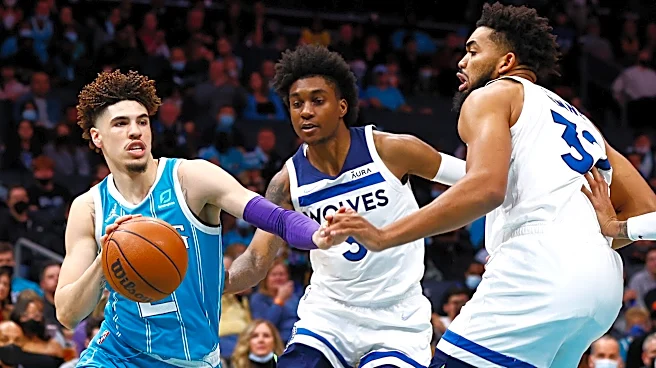
LaMelo Ball: The Mixologist

The Stats: Team Offensive Rating, Games Missed, Defensive Rebounds Per Game

The Why Behind Them: Having Mike Conley as a point guard is like drinking an Old Fashioned with lifelong friends. There is safety, comfort, and familiarity. Having LaMelo Ball as your point guard is going to be like going to a fancy new bar that doesn’t have a menu, and behind the bar is a mixologist that takes a long, studious look at you, starts working behind the bar, and then places a whole new concoction in front of you.
It could be a terrible experience, but it also might be one of the best drinks you’ve ever had. You just will never know unless you actually walk out the door and try it.
Also the mixologist was traded to your city because he has a history of tripping over barstools and missing nights at the bar so there’s a decent chance he might not be in the night you go out for drinks and… I think I’ve stretched this metaphor too thin so let’s get back to basketball.
Here’s the thesis on LaMelo: he was brought here to unlock the offense and set up Anthony Edwards to be the best version of himself (more on that soon). If things go according to plan, this is phase one of a long relationship as LaMelo injects pace, creativity and joy back into Minnesota’s offense. The best signs that this project is working? Overall offensive numbers and Ball being healthy and available for the majority of the season.
The final stat is all about his role on the other end of the floor: defensive rebounding. Ball is never going to be expected to be a defensive stalwart, but where he can best contribute is in helping to close out defensive possessions and start offensive ones.
For those that are unaware, the Wolves’ new 6’7’’ point guard is one of the best defensive rebounding guards in the NBA. Last season, Cleaning the Glass had him as a 95th percentile defensive rebounder as he averaged 4.8 rebounds per game, a career low overall number. However that coincided with about four less minutes per game.
For a player like Rudy Gobert, a defensive rebound means closing out a possession. But for a player like LaMelo, it means that the ball gets in his hands as quickly as possible for a hit-ahead pass or initiating a fast break. It’s an immediate adrenaline boost to a starting group that has had a habit of playing slow the last few years. It is a desperate team need meeting an elite player strength.
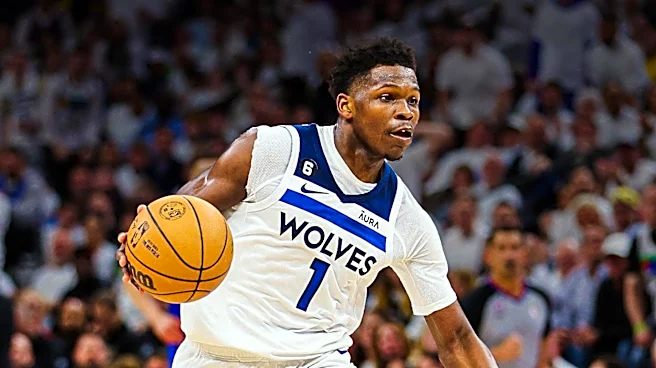
Anthony Edwards: The Charizard

The Stats: True Shooting Percentage, Personal Fouls Drawn, Conference Standing

The Why Behind Them: Welcome to the Anthony Edwards final evolution.
So much of the offseason talk by president of basketball operations Tim Connelly and head coach Chris Finch has been about shaping the roster around what Edwards does best. A recurring theme throughout any longform interview (special shoutout to Britt Robson’s interview with Chris Finch) was about the weight of point guard duties and the effect that had on the all-star guard’s defensive energy. Ant is more Kobe Bryant than James Harden, and the big bet the team is making is that this shift will allow him to find his final form as he enters the prime of his career.
The first stat is simple: If Anthony Edwards is in his ideal offensive role, this should be the most efficient shooting season of his career. His previous career high TS% last season was 61.7%, so that’s the highwater mark that he needs to get over.
On the second stat, personal fouls drawn (PFD), I feel compelled to elaborate more. I have multiple doctorates from Foul-Baiting-Ruins-Basketball University. I’ve gotten into a fight with one of my best friends after saying, “I’d rather watch Julius Randle on my team than Shai Gilgeous-Alexander” because of how much I hate that style of play. I cannot stress enough my credentials in this department.
This is not a plea for four-time All-Star to overexaggerate contact, flop, or spend large portions of TV timeouts working the officials. This stat came about because the more I dug into Edwards’ numbers and the final step he needs to take into the MVP conversation, the reality is he is the worst among his superstar peers at drawing contact.
He was 29th in the league at drawing fouls with 4.5 PFD per game. Every single player that received an MVP vote comfortably drew more fouls per game than Ant:
- Giannis Antetokounmpo: 8.1 (not eligible for MVP last season, just the high standard mark for this stat)
- Luka Dončić: 7.3
- Nikola Jokić: 6.7
- Jaylen Brown: 6.3
- Victor Wembanyama: 6.3
- Shai Gilgeous-Alexander: 6.1
- Jalen Brunson: 5.1
- Kawhi Leonard 5.1
Edwards doesn’t need to be in the top tier, but when you look at a player with a similar build to him like Jaylen Brown it does point to room for improvement. Drawing contact forces good defenders into foul trouble, puts your team in the bonus, and often is an outcome of attacking shifting/off-balance defenses. With LaMelo taking over point guard duties this season, part of the Atlanta native’s final alpha form evolution needs to involve him doing the thing he was built in a basketball lab for; getting downhill and punishing rotating defenses with his once-in-a-generation athleticism.
The final stat I’ll be tracking is the most obvious one: is Anthony Edwards’ team a threat to win the Western Conference? One third of Edwards’ overall grade will be pulled in the direction of the team’s standing – a fair next step for a player looking to plant his flag in the MVP conversation for the next decade in the league.
Jaden McDaniels: The “Whose Car Are We Going To Take?” Guy

The Stats: 3-Point Percentage, Points Per Shot Attempt, Defensive Estimated Plus/Minus

The Why Behind Them: You cannot win a title in the NBA without a player like Jaden McDaniels.
If I were in charge of building an all-time Timberwolves Mount Rushmore, Mr. “They’re all bad defenders” has earned his place on my monument. He does the little things, the big things when asked, and if something is going down and you need some backup, simply asks “Whose car we taking?”
In fact, when things go down, there is no time to even ask that question because he’s already charged headlong into the fray like Leeroy Jenkins.
In order for this team’s offense to reach its full potential, McDaniels has to be a capable shooter from deep to help offset the heretofore streakiness of Jonathan Kuminga and Rudy Gobert’s lack of spacing. The most common three-point look that Jaden gets? Wide open: no defender within six feet when he shoots the ball. If Jaden can hit these at a consistent clip, the whole offense opens up.
You know the stat that consistently bumps up to an elite level (playoffs) vs a good level (regular season) as the calendar turns to April? Jaden McDaniel’s points per shot attempt (PPSA). Besides the San Antonio series last season, McDaniels offensive efficiency with his PPSA goes from above league average (60th percentile) to 97th, 96th, and 82nd percentile in his three previous playoff runs. Like so many of the offensive stats I’m looking at for the starters, this is all about efficiency and making regular season monotony look more like post season excellence.
The final stat is McDaniels overall defensive EPM, a number where he finished at in the 90th percentile in the league last season. I’ve set the “A” season grade at a number that would have finished in the 95th percentile, and presumably be the marker of an all-defense team.
Jonathan Kuminga: The Knife-Wrench

The Stats: Rebounds Per Game, Contested Shots Per Game, Offensive Estimated Plus/Minus

The Why Behind Them: Perhaps my millennial is showing with a Dr. Ján Ïtor reference, but alas, it was the first place my mind went. Much like Jonathan Kuminga, the knife-wrench is an out of the box idea; a combination of two common tools (a toolsy prospect if you will!) that in theory could solve multiple problems at once. It also, in theory, could stab you in your thigh if placed at the wrong angle on your toolbelt. While the answer to his fit will come in time, the more you get to know him, the more you’ll find yourself pulling for him to succeed.
So what are the tools that this team most needs to see? Defense, rebounding and finding his niche as a slice of the offensive pie.
If Kuminga is committed to the defensive side of the floor, the ceiling of this roster completely changes. Presuming Gobert anchoring his presence in the paint, the DRC-native has the same opportunity Nickeil Alexander-Walker did when he came over in the trade from Utah: Re-invent yourself as a defensive dog and go into the offseason and get paid.
The departure of Julius Randle (6.7) and Naz Reid (6.2) opens up 13 rebounds per game that are up for grabs for the regular rotation guys. As mentioned above, I expect LaMelo Ball to get his fair share of the defensive boards, so the number reflected for Kuminga’s “A” rebounding grade comes with an expectation that the best version of himself is a weapon on the offensive glass.
According to Cleaning The Glass, Kuminga has been anywhere from a 61st-88th percentile offensive rebounder at the forward position since his rookie season. It’s a real part of his skillset and one I expect to be intentionally utilized to offset a lower usage number.
As for Kuminga’s final stat, offensive EPM, this is all about his offensive effectiveness as a role player. There aren’t a lot of pieces of the offensive pie left, but if he’s able to fit into the flow of offense and find his moments, it will be reflected in his offensive EPM as the team scores and thrives. The 0.5 “A” grade number would him around a 75th percentile.
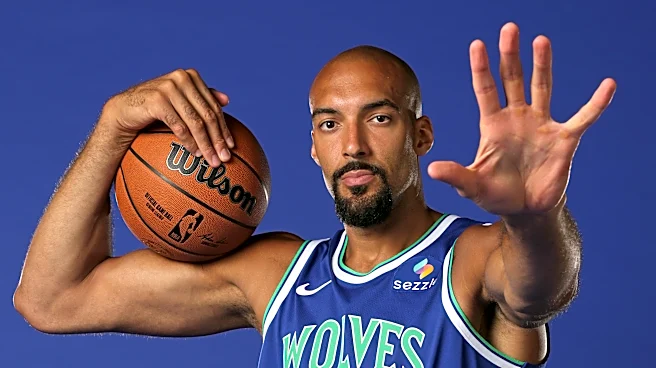
Rudy Gobert: The GOAT-ee

The Stats: Screen Assist Points Per Game, Dunks Per Game, Team Defensive Ranking

The Why Behind Them: Did you know that the facial hair formation known as the goatee derives its name from bearing a resemblance to a billy goat? The look is literally goaty.
Did you know that the goatee’s first rise in popularity is connected to a seventeenth century Flemish painter due to the widespread popularity of his self-portraits?
Did you know that after disappearing for centuries the goatee re-emerged hundreds of years later, made famous by Napoleon III and eventually being immortalized on the faces of “The Three Musketeers” by French author Alexander Dumas?
You may find yourself asking, “what does any of this have to do with Rudy Gobert’s upcoming basketball season?” And the answer to that is so simple you should frankly feel embarrassed for asking. Before the ball has bounced even one single time on the practice floor at Mayo Clinic, that tuft of hair on the Frenchman’s face has made a louder statement than any media day quote ever could: “All for one, and one for all. United we stand, divided we fall.”
And speaking of being united, Gobert has always been one of the best screen setters in basketball, finishing in the top five in screen assists for the past decade (seriously, he was #2 in the ‘16-‘17 season!). While you can debate LaMelo Ball being the best point guard that Gobert has played with, LaMelo is the most dynamic point guard of Gobert’s career. The French Big is a hall of fame screener and this season could be the pièce de résistance of his storied career.
The last two stats are short and sweet. Continuing on the same thesis of playing with the most dynamic passing point guard he’s ever played with, the goateed Frenchman should have a little bit of rejuvenation in dunking around the basket. And finally, team defensive ranking as a season long stat. Rudy Gobert has long been said to be a top ten defense in and of himself. The Wolves will once again test that theory and rely on his prowess to anchor the team on that end.
That’s it for now! Comment below if there is a potentially better category or stat to track – I’ve adjusted metrics based on ideas from the comment section in past seasons and will look closely at it if it falls within the date-oriented stat systems I can use for tracking.
I’ll be back soon with a preview of the bench, until then, may Rudy Gobert’s goatee offer us all peace and comfort while we wait for the preseason to start.