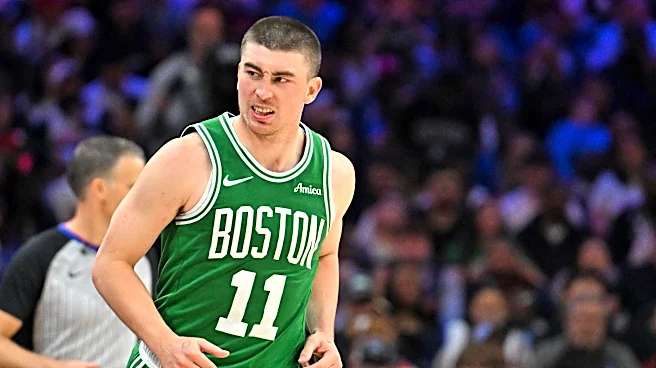






For most of the last two years, Payton Pritchard’s contract has been one of the easiest things on the Celtics’ books to celebrate.
A four-year, $30 million deal signed in October 2023 for a guard who can shoot, handle the ball, push pace, scrap in the paint, bomb away from the logo and swing games by himself? Yes, please and thank you. No further questions. Please put that receipt in a frame and hang it next to the 2024 banner.
That version of the conversation was fun while it lasted. Sadly for us,
though certainly not for PP himself, it’s about to change.
Pritchard is no longer a plucky underdog value story. He isn’t the scrappy bench guard who outperformed expectations and turned into one of Brad Stevens’ better pieces of business. Well, in a way he’s still all of that, sure, but as we’re about to find out, he’s become so much more. After his last couple of seasons, Pritchard has become one of Boston’s more interesting offseason variables.
That’s what happens when a bargain starts playing like something much closer to a pillar.
The contract is still absurd. The role is anything but.
The Celtics are set to pay Pritchard $7.8 million next season. In the NBA’s current financial climate, that number feels like it was discovered in a couch cushion. Boston will owe Jayson Tatum, Jaylen Brown and Derrick White roughly $145 million combined next season, while no other player on the roster is currently set to make more than $11 million. Pritchard living in that range while producing the way he did is laughably amazing for Boston. It’s one of the reasons the Celtics stayed afloat, and then some, during a season that could have gone sideways fast.
But that’s also where this gets complicated.
Pritchard feels like he’s become more than a “nice to have” player. The Celtics leaned on him too much, and he delivered too often, for him to be treated like a budget-friendly depth piece.
He gave Boston real creation when the offense needed it. He played with pace when the game started to bog down. He punished defenses that lost him. He became more than just a catch-and-shoot threat. There were nights when he wasn’t simply supplementing the stars. He was the star, organizing possessions, creating advantages and forcing Joe Mazzulla’s hand to trust him with more responsibility.
Pritchard plays with the exact kind of irrational confidence that makes sense only after the shot goes in. When it doesn’t, you’re halfway through saying, “Payton, what are we doing?” When it does, you’re nodding like you saw the whole thing coming.
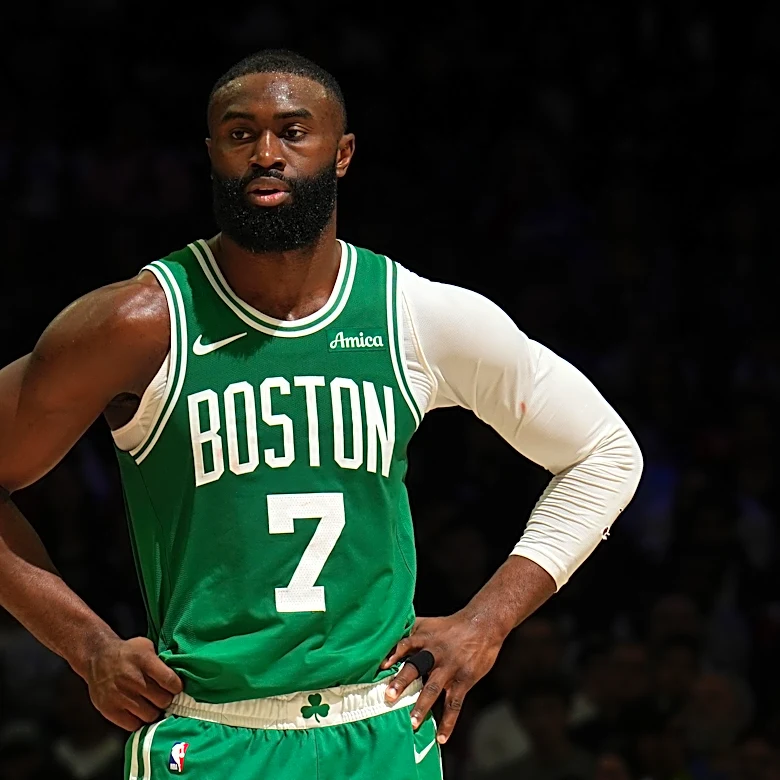
Jaylen Brown said during the season that Pritchard was playing at an All-Star level and that Boston trusted him to run things. That wasn’t a throwaway compliment. It reflected what the games looked like. Pritchard earned more trust because he kept giving the Celtics reasons to offer it.
Now the team has to decide what that trust is worth.
A bargain with leverage
Pritchard is extension eligible this offseason, and that’s where the current bargain starts becoming a bigger question.
Under normal circumstances, this would be easy enough. Pay the guy. Keep the guy. Celebrate the guy. Maybe build a statue of him launching that infamous halfcourt heave in Game 5 of the 2024 NBA Finals.
But Pritchard’s current contract is such a bargain that it limits how much Boston can offer him on an extension. The rules come into play here, and Keith Smith recently laid out the key point: because Pritchard’s salary is below the Estimated Average Player Salary, Boston may be able to offer more than a simple 140% raise off his current number.
That is real money, but it’s also not the same as open-market money.
Pritchard is making $7.8 million next season, which is among the league’s best value deals. But if he believes this past season was a new baseline rather than a peak, waiting could make sense. The cap is going up. The tax line is going up. Teams always need shooting, ball handling and competitive guards who don’t shrink from big moments.
Taking the extension would give Pritchard security now. Waiting could give him leverage in the future.
For once, Boston might not be the only side with it.
And that’s before getting into the roster-building piece of all this. Pritchard’s contract is valuable because he outplays it. That also makes him one of the few movable contracts on the roster that could actually interest other teams. Boston doesn’t have many mid-sized salaries. So, if the Celtics want to chase a center, add more size or reshape the roster in a meaningful way, rival teams are not going to start the conversation by asking for the guys Boston is already mentally Photoshopping out of next year’s team picture.
Pritchard’s value cuts both ways.
The Celtics have to decide what Pritchard means to them
If you extend Pritchard, you’re keeping a player who has become part of the team’s identity. He plays with the exact kind of edge Celtics fans love. He’s annoying in the best way. He rebounds like he has personally been offended by taller people his whole life.
If you move him, you better be doing it for something that clearly raises Boston’s ceiling.
Trading Pritchard because his contract helps make the math work is one thing. Trading him because the Celtics are hunting for a real upgrade is another. There’s a tightrope there, and it’s a narrow one to traverse.
The Celtics don’t have to decide whether Pritchard belongs anymore. He answered that.
The harder question is what kind of player they believe he will be going forward.
Is he the long-term sixth man who stabilizes the offense and closes certain matchups? Is he a possible starter if Boston’s backcourt thins out? Is he the kind of player you extend now because you know the price will only get scarier later? Or is he one of the few non-star pieces valuable enough to help the Celtics make a bigger move?
None of those questions are meant to be insulting. They’re the cost of becoming important.
Pritchard’s contract is still one of Boston’s best bargains. But because of how out-in-the-open good he’s become, the conversation around him can’t stay cheap forever.