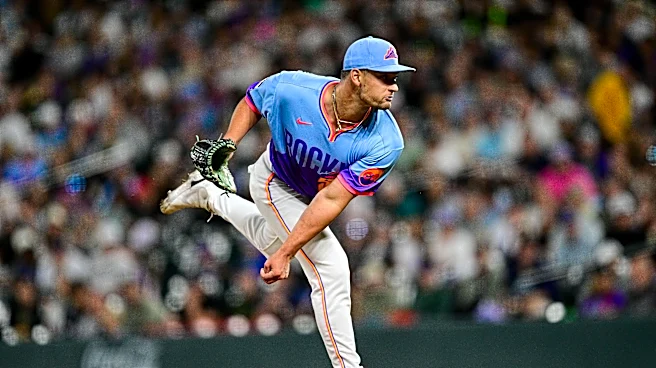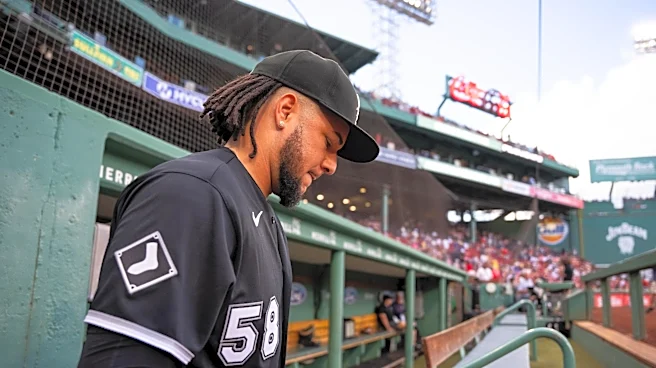

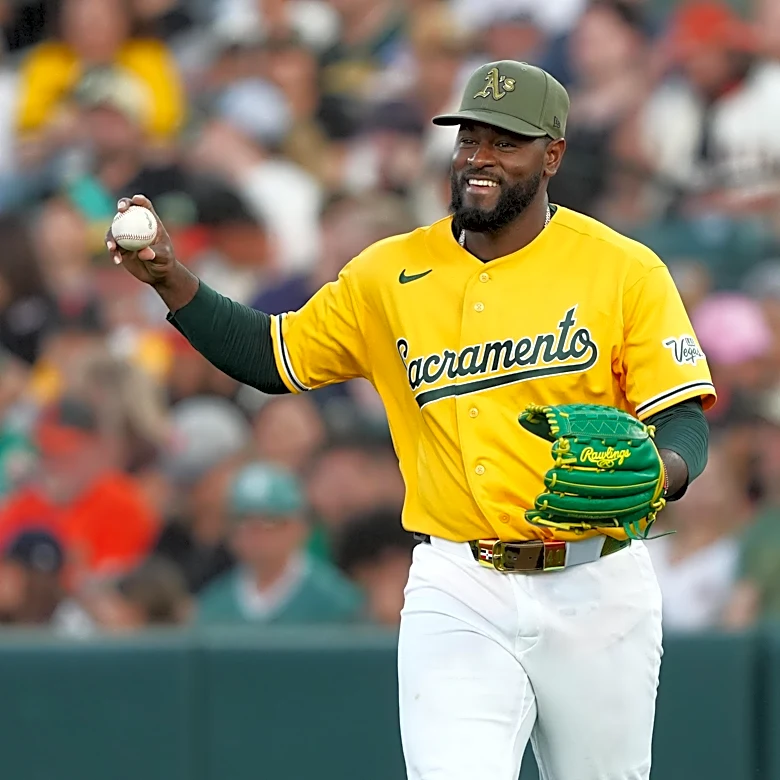
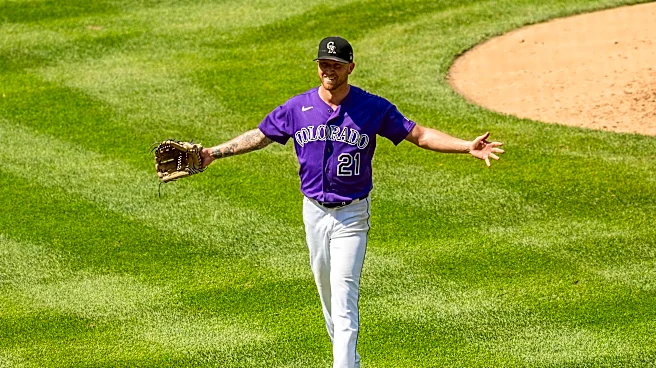
When the Colorado Rockies acquired Luis Castillo and Davis Martin from the Chicago White Sox last week, it was evident that by absorbing all of Castillo’s contract for 2027, the Rockies were able to get the real prize in Martin. However, there is a real possibility that Castillo could find a way to rebound after the worst season of his career and be a monumental pickup for the Rockies.
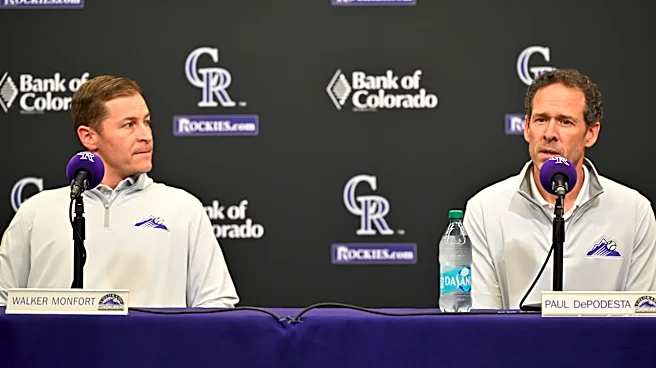
Concerning Castillo’s struggles in 2026, particularly after getting traded to Chicago, Paul DePodesta said, “It was
certainly a short sample post-trade deadline last year. I think that happens with players all the time in terms of having some short-term difficulties. He has a long-term track record of being a very, very good pitcher. We also have some insight into the person and feel really good about that piece of it, too.”
The Rockies are certainly hopeful that Castillo can turn things back around, but what can he and the Rockies do to try and accomplish that feat?
Reestablish pitch-mix
Castillo relies on elevating his four-seamer, while burying his changeup below the zone. While he maintained that separation in 2026, Castillo’s fastball dipped to 93 mph after the trade to Chicago, after it had been its standard 95-96 mph range in Seattle. That dip in velocity, likely tied to the eventual shoulder impingement injury that ended his season, was a culprit in his lack of success.
It’s okay to live up in the zone; in fact, it can be incredibly advantageous. Just look at this fastball he threw to Kyle Tucker in 2022 for a strikeout.
Now compare it to this fastball he threw to Jose Altuve late in 2026. The fastball still hit 95 mph and was located at the top of the zone, but Altuve managed to turn on it easily for a home run.
Without peak mid-to-upper-90s velocity, hitters stopped respecting the top of the zone, knowing anything tracking high was a hittable four-seamer, and anything tracking low was an off-speed pitch they could spit on. That lack of distinction between his pitches hindered his sinker, which was being thrown more over the middle of the plate, and was battered to the tune of a .313/.349/.393 slash line.
The changeup is an interesting pitch because its usage has decreased quite a bit since his rookie year in 2017. In fact, for most of his career in Cincinnati, it was essentially his primary pitch, supported by the fastball. In 2022, however, that began to change as his changeup usage dropped to 22.3%, down from 30.5% in 2021.
While in Seattle, that trend continued as his changeup became his least-thrown pitch and became practically exclusive to left-handed batters. Perhaps a resurgence of his changeup usage could be useful at Coors Field, as it was at Great American Ballpark. It maintains an elite whiff rate around 30% and has been relatively the same pitch through his career; it has just been hit a bit more in the last few years since he reduced its usage.
That brings us to the slider, which took over as his main secondary pitch after the fastball since 2023, his first full year in Seattle.
In 2026, Castillo managed a 26.9% whiff rate with his slider while using it nearly equally against both left and right-handed batters. That was by far the lowest of his career as it not only matched what his fastball was doing, but was 10 points lower than what it generated in 2025. When his four-seamer lost bat-missing life at the top of the zone, Castillo tried compensating by throwing more sliders, but instead of generating chases, the pitch backed up into the hitting zone and became his most heavily damaged offering. We know sliders can be effective, but he’ll have to find a way to refine it and get back to generating the swing and miss.
Castillo has a solid pitch mix, and the Rockies have the challenge of helping him refine and take advantage of it to take on the challenge of Coors Field.
Establish confidence at Coors Field
Speaking of Coors Field, that is going to be one of the toughest challenges facing Castillo and any other pitcher the Rockies bring in.
Castillo has limited exposure to Coors Field in his career, having made just three starts. In 16.1 innings, he owns a 6.61 ERA, which isn’t great, though it’s worth considering that the number is inflated after he allowed eight runs on 10 hits in 3.2 innings back in 2021. His other starts include a 5.2-inning outing where he allowed four runs on nine hits in 2017 and an outing of seven shutout innings with just two hits allowed in 2024.
In that time, Castillo also had 20 strikeouts against four walks with just three home runs allowed. Sure, we can credit the strikeouts to the Rockies’ terrible offensive trends, but there is still merit to how nasty he can be.
Confidence is key at Coors Field, and Castillo is sure to have had plenty after spending the first half of his career in Cincinnati at Great American Ballpark. In 71 career starts, he sports a 3.32 ERA with 484 strikeouts against 140 walks in 428.2 innings of work. In one of the most hitter-friendly ballparks in baseball, Castillo has handled it with ease and has allowed 49 home runs, just four more than he has in Seattle.
The history of success and the reality of mindset is not lost on the Rockies president of baseball operations:
“We talked about the importance of mindset in terms of pitching here,” said DePodesta. “Luis Castillo pitched in Cincinnati for a number of years. That’s not an easy place to pitch, either. One thing I want to make sure that we’re careful about is that, first of all, we play half our games here, not all our games. We play half our games, so we don’t want to turn this into something it’s not.
“The second thing is our mindset needs to be that we need to be better than the guy in the other dugout,” he continued. “There’s no ERA title for what you do while you’re here or anything like that. It’s about winning. It’s about beating the other guy. And I think the competitiveness that both those guys have shown, and that we, with the people that we have in our organization who know both these guys, the competitiveness they have as individuals, I think is a really good fit for us.”
For Castillo to succeed at Coors Field, he is going to need to limit contact, especially hard contact. In 2026, he allowed an 89.9 mph average exit velocity, a 41.8% hard-hit rate, and a 9.6% barrel rate. Those kinds of numbers hurt no matter where you pitch, but can be extra hurtful at Coors Field with the spacious outfield. If he wants any chance of survival, he’s going to have to induce softer contact on the ground and try to limit hits as much as possible. And, of course, steel his mind for the challenge that faces him.
Refine efficiency
Another issue for Castillo last season is one the Rockies were quite familiar with: efficiency.
Elevated pitch counts ended up being an issue for him as he averaged 18.11 pitches per inning, the highest of his career. Deeper counts were often a culprit but the extended at-bats and the increase in hits just left him out there a little bit longer.
For the year, he ended up with just 15 appearances where he went five innings or more. Now, part of that is the fact that he was used in a piggyback role in Seattle, where he was expected to only go four innings, and also working out of the White Sox bullpen. Regardless, his struggles were the reason he was put into those roles and for the first time in a full season of his career, Castillo failed to throw at least 160 innings.
He also struggled in the first three innings, posting a 6.01 ERA, but specifically in the first and third innings. Getting into a hole early was no stranger to the Rockies in 2026, but Castillo has historically been solid in the first third of the game. He has always had some issues in the first inning, but rallying back has been a strong suit in his career and one the Rockies need.
If Castillo can get back on track with his efficiency, it could signal things are improving not just for him, but the whole Rockies staff in general.
Conclusion
Luis Castillo is a unique opportunity for the Rockies to take a pitcher with a long history of success and put make his most recent season an outlier. We are so used to them bringing in an aged pitcher that hasn’t had a good season in five years.
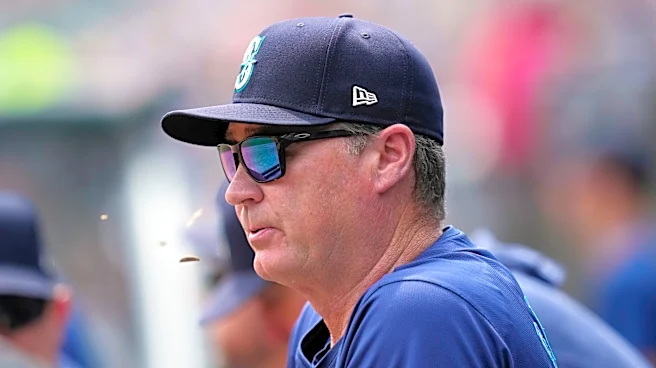
Castillo has a long history of success, and the Rockies need to build a reputation that struggling pitchers can come to Colorado and find success. With the additions of a new pitching coach and the hiring of his former manager Scott Servais in the front office, and his connections to Jeff Pickler and Gabe Ribas, perhaps the tools are in place for the Rockies to help Castillo rebound to the pitcher he’s always been.
Join the conversation!
Sign up for a user account and get:
- Fewer ads
- Create community posts
- Comment on articles, community posts
- Rec comments, community posts
- New, improved notifications system!
Download the SB Nation app on iOS or Android.
Please keep in mind ourPurple Row Community Guidelines when you’re commenting. Thanks!