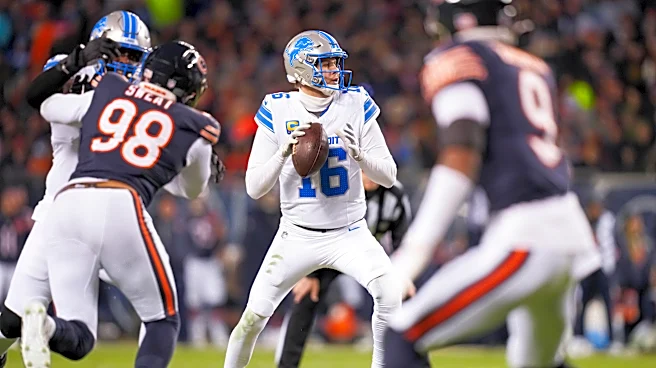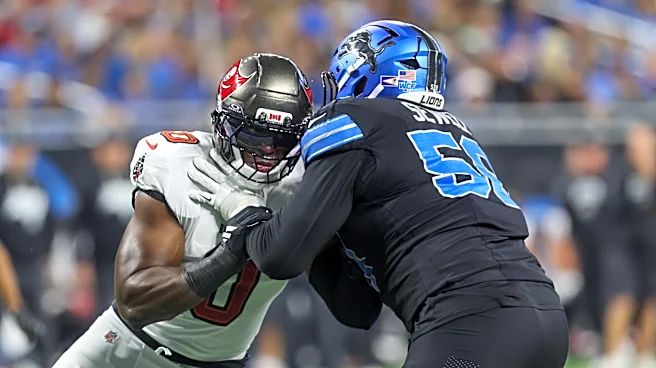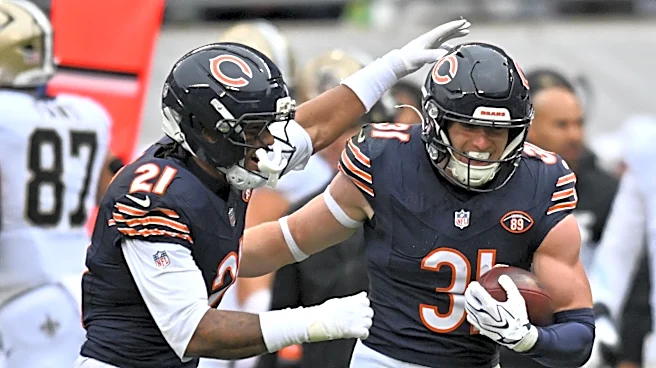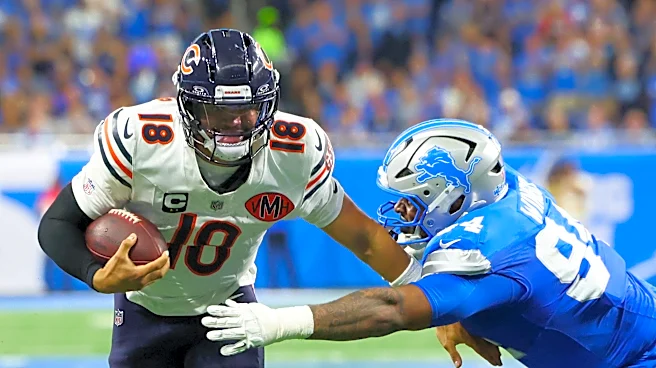



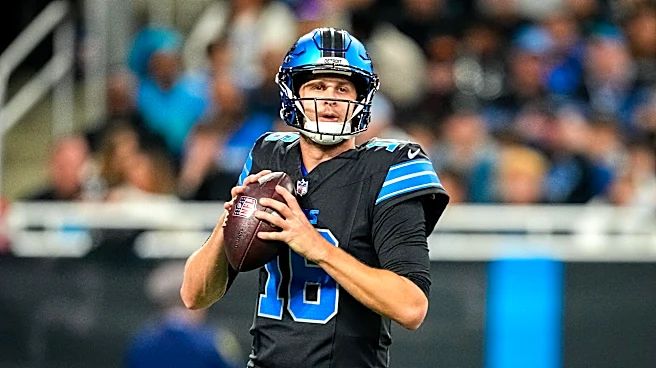
The two most recent NFC North division champions pitted against each other to kick off the NFL’s Thanksgiving spectacular. Both teams are 8-2 in loaded divisional and conference races. Dan Campbell vs. Ben Johnson. This is why the NFL is undefeated.
One of the few hurdles Campbell has yet to clear is finding consistent success on Turkey Day. After going 1-5 on Thanksgiving as a player with the Lions and Dallas Cowboys, Campbell is just 1-4 as the Lions’ head coach in their annual spotlight game. Detroit
is 1-8 on Thanksgiving over the last nine seasons, with the Chicago Bears alone going 3-1 against the Lions in that span.
The Lions have endured a grueling stretch, returning from Germany and playing last week without the luxury of a bye, followed by this short four-day turnaround. However, this game carries more weight than any they’ve played since their back-to-back divisional matchups against the Packers and Vikings. As a reminder, the Lions will play all three of their road divisional games over the last four games, making it even more imperative that they take care of business at home.
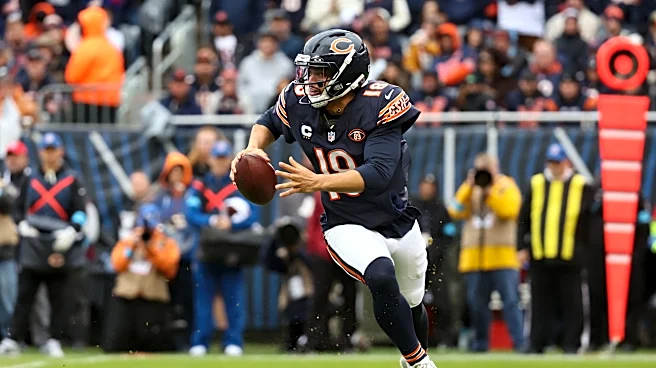
This week’s Lions-Bears preview will focus on both sides of the ball, with a heightened emphasis on how defensive coordinator Kelvin Sheppard’s burgeoning defensive unit can turn Bears QB Caleb Williams into a turducken.
Note: Unless otherwise indicated, all statistics are sourced from NFL Pro, FTN Fantasy, Pro Football Reference, SumerSports, or Pro Football Focus.
Can’t Run Away From Your Problems
The Bears’ offense this season hasn’t quite reached the heights of efficiency it attained at times last year, except Week 1, when it put together a 59-burger firework factory against the Panthers. In fact, while the Bears haven’t trailed since Williams returned to the lineup in Week 6, their offense has averaged just -0.04 EPA/play in that span, good for a clean league-average ranking of 16th.
One area that’s had hiccups in that span is the run game, which has suffered from the downgrade of center Drew Dalman (offseason retirement) to Garrett Bradbury and the loss of tight end Cole Kmet to injured reserve, a rock-fighting Geodude on the perimeter.
The Bears are still committed to running the football, with a 46.8% run rate (8th), but where they’re really struggling is on early downs, putting themselves behind the eight ball. Since Week 6, their 132 early-down (first- and second-down) rushing attempts have generated just 3.3 yards/rush (29th), -0.269 EPA/rush (32nd), and a 34.1% success rate (27th). That’s not the run-game wagon Ben Johnson, one of football’s better run-game architects, had rolling last year.
It hasn’t mattered whether they’re facing light boxes (six defenders or fewer) or loaded boxes (eight or more defenders) on early downs, as they rank among the bottom five to 10 teams in the league in both yards/rush and EPA/rush against either defensive look. The same holds true whether they’re running from under center or shotgun, ranking in the bottom five to 10 in both metrics. Personnel-wise, it doesn’t get much better, with 13-personnel being the lone bright spot, producing numbers closer to league average.
Meanwhile, the Detroit Lions’ run defense, since Week 5, leads the league with -0.20 EPA/rush, ranks third in rushing success rate allowed (34.9%) and fewest yards after contact per carry allowed (2.23), and even ranks in the top 10 in run stuff rate (23.2%).
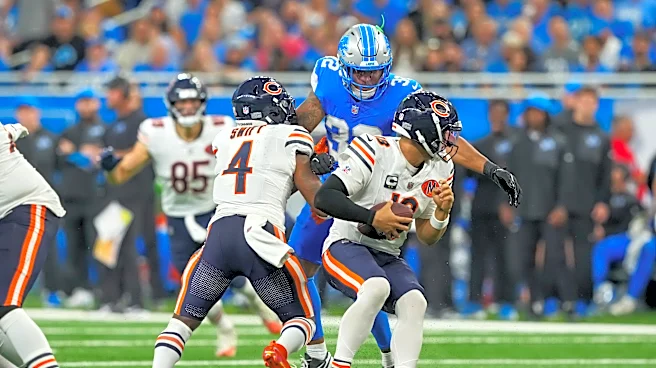
The Lions’ defense is up to the task of shutting down former Lion D’Andre Swift and second-year back Kyle Monangai, both of whom have been hobbled by lower-body ailments this season. The key matchup to watch will be the dynamic defensive tackle duo of Tyleik Williams and Alim McNeill, who should be able to push Bradbury around and will have a heavyweight clash with Joe Thuney and Jonah Jackson, two offensive guards who haven’t been quite as dominant as they were last season. Consistently putting Williams in unfavorable late-down situations will go a long way toward choking out his opportunities to operate in advantageous, low-pressure situations.
Gobbling Up the Quarterback
While the Lions’ defense has been selective with its blitzing since Week 5, bringing extra heat on only 20.1% of dropbacks (29th), Kelvin Sheppard may want to consider sending additional defenders at Williams on second and third downs.
Against the blitz on second and third downs since his return in Week 6, Williams is just 27-of-49 passing (55.1%, 26th) for 365 passing yards, registering -0.129 EPA/dropback (21st), a 41.5% passing success rate (19th), and a 1.9% turnover rate (15th). Opposing defenses have clearly identified this vulnerability, blitzing the Bears on 43.4% of second- and third-down dropbacks, the highest rate any offense has faced since Week 6.
Two defenders who could be key figures in this regard are Derrick Barnes and jack-of-all-trades defensive back Roger McCreary. Barnes has generated a 25.8% pressure rate across 31 pass-rushing snaps since Week 5, ranking 13th among 76 qualifying off-ball linebackers (min. 10 pass-rushing snaps). Meanwhile, since Week 6, McCreary has registered a 40.0% pressure rate, ranking 13th among 87 qualifying defensive backs (min. five pass-rushing snaps).
The recipe for success for the Lions’ defense in getting Ben Johnson’s offense out of sync is to shut down the run on early downs and send extra rushers at Williams on subsequent downs to speed him up, rattle his cage, force mistakes, and keep punter Tory Taylor busy on Thanksgiving.
Putting a Lid on the YAC Gravy Train
Since Williams returned in Week 6, the Bears have relied heavily on yards after the catch (YAC), finding skill players like Luther Burden and old friend Kalif Raymond in space with room to roam. The Bears have generated 682 yards after the catch (7th) on 113 completions, averaging 6.04 YAC per completion (6th), with YAC accounting for 51.7% of their passing yards (10th). Additionally, 26 of their receptions (23.0%) have generated 10 or more yards after the catch, the fifth-highest rate in the NFL. Generating YAC has been a clear strength of their passing attack.
Luckily, one of the calling cards of Sheppard’s defense is forcing offenses to fight for every yard, and nothing comes easily. The Lions are a vise grip once a pass is completed, swarming receivers and shutting down opportunities for additional yardage. Since Week 5, the Lions’ defense has allowed just 4.2 yards after the catch per reception, the second-lowest mark in the NFL over that span.
Brian Branch and his boys in coverage don’t give an inch and should force the Bears’ passing offense to be more efficient downfield rather than relying on their playmakers to manufacture yardage after the catch.
Feasting Downfield
While the Bears’ defense under Dennis Allen, especially with the addition of Jeffery Simmons, has been a formidable foe this season, one area where they’ve struggled mightily is defending deep passes (20-plus air yards).
On those passes, the Bears have allowed 17-of-35 completions (48.6%, 28th) for 697 yards, 19.91 yards/attempt (32nd), six touchdowns, and just one interception, surrendering a league-worst +1.107 EPA/dropback. It’s been a despicable showing for an otherwise formidable defense when opposing offenses have elected to test them deep.
Look for the Lions to take some big shots downfield, testing the long speed of cornerbacks Jaylon Johnson and Tyrique Stevenson and looking for opportunities to catch rookie Dillon Thieneman or backup-turned-starter Cam Lewis out of position and get behind them. The odds feel pretty high that we’re treated to another Jameson Williams explosive play on Thanksgiving.