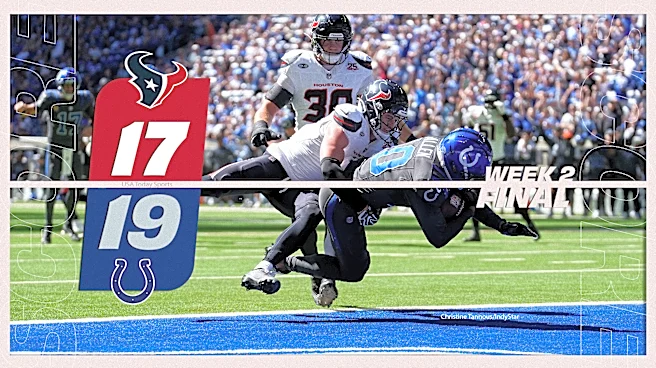


The Colts were staring at another close loss.
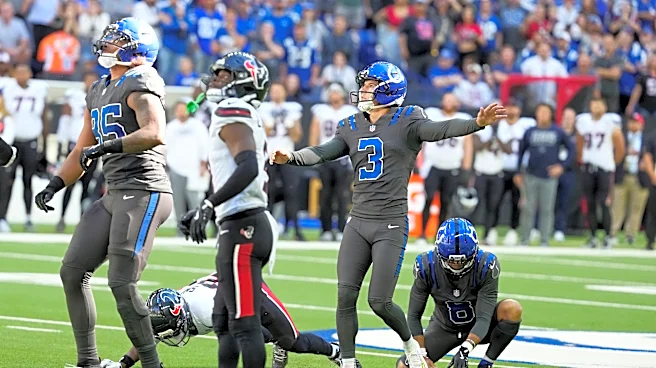
Trailing Houston by one with just over 90 seconds remaining, Indianapolis had the ball on its own side of the field and needed one more big play to give Spencer Shrader a legitimate chance to win it. After what happened in Kansas City a week earlier, the last thing the Colts wanted was to let another late opportunity slip away and find themselves staring at third-and-long with the season already starting to get away from them.
That is when Laquon Treadwell
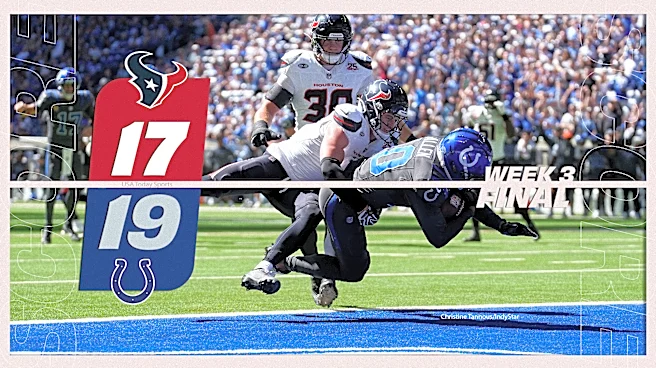
delivered the biggest play of the game, and arguably the biggest play of the Colts’ season so far. On his first target of the afternoon, Treadwell broke open over the middle and Daniel Jones stepped up in the pocket, stayed composed and fired a strike that moved Indianapolis safely into Texans territory. Treadwell wisely stayed down after the catch, something he joked afterward that he had learned from the near-fumble in Kansas City the week before.
The catch put the Colts in position for Shrader’s eventual game-winning field goal and helped snap a nine-game losing streak. The throw itself was excellent, but the design deserves just as much attention. Indianapolis used a concept that attacked exactly how Houston was defending the play, and once Jones stepped up through the pressure, the window opened for Treadwell right where the Colts needed it.
Dagger Concept

A Dagger concept is essentially a go route from the slot paired with a deep dig from the outside receiver. Josh Downs is the slot receiver on the play and pushes vertically, while Treadwell runs the dig at around 15 yards. Against this Cover 3 look, Downs is basically the clear-out route. He does not need to win the rep or even run it with the same urgency he would if he expected the ball. His job is to occupy the deep safety and make sure that defender cannot drive downhill on Treadwell. The safety still has to respect Downs running through his area, and that is enough to create the space underneath.
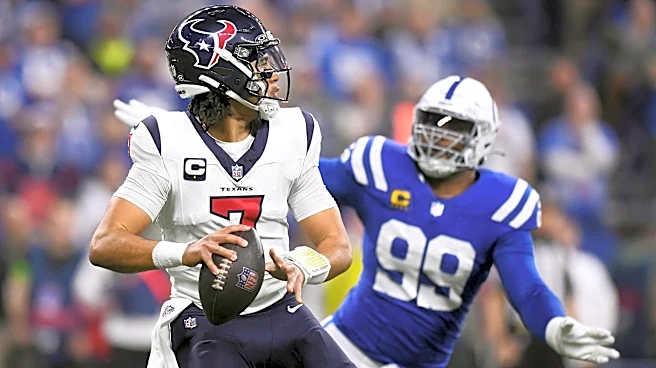
Houston shows a one-high safety look before the snap and drops into what looks like a match Cover 3. The free safety is sitting extremely deep in the middle of the field, while Lassiter and Stingley (their top two cornerbacks) handle the other two deep thirds. Underneath, the safety Blankenship to Allen’s side drops toward the middle of the field, the nickel who starts over Downs works toward the flats, and the two linebackers who initially show pressure bail into the hook-curl areas.
By the time Treadwell reaches the top of the dig, there is a pocket sitting between essentially every layer of the coverage. The deep defending safety is over the top, the linebackers have dropped underneath, and the flat defender has widened and the dropping safety can’t get deep enough in time. Treadwell gets to roughly 15 yards, breaks inside and settles right in the middle of all of it. He does not need to separate by five yards from one defender because the structure of the coverage has already created the space for him. He just has to get to the landmark at the right time.
The backside of the play gives Jones a few other answers if Houston plays it differently. Tyler Warren chips before releasing underneath, likely serving as the safety-valve option if nothing develops downfield. Keenan Allen runs a shallow cross or drag from the other side, which is especially useful if Houston ends up playing man coverage. Allen probably is not outrunning many defenders at this point in his career, but the route still gives Jones a quick underneath option moving across the formation. The running back is responsible for checking the blitz and any immediate pressure first before releasing late if the pocket stays clean.
The other interesting part of the play is Jones’ footwork. It is not a textbook three-step drop where he hits the back foot and immediately lets the ball go. He takes more of a modified drop, with a typical drive step followed by three steps, but then adds a small shuffle to buy more time before hitching up twice in the pocket. The footwork is not especially clean, but it works for what the Colts are trying to accomplish.
Treadwell is not a fast receiver, and a 15-yard dig takes time to develop with him running it. If Alec Pierce were running this route, the timing would probably look different. With a faster receiver, a normal three-step drop with one hitch might line up perfectly with the break. Jones seems to adjust to Treadwell’s pace here, gives the route enough time to develop and stays patient rather than forcing the ball before the window opens.
Once Treadwell gets into the hole between the linebackers and the deep coverage, Jones steps up and delivers the ball on time. The design creates the window, Treadwell gets exactly where he needs to be and Jones gives the route enough time to fully develop. It is a simple concept executed very well at the biggest point of the game.
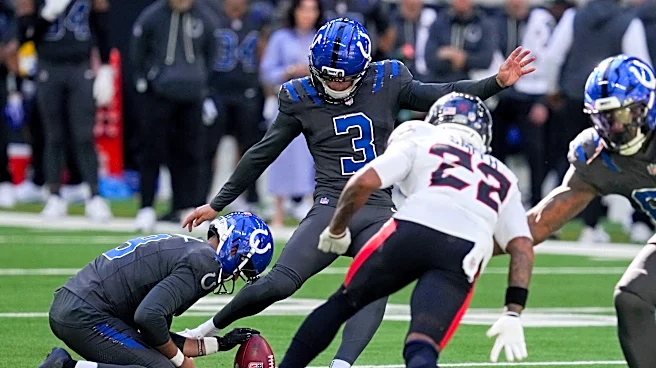
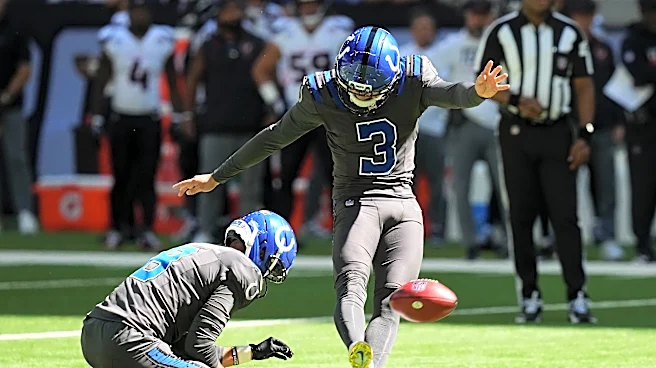
The Colts did not do much after the Treadwell catch, which only makes the play more important. Indianapolis gained just 10 more yards over the final minute or so before Spencer Shrader came out to attempt the winning field goal. Without Treadwell getting 20 yards on that dig, the Colts are probably asking Shrader to attempt something well outside normal field-goal range, if they even get into position to try one at all.
Instead, Jones stepped up in the pocket, found Treadwell in the middle of Houston’s coverage and completely changed the final possession. The Colts only needed a handful of yards after that to give Shrader a realistic attempt, and he finished the job.
The difference between winning and losing this game was much bigger than one result in September. Historically, only around 2.5% of teams that start 0-3 go on to make the playoffs. At 1-2, that number rises to roughly 25%. That is a 22.5 percentage-point difference between the two starts.
Obviously, one catch does not literally increase a team’s playoff chances by exactly 22.5%. There are too many variables over the remaining 14 games for that. Still, it shows how much was riding on that final drive. The Colts were staring at 0-3 and another close loss after what happened in Kansas City. Instead, Treadwell made the biggest catch of the game, Jones made one of his best throws of the afternoon and Shrader finished it with the kick.
When the Colts look back on this season, that play may end up being much bigger than a 20-yard completion in the box score.