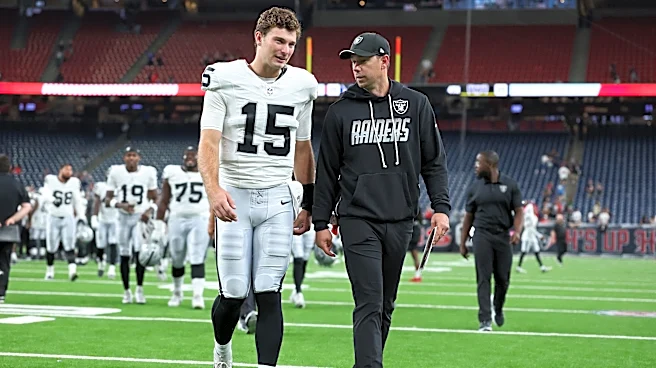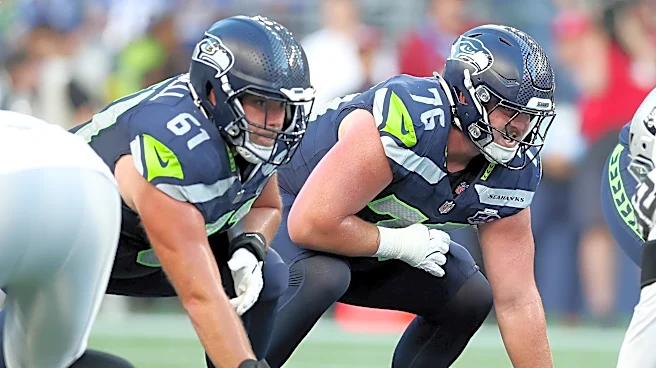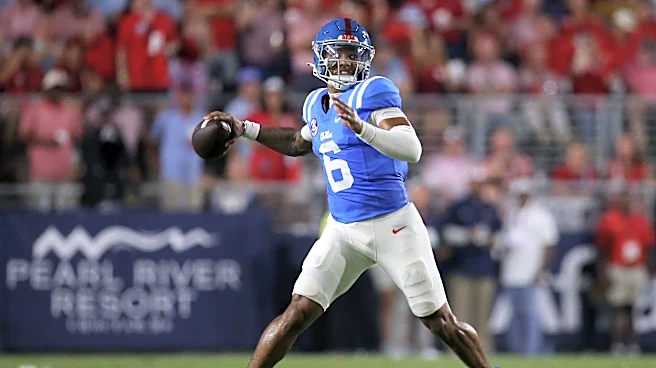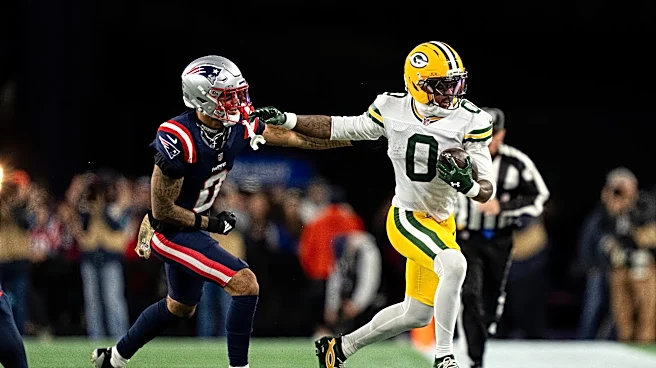


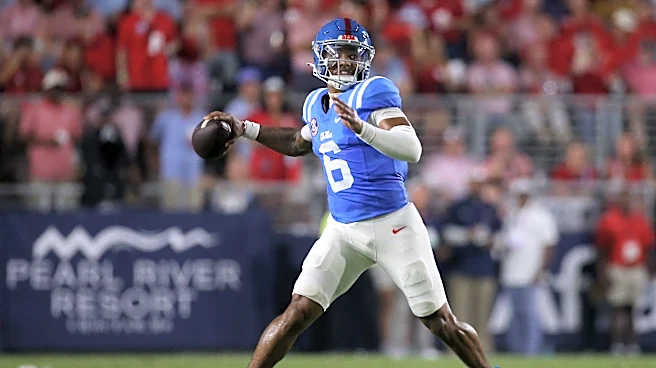
After trading starting quarterback Kirk Cousins to the Minnesota Vikings for a third-round pick ahead of Tuesday’s deadline, the Las Vegas Raiders’ Week 10 game against the Seattle Seahawks will forever be known as Fernando Mendoza’s first regular-season start for the Raiders
. Of course, that’s the primary focus of this week’s mailbag. Let’s get to it!A: I get that a lot of people feel like the Raiders didn’t get a big enough return for Cousins, and initially, I was surprised they didn’t get more,
too. I felt like John Spytek could have at least gotten an escalator on the pick where, if the Vikings made the NFC Championship, Super Bowl or whatever with Cousins, the pick becomes a second-rounder.
However, all of the reporting after the fact has been that Minnesota wasn’t willing to go higher than a third for Cousins. So, if he wasn’t going to be the starter in Las Vegas for much longer, at least Spytek managed to get a Top 100 pick from a player who wasn’t going to be on next year’s roster and probably wasn’t going to be contributing for much longer this year anyway.
Why wouldn’t the Vikings budge? Well, this is the same organization that moved on from Cousins a few years ago because they felt like they’d never be able to make a deep playoff run with him. Now that he’s older and didn’t join the team until halfway through the season, I’d imagine the logic is similar. Essentially, Minnesota was willing to take a chance that the 38-year-old can salvage the campaign, but not at the cost of potentially jeopardizing the club’s future, and drew a line at the third-rounder.
Q: Can you please help me understand just what this team is doing? Trading your starting QB sends a signal that you’re no longer competing; you’re rebuilding. If that is the case, why do you keep your best trade asset in Maxx Crosby, who could bring you higher-round draft picks? Many people feel like the Raiders won’t win another game and fear for Mendoza.
A: To be honest, I don’t think my answer is going to be satisfactory for you.
It’s never been a secret that this is a rebuild year for the Raiders. They put a heavy emphasis on getting younger in the offseason, and it was always clear that Kirk Cousins was a bridge-gap starter until Mendoza was ready to start. The Cousins trade doesn’t happen if John Spytek and Klint Kubiak don’t think the latter is true. Spytek even said that the organization feels it can still win in the second half of this season with the rookie behind center.
As far as not trading Crosby, I can agree that it’d make sense to try and get picks for him. However, the coaching staff and front office seem to think what he brings as a leader is more valuable to the culture that Kubiak is trying to build than a couple of draft picks. Also, keeping Crosby ties back to Spytek and Kubiak thinking they can stay in the playoff hunt with Mendoza.
Now, if that plan falls flat and the team struggles down the stretch, maybe the strategy changes in the offseason and they look to move Crosby for picks again. But right now, the team’s brass appears comfortable seeing how the rest of the campaign plays out with the No. 1 pick leading the charge.

A: I think you’re on the right track here where Kubiak’s game plan is going to be to get the ball out of Mendoza’s hands quickly and give him some easy throws, especially early on. There might not be a worse defense to face for a quarterback’s first NFL start given how many certified dudes the Seahawks have and how confusing Mike Macdonald’s scheme is.
So, I think we’ll see a good amount of predetermined throws via screens, RPOs and bootlegs to simplify the rookie’s reads and try to neutralize Seattle’s pass rush. And of course, if there’s ever a game for the rushing attack to finally hit its stride, it’s this one.
A: If I’m Macdonald, I’m throwing the book at Mendoza by giving him a lot of pressure looks pre-snap and changing the picture post-snap. Basically, the strategy is to try to overwhelm and confuse the rookie as much as possible so that he starts thinking too much and either holds onto the ball too long or makes a mistake that leads to a turnover.
That’s why I think Kubiak should start the game with the predetermined quick throws mentioned above. Take the thinking off Fernando’s plate initially and let him get into a rhythm to build some confidence before opening up the playbook later on. To use a cross-sport reference, it’d be like a jump shooter looking to get fouled early so he can get to the line and see a few balls go through the hoop before letting it rip from three.
A: I just want to start by giving you a hard time about asking a “two-part question” when there are four questions in here, LOL!
I think Brock Bowers was always expected to be the primary receiver, and the actual receivers were viewed as complementary pieces. Bowers is doing a pretty good job of filling that role, seeing as he’s putting up wide receiver numbers, ranking tied for 14th in receptions (48), 10th in yards (658) and tied for sixth in touchdowns (six) among all pass-catchers, not just tight ends. And that’s after missing two games. As long as he’s around, the ‘WR1’ issue is overblown, in my opinion.
On top of that, I think Tre Tucker has been a solid No. 2 this season. He ranks in the top 25 of receivers in catches (33, tied for 25th), yards (529, 17th) and touchdowns (four, tied for 11th). It also wouldn’t be surprising to me if Tucker is even more productive with Mendoza, given the latter brings more arm strength to the table than Cousins did.
Now, Tucker is an impending free agent, and it might make more sense to save money for Bowers’ extension. So, wide receiver might still be an offseason need this year, but it doesn’t need to be a top priority if the plan is to open up the checkbook for the “football robot from heaven”.
With Bech, he’s never been a great separator and has always been more reliant on winning contested catches. That was the book on him coming out of TCU, and it has shown up during his limited playing time in the NFL so far. He was/is a decent route runner; he just isn’t a high-level athlete to explode out of cuts and generate a lot of separation. He can win by being physical at the top of the route, but that isn’t going to result in wide-open targets.
However, Bech has only run 59 routes this season, per Pro Football Focus, and just 19 in the two games since he returned from injury. So it’s too small of a sample size for me to say definitively that’s been the issue this year.
A: I’d like to see Jackson Powers-Johnson get a shot at left guard, but I don’t think it will happen. One of the frustrations I have with Kubiak is that he seems to be too loyal to Spencer Buford. The Athletic’s Sam Warren didn’t say that directly when he joined Marcus and me on Tape Don’t Lie a couple of weeks ago, but Warren did mention that the coaching staff thinks higher of Burford than what his perception is outside of the building.
Also, I’m sure some people are tired of me saying this; I get the feeling JPJ won’t be on the roster after this season. Unless an injury happens where he gets put back into the lineup and plays well, I think it’ll be a similar situation to Tyree Wilson, where Powers-Johnson gets shopped and traded in the offseason.
A: Let’s slow down here for a second. Marcus and I aren’t saying Mike Washington Jr. is a bust. Last week just highlighted that he isn’t ready to take over as the lead running back ahead of Ashton Jeanty, which has always been the expectation for the fourth-round pick.
I talked about this a bunch in the offseason (and I’m pretty sure Marcus did, too); Washington is more of a complementary back who is a home-run hitter rather than a bell cow due to his lack of vision and shiftiness. The Jets game opened the door for MJW to potentially take over because he did a decent job of keeping the offense on schedule, but last week was a different story. Still, he can be a good second option behind Jeanty moving forward.
The coaching staff, especially the head coach, should have input on who the team drafts. They’re the ones coaching the players after all, and ignoring their opinions is how friction gets created within the organization. The general manager should be the one making the final call, but his decision should be the result of a collaborative effort with the scouting staff’s and coaching staff’s opinions factored in.
It’s pretty common for coaches and the front office to meet during the offseason and hash out what players they want to target in the draft.
Q: How has Rob Leonard treated No. 1 receivers like Chris Olave and Garrett Wilson? Will he adjust his coverage scheme to Jaxon Smith-Njigba?

A: Against Olave, Leonard’s strategy was essentially to keep Olave in front of the secondary to prevent giving up explosive plays, since he and Tyler Shough connected on a handful of deep shots in the first two weeks of the season. So, the Raiders were willing to give up any short routes to Olave.
He still ended up having over 100 yards, but there were no explosive plays. That game is his second-lowest average depth of target (ADOT) of the season at 9.3 yards, and he had his highest YAC total (32 yards) of the season, per PFF. That was a decent strategy because the Saints didn’t have another receiver who could threaten the Raiders downfield, and Olave didn’t burn the Raiders deep.
Against Wilson, Leonard went with a similar strategy initially. However, the cornerbacks had their worst game of the season collectively. Darien Porter started the game with poor awareness in Cover 3, losing Wilson for a 31-yard catch. On top of that, Eric Stokes got cooked by Adonai Mitchell for the majority of the game, while Jermod McCoy was beaten deep a handful of times as well.
In other words, Leonard’s strategy didn’t work in New York because of a lack of execution in the secondary, and the Jets had more than one pass catcher who could burn the defense.
I’d imagine the approach this Sunday will be to bracket or double team JSN as much as possible. He’s too good after the catch that you can’t just take away the deep shots and give him what he wants underneath. Also, there are very few corners (maybe none) who can cover Smith-Njigba consistently throughout a game, and Vegas certainly don’t have someone who can do it with how the position group has been playing lately.
The good news is Seattle doesn’t have another pass-catcher who really strikes fear in opposing defenses, similar to New Orleans. Cooper Kupp is still solid, but he’s well past his prime at this stage.
The bad news is JSN lines up all over the place, which makes it difficult to double team him because the defense doesn’t know where he’ll line up until the offense breaks the huddle. Bracket coverage impacts the entire secondary because the defense is dedicating two defenders to one pass catcher. If the unit doesn’t know where that pass catcher is going to be, then they have to adjust on the fly, which can lead to coverage breaks. Also, Smith-Njigba is arguably the best receiver in the game right now and can beat bracket coverage anyway.
Long story short, the Raiders are probably going to have a tough time keeping JSN in check on Sunday. Most defenses in the league do, where it’s just a matter of trying to limit his damage as much as possible.
Q: Matt, rewatching the last 4 games, I noticed the Raiders are having a hard time keeping the edge and defending passes on the flat. When they blitz, they’re easy to spot and defend. How much of this is Leonard’s scheme, and how much is a lack of quality defensive players? It just seems players are not in good positions to properly defend the run. Also, in your opinion, will Leonard be back next year?
A: The run defense is more of a personnel issue, in my opinion. Not having a defensive tackle who can reset the line of scrimmage and/or get penetration allows the offense to dictate where the ball goes instead of the defense forcing cutbacks. That makes the linebackers’ jobs more difficult because the running back has more options/rushing lanes available, so the backers can’t play fast and attack downhill. Also, there are plenty of plays where the defensive tackles are getting pushed into the second level.
That’s a big reason why the Raiders are struggling to stop 12 and 13 personnel runs. Two- and three-tight-end formations mean the defense has to account for more gaps, so it’s harder for the coordinator to scheme up blitzes and run stunts because there are more options for where the ball can go. When you scheme something up against the run, you’re guessing at where the ball is going, and the likelihood of picking wrong increases when there are more gaps to account for. It should be an educated guess based on the offense’s tendacies, but it’s still a guess.
As far as coverage goes, it’s a twofold answer. Yes, Leonard’s scheme has left the defense susceptible in the flats, especially when he blitzes. However, opposing offenses are only worried about Maxx Crosby as a pass rusher right now because no one else is winning one-on-one opportunities consistently. So, they’re sliding the protection to Crosby to set up double teams, or just chip blocking him, and no one else is taking advantage of the opportunity to force the offense to adjust.
Malcolm Koonce had a good start to the season where he was beating backup-caliber tackles, but Koonce has cooled off against better competition. And the interior pass rush has been pretty much nonexistent all season.
So, Leonard has to blitz or manufacture pressure to avoid giving quarterbacks all day in the pocket. That thins out the secondary and leaves the defense susceptible to getting beaten in coverage. However, I do think his play calling has been too predictable because offenses seem to constantly have answers when he does bring pressure.
Will Rob Leonard get fired at the end of the year? I understand why Klint Kubiak hasn’t done that yet because of the personnel issues I mentioned above. But Kubiak can’t have a defense that ranks dead last in points per game and is getting scored on at a historic pace and not make a significant change in the offseason.
Maybe that’s a massive personnel change instead of firing the coordinator, but it isn’t like Kubiak and Leonard have a long history together.
Q: The Raiders have received very limited return on investment from their defensive free agency signings. Do you think paying big bucks for young players coming off their rookie deals is the right approach? Should they target a bunch of solid veterans on reasonable short-term deals?
A: In my opinion, Spytek approached free agency last offseason the right way by targeting younger players who were coming off rookie contracts. When a team is rebuilding, older veterans on short-term contracts are the type of players a general manager should stay away from.
If the team’s core is young and the organization isn’t expecting to be a contender right away, then older guys who are near the end of their prime and not going to be around long-term aren’t worth bringing in. Instead, the roster-building strategy should be to get as many young and talented players as possible so that they can grow together and develop into a contending team for several years to come. But that doesn’t come without growing pains, and that’s where the Raiders are at right now.
Now, if they finish this season around the seven- to eight-win mark and just have a few holes to patch over to become a legitimate contender in 2027, that’s when Spytek should pivot toward older veterans on short-term contracts in free agency. So the strategy could flip this offseason, especially if Mendoza hits the ground running. But as far as this past spring goes, I think the Raiders went about it the right way even if the early returns are underwhelming.
That’ll do it for this week’s mailbag. Thank you all for submitting questions and, as your weekly reminder, if you’d like to have your questions answered in a future column, tweet them at me, @MHolder95, email them to SBPQuestions1@gmail.com or look for our weekly call for questions on the site. The latter will continue to publish on Thursdays.