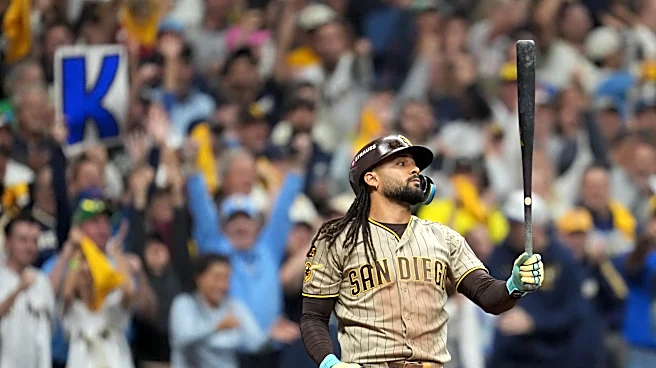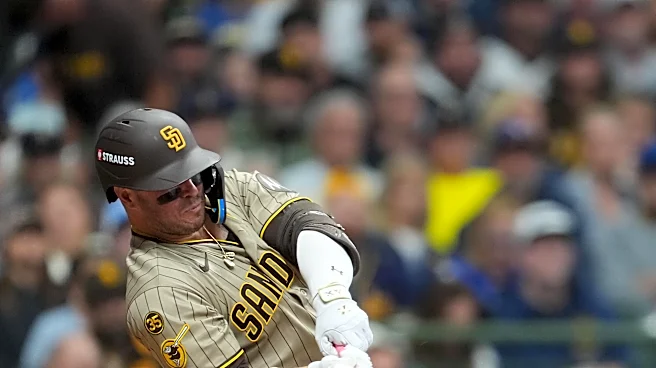



Much like a weekend in Las Vegas, the San Diego Padres have little to talk about after the first two games of the National League Division Series against the Milwaukee Brewers.
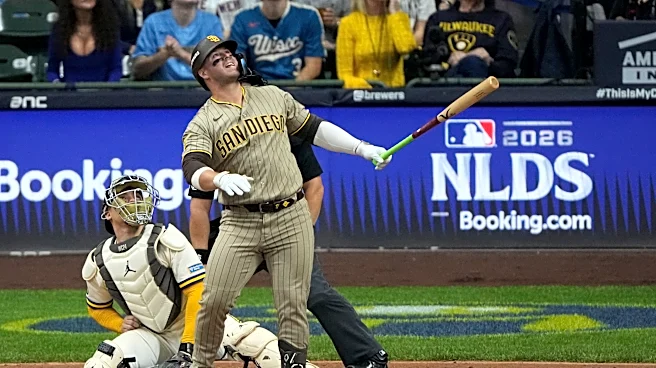
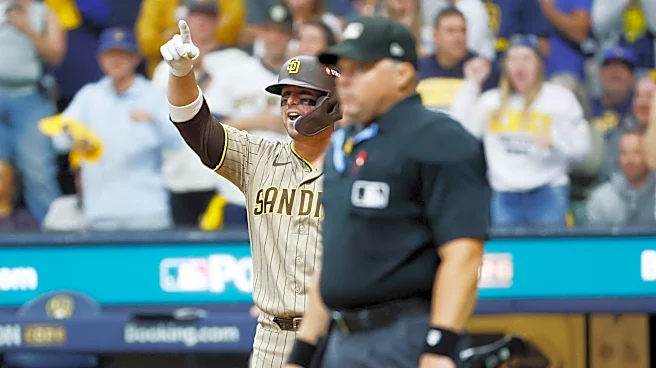
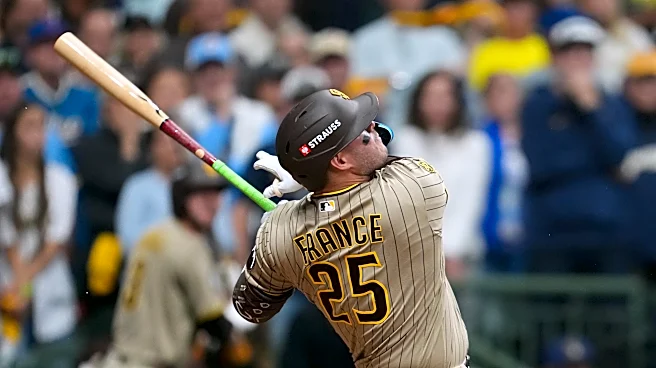
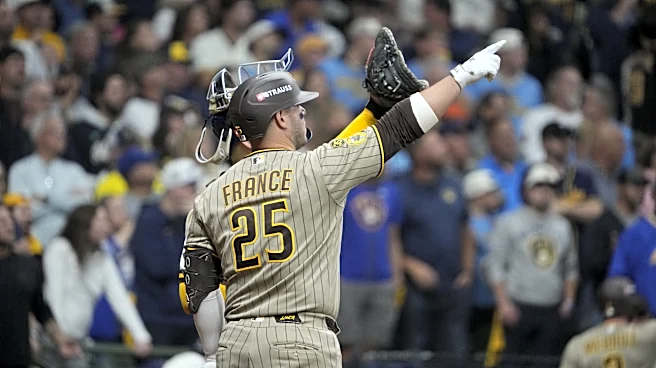
However, the Friar Faithful have plenty to say about the two defeats. One game was decided on a roof-aided out that negated Ty France’s go-ahead home run. And the game’s best closer coughed up a one-run lead in the ninth inning.
Not all dome stadiums are equal
The ground rules for a ball hitting a domed stadium’s roof depend on the venue’s architectural design.
In Milwaukee, a batted ball that hits the roof or cable extension in fair territory is live and in play. However, if the contact is in foul territory, it is a foul ball.
Keep in mind that the rules are different at Tampa’s Tropicana Field. The highest catwalk rings are the facility’s roof, and balls that hit them are considered in play. But the lower catwalk rings are in fair territory and, if hit, are automatic home runs.
For competitive fairness, Major League Baseball needs a universal rule for all balls that hit a dome stadium’s roof. The sport cannot have different outcomes for the same play. A home run in Tampa could be ruled an out in Milwaukee.
League rules state balls bouncing off the wall cannot be caught for an out. Please explain the difference in these scenarios.
Adopting a universal rule would eliminate confusion for players and fans alike.
Was Craig Stammen greedy?
The Padres were leading 3-2 heading into the bottom of the eighth inning. Manager Craig Stammen was six outs away from evening the series at a game apiece and heading home for Games 3 and 4. Usually, he chooses long-term bullpen management over extending a reliever’s appearance.
In Game 2, he became greedy with his managerial decisions.
Arguably, Mason Miller is baseball’s best closer. He recorded 38 saves with a 1.67 ERA, and regularly throws in the 100s. You could not ask for a better option to close out a potential Game 2 win. But Stammen wanted more from his closer: a two-inning outing.
Yes, Miller had two multi-inning appearances this season: a 7-6 win over the Atlanta Braves on June 23rd and a 3-2 victory over the New York Yankees on September 4th. Both outings were extra-inning affairs.
A tale of two innings
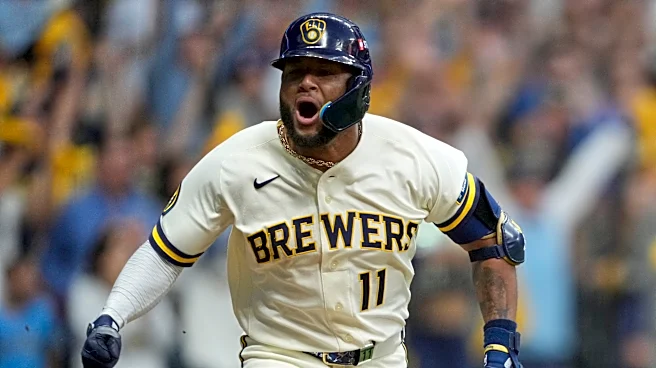
On Sunday, Miller retired the Brewers’ No. 2, 3, and 4 hitters on 12 pitches. But the ninth inning was a different story: besides recording two outs, he walked three batters and gave up the game-winning hit by Jackson Chourio.
Of course, conspiracy theorists believe Miller was tipping his pitches in the ninth inning. Sorry folks, but that is a fallacy. Control issues were his problem.
In the postgame press conference, Stammen admitted his closer was struggling with the strike zone (40 pitches thrown/21 for strikes) in the ninth inning. If Miller was tipping his pitches, adjusting his hand placement within the glove will resolve the issue.
It is tough to second-guess yourself, but Stammen’s first managerial mistake was using Adrian Morejon for two innings in Game 1. Instead, he should have used Morejon and Miller as a power-arm tandem for the final two innings.
Stammen did not trust another reliever to pitch the eighth inning and chose his best to close out the game.
Let’s not kid ourselves: the Padres’ bats struggled through the first two games of the series. The offense stalled, leaving 20 runners on base, and the lineup went 3-for-18 with runners in scoring position.
The Friars know their fate this evening: Win or go home.