

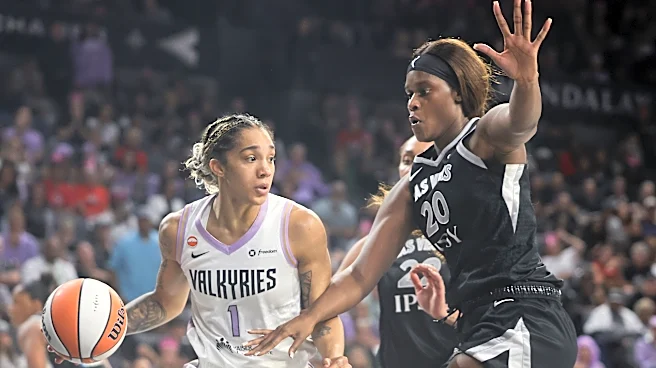

The Golden State Valkyries’ arrival in the 2026 WNBA Finals has inspired many big picture proclamations.
In just their second WNBA season, the Valkyries have made history with their rapid ascent toward the very top of the league, proving to be “light years ahead” of a seemingly overly ambitious five-season contention plan.
And they’re here with an atypical roster construction amplified by a unique culture, prioritizing a deep group of previously-undervalued-yet-perfectly-fitting players who have bought
into an egalitarian, defense-first system that contrasts with the star power that traditionally has propelled greatness in the WNBA. This model, quite possibly, is the future of sustainable team building in the league.
The grand significance of Golden State’s triumph, however, overlooks the finer details of what they’ve achieved to advance to the Finals stage, as well as what they must do to win four more games.
So, before indulging in more appreciation of what the Valkyries have accomplished, which they will deserve regardless of the outcome of these Finals, let’s look at the three big questions that will determine whether or not Ballhalla will be celebrating a thought-to-be-improbable Year 2 title.
In the comments, be sure to share your keys to a Valkyrie victory.
1. Who will be the priorities for the Golden State defense?

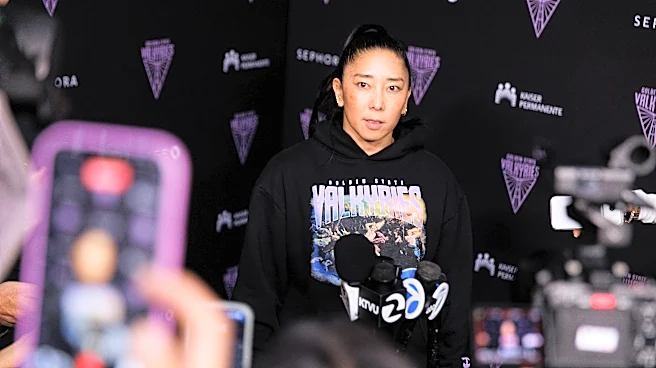
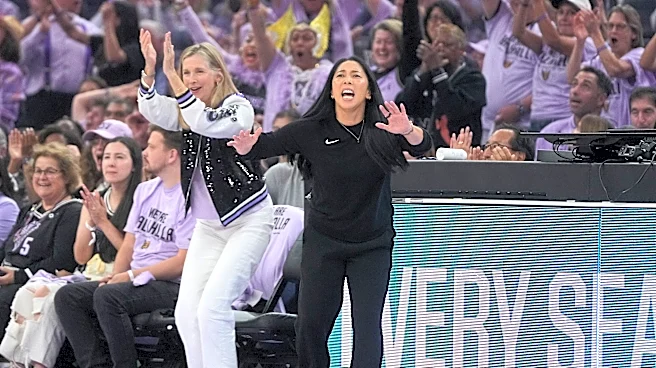
Shutting down opposing stars has defined the Golden State defense under head coach Natalie Nakase.
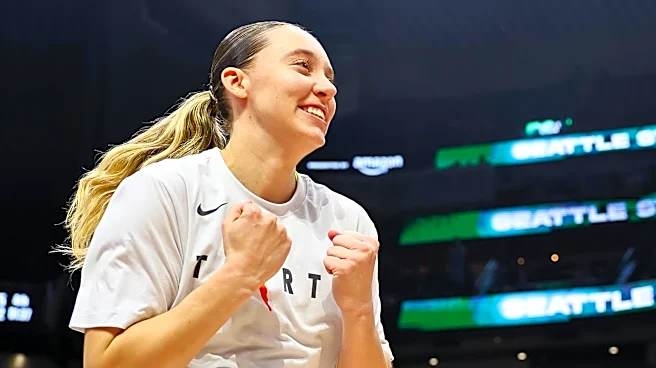
In the first round of the playoffs against the Dallas Wings, it was clear they adopted an “anybody but Paige” policy, prioritizing stymying Paige Bueckers and daring another Dallas player to beat them. That gamble likely came closer to burning them than expected, as the spins of Arike Ogunbowale shotmaking roulette wheel resulted in 75 points across Games 2 and 3, requiring an extra five minutes for the Valkyries to survive against the No. 7 seed.
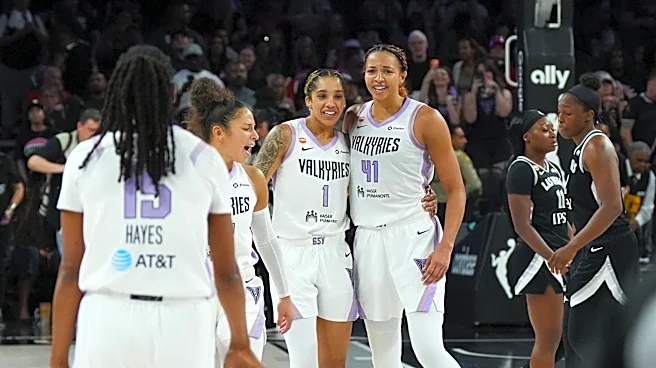
In the semifinals, Golden State could exert all their defensive energies towards the Las Vegas Aces’ Big 3, deploying their All-Defensive trio of Kiah Stokes, Gabby Williams and Veronica Burton on A’ja Wilson, Jackie Young and Chelsea Gray, respectively, with little fear of anyone else in a Vegas uniform.
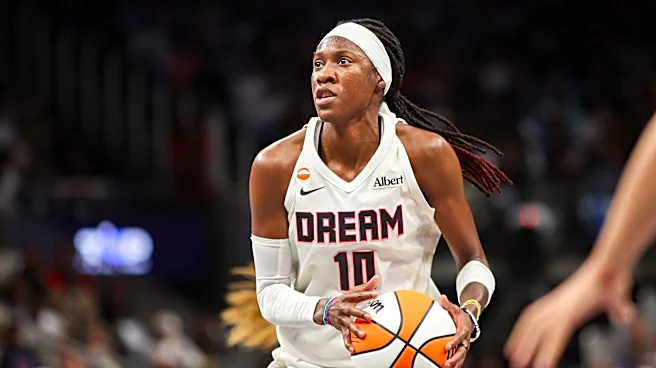
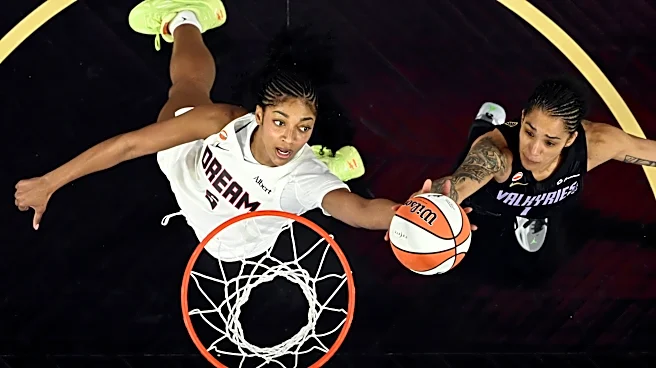
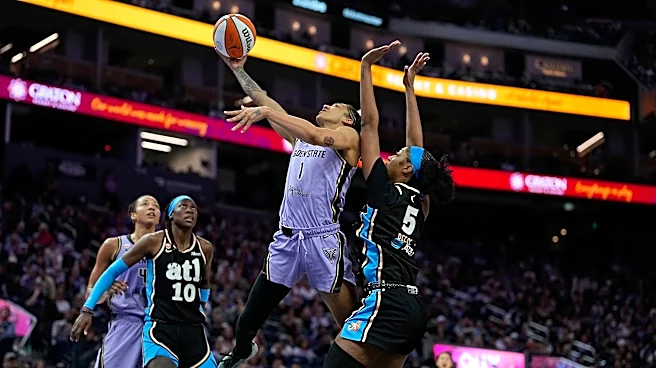
In their three-game regular-season sweep of the Dream, the Valkyries worked their defensive matchup magic on Rhyne Howard. For the 2026 season, Howard averaged her fewest points per against Golden State, all while shooting barely above 30 percent from the field. With Howard’s offensive impact extinguished, largely due to the work of Williams, Atlanta managed to score less than 75 points per game across their three losses to Golden State, their poorest average against any team.
Beginning on Saturday in San Francisco, however, the Valkyries will face what the Dream themselves rightly insist is a different team, with the offensive command of Jordin Canada, plus the addition of the experienced DeWanna Bonner, equipping Atlanta with more offensive weapons that will require schemes and strategies.
Simply silencing Howard is no longer enough if Canada and Bonner, and maybe a returned Allisha Gray, have loud games.
So, what’s the approach for Nakase and company? Is corralling the speedy Canada now at the top of the scouting report? How much attention will she send to Angel Reese? And what happens if Angel and Naz Hillmon hit the wide-open, dare 3s they’re likely to see? Howard, meanwhile, still looms as a threat.
The Dream, somewhat surprisingly, might present more challenges for the Golden State defense than the Wings or Aces did.
2. Can the clutch magic of Ballhalla keep carrying the Valkyries?

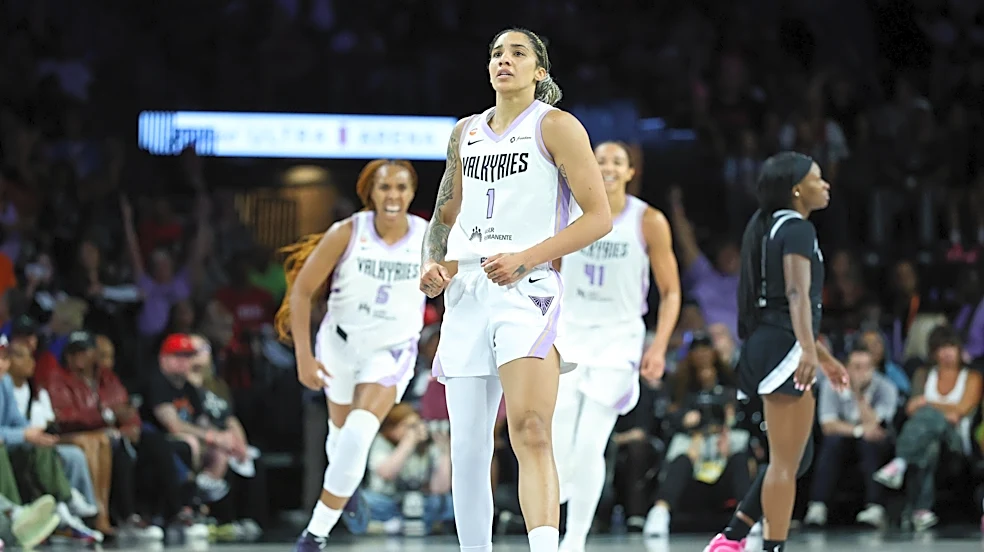
Zack Ward wrote about how Burton has come through in the clutch for Golden State, undaunted by off offensive nights as she has stepped up to take, and make, crucial shots. Williams, likewise, has cooked in the postseason’s most pressure-packed moments.
In their seven-game postseason, Golden State has played 26 clutch minutes, as defined by WNBA Stats. Both Burton and Williams have been on the court for all those minutes. Burton has shot 50 percent from the field in clutch time, while Williams has scored nearly a point per minute in the clutch, with a playoff-leading 25-clutchtime points.
In contrast, their opponents have hit under 28 percent of their shots in clutch situations.
Is all this sustainable? Yes, the Golden State defense is very good, but holding opponents to such poor shooting requires more than a bit of fortune. On the other side, can Williams, never considered a star-level offensive option, keep performing like one when it matters the most?
Atlanta, likewise, has been nails in the clutch, arguably overperforming expectations even more than Golden State; the Valkyries have outscored opponents by six points in their 26 clutch minutes, while the Dream have a scoring margin of +15 points in their 16 clutch minutes. So, it’s also fair to question whether the Dream can keep it up in clutch moments.
And maybe, there’s no concern for the Valkyries because Ballhalla will continue to conjure it’s greatest magic in winning time.
3. Will Nakase keep pushing the right rotational buttons?

In an effort to combat the aggressive Atlanta defense in the semifinals, New York Liberty head coach Chris DeMarco turned to the little-used Marine Fauthoux. Although Fauthoux performed well, it was a move that reeked of desperation and indecision; New York was searching for something.
In their Game 1 semifinal win over the Aces, Nakase called on Aminata Gueye, who played just a single regular-season game for Golden State. Gueye gave the Valkyries nine points, a pair of boards, two steals and a block in just under 13 minutes. And after seeing limited minutes in Games 2 and 3 of the first round, Kaitlyn Chen also served as a key contributor in Game 1 of the semis, with Nakase sticking with Chen over Burton for much of the second half.
The moves seemed genius, evidence of Nakase’s intuitive understanding of every single player on her roster.
The sweep of the Aces also validated Nakase’s decision to winnow the role of unanimous Sixth Player of the Year Janelle Salaün. The undisputed best reserve in the league logged just 20 minutes across the three-game semifinal series, going 1-for-2 from 3—her signature skill—as she totaled seven points.
What if Nakase’s apparent ability to wed omniscience and optionality doesn’t lead to such ideal outcomes in the Finals?
The Valkyries are dangerous because of a shared belief that anyone is capable of being that difference maker. While Nakase devises defensive schemes to stall out other teams’ stars, her counterparts often cannot do the same, as Golden State’s offensive egalitarianism can upend the most exacting plans. Even as Williams has emerged as a more featured offensive star in the postseason, she still is averaging just 31 minutes per game in the playoffs, the most of any Valkyrie. Four Dream players, for comparison, are at more than 33 minutes per game; head coach Karl Smesko, in contrast to Nakase, eliminates potentially complicated choices and maximizes his core.
A well of potential contributors is a positive, until it’s not.
If Nakase’s pulse doesn’t produce in near-perfect fashion, do things start to get sticky for Golden State, where her efforts to identify an X factor begin to resemble DeMarco’s desperation?