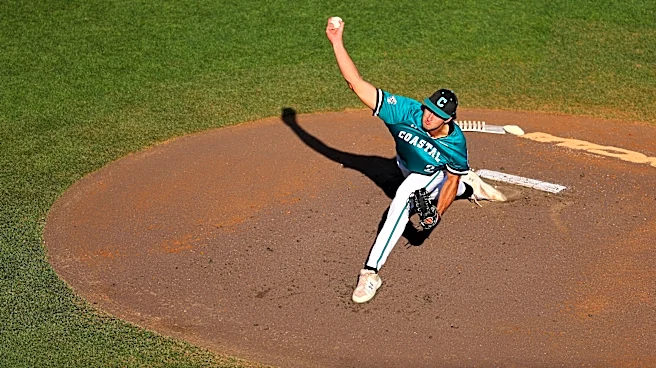






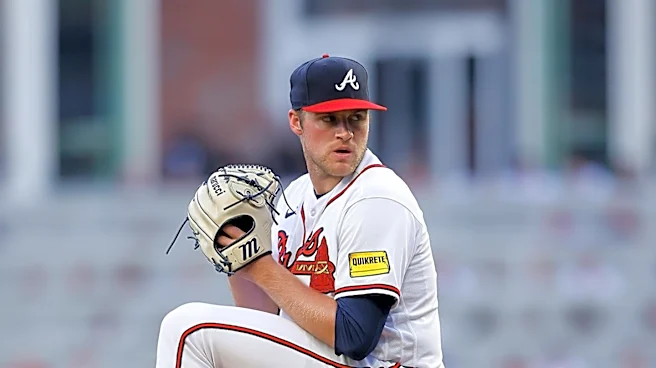


The Detroit Tigers have reportedly come to terms with their first five draft picks in the 2026 amateur draft. We’ve been waiting for them to sign and for numbers to be announced so we can begin to get an idea how many of their prep and JUCO picks they might actually be able to land. On Thursday evening, Jim Callis of MLB Pipeline announced the first and biggest number on their board. First round selection, right-handed starting pitcher Cameron Flukey has signed with the Tigers for a reported $3.8
million, which is roughly $282,000 under slot for the 22nd overall pick.
The big right-hander has an overpowering mid to high 90’s fourseam fastball that misses bats, as does his sharp 12-6 curveball in the high 70’s. He also has a good track record of locating both pitches for strikes. Development on his slider and offspeed pitch, along with refining his command a little further, will be keys to turning Flukey into the frontline starter he has the potential to become.
So the Tigers saved $282,000 here, and this is the plan. Hopefully they can trim a hundred thousand here and there from college draft picks slot bonuses, while landing a lot of their college picks from further on in the draft for around the league minimum. The savings would then be used to lock up their prep and JUCO picks, who have the option to honor their four-year college commitments should they not get an offer they’ll accept from the Tigers.
The strategy usually results in a few players going back to school, but by locking up as much teenaged talent as possible the Tigers hope to get future first round talents before they get there. So far, leaning into that strategy hasn’t done a whole lot for the farm system, but it takes a lot more time to really know how prep players will play out. At the same time, this strategy continues to become tougher as colleges can know offer name, image, and likeness dollars to their recruits to try and convince them to pass on their draft offers and hope to improve and raise their draft stock signficantly in time for their junior seasons of college, when most top college talent is drafted and signed.
The Tigers entered this draft with $9,165,100 in total bonus pool. Prior to round 11, all money paid as a bonus to draftees counts against that total bonus pool. Beyond the 10th round, teams can pay a player up to $150,000 without it counting against their bonus pools. That $150,000 threshold is often referred to as the minimum bonus, although teams can pay less.
The Tigers then have a number of prep and JUCO picks they’ll have to try and find enough money to sign. 8th rounder, 3rd baseman Robert Omidi, a left-handed hitter out of St. Martin Secondary School in Ontario, Canada is the first example. 11th rounder, left-handed hitting first baseman Will Adams, a high schooler out of Hoover HS in Alabama will be another crucial one to get signed. He has one of the more raved about swings and overall hit tools in the prep ranks, with developing power that should get to plus as he fills out. Those two will presumably be priorites and command well above slot bonuses. The Tigers will have sorted this out in advance to make sure they can land those two, presumably.
JUCO center fielder Tyler West, who has a commitment to transfer to Texas A&M, will be a crucial one to watch. Prep right-hander Dustin Dunwoody, selected in the 15th round out of Royal HS in California, is another big one to land, and he holds a commitment to USC. RHP Jack Byers, from Artesia HS in New Mexico, has a commitment to the University of Arizona. 20th round selection, right-hander Will Zielinksi from Vauxhall HS in Alberta, Canada, rounds out the list of players that will be the trickest for the Tigers to land.
One more relevant rule is that the Tigers could go 5% over their bonus pool, about $450,000, and the penalty would be a 75% tax on the overage. That’s pretty minor, as the Tigers have previously had higher bonus pools the past three drafts and thus spent more money overall anyway. If they go any further, the penalities could included forfeiting future draft picks. No one has tested that limit before, and the Tigers won’t be the first, but spending the extra $450,000 makes plenty of sense and should help them to get most of their tougher signs locked up. Presumably one or two will slip through the cracks as usual.