







You’ve heard it before. Back in early 2019, before they had assumed full control of the Brooklyn Nets and Barclays Center, Joe and Clara Wu Tsai decided after a plea from Adam Silver to rescue the New York Liberty and by extension, the whole WNBA. They bought the franchise at around $12 to $14 million, mostly in debt relief, from James Dolan. The Knicks and Rangers owner had stopped investing in the W, moved the team from the Garden to a 90-year-old gym in White Plains as a cost-savings measure.
He gave the W up for dead and put the Liberty on the market. For more than two years, he couldn’t find a suitor.
Then in 2019, the Tsais bought the team, moved it back to New York and invested in all manner of improvements from player amenities to upgrades in the front office and performance team helped a long by a big investment from members of the Koch family. In turn, that led to a spate of big signings. By 2024, the fifth anniversary of their purchase, the Liberty were finally WNBA champs and the hottest summertime ticket in New York. Then in 2025, they sold a mid-teens percentage to and old friend Alibaba founder Jack Ma and five sportswomen in part to finance a state-of-the art $80 million training facility on Newtown Creek in Greenpoint.
Now, two years after Wu Tsai proclaimed to a group of fellow Harvard alumni that she expected the team to be the first professional women’s sports team with a billion dollar valuation by 2035, her team is well on its way the big B. However, in valuations published by Sportico and CNBC this week, the Tsais have lost the race to be the first women’s team with that billion dollar valuation.
Sportico’s Kurt Badenhausen and CNBC’s Mike Ozanian ranked the Libs second behind the expansion Golden State Valkyries, both giving them a valuation of $600 million, a 50 times jump since 2019 and a three times increase since 2024 when they won the title. However, both also placed the three-year old Golden State Valkyries at a considerable premium, Badenhausen at $85o million and Ozanian at $1 billion.
Neither explained in much detail why the Valkyries who play at the Chase Center in San Francisco has outshone the Liberty, WNBA financials are not public. But one reason is that the Valkyries have an estimated revenue advantage: $78 million for Golden State to $43 million for the Liberty. The biggest difference between the two, noted Ozanian, is that the Valkyries lead everyone the league in attendance and season ticket holders.
Last season, the Valkyries’ first in the league, the team led the WNBA with $78 million in revenue, according to a person familiar with team finances who asked not to be named because the matter is private. The Valkyries’ average home attendance last season was a league-leading 18,064, and this season they became the first WNBA team to sell 12,000 season tickets, the person said.
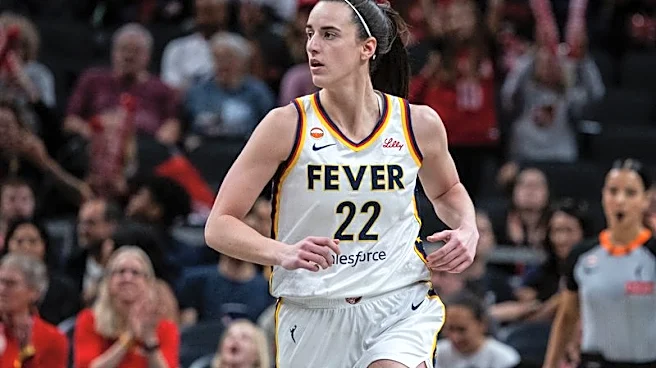
The Liberty average attendance was 16,323 but the number of STHs is not public. The attendance was actually third in the W behind the Valkyries and the Indiana Fever with Caitlan Clark who both writers ranked third in valuation at $560 million. The Libs may see a big jump this season with the team’s decision to open the upper bowl for all its home games.
Does it matter to Clara Wu or Joe Tsai that they didn’t win the race to the billion? Their fingerprints are all over the WNBA’s rise, starting with the renaissance of a team in the biggest market as well as having key roles in both the $2.2 billion TV rights deal and the W’s CBA talks earlier this season. Both milestones have been critical to the overall rise in the league’s valuations.
Said a Brooklyn Sports & Entertainment official: “Our valuation is pretty on point …but great to see how far women’s sports has come over the past few years!” The official declined to discuss any other WNBA team’s valuation”
Indeed, Sportico’s Badenhausen estimates that WNBA teams are worth an average of $427 million this season, a 59 percent jump from 2025.
Players liked the news and added that it reflected well on the their efforts.
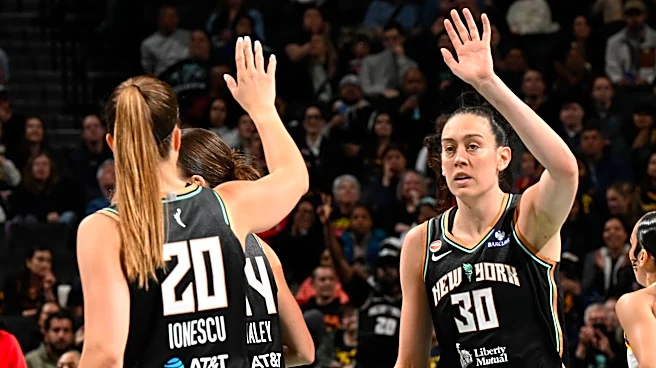
“It’s amazing,” Sabrina Ionescu told reporters Friday. “It’s kind of a testament to us, this organization, the fans, our owners and the investment that they continue to put in the product that they see on the court. It takes a lot of people for that to happen … I think we know our worth and what we’re doing and how every year it just continues to build the business. But that’s pretty cool to see for everyone to kind of be able to see it like that.”
“The numbers don’t lie,” added Betnijah Laney-Hamilton. “I think that we continue to build and it’s just gonna continue to get better.”
The league’s average annual increase is in large part an increase in popularity, driven first by the Liberty’s All-Star lineup in 2024 along with the arrival of a legitimate star in Caitlin Clark. Joe Tsai has put the Caitlan effect at 400% recently. Moreover, the WNBA’s new CBA — with its jump in players salaries and the assurance of labor peace over the next six or seven years — can’t be dismissed.