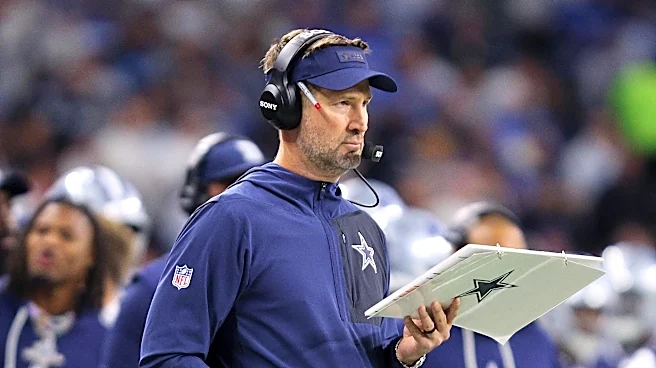




When the Dallas Cowboys chose to move on from Mike McCarthy and accept Brian Schottenheimer, it came with a two-fer. New head coach. New playcaller. The reaction was a little mixed because Schottehnheimer had been in the building previously and had some degree of influence over the offense, although it was unclear how much. Critics of McCarthy were glad to see his predictable, outdated Texas Toast offense no longer around, but that came with no promises that things were going to be better.
Enter Schottenheimer.
Would we see more of the same, or would giving him more control open things up for this offense? Inquiring minds wanted to know. And we learned quickly that Schottenheimer himself had some good things and some not-so-good things that made the Cowboys offense a sometimes juggernaut and sometimes underperforming unit. What was this new playcaller doing that was creating such contrasting offensive production from snap to snap?
Starting with the good stuff, Schottenheimer loved to feed his stars. He designs concepts to funnel the football directly into the hands of his most explosive playmakers. Look at the track record of success he has generated. He created career years for guys like George Pickens (1,429 yards and 9 TDs) and Javonte Williams (1,201 yards and 11 TDs). Even tight end Jake Ferguson regularly found paydirt in this offense, hauling in more touchdowns last year than he had in his previous three seasons combined.
Before we get into more of the good stuff, let’s get the bad stuff out of the way. Schottenheimer’s rigid, physical early game plans did not always hit the ground running, which routinely landed the Cowboys straight into a first-quarter hole. Part of the blame falls on a defense that struggled to stop opposing teams from the onset, but a stagnant offense did them no favors.
Last season, the Cowboys’ offense ranked as one of the lower-scoring teams in the first quarter. But everything changed once they started going off script. Dallas absolutely turned it on as the game progressed, ranking second in the NFL in points scored after the first quarter. Falling into those early holes forced them to switch gears into a lightning-fast, up-tempo attack that left defenses out of sorts.
Simplify the picture. That is his gift to the quarterback. Schottenheimer completely revamped the system to make life easier for Dak Prescott, starting with a lot of early movement that kept the defense guessing. During McCarthy’s final season, the team used pre-snap motion just 24.6% of the time, ranking a lowly 23rd in the league. Schottenheimer cranked that all the way up to 37.7%, jumping to 11th best in the NFL. That constant pre-snap movement instantly gives the quarterback a better picture of the defense before the ball is even snapped.
Preserving clean pockets for the quarterback was prioritized as the coaches routinely committed extra blockers into their protection schemes. Whether it was additional tight ends or an ace pass-pro blocking running back like Williams, Prescott was given extra time to operate, and that was huge.
The team’s new playcaller loved to marry the elements. That is how he opens up the field. He leans on a physical, heavy power run game to suck in linebackers, creating the setup for a devastating passing game. The play-action passing game skyrocketed from a pathetic 11.1% under McCarthy (second-worst) to a more lethal 21% under Schottenheimer (11th-best). That jump was made possible by his continued commitment to the ground attack.
Things should only get better as the Cowboys have managed to keep all their key offensive pieces in order. The new offensive weapons from a year ago, Pickens and Williams, are sticking around. The offensive line consists of the usual suspects, mostly of whom are young guys continuing to grow. This continuity should help them clean up the self-induced errors and underperformance once they get into the red zone (OCC provides a great breakdown here).
To Schottenheimer’s credit (and Klayton Adams as well, since he is the offensive coordinator), they did a good job disguising their intent. They should increase their versatility by dressing up different plays to look exactly the same. Heavy run personnel packages will suddenly transition into wide-open passing concepts, leaving opposing defenders out of position.
With an experienced, battle-tested offensive line and a loaded room of skill players, this offense is poised for more good things. That baseline does not even account for the potential growth from rising young pieces like Jaydon Blue, Ryan Flournoy, and Brevyn Spann Ford.
What will year two bring? We don’t know. But Schottenheimer has done some good things, and the potential is there to be even better. They are lined up to give us more of the good stuff and clean up some of the bad stuff. And if the defense can make some stops and give the offense even more opportunities, the table is set for a more potent Cowboys offense in 2026.