
Andrew Smithson says…
People might assume that they’re rare, but there’s quite a few that deserve name checks or to be classed as a favourite.
Gordon Armstrong and Gary Owers were both massive parts of the team when I first started going and in more recent times you’ve had the likes of George Honeyman, Anthony Patterson, Dan Neil and Chris Rigg — all lads from various parts of Tyneside that were committed to Sunderland.
The definition of the word ‘Geordie’ is vague these days and different people have contrasting ideas
about whether they wish to be considered as one or not, but if we look purely at figures born in the city of Newcastle upon Tyne, you realise that they’re represented at nearly every major success in Sunderland history.
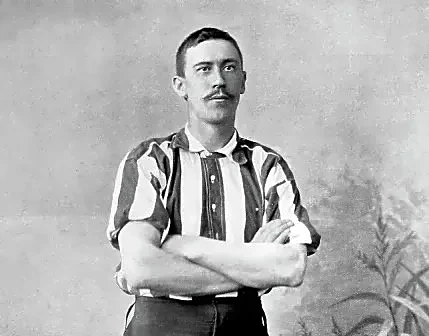
Tom Porteous became the club’s first England international, for instance, and was part of Tom Watson’s glorious title-winning run in the 1890s, whereas David Young and Dennis Tueart both featured in our 1973 cup glory.
I think my personal standout is Len Duns. Born in Newcastle during World War I, he was a very pacy and very creative winger that went on to serve the club for many years and was a star of the team either side of World War II.
A league and FA Cup winner on Wearside in the 1930s, he was a one-club man in terms of senior football, staying at Roker Park until his retirement in the 1950s.
Although he guested for several clubs during the war, doing so alongside duties for the Royal Artillery, he was red and white through and through, and remained faithful to the town after hanging up his boots through his business interests.

John Wilson says…
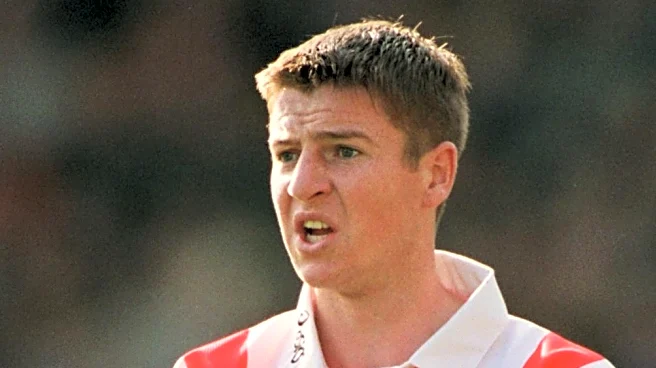
For personal reasons as well as footballing ones, I’m choosing Michael Bridges.
Bridges was chosen by myself to play for North Tyneside U11 County when I ran the area team. He was selected for trials from his middle school — Marden Bridge — and was easily picked out as a fast, talented lad.
Like several North Tyneside players I had, it was a proud moment to see him develop and go on to represent Sunderland.
For the bulk of his time at Sunderland, he was behind Niall Quinn and Kevin Phillips, so perhaps he didn’t get as much game time as his talents warranted. We also had the option of Danny Dichio on the bench, so it was a competitive squad assembled by Peter Reid, and nobody could complain when he left for Leeds United for a £5 million fee.
I loved watching a galloping Bridges, with his deer-like sprinting style. I’m sure he’d say he had a successful career and is happy with his lot as he now presents TeamTalk on BBC Look North, but I often thought he was in the right place at the wrong time, and never quite got the springboard his talents deserved.
Jon Guy says…
I would say Barry Venison.
Great player for Lads; a really classy player and deserved to captain the team at such a young age.
I would say he came through the youth set up and highlighted what was possible from the academy. For me, it was also a real betrayal that he would move to the dark side, but we’ll never know what goes on behind the scenes.
Class player, without a doubt.

Phil West says…
At the risk of pouring a bucket full of gasoline on an already-simmering pre-derby fire, I’m opting for Lee Clark.
Why? Because despite his black and white roots, his prominent role in the Mags’ teams of the mid 1990s and the t-shirt he opted to wear when attending the 1999 FA Cup final, the former Kevin Keegan foot soldier was one of the shrewder and more impactful Sunderland signings as a new era dawned under Peter Reid.
However, on a brief side note, I’d like to back up John’s point about Michael Bridges, because he was blessed with sublime skill and the kind of finishing ability that stood out even at a time when prolific red and white forwards were plentiful.
Anyway, back to Clark — dynamic, good on the ball, intelligent, and a genuine grafter in the Sunderland engine room following his switch from Newcastle in the summer of 1997.
For evidence of this, seek out the 1997/1998 Sunderland season review on YouTube.
Through the grainy collection of pixels, you’ll often see Clark getting on the ball before either playing it into his teammates’ feet and embarking on driving runs into the box or running with the ball at pace himself — something that often ended in goals and was a skill that he boxed off to superb effect as we fell just short of promotion during our maiden campaign at the Stadium of Light.
1998/1999 saw the Lads go one better and despite an early-season ankle break, Clark returned with aplomb and played a huge role as we blasted our way to the Division One title. If Kevin Ball provided the thunder and Alex Rae the nous and class on the ball, Clark was somewhere in the middle; never shy of getting stuck in but a real thinking-man’s midfielder and a key provider of depth during a marathon campaign.
Sadly — and despite giving off the impression that he genuinely enjoyed playing for Sunderland — it all turned sour once the campaign was over and the planning for the Premier League began, but during two seasons in red and white, the recently-appointed Rotherham boss made a huge impression on me and I still remember his time here very fondly.