


The 2026 NFL Draft is now a little under two weeks away. It’s a unique draft for the Bears in that they finally have a late first-round pick, a testament to how successful their 2025 season was.
There’s plenty of great talent to be had near the end of each round, but it makes predicting their selections more difficult. You never have as good of an understanding of which players will be on the board with a later pick, compared to the top-ten territories Chicago has been in often in recent years. This
prediction difficulty rings especially true the deeper you get into different rounds.
A few days ago, I analyzed potential options for the Bears in the second round of this year’s draft. I figured it was only a natural conclusion to do the same with their third-round pick. This pick becomes a lot more wide open than the picks in Round 2, seeing as though there are more variables factoring into pick in the form of which prospects get selected first, as well as where the best value is compared to current and future needs, among other things.
Using a combination of my own draft rankings and the consensus rankings from PFSN’s NFL Mock Draft Simulator, here are a few potential second-round prospects at positions of needs for the Bears around the No. 89 selections.
Offensive linemen
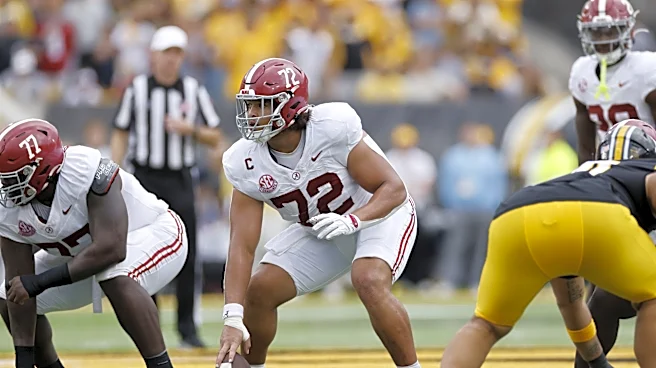
Parker Brailsford, C, Alabama
Jacob Infante ranking: No. 116; PFSN consensus ranking: No. 132
A three-year starter between his time at Washington and Alabama, Parker Brailsford is a smaller center but one who makes up for it with impressive athleticism and coordination. He’s an intelligent zone-run blocker who accelerates well off the line of scrimmage, changes direction well in pass protection, and can roll his hips through contact to seal off defenders in the run game.
Brian Parker II, G/C, Duke
Jacob Infante ranking: No. 84; PFSN consensus ranking: No. 107
I have Brian Parker II kicking inside in the NFL due to a lack of tackle-caliber length, but the tape he put together at Duke this year was strong. He processes well against the blitz in pass protection, he keeps proper weight distribution through contact, and he lands his strikes accurately. He won’t wow you as a physical specimen, but he’s a pro-ready talent with the fundamentals to have a high floor in the pros.
Logan Jones, C, Iowa
Jacob Infante ranking: No. 77; PFSN consensus ranking: No. 102
Logan Jones is an intriguing blend of raw athleticism, physicality, and ample Big Ten starting experience. He has the burst off the line of scrimmage to execute reach blocks well, and he has the grip strength and anchor to drive defenders backwards at the point of attack. He’s an older prospect with average flexibility, but he’s a mauler who’s seen it all and plays with confidence and aggression.
Jake Slaughter, C, Florida
Jacob Infante ranking: No. 111; PFSN consensus ranking: No. 101
Jake Slaughter excelled in the SEC against NFL-caliber defensive tackles on practically a weekly basis. He impresses me with the timing and accuracy of his strikes, as well as his processing as a zone-run blocker. He isn’t incredibly flexible in his lower half, but he tested much better than I was expecting at the Combine, which points to more athletic upside than what might show up on tape.
Austin Barber, OT, Florida
Jacob Infante ranking: No. 117; PFSN consensus ranking: No. 115
Another experienced offensive lineman from Florida, Austin Barber was a four-year starter for the Gators. His pad level is a work in progress, and he’s been called for one too many penalties over the course of his collegiate career. However, he has the size, length, raw power, and quickness shooting into his pass sets to project confidence in him as a high-level swing tackle quickly in the NFL, having the potential to grow into something more.
Dametrious Crownover, OT, Texas A&M
Jacob Infante ranking: No. 163; PFSN consensus ranking: No. 88
Dametrious Crownover is a risky pick for me, seeing as though he had 11 penalties in 2025, had poor agility testing at the Combine, and got smoked in the playoffs by Miami’s tandem of Rueben Bain Jr. and Akheem Mesidor. As raw as he might be, he’s 6’7” and 319 pounds with 35 3/8-inch arms, good raw power, and sneaky good foot speed for someone his size. He’ll likely go much higher than where I have him ranked.
Defensive linemen
Kaleb Proctor, DT, Southeastern Louisiana
Jacob Infante ranking: No. 157; PFSN consensus ranking: No. 127
It’s not often you see undersized FCS defensive linemen project as safe bets to get drafted, but Kaleb Proctor is absolutely an exception. He’s an explosive athlete at defensive tackle with a relentless motor, a deep arsenal as a pass rusher, and a naturally low center of gravity. He had 9 sacks for Southeastern Louisiana in 2025, with two of them coming against LSU. You want small-school players to play up to higher-level competition, and Proctor did exactly that last September.
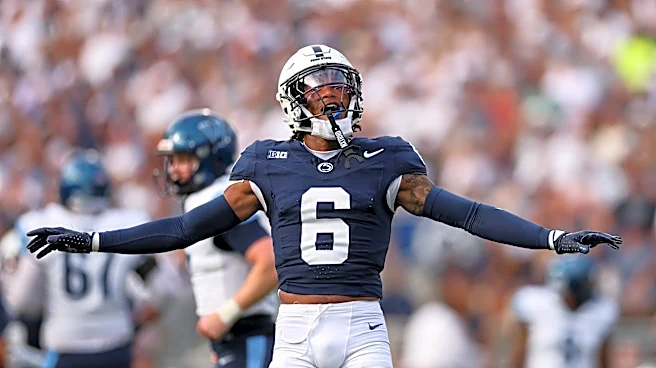
Zane Durant, DT, Penn State
Jacob Infante ranking: No. 91; PFSN consensus ranking: No. 148
Another smaller but explosive defensive tackle, Zane Durant dominated the Combine with a 4.75 40-yard dash at 290 pounds, including a 96th-percentile 1.66 10-yard split. That quickness shows up in how dynamic he appears off the snap on tape. His upfield speed and low center of gravity allows him to squeeze through gaps and disrupt plays up the middle. His play strength is below average for his position, but Durant should get playing time early as a passing-down contributor.
Chris McClellan, DT, Missouri
Jacob Infante ranking: No. 99; PFSN consensus ranking: No. 118
Chris McClellan is a bigger defensive tackle than the others listed here, but he also brings an impressive first step with much better explosiveness than most 6’4”, 313-pound players. His pad level and agility are pretty run of the mill, but he pushes the pocket well with his quickness off the ball, the power he packs in his punches, and the churn he shows off in his lower half while working through blocks.
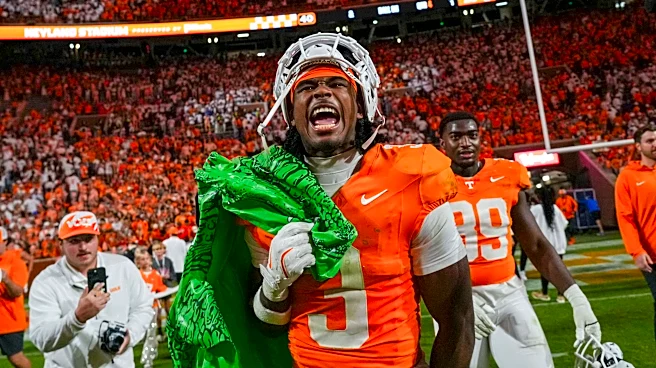
Joshua Josephs, EDGE, Tennessee
Jacob Infante ranking: No. 83; PFSN consensus ranking: No. 80
There aren’t many edge rushers who project as good Round 3 fits in this year’s draft, much less ones who fit what the Bears look for at the position. Joshua Josephs is a little undersized at 6’3” and 242 pounds, but he brings ideal length for a defensive end and brings an intriguing element of speed and bend around the corner that would benefit Chicago’s pass rush.
Defensive backs
Tacario Davis, CB, Washington
Jacob Infante ranking: No. 95; PFSN consensus ranking: No. 110
At 6’4” with 33 3/8-inch arms and a 4.41 40-yard dash, you won’t find many size-speed combinations in this 2026 draft class better than Tacario Davis. He missed some time with year due to injuries, but he’s a coordinated outside cornerback with very good ball skills and underneath instincts in coverage. He projects very well as an easy fit in Chicago’s system.
Devin Moore, CB, Florida
Jacob Infante ranking: No. 98; PFSN consensus ranking: No. 112
You’ll find most of these cornerbacks fit the “big and lengthy” mold (pause), and that’s by design. Devin Moore didn’t run as fast as Davis at the Combine, but he’s a 6’3” cornerback with much better fluidity and body control coming out of his breaks than most his size. He’s also a capable tackler with ideal physicality and effort at the wrap-up point.
Will Lee III, CB, Texas A&M
Jacob Infante ranking: No. 120; PFSN consensus ranking: No. 93
Will Lee III is a 6’2” cornerback with 89th-percentile arm length for his position, and he uses that advantage well. He’s a physical defender who uses his hands well through a receiver’s stems to jam them coming off the snap. He’s also a solid tackler with the raw size and play strength to drag down defenders. Lee’s a little lower on my list for being a little stiff in the hips and having average long speed, but he has the route-mirroring ability in press coverage to make up for it a bit.
Malik Muhammad, CB, Texas
Jacob Infante ranking: No. 96; PFSN consensus ranking: No. 79
Coming in at 6’0”, Malik Muhammad is certainly the smallest of the cornerbacks on this list. However, I come away impressed with his physicality and scrappy demeanor, and I have a feeling the Bears would be, too. He’s a feisty cover corner who battles at the catch point and is constantly hand fighting while jamming receivers near the line of scrimmage. His aggressive mentality can come back to bite him in the form of missed tackles and the occasional penalty, but he’s a fighter.
Zakee Wheatley, S, Penn State
Jacob Infante ranking: No. 75; PFSN consensus ranking: No. 87
Whether it be Adrian Amos or Jaquan Brisker, the Bears have had a hard-hitting safety from Penn State in their starting lineup for much of the last decade. Why not keep that trend alive by drafting Zakee Wheatley? He’s best as a deep safety but has the physicality to play in the box and good instincts covering out of the slot. He’s a somewhat average athlete to be playing in the slot consistently, but his ball skills and the pop he brings in his pads as a tackler should make him a solid starter in the league.
Jalon Kilgore, S, South Carolina
Jacob Infante ranking: No. 87; PFSN consensus ranking: No. 86
A big-bodied defensive back with 4.40 speed who can play all over the back end of the defense, Jalon Kilgore declared for the draft a year early after a strong tenure at South Carolina. Nick Emmanwori’s successor in the Gamecocks’ starting lineup is competitive at the catch point, explosive as a downhill tackler, and has good ball-tracking skills in coverage. If he can get his tackling form down more consistently, he’ll be a serious name to watch.
Bud Clark, S, TCU
Jacob Infante ranking: No. 97; PFSN consensus ranking: No. 83
With 15 interceptions over the last four years, Bud Clark is one of the most productive defensive backs in the 2026 NFL Draft. He’s a little older for a draft prospect and has a season-ending injury to his name from 2021, but he’s an intelligent safety with quick route recognition processing, 4.41 speed in the 40-yard dash, and the ball skills needed to attack the ball in the air from any angle to make the big play.
Skill position players
Emmett Johnson, RB, Nebraska
Jacob Infante ranking: No. 88; PFSN consensus ranking: No. 109
He didn’t light the world on fire with his Combine testing, but Emmett Johnson’s film from his 2025 season surpasses his mediocre 5.85 RAS. He’s a sure-handed receiving back with some of the best passing-down value in this class, and he has good short-area explosiveness with the ability to hit the hole aggressively once he fits a running lane to exploit. He’s creative in space and has good ball-carrier vision in and outside of the tackles.
Kaytron Allen, RB, Penn State
Jacob Infante ranking: No. 118; PFSN consensus ranking: No. 121
With 4,180 career rushing yards, Kaytron Allen is one of the most productive running backs in this year’s draft. He’s a well-built, sturdy runner with impressive toughness as a downhill runner and ball-carrier vision in between the tackles that consistently got better during his time at Penn State. Even battling with Nicholas Singleton for touches, Allen was able to separate himself as the more reliable of the two over time.
Demond Claiborne, RB, Wake Forest
Jacob Infante ranking: No. 106; PFSN consensus ranking: No. 126
Demond Claiborne isn’t the biggest back in the world, but he’s lightning in a bottle if you give him some space to work with. Armed with a 4.37 40-yard dash, Claiborne has elite acceleration out of the backfield with the breakaway speed to make big plays in the ground game. His raw speed and agility are maximized by his creativity with the ball in hands, whether as a downhill runner or out in space.
Bryce Lance, WR, North Dakota State
Jacob Infante ranking: No. 107; PFSN consensus ranking: No. 77
Coming off of consecutive 1,000-yard seasons, Bryce Lance has the production and the physical upside you prefer for in a small-school prospect. He’s 6’3” with a 4.34 40-yard dash and a 41 1/2-inch vertical jump, and those tools show up on film. As raw as a route-running technician as he may be, he has elite deep threat potential with his length, speed, and ball-tracking abilities. He adjusts well to the ball in the air and has strong hands needed to come down with the ball in contested situations.
Skyler Bell, WR, UConn
Jacob Infante ranking: No. 89; PFSN consensus ranking: No. 71
It’s hard to bring up a better wide receiver season in this class than the All-American outing Skyler Bell had for UConn this year. He had 101 catches for 1,278 yards and 13 touchdowns, carrying the load as the bonafide WR1 for fellow draft prospect and Huskies QB Joe Fagnano. Bell is a crafty route runner who can adjust the tempo of his routes, the pattern of his stems, and depth of his routes to exploit certain coverage looks. He’s a reliable pass-catcher with a high floor, even if he isn’t the biggest receiver out there.
Brenen Thompson, WR, Mississippi State
Jacob Infante ranking: No. 60; PFSN consensus ranking: No. 106
Brenen Thompson is an elite athlete who ran the fastest 40-yard dash at this year’s Combine, and it’s not surprising to see why. His breakaway speed and burst stretching the field vertically is top notch. He’s shifty after the catch, and once he gets some space to work with, he’s gone. As a route runner, he’s crisp out of his breaks and can create separation with his athleticism and weight distribution. He’s small with average hands and a limited catch radius, which hurts his upside, but he has the potential to be an impact speed threat for an NFL offense.
Ted Hurst, WR, Georgia State
Jacob Infante ranking: No. 90; PFSN consensus ranking: No. 69
At 6’4” and 206 pounds, Ted Hurst certainly looks the part for a perimeter receiver in the pros. He’s coming off a 1,004-yard season for Georgia State, where he used his large frame and impressive deep speed to move the ball down the field as a vertical target. He attacks the 50/50 ball like a power forward with his positioning and high-pointing ability. Hurst is a bit high as a route runner coming out of transitions, and his drop tendencies are a little much, but he has the size, speed, and physicality to wow NFL teams.